






식품 및 사료 분석 샘플 준비 및 소규모 생산을 위한 적합한 실험실 실험실
식품 테스트 실험실은 의미 있고 재생할 수 있는 분석 결과를 얻기 위해 대표적인, 동기화된 및 분쇄된 샘플을 필요로 합니다. 후속 분석의 표준 편차는 입자 크기 감소 및 분석 샘플의 동성화로 최소화될 수 있습니다.
식품 샘플 준비를 위해 가장 적합한 샘플은 나이프 밀, 로터 밀, 절단 밀 및 볼 밀. 적절한 샘플 크기 또는 충분한 샘플 볼륨을 찾을 때 초기 샘플 크기와 배치 크기가 작은 샘플과 다른 기술을 필요로합니다.
Click on the chapters to explore!
옥수수 또는 사탕>과 같은 자유 흐르는, 곡식 또는 크리스탈 (유량이 아닌) 샘플의 분포화는 일반적으로 간단합니다. 다양한 로터 밀이 적합합니다. 설탕과 같은 크리스탈 샘플은 고속 원심 분쇄기 ZM 300를 사용하여 0.08 mm 개경 크기의 링 시브를 사용하여 분쇄할 수 있습니다. 초심 분쇄 밀에서 초심 분쇄는 매우 효과적입니다.
옥수수 또는 스페이스>와 같은 재료는 일반적으로 ZM 300 또는 Rotor Beater 밀 SR 300/link>를 사용하여 약 500 μm 또는 심지어 250 μm 주위의 입자 크기로 밀어냅니다. 알 수없는 샘플을 밀면 중간 오버터 크기의 시브로 시작하는 것이 좋습니다. 샘플이 시브를 차단하지 않을 때 크기가 더 줄어들 수 있습니다. 이 절차는 모든 로터 밀 적용됩니다. SR 300 사이클론을 연결하는 경우 최대 30 l의 큰 샘플 양에 유용합니다. SR 300 또 다른 장점은 최대 25 mm의 큰 공급 크기입니다.
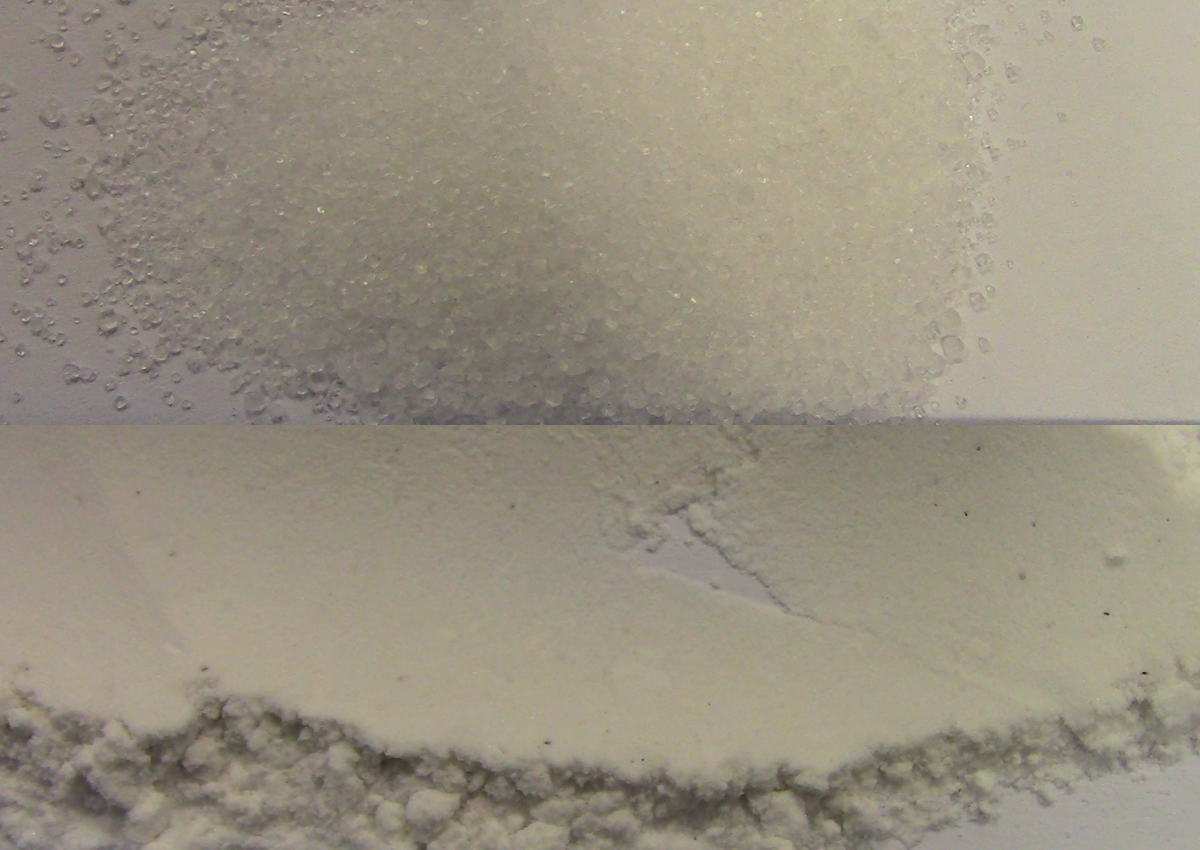
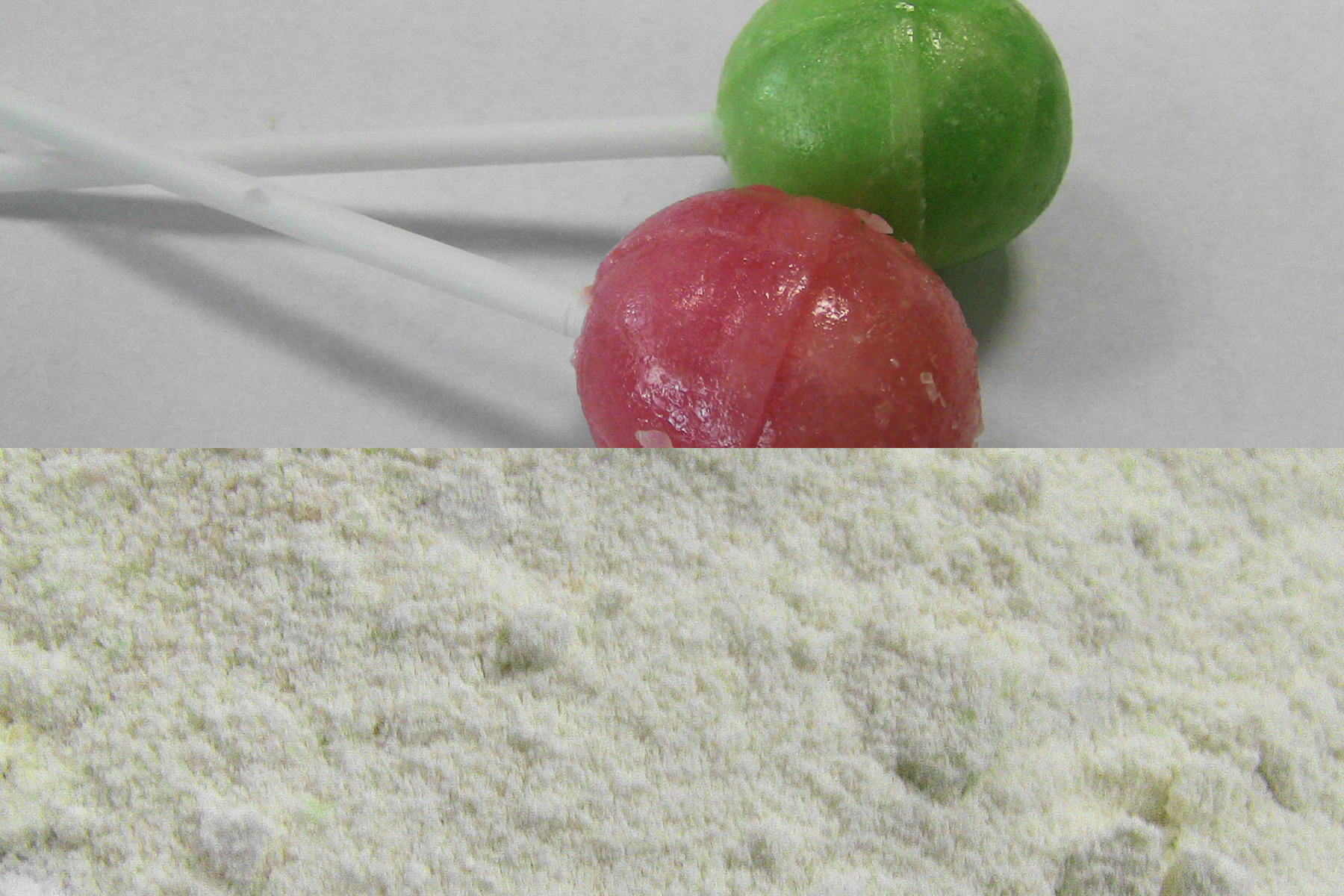
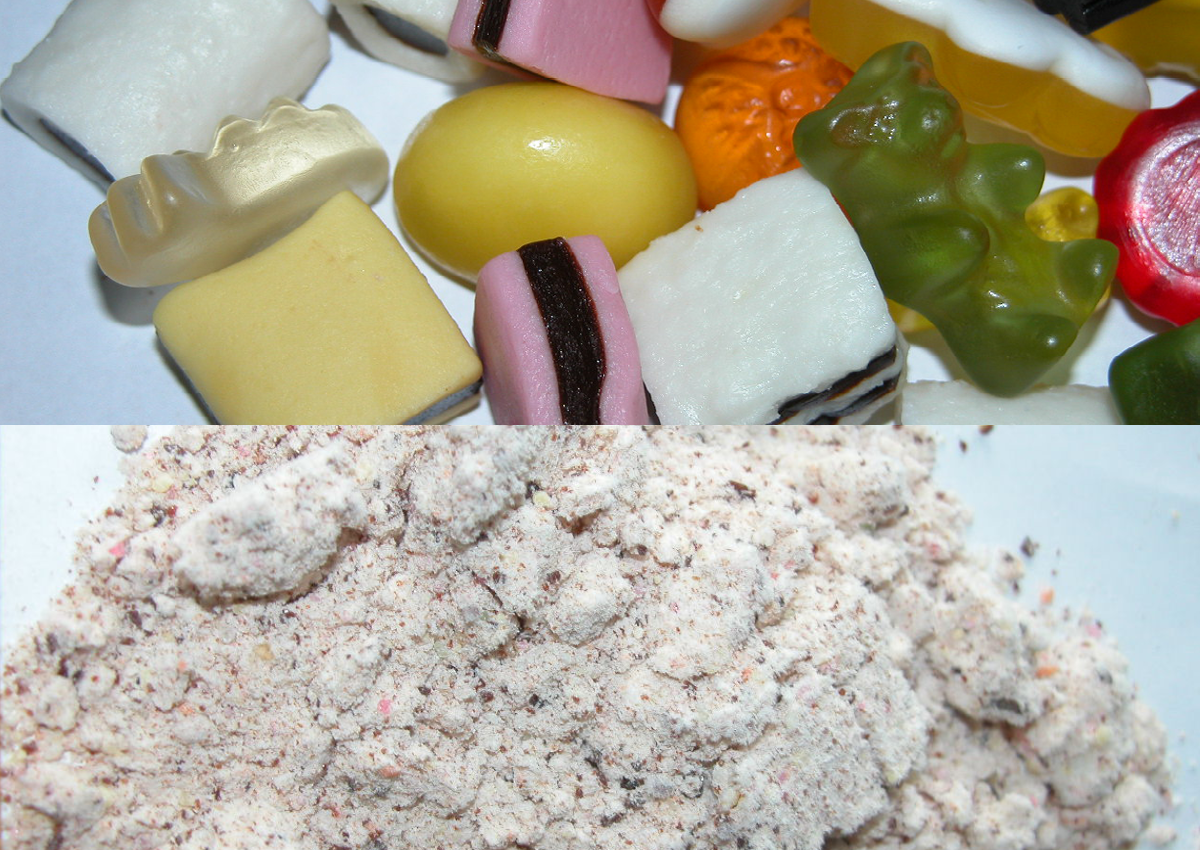
설탕물은 매우 다른 텍스처로 발생합니다. 그것은 단단한, 붙은, 지방 또는 젖은 수 있습니다. 높은 설탕 및 정제 시럽 함량이있는 hard candy의 일반적인 동성화 프로세스는 Knife Mill GRINDOMIX GM 200에서 수행됩니다. 100 g의 단단한 사탕은 처음에는 약 6 초에서 12 초 동안 6000 rpm에서 6000 rpm로 약 6 초 동안 밀링하여 0.5 mm 이하의 크기를 줄입니다. 이 단계별 절차는 샘플이 칼에 붙어있는 것을 방지하고 쓰레기를 감소시킵니다. 이것은 주택 믹서에서 종종 발생하는 것처럼.
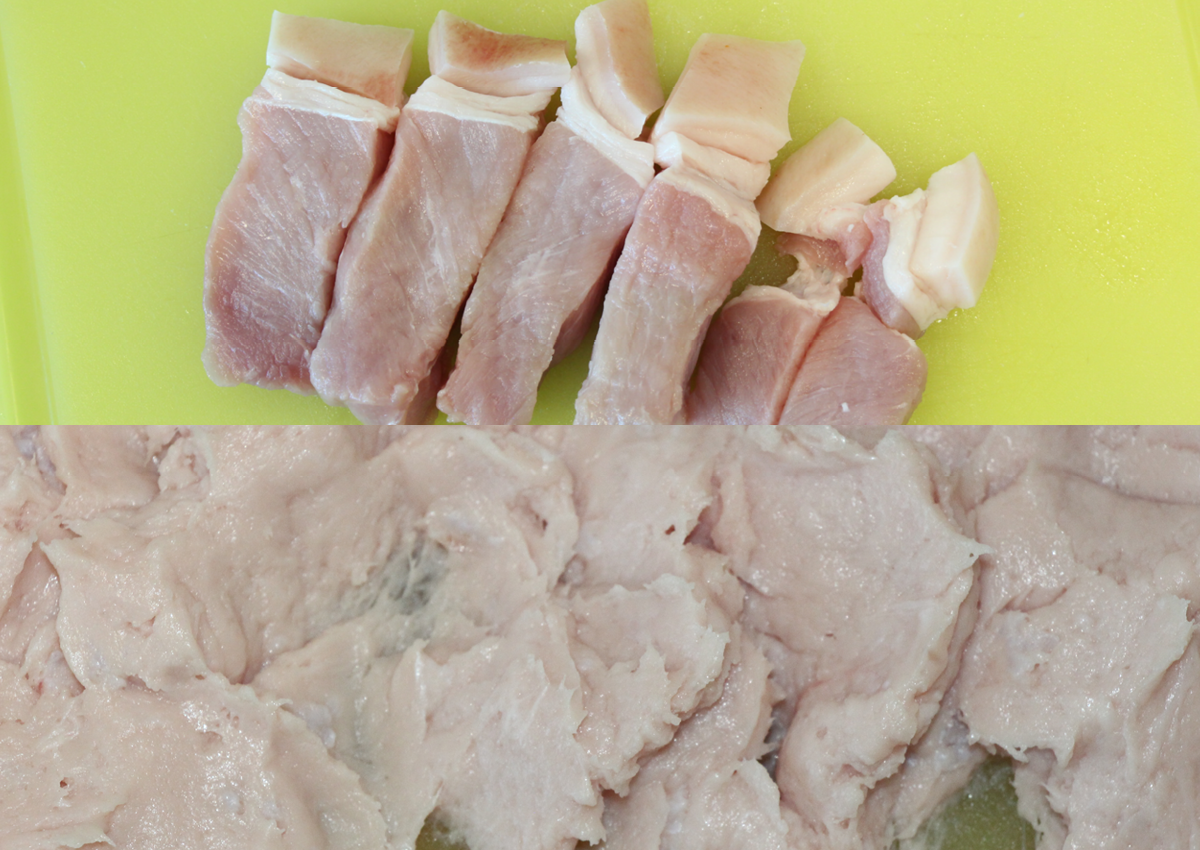
단단한 샘플 재료, 예를 들어, 지방, 스트라이크 베이컨 를 분석하기 전에 homogenization 프로세스에 도전을 제기합니다. 껍질 또는 피부의 더 큰 부분이 절단되지 않는 경우, 샘플은 균일하지 않으며, 분석은 잘못된 결과를 제공 할 수 있습니다. 나이프 밀 고기 섬유의 크기를 줄이기 위해 가장 적합한 것으로 입증되었습니다. 칼의 전체 절단 능력을 사용하는 강력한 모터는 낮은 열 축적을 보장하는 것이 유리합니다. 완전히 균일 샘플을 얻기 위해 (실 온도에서), 단단한 고기 샘플을 매우 짧은 시간에 균일화하는 데 이상적으로 적합합니다.
250g의 돼지 어깨 는 GRINDOMIX GM 200에서 30s 동안 3000rpm에서 인터페이스 모드를 사용하여 GRINDOMIX GM 200를 처리합니다. 첫 번째 단계는 각각 7000rpm로 30s의 두 개의 사이클로 이어집니다. 다른 종류의 덮개는 다른 30s에서 10,000rpm로 샘플에 과도한 압력을 발휘할 수 있기 때문에 첫 번째 단계 동안 표본의 표준 덮개를 사용하는 것이 중요합니다. 미세 밀링 단계에서 샘플의 최대 속도 감소 덮개는 샘플을 완전히 균형화시키는 데 유용합니다.
치즈 샘플은 또한 뚱뚱하고 접착성이 있기 때문에 복잡할 수 있습니다. 130 g의 샘플은 2 x 10 s의 밀링 단계에서 10,000 rpm에서 GM 200를 사용하여 0.5 mm 이하로 homogenized되었습니다. 샘플은 밀링 단계 사이에 수동으로 스푼과 혼합하여 접착 부품을 풀 수 있습니다. 견과류와 같은 샘플은 치즈보다 더 접착성이 있지만 200 g는 약 20 s 이내에 치즈 샘플에 대해 설명된 것과 유사한 방식으로 homogenized 할 수 있습니다.
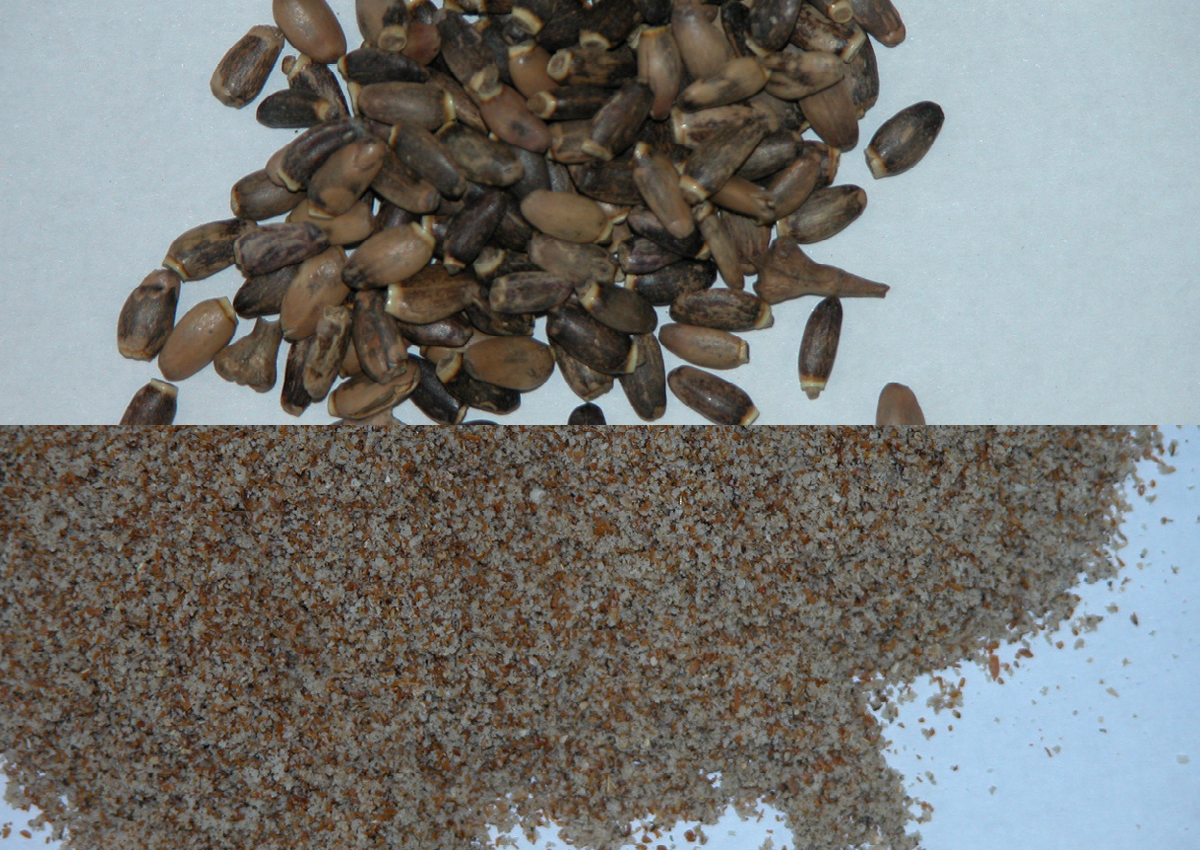
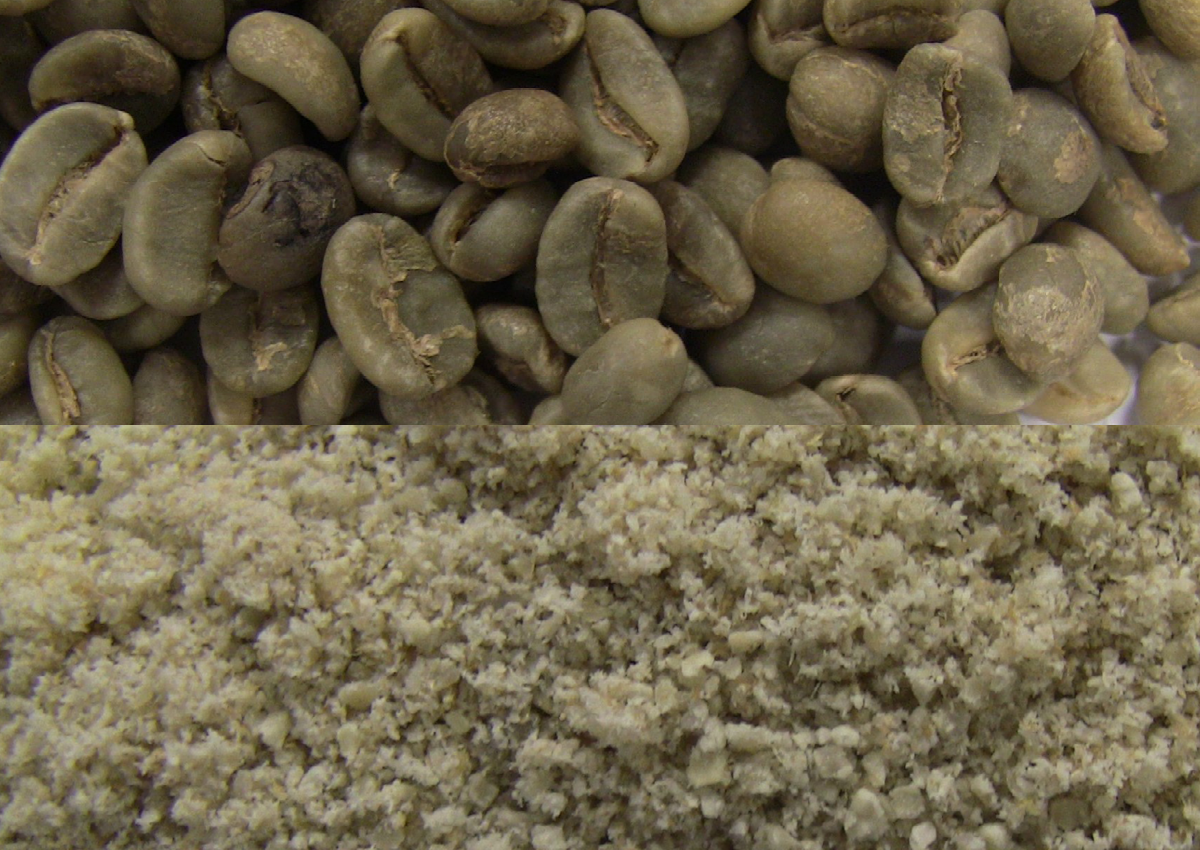
씨앗이나 커피와 같은 자유 흐르는 샘플은 칼 밀에서 처리할 수 있지만 일반적으로 ZM 300과 같은 로터 밀이 그러한 샘플을 분쇄하는 데 사용됩니다. 거리 시프 (또는 SR 300가 사용되는 경우 거리 로터)는 샘플의 절삭 효과를 최소화하고 결과적으로 지방 방출을 줄일 수 있습니다.
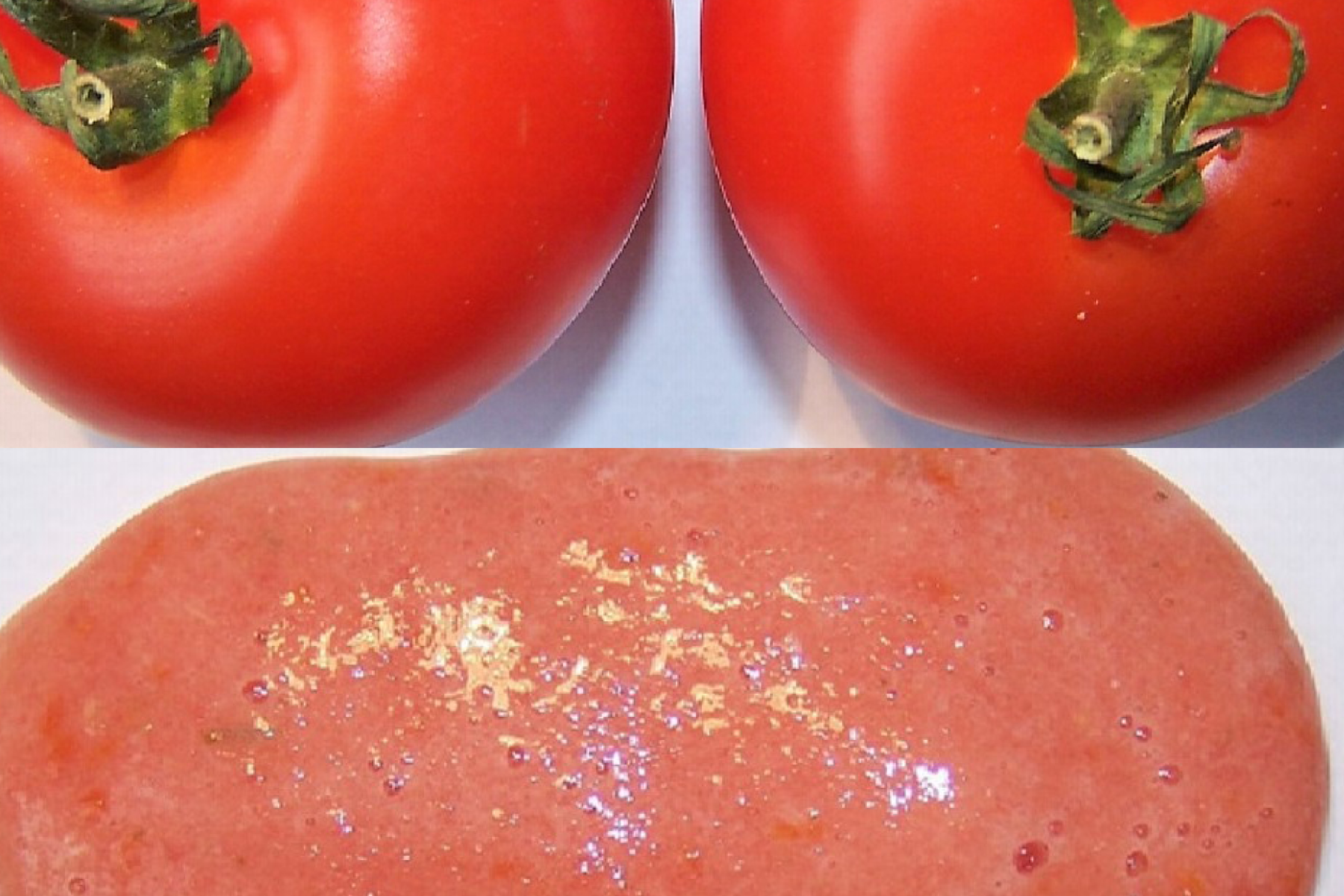
GM 채소 샘플은 습기를 함유하고 있거나 심지어 주로 물을 함유하고 있습니다. GM 토마토 수프와 같은 가공된 제품도 많은 물을 함유하고 있으며 토마토와 유사하게 준비되어 있습니다. 후자의 경우에는 높은 물 함량으로 인해 완전한 호모제화가 촉진됩니다. GM 300 샘플은 더 이상 회전하는 칼과 접촉하지 않는 채소의 벽에 붙어있기 때문에. 예를 들어, < 180 g> 토마토 는 현재 창에서 내부 연결을 열립니다.
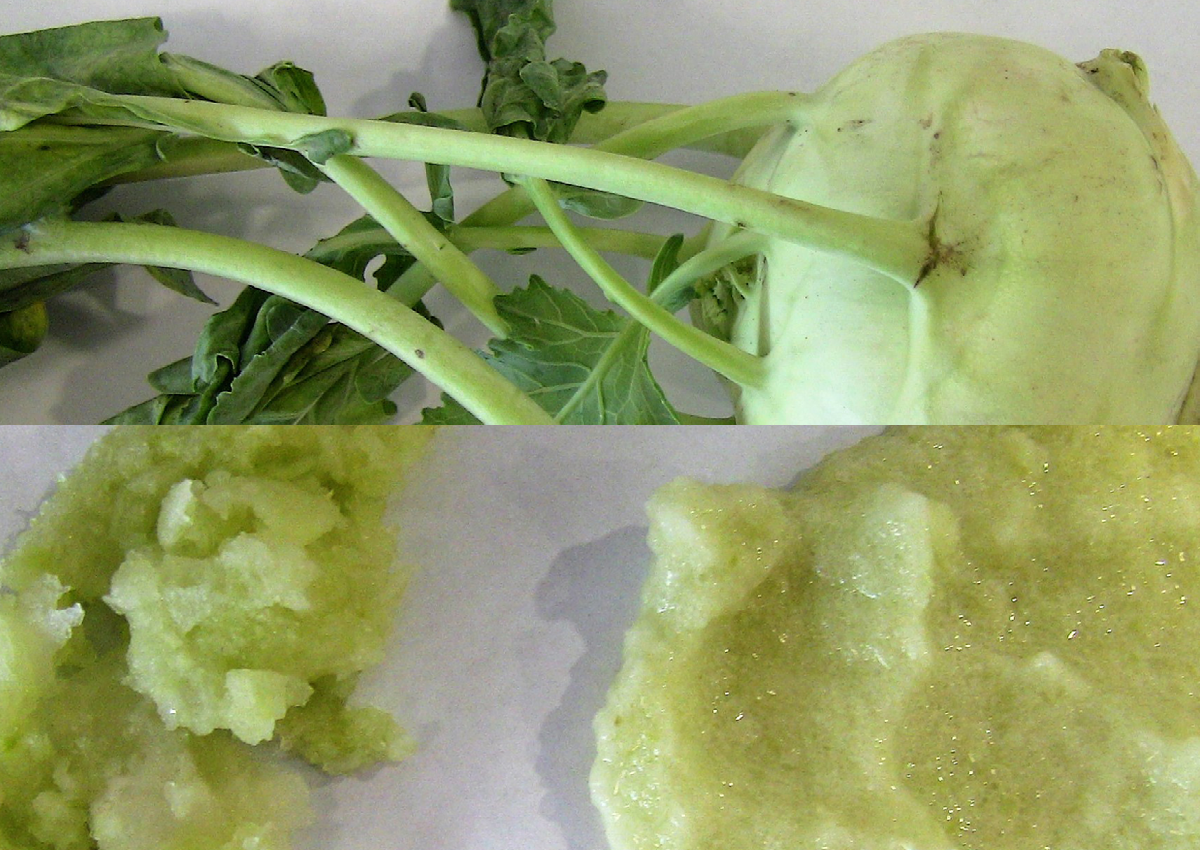
모두 껍질과 같은 샘플은 물 함량이 낮습니다. 샘플 조각은 밀링 컨테이너의 벽에 붙어있는 경향이 있으며, 따라서 칼잎과의 접촉을 피합니다. 일부 샘플 조각은 대부분 동성 샘플에 남아있을 수 있습니다. 최대 속도가 사용되는 경우에도 중력 덮개를 사용하면 밀링 효과를 개선하는 데 도움이되지만, 20 초 후에 샘플에 약간의 물을 추가하여 완전한 동성화가 이루어집니다. 280 g의 모두 껍질은 수동으로 4 개로 절단되었습니다. 밀링은 두 단계로 수행되었습니다. 최초 10 초 동안 2000 rpm의 낮은 속도를 사용하는 것이 권장됩니다. 5000 rpm의 정밀 밀링을 위해, 50 ml의 물이 20 초 후에 좋은 동성화를 달성합니다.
For fibrous samples such as dried herbs or other plant materials - but also freeze-dried fish, for example, - cutting effects are best suited to homogenize the samples. Usually, large sample amounts are required to ensure representative sample preparation, as fibrous materials tend to be light, voluminous materials and can be very heterogeneous. Sometimes manual pre-cutting is necessary to obtain a suitable sample size for feeding the cutting mill and avoid formation of nests and clusters which tend to remain in the hopper and are therefore not efficiently homogenized.
The Cutting Mill SM 100 is suitable for basic preliminary grinding, where the plant samples are effectively cut with a parallel section rotor. Usually, a fineness down to 4 to 6 mm can be easily achieved in a cutting mill. For obtaining particles < 1 mm, the use of a cyclone is recommended, for example in the SM 300. The Ultra Centrifugal Mill ZM 300 produces even finer particles but has the drawback of accepting smaller sample pieces. Thus, if large fibrous samples need to be homogenized to less than 0.5 mm, the combination of pre-cutting in a cutting mill followed by fine grinding in a ZM 300 is the best choice. A standard ring sieve rather than a distance sieve should be used in the ZM 300 as fibrous samples require shearing forces. Another solution might be a rotor mill like the SR 300 which accepts larger initial feed sizes and is capable to pulverize fibrous samples down to < 0.5 mm using the standard rotor which generates sufficient shearing forces.
A cyclone helps to improve the discharge of light sample materials from the grinding chamber. It also cools the sample to minimize loss of volatile ingredients such as terpenes. If volatile ingredients should be preserved, it is recommended not to use too fine bottom sieves – as this causes warming and thus loss of volatiles. Depending on the sample properties, the pulverized materials tends to remain fibrous, as long fibers may pass the bottom sieves of the cutting and rotor mills lengthwise. If this needs to be avoided, ball mills like the MM 400 or the PM 100 are a better choice.
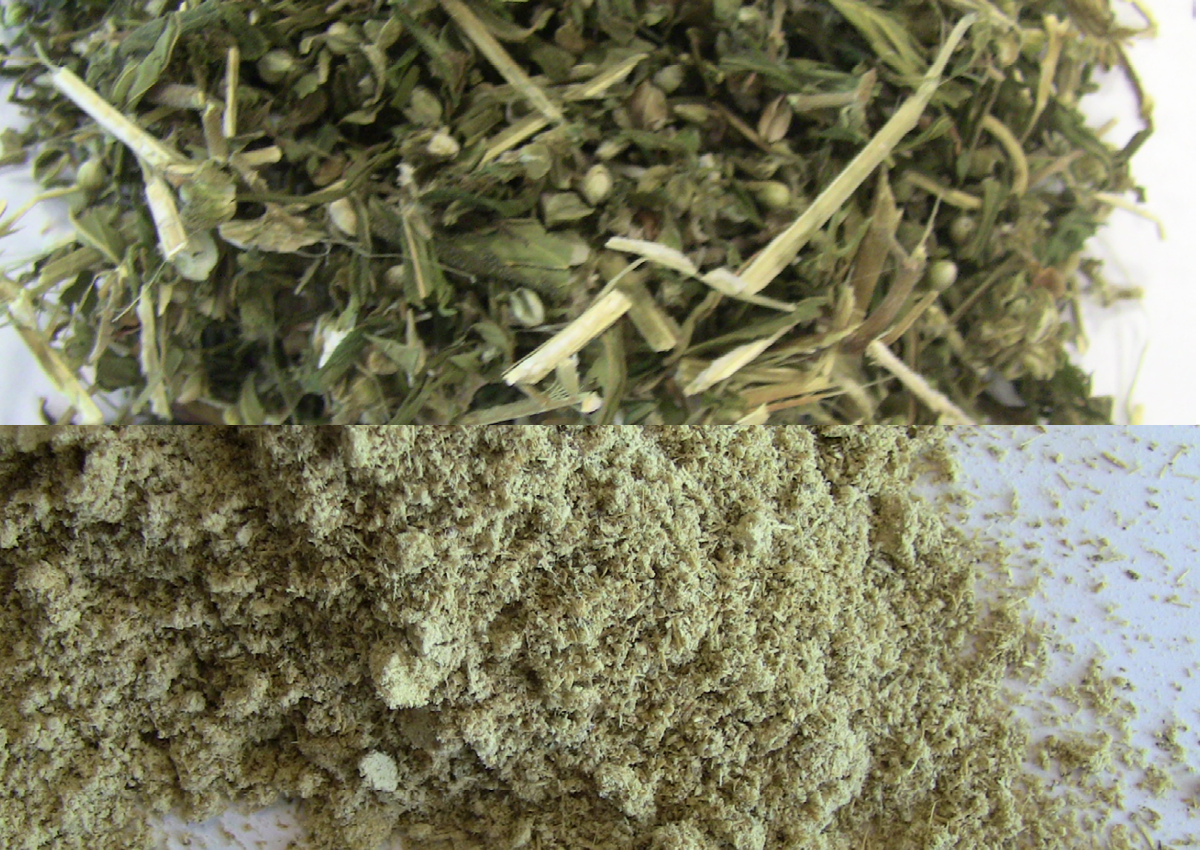
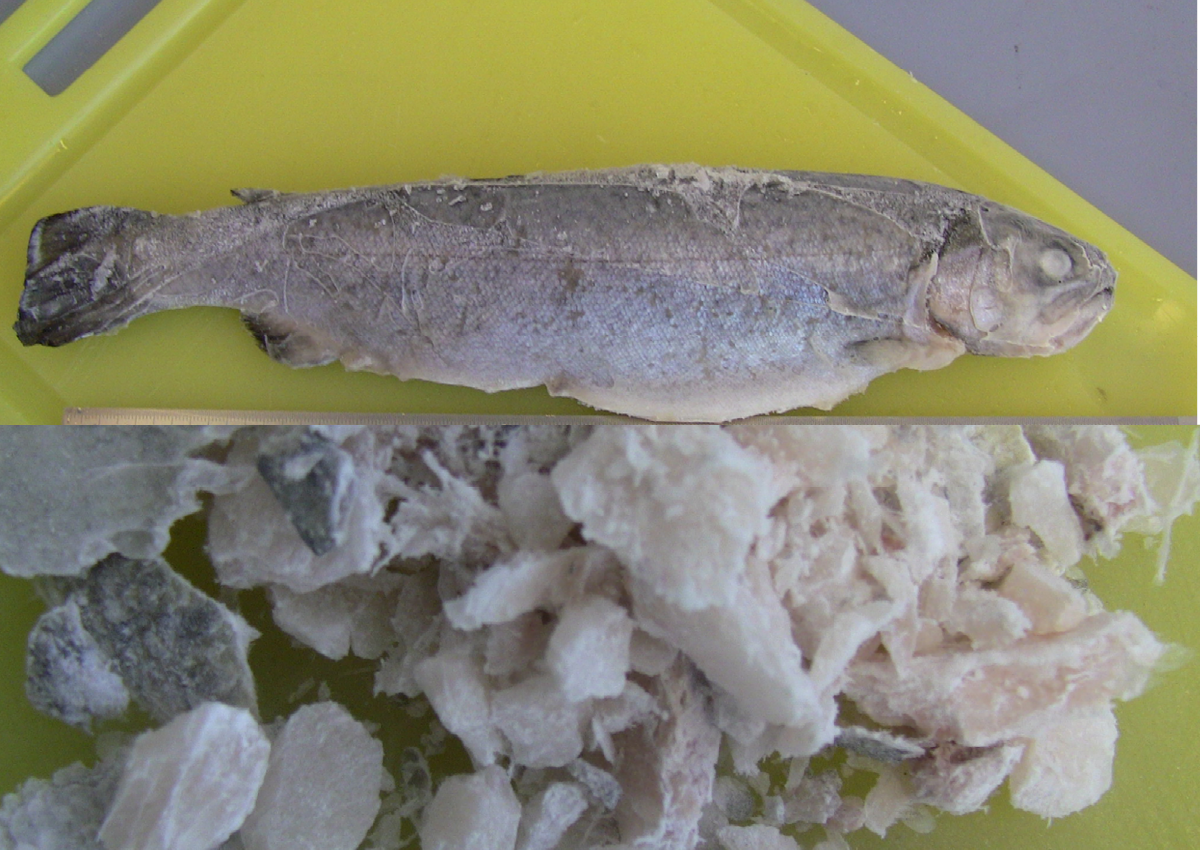
The feed size is the original particle size of the sample. For choosing a suitable mill, it makes a great difference whether large samples, like a whole fish, or small particles, such as grain kernels, are to be homogenized. The homogenization of a complete fish is a challenge; scales, skin and bones are fairly resistant to size reduction so that the sample still contains larger pieces after grinding in most mills (e. g. fresh fish in a knife mill). A high fat content makes the process more difficult, as fatty particles stick together to form large lumps which block the mill and keep the sample inhomogeneous. Freeze-drying the fish and grinding it in the Cutting Mill SM 300 help to solve the problem. 125 g (4 fishes, pre-cut once) of carp or turbot were pulverized in the SM 300 at a speed of 3,000 min-1, using a V-rotor which also cuts the scarp and fish bones. The cyclone was employed to cool the sample. After 2 min of grinding with a 0.75 mm bottom sieve, a particle size of 0.75 mm is obtained without significant heat-built-up.
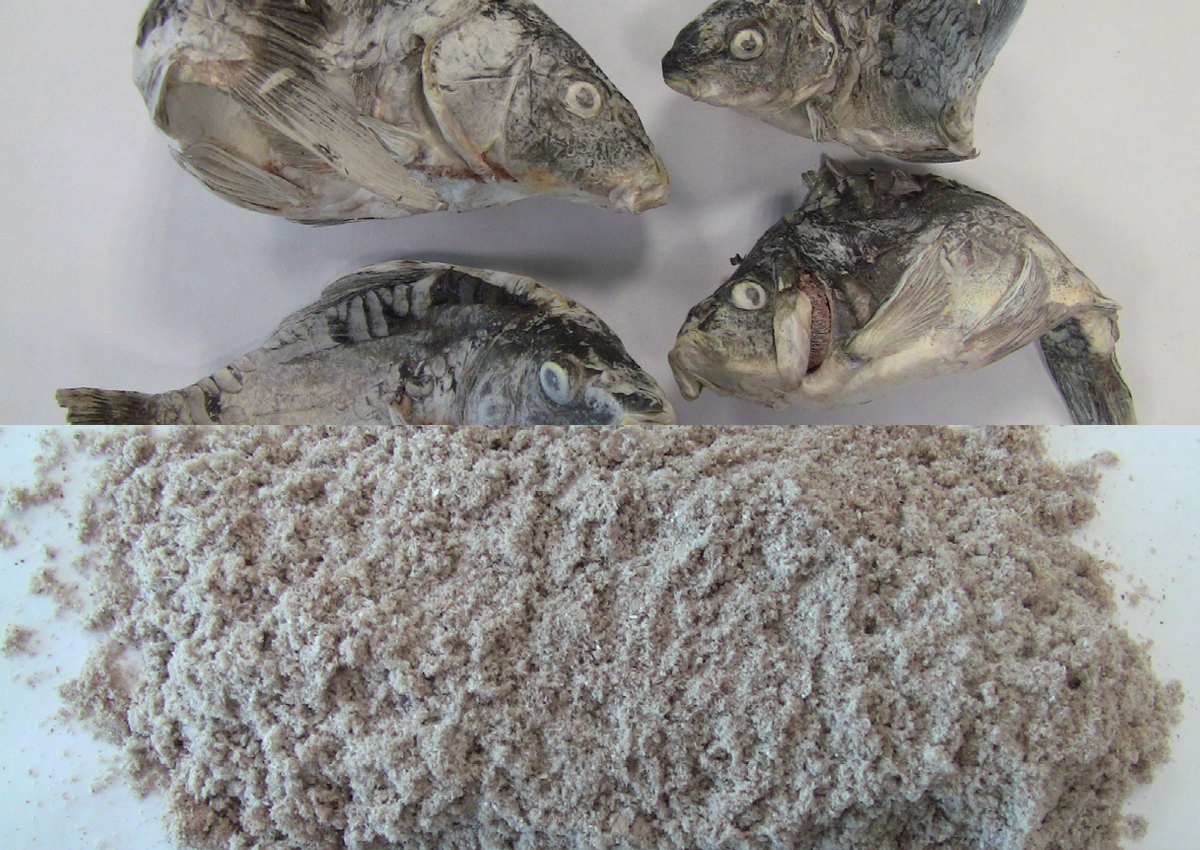
Another example for large sample pieces is cocoa cake. 1 kg with sample pieces of up to 80 mm can be easily homogenized to a fineness < 10 mm in the Cutting Mill SM 300 using a 10 mm bottom sieve and the parallel section rotor at 1,500 rpm for 1 min.
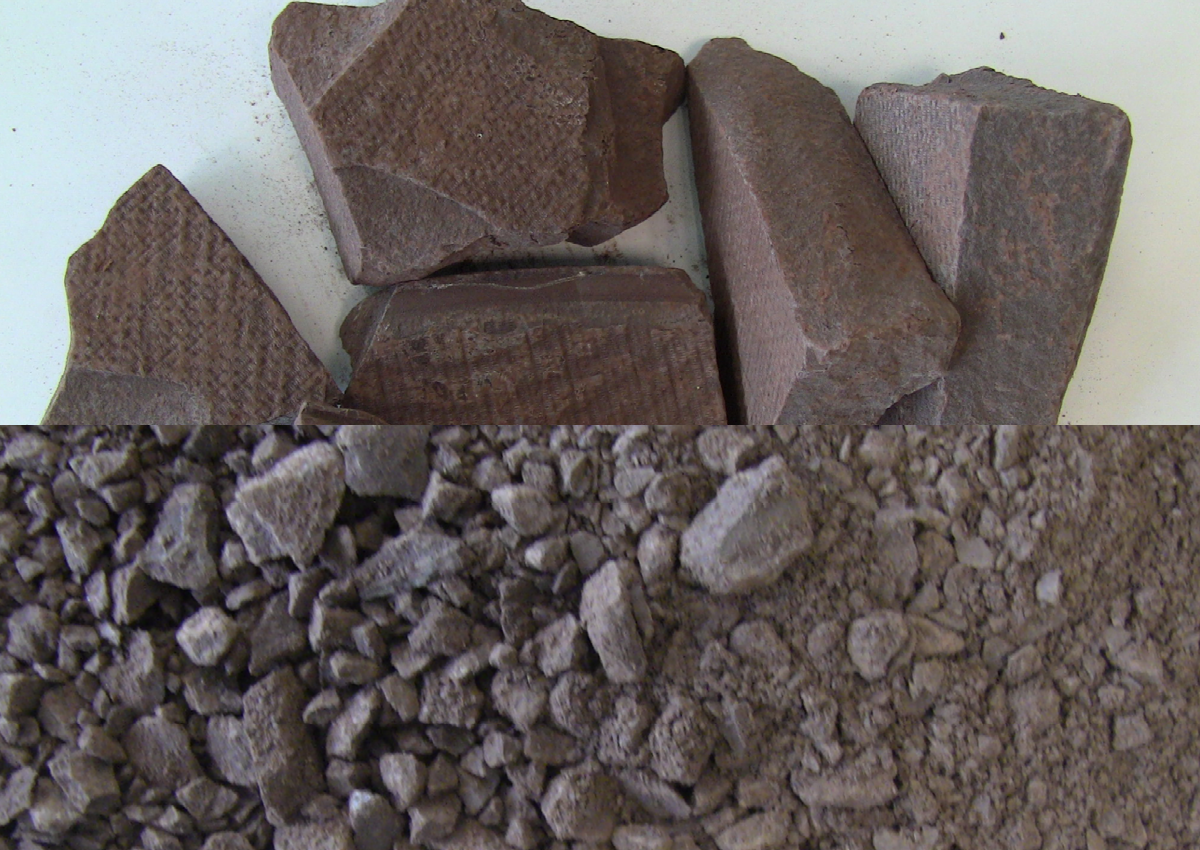
Rock salt not only consists of sodium chloride but may also contain other minerals and silicates. To analyze the composition of salt, the sample needs to be sufficiently homogenized, considering that larger lumps of rock salt are usually very inhomogeneous. The element concentrations in salt are typically very low so that quantities in the kilogram range are required for sample preparation. In principle, a cutting mill can cope with large quantities and sample pieces, but wear would have a much greater impact than in a rotor beater mill, as the cutting bars of the cutting mill are not designed to process large amounts of abrasive materials. With a rotor beater mill, charges of several kilograms can be pulverized easily. A distance rotor is recommended to reduce frictional heat. Thanks to a 5-L collecting vessel, 5 kg of sample with a feed size up to 25 mm is pulverized in one run at a speed of 10,000 rpm in the SR 300. The complete sample is reduced to a final fineness of <200 µm.
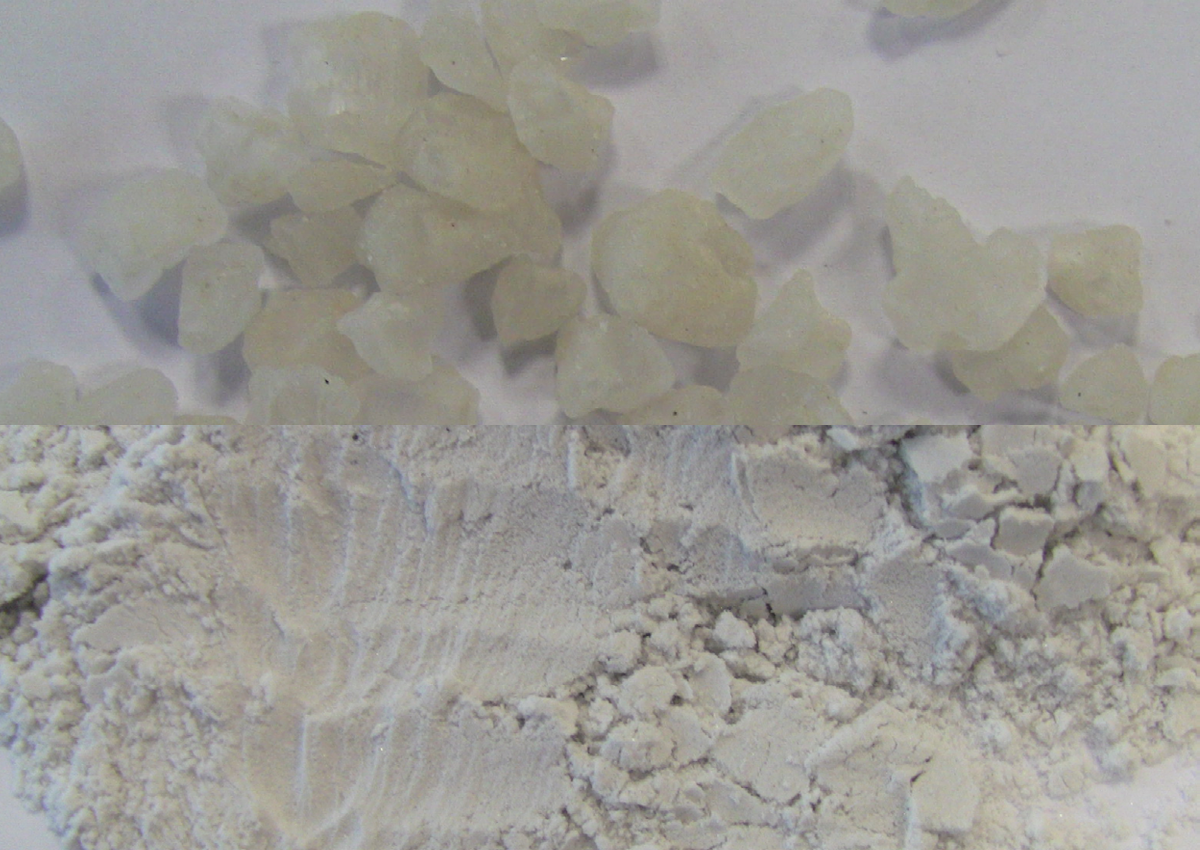
For some analyses, large sample amounts are required to detect traces of analytes or to find clusters, e.g. of mycotoxins or GMO. Mycotoxins are produced by fungi, which form clusters in a sample. Open systems with an inlet and outlet, like rotor mills, accept large feed quantities of bulk material and are therefore ideally suited for sample preparation prior to mycotoxin or GMO analysis.
The first step is the preliminary size reduction of a representative amount of, for example, 2 kg per ton of nuts with the Cutting Mill SM 100 to a particle size of 3 mm. The sample is then divided into representative sub-samples with the help of the Rotary Tube Divider PT 100 which provides a very high division accuracy.
The subsequent fine size reduction is ideally carried out in the Ultra Centrifugal Mill ZM 300. For the processing of hazelnuts, the use of distance sieves is recommendable which have been specially developed for grinding temperature-sensitive, brittle materials. As mycotoxins are lipophilic, the grinding process should be as gentle as possible to avoid the release of fat from the sample. A cyclone helps to quickly discharge the sample from the grinding chamber and provides cooling by generating an air stream. A fineness of 300 µm is sufficient for the subsequent extraction of the mycotoxins from the sample. In the same way, soy beans can be processed.
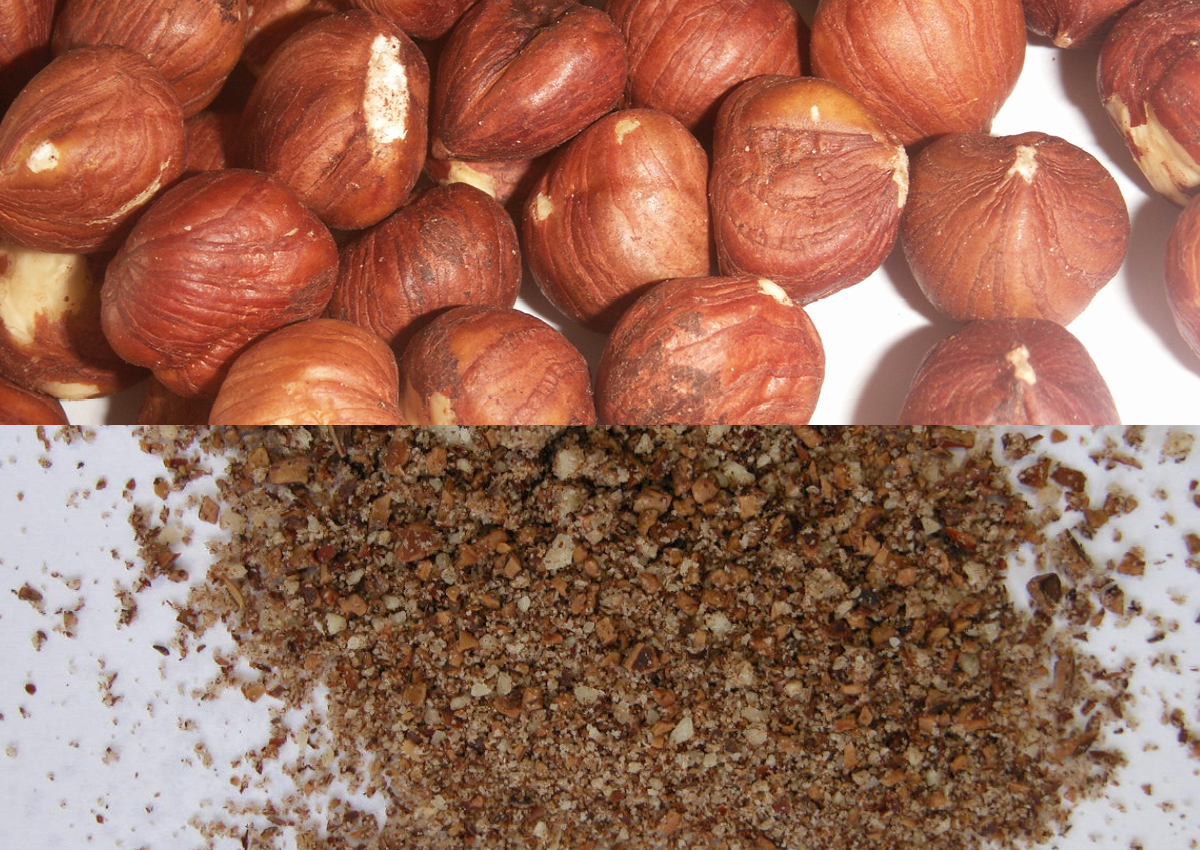
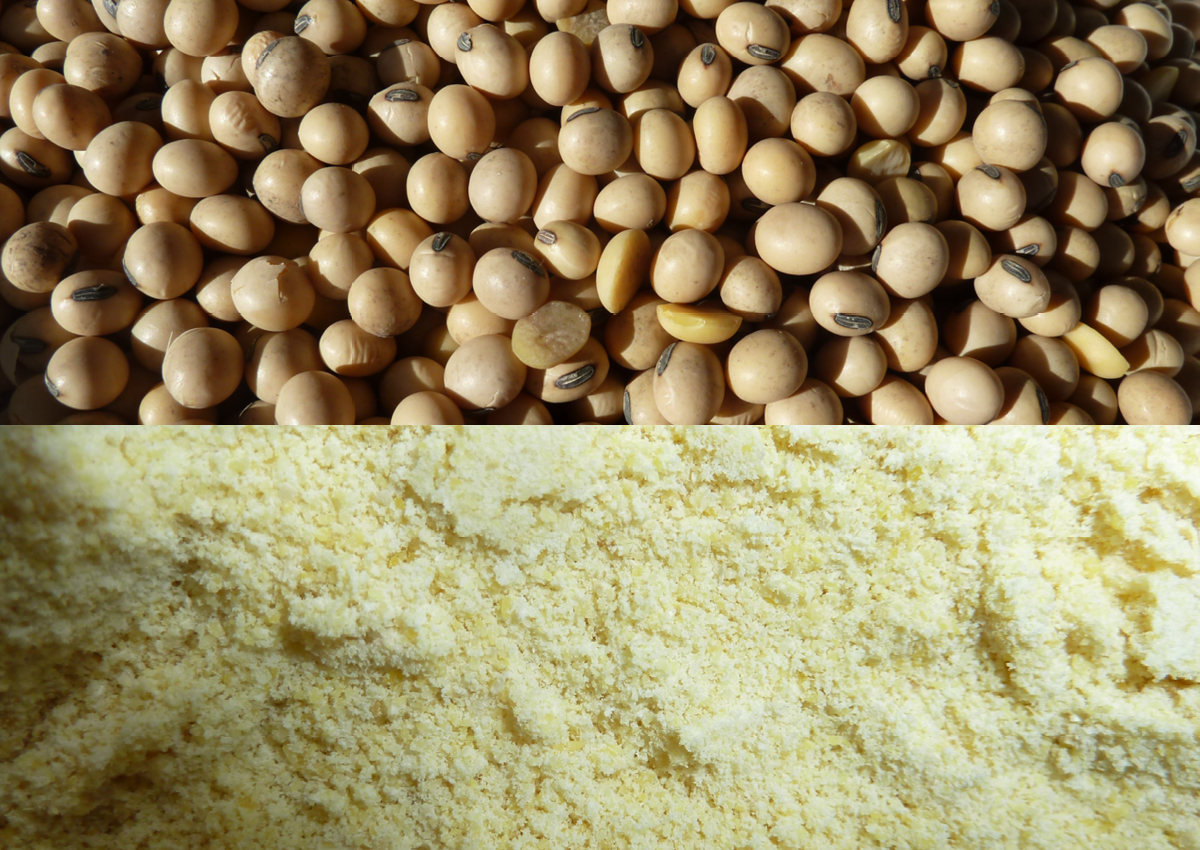
If a sample is already fairly homogeneous or if the subsequent analysis deals with PCR, only small sample volumes are required. For this type of application, ball mills are often the ideal choice.
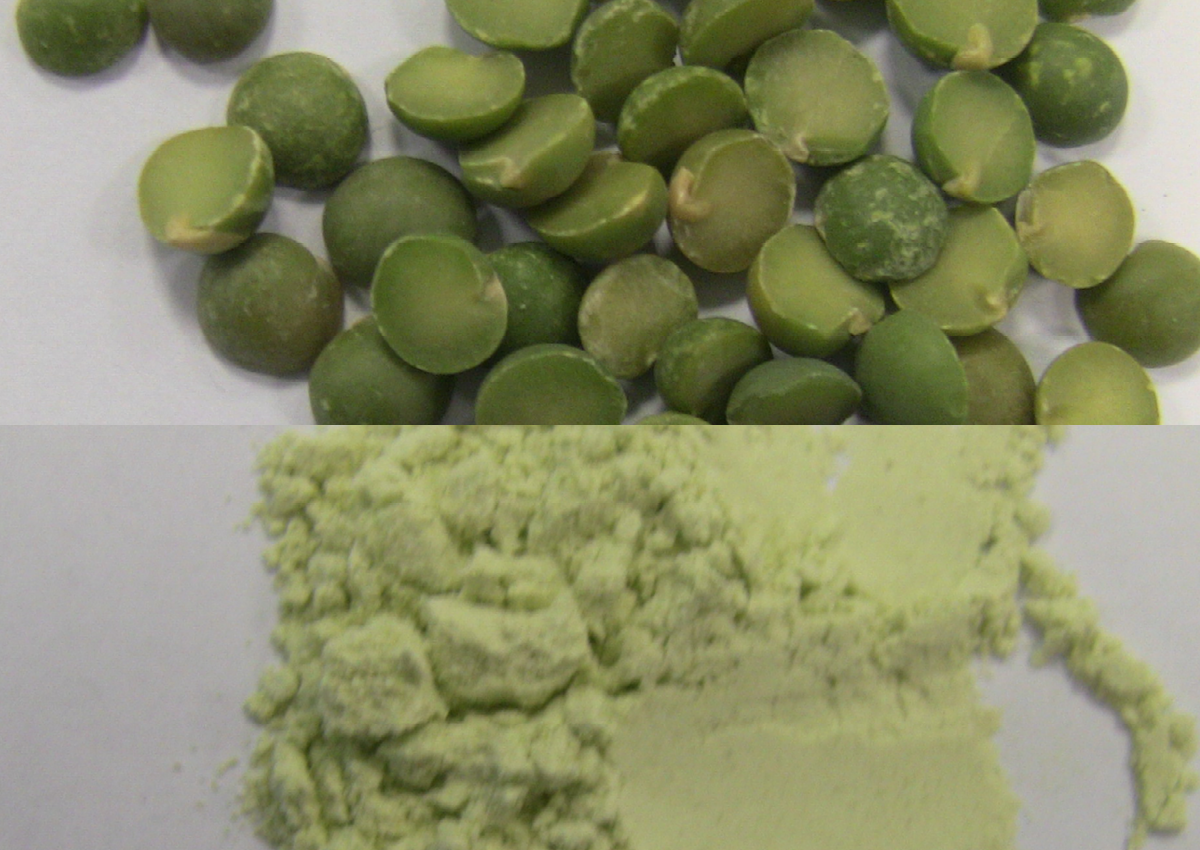
An allrounder like the Mixer Mill MM 400 features two grinding stations and accepts sample amounts up to 20 ml. It pulverizes, for example, 6.5 g dried peas to a fineness of 0.4 mm in 30 s using a 50 ml stainless steel grinding jar and 1 x 25 mm grinding ball.
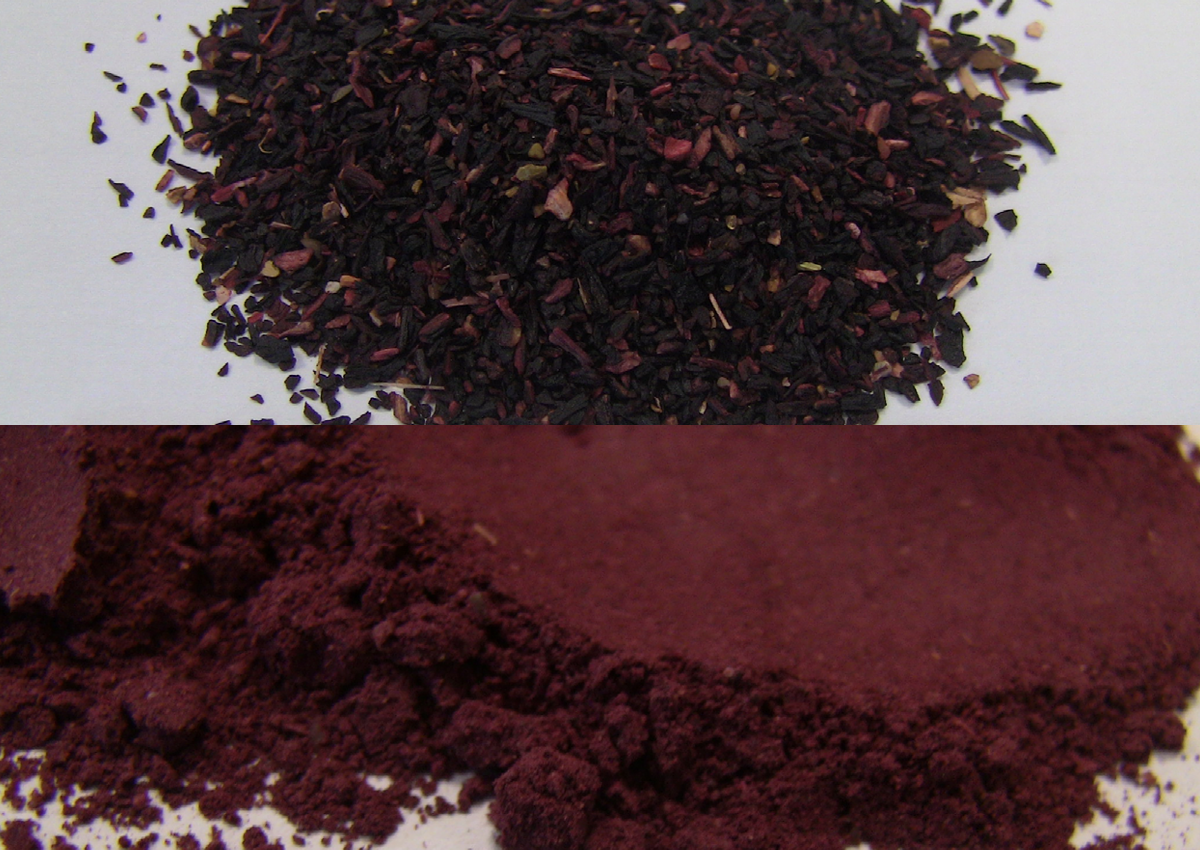
In a similar way, 8 g dried hibiscus is pulverized within 2 min to 100 µm. In 50 ml steel jars, usually a 25 ml ball is used. A rule of thumb is: the grinding ball needs to be three times larger than the biggest sample piece for efficient sample crushing. Therefore, a particle size of about 8 mm can only be effectively crushed in the 50 ml jar which leaves enough room for a 25 mm ball. The MM 400 also accommodates adapters, e.g. for single-use vials, to process samples with particle sizes of 3 mm max.
The MM 400 can be equipped with a variety of adapters, accepting, for example, 2 ml single-use vials, 2 ml steel vials or 5 ml steel jars. Thus, homogenization can be done in batches of 8 or 20 samples, which is a benefit for PCR analysis of, e.g., a single grain or pea. Here, 2 x 7 mm to 10 mm grinding balls made of steel or tungsten carbide are added to each tube. Single-use vials have the benefit of preventing cross contamination.
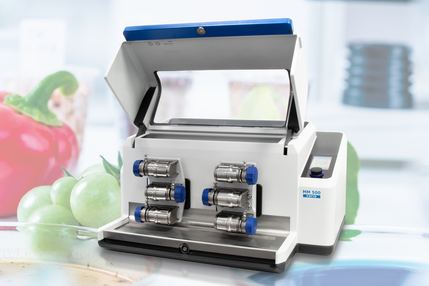
The Mixer Mill MM 500 vario allows for higher sample throughput thanks to 6 grinding stations for grinding jars or adapters. In total, 50 x 2 ml single-use tubes or stainless steel jars or 24 x 5 ml stainless steel jars can be used per batch.
Food & Beverages | Verder Scientific
실내 온도에서 식품 분쇄하는 응용 프로그램 비디오
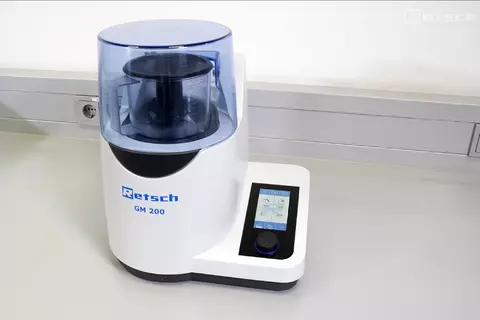
Knife Mill GRINDOMIX GM 200 이용한 식품 샘플 균질화
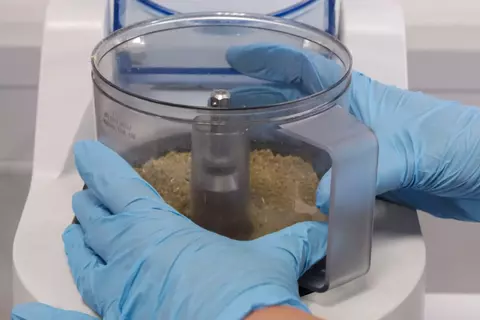
GM 200 사용하여 대마초의 동성화
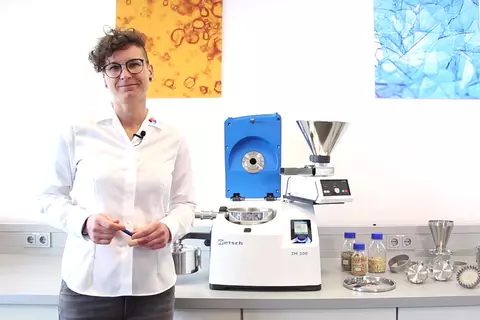
고속 원심 분쇄기 ZM 300

고속 원심 분쇄기 ZM 200을 사용하여 꽃 부스의 밀링
Cryogenic grinding to embrittle samples and preserve volatile ingredients
젖은 또는 젖은 샘플을 밀어내는 것은 나이프 밀 사용하여 차단 및 재료 손실을 피하기 위해 최선입니다. 냉각 샘플 재료는 붕괴 행동을 향상시키고 부드러운, 단단한, 붙은 및 지방 식품의 쉬운 분쇄를 허용합니다. 또한 터펜과 같은 유발성 재료를 보존하는 것이 좋습니다. 액체 질소 또는 건조 얼음을 사용하여 cryogenic 밀어링은 효과적이지만, 물질은 젖지 않아야하며 냉각제는 폐쇄 된 밀어링 도구에서 사용해서는 안됩니다. cryogenic 밀어링은 나이프 밀, 로터 밀 또는 볼 밀에서 수 있습니다. 일반적으로, 지방 / 붙은 재료의 완전한 분쇄는 cryogenic 밀어링으로만 가능합니다.
Click on the chapters to explore!
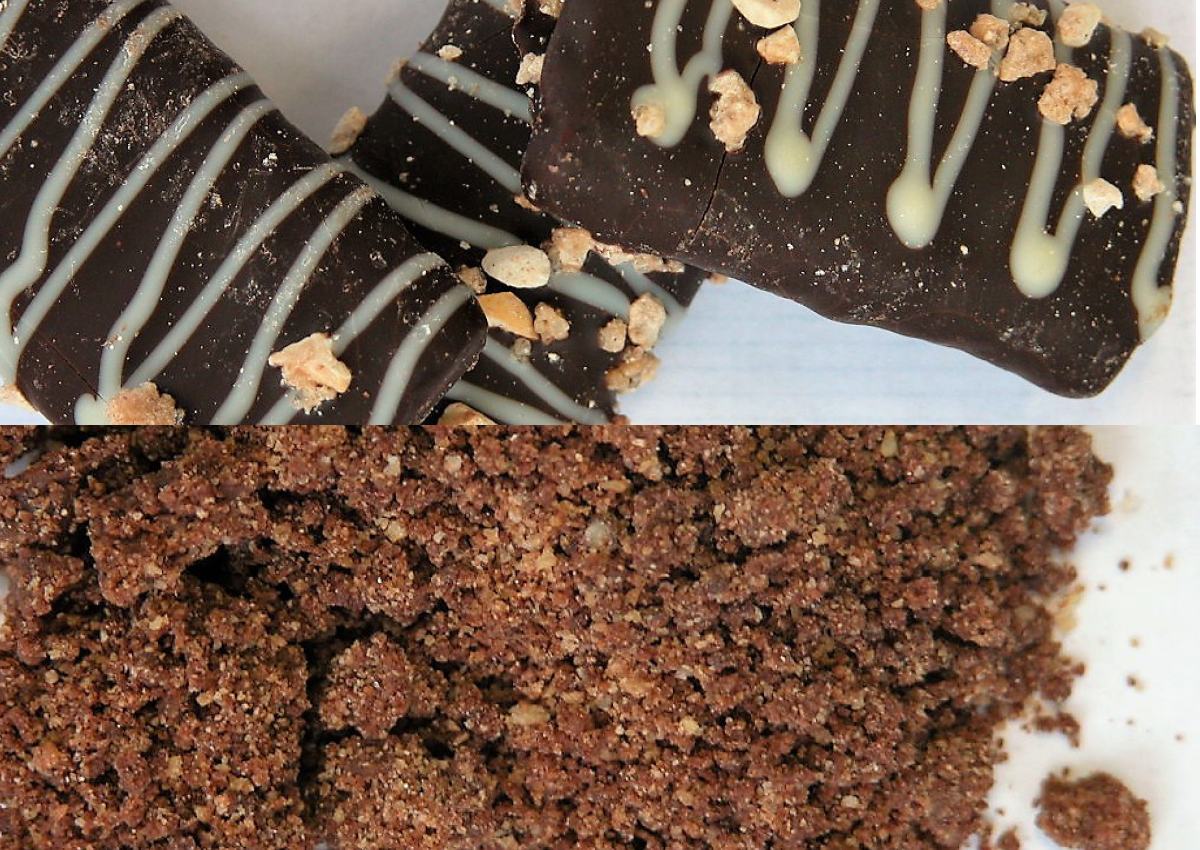
심지어 초콜릿은 실내 온도에서 가공할 때 파스타로 변하더라도 성공적으로 크리오겐으로 분쇄할 수 있습니다. 샘플은 1 : 2의 비율로 건조 얼음과 혼합됩니다. 몇 분 후에는 철저하게 냉각됩니다. 건조 얼음은 샘플을 항상 차갑게 유지합니다. 나이프 밀이밀 크리오겐적인 밀링을 수행할 때 어떤 플라스틱 액세서리를 사용하지 않도록 주의해야합니다. 이러한 액세서리는 -20°C 냉장고 또는 액체 질소로 가득 찬 욕조에서 온 샘플을 손상시킬 수 있기 때문입니다. LN<2>의 직접 사용은 구멍이 있는 덮개로 권장되지 않습니다.
일반적으로 내부 gryo 링크에서 내부 gryo 링크를 제어해야하는 경우, 내부 gryo 링크는 LN2를 사용하여 냉각제로 내부 gryo 링크를 직접 샘플링해야합니다. 일반적으로 내부 gryo 링크에서 내부 gryo 링크는 샘플링크 500을 사용하여 냉각제로 LN2를 사용하여 내부 gryo 링크를 직접 샘플링해야합니다. MM 400에서, 샘플과 샘플링크가 샘플링크를 먼저 열고 샘플링크를 단단히 닫습니다. <12 내부 grio 링크는 샘플링크의 내부 링크를 닫습니다.
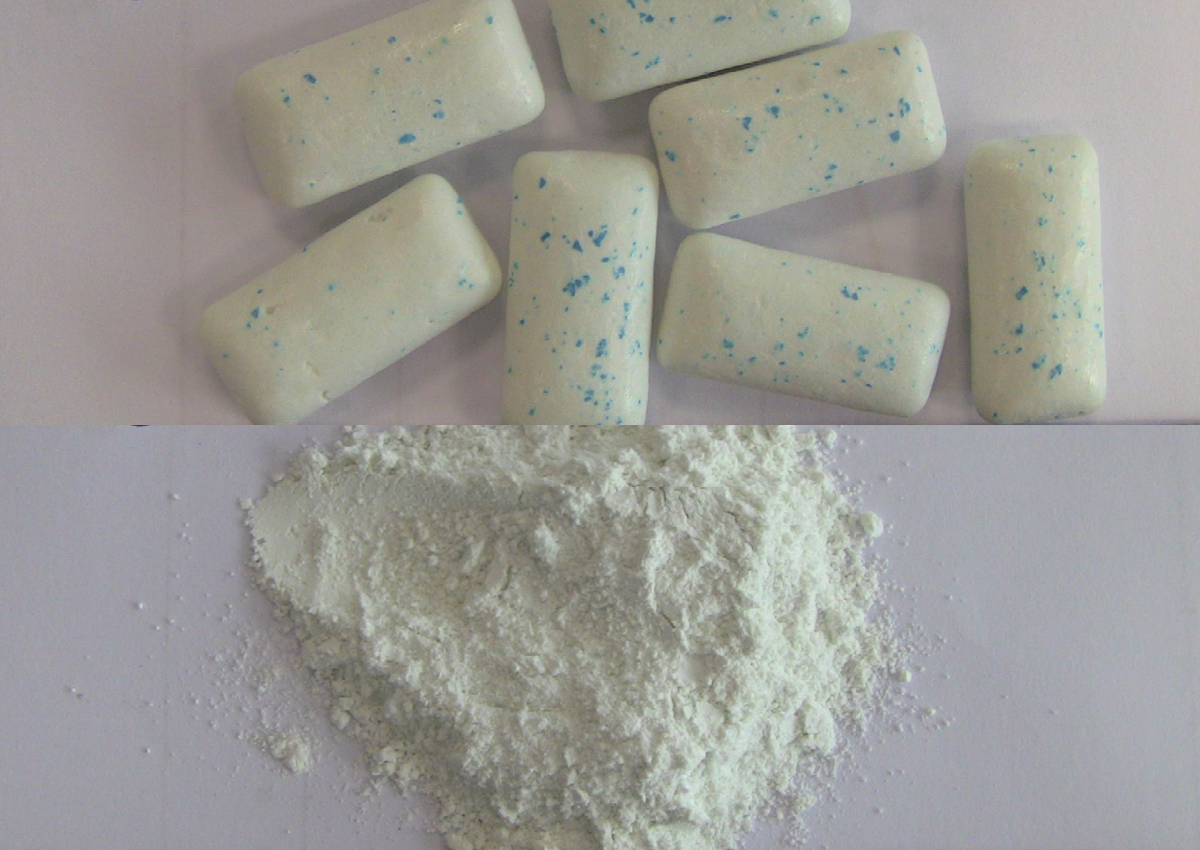
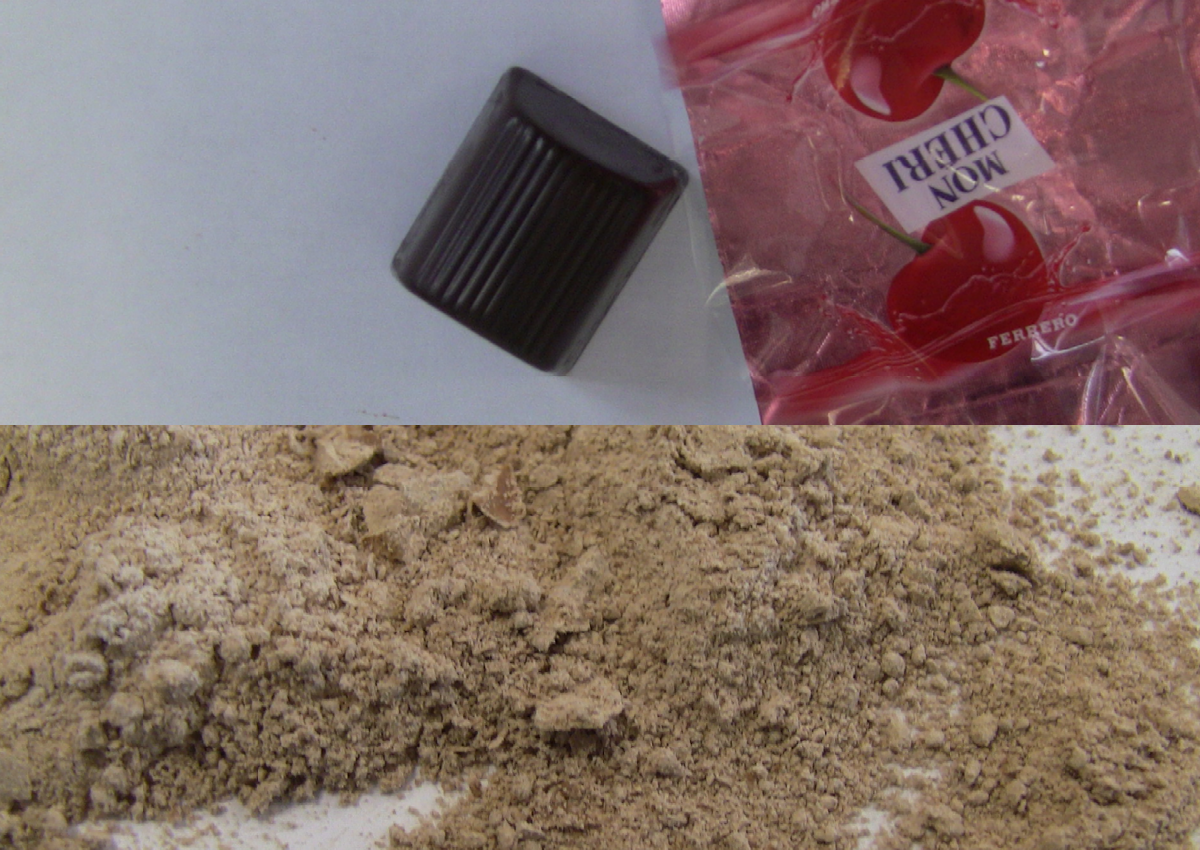
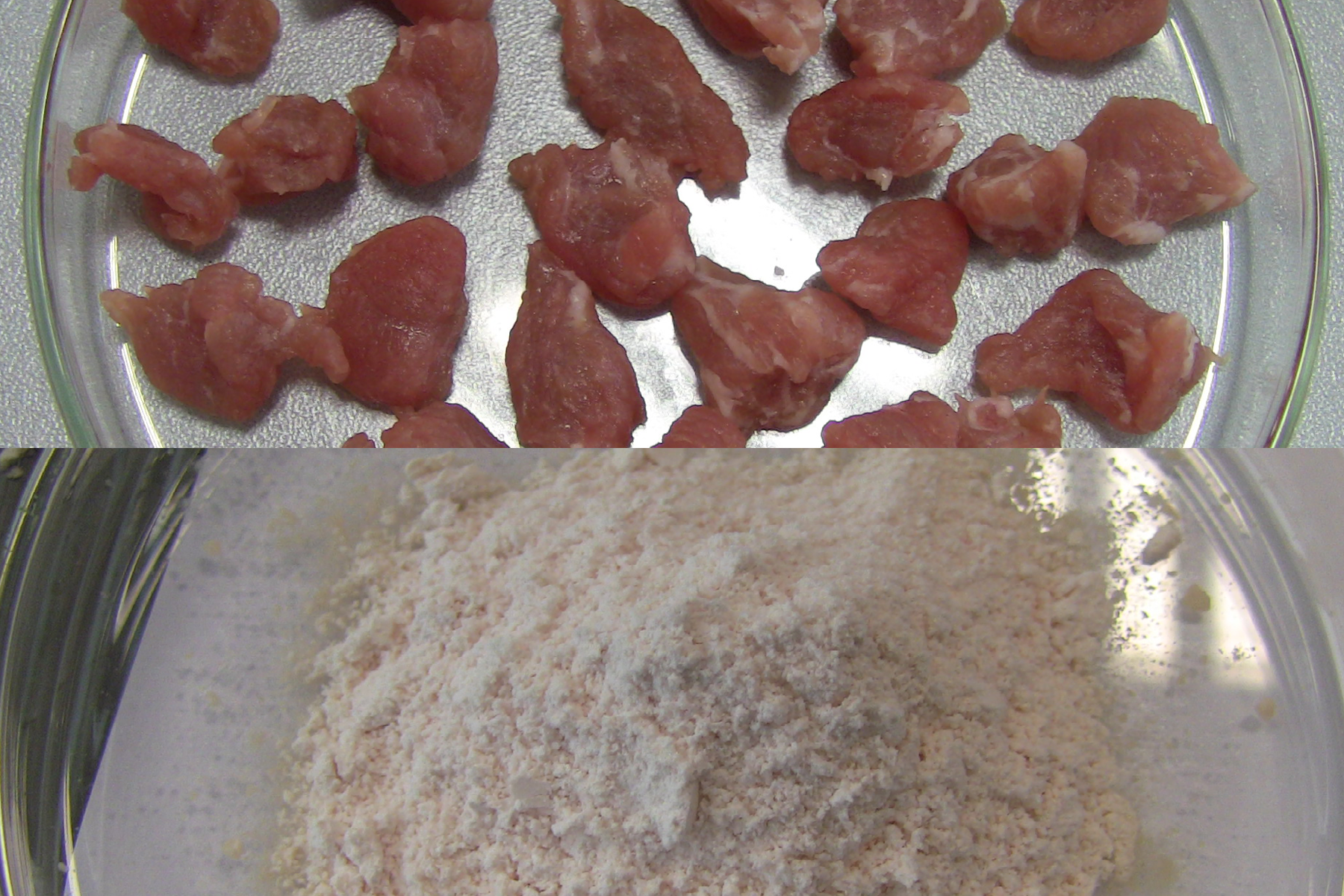
ZM 300>과 같은 초중심 샘플 밀은 혼합기 밀보다 더 큰 샘플 볼륨을 수용합니다. 샘플은 LN2로 가득 찬 컨테이너에 직접 몰입되기 전에 지속적이지만 천천히 강철 스푼으로 밀판에 공급됩니다. 샘플이 1mm 미만의 건조 얼음 대신 질소보다 건조 얼음의 액체를 사용하면 샘플을 냉각하는 것이 좋습니다. 샘플이 LN 샤워 욕조에서 샘플을 가진 물고기보다 건조 샘플을 밀에 전송하는 것이 훨씬 쉽습니다.
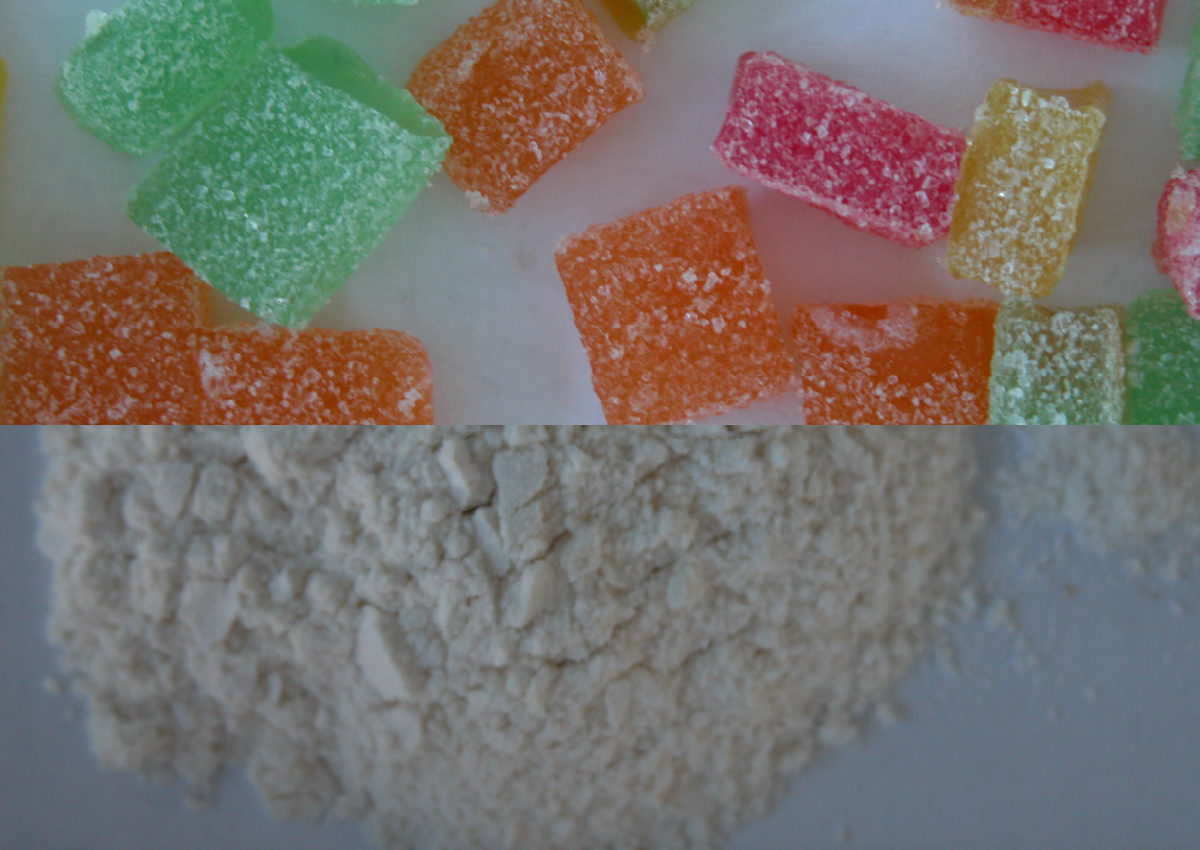
SM 300/link>과 같은 절단 블렌드는 초중심 블렌드 또는 나이프 밀 더 큰 공급 크기를 처리하는 데 특히 적합합니다. 액체 질소와 건조 얼음 모두를 사용할 수 있습니다. 부드러운 샘플 재료는 상당히 어렵습니다. 따라서, 6 디스크 로터의 사용은 더 큰 냉동 샘플 조각을 분쇄하는 것이 좋습니다. 또한 냉동 닭고기 부분을 포함하여 뼈를 포함하는 같은 이성 샘플을 사전 절단하는 데 적합합니다. SM 300 700rpm의 감소 속도와 20kW의 모터 피크 전력은 큰 냉동 샘플 조각을 분쇄하는 데 유리합니다.
애플리케이션 비디오 식품 크리오겐 밀링
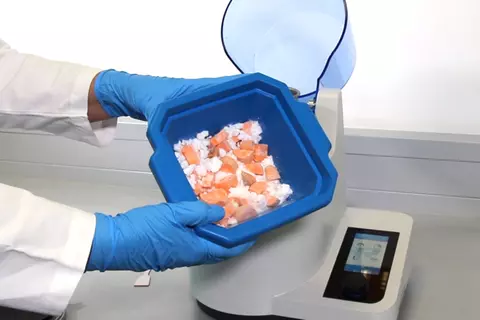
나이프 밀 GRINDOMIX GM 200 사용하여 크리오겐 밀링
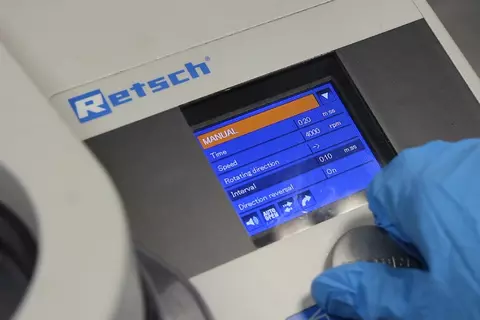
칼 밀 GRINDOMIX GM 300
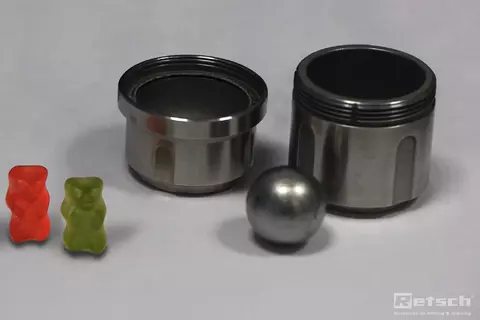
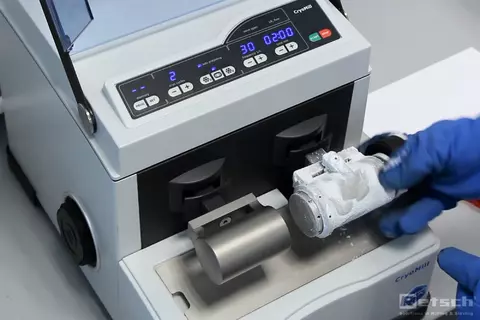
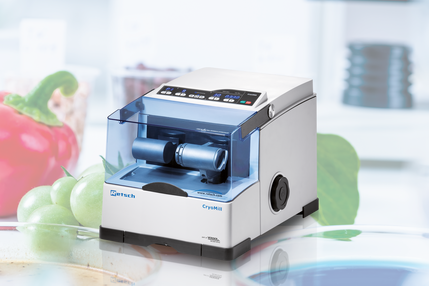
CryoMill 사용한 크리오겐 밀링
철저한 동성화를 통해 표준 편차를 줄이는
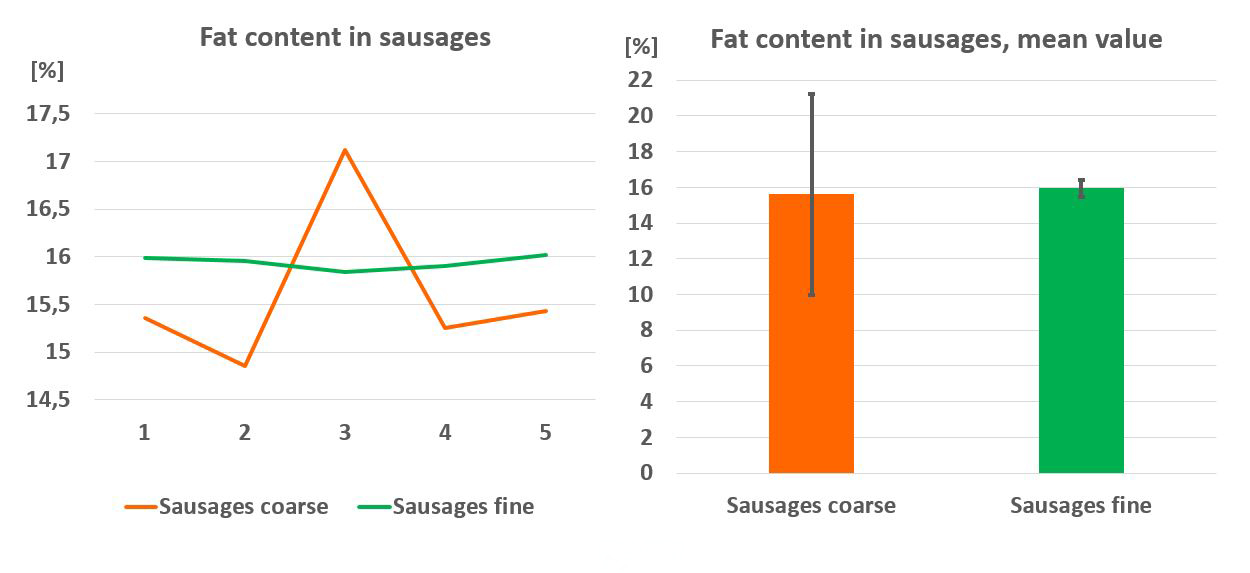
예: 지방 분석
표본 homogenization는 재현 가능한 결과를 보장합니다. 대략 밀린 샘플의 표준 편차는 일반적으로 철저하게 분말된 샘플보다 더 큰 변화를 보여줍니다. 이것은 다음 예에서 볼 수 있습니다: 4-5 mm 입자와 0.5 mm 입자와 homogenized 샘플은 그들의 지방 함량을 5 번 연속으로 마이크로파 유도 건조와 NMR 스펙트로스코피와 결합하여 분석되었습니다. 각 측정에 대하여, 4 g 샘플은 2.5 분 이내에 건조되고 1 분 이내에 분석되었습니다. 거친 샘플의 지방 함량은 더 작은 샘플보다 더 다양합니다. 첫 번째 분의 지방 함량은 14.85 %에서 17.12 % 사이의 범위 내에서 측정되었으며 표준 편차는 0.88 %로 감소되었습니다.
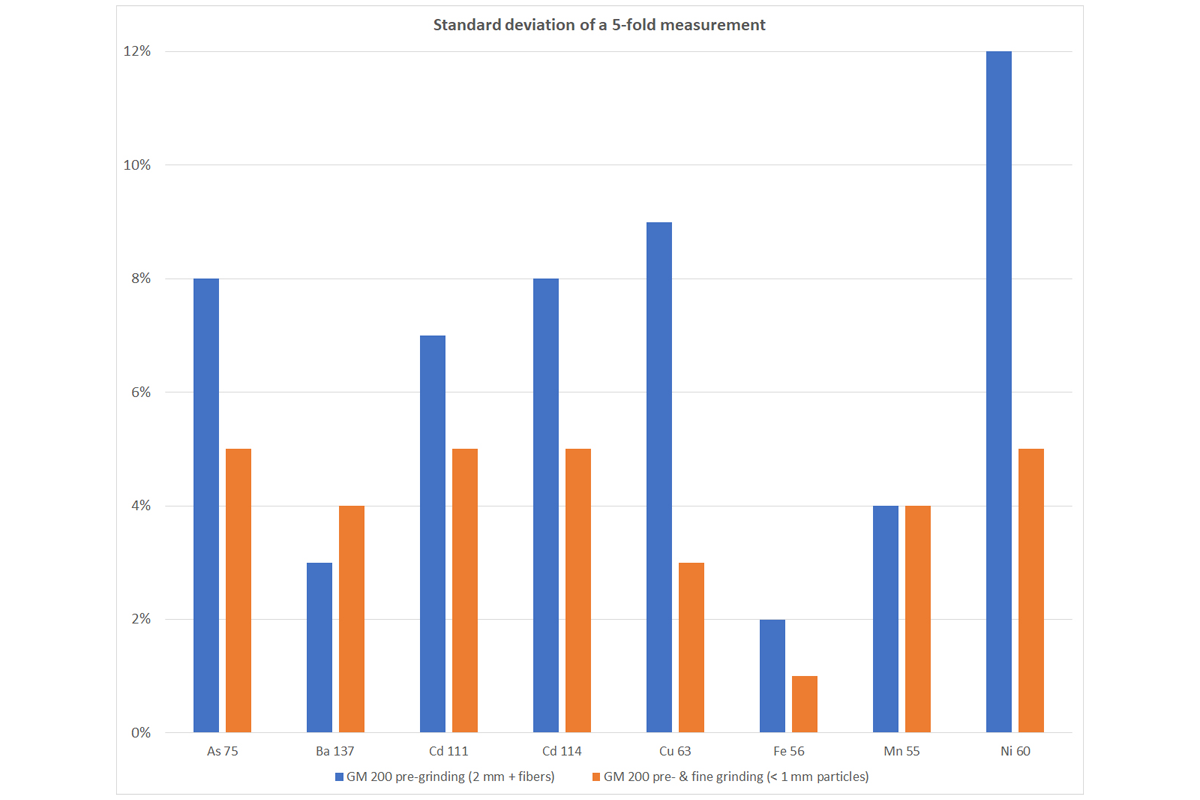
무거운 금속 함량의 결정
큰 4 개의 무거운 금속에 대한 유사한 효과가 표시됩니다. 만약 차 샘플이 2 mm의 입자 크기로 밀린다면 (장장섬유를 포함하면), 표준 변형은 입자 < 1 mm 및 섬유가없는보다 더 큰 표준 샘플입니다. 미세 밀린 샘플에서 표준 편차는 1%에서 5% 사이에 있으며, 더 거친 샘플에서는 2%에서 12% 사이에 있습니다. 따라서, 동성화에 필요한 추가 시간은 신뢰할 수 있고 재현 가능한 결과를 보장함으로써 보상됩니다.
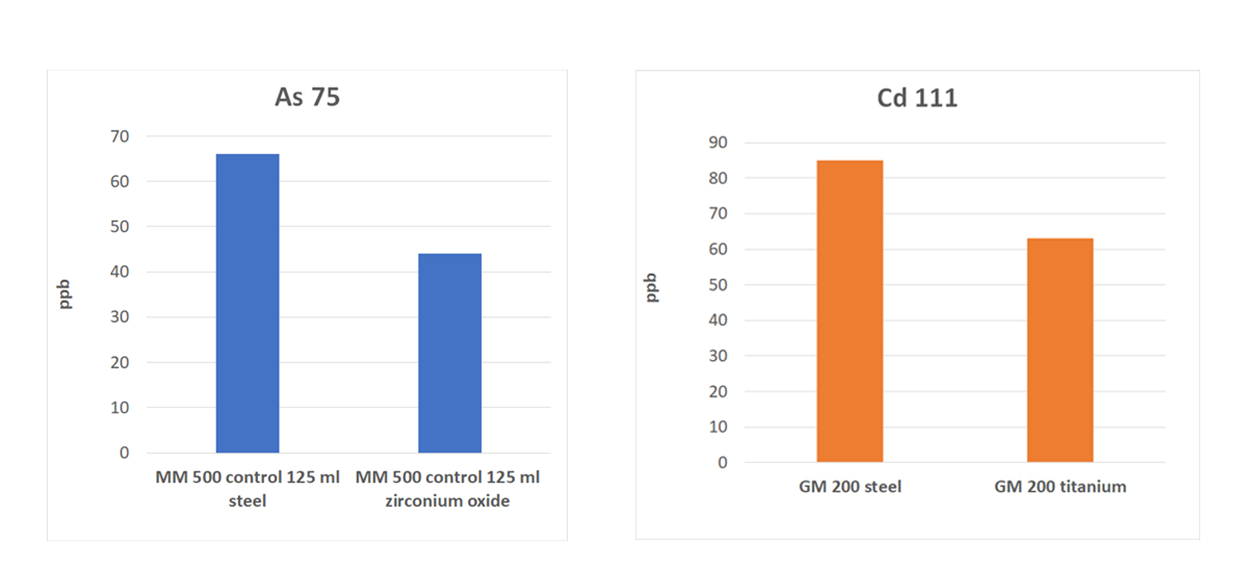
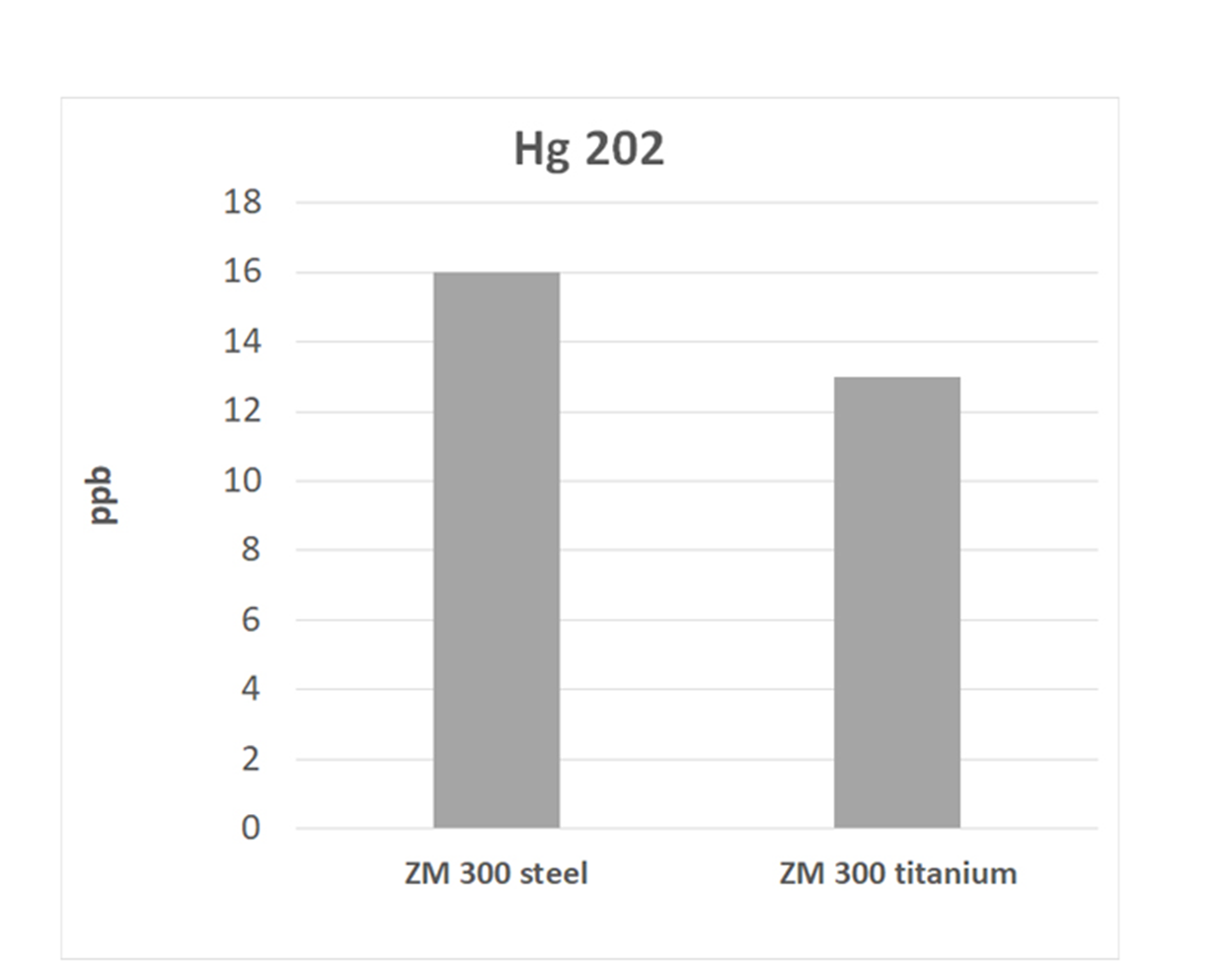
기계적 크기의 감소는 나중의 분석에 영향을 미칠 수 있습니다. 식품 분석을위한 밀링 도구를 선택할 때, 밀링 도구의 재질의 영향을 고려해야합니다. 밀링 도구는 밀링의 유형에 따라 다른 재료로 사용할 수 있습니다. 그 결과로, 강철 또는 지르코늄 산화물과 같은 재료의 흔적이 샘플에서 발견 될 수 있습니다.이 경우, 티타늄 또는 지르코늄 산화물과 같은 중립 재료로 만든 도구를 사용하는 것이 더 좋습니다. 그러나, 강철 장비의 중량 금속 함량이 조사 대상이면.
NIR 분석을 위한 높은 샘플 처리량
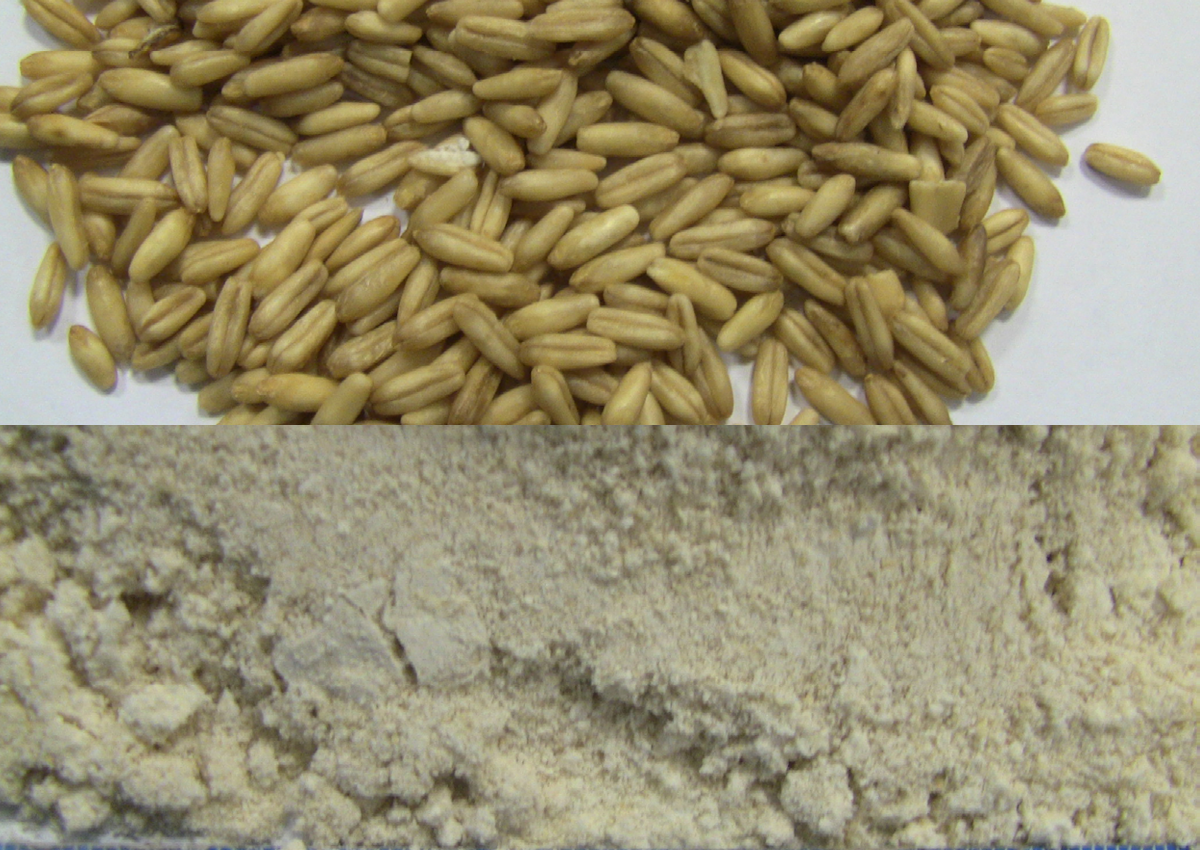
NIR 샘플은 단백질 함량, 습도, 지방 및 석양을 동시에 결정하는 일반적인 분석 방법입니다. 따라서, 그것은 높은 샘플 처리량과 큰 유연성이 필요할 때마다 사용됩니다. 샘플 준비의 필요성에 대해 많은 논의가있다. NIR 분석 전에 샘플 준비의 장점은 무엇입니까? NIR 방사선의 침투 깊이는 최대 1mm이며, 결과적으로 측정 결과에서 과도하게 나타납니다. 이것은 샘플이 완전히 균일화되지 않으면 샘플의 함량을 파악할 수 없습니다. 그러나 샘플이 곡물이나 씨앗과 같은 다른 층으로 구성된 경우, 단지 1mm 이하의 층만 분석됩니다.
QuEChERS에 의한 농약 추출
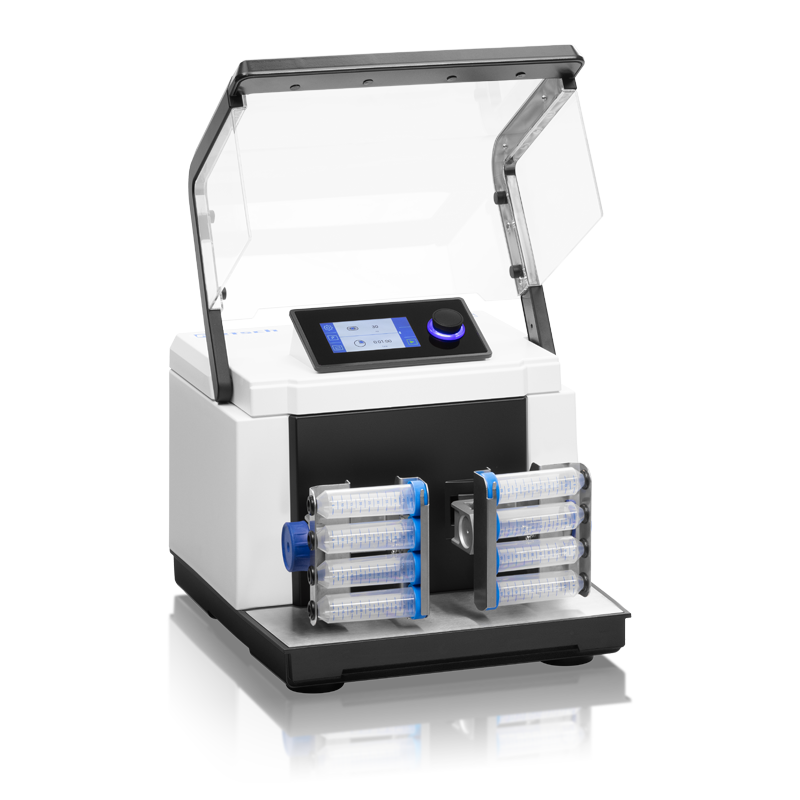
이 QuEChERS(Quick, Easy, Cheap, Effective, Rugged, and Safe)는 식품 및 농업 제품에서 농약 잔류물의 추출 및 정화에 사용되는 샘플 준비 방법으로, 과일과 채소에서 다수의 농약 잔류물의 분석을 위한 간단하고 빠르고 비용 효율적인 방법을 제공합니다. 이 절차는 유기 용액으로 샘플 추출을 포함합니다. Mixer extract inducing phase separation and cleaning of the extract.
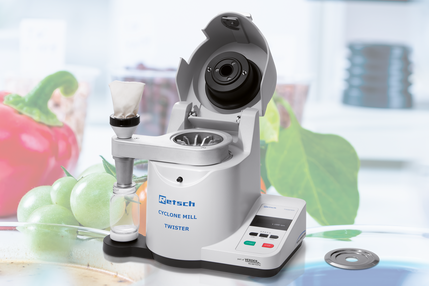
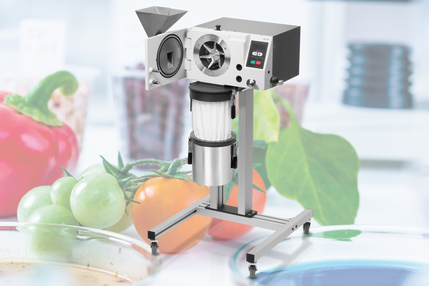
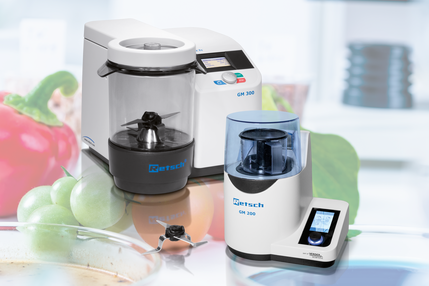
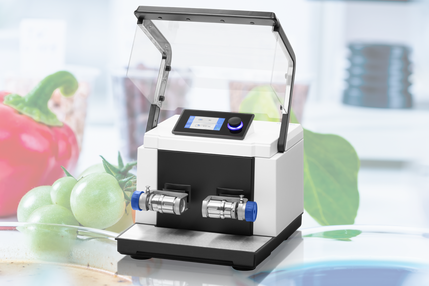
식품 및 사료 샘플을 동조하는 데 적합한 밀

시브 분석을 사용하여 들어오는 상품 검사
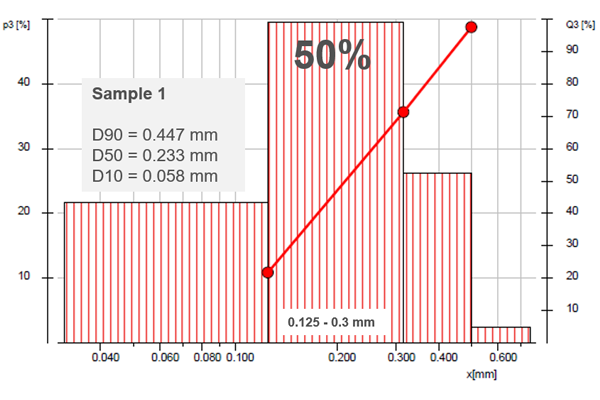
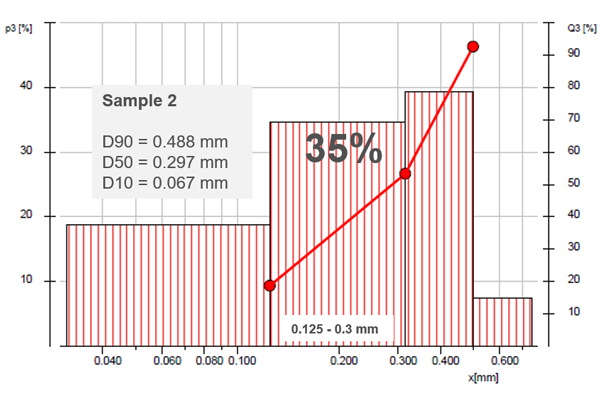
시브 분석은 곡물 샘플의 입자 크기 분포를 결정하는 데 널리 사용되는 방법입니다. 곡물 잎의 들어오는 검사에 특히 소금과 먼지 분수가 중요합니다. 이것들은 뮤슬리의 혼합 및 포장 프로세스에 부정적인 영향을 미칩니다. 먼지 분수가 미만 500 미크로로 구성되어 있으며, 용접 코팅에 붙여서 포장물의 밀봉을 방지합니다. 또 다른 부정적인 효과는 소위 '분리된' 시리얼 생산 중에 발생합니다. Crunchies는 치브 분석으로 잎을 개별 분수로 분리하면 신뢰할 수있는 품질 평가를 허용함으로써 꿀을 추가함으로써 제품에 대한 이러한 부정적인 영향을 완화합니다.
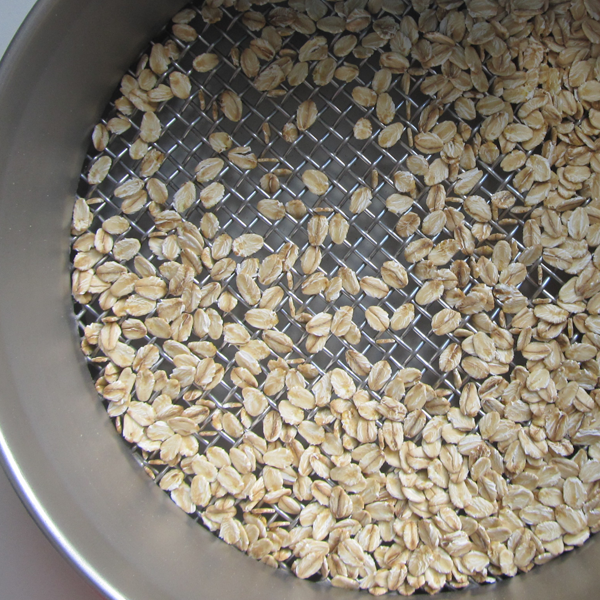
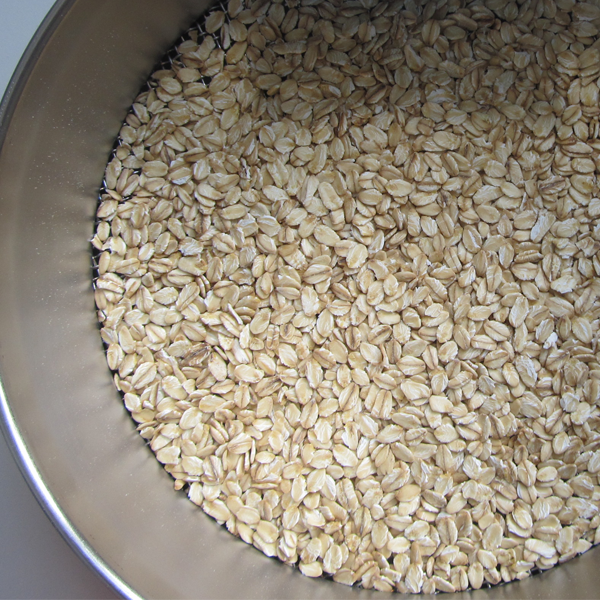
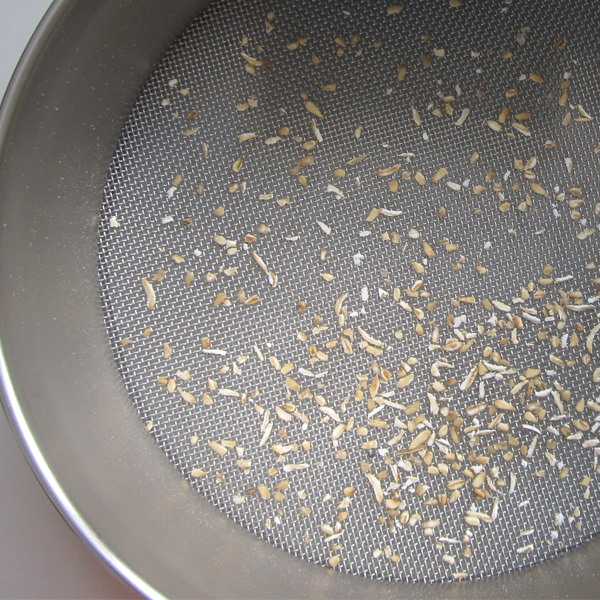
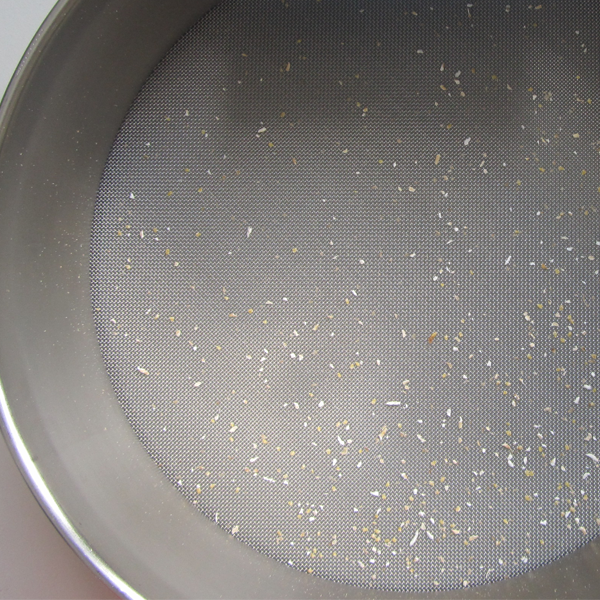
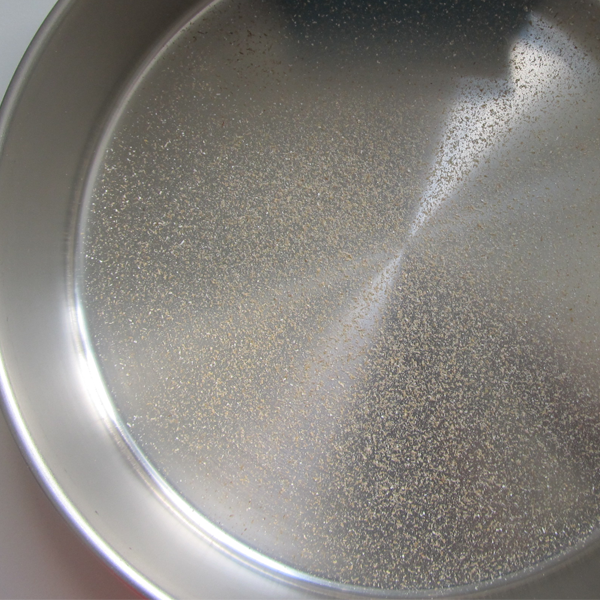
시트 셔커 AS 200 control 사용하여 곡물 잎의 품질 제어. 시험용 분체 200 x 50 mm; 메쉬 크기: 500 μm - 4 mm; 폭: 1 mm; 시간: 5 분
Verder Scientific solutions
입자 크기의 맛과 맛에 대한 영향
입자 크기는 식품 및 음료의 맛에 직접적인 영향을 미칠 수 있습니다. 예를 들어, 고품질의 초콜릿은 특정한 곡물 크기를 필요로합니다. 입자 크기의 중요성에 대한 또 다른 예는 커피입니다. 커피를 준비하는 데 최적의 재료 추출을 달성하는 것은 필수적입니다. 밀크 크기는 추출 속도와 시간에 상당한 영향을 미칩니다. 밀크 크기와 밀크 시간과 밀크 온도 사이의 균형이 커피의 주요 품질에 적합하지 않으면 커피가 과도하게 추출되며, 과도하게 용해진 구성 요소에서 뜨거운 맛을 얻을 수 있습니다.
커피 분말의 품질 제어 에어젯 분체기 AS 200 jet.
우리의 백서와 기사로 더 많은 통찰력을 얻으십시오.

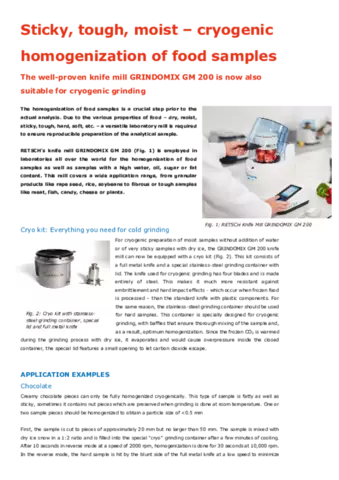
Sticky, tough, moist – cryogenic homogenization of food samples
The homogenization of food samples is a crucial step prior to the actual analysis. Due to the various properties of food – dry, moist, sticky, tough, hard, soft, etc. – a versatile laboratory mill is required to ensure reproducible preparation of the analytical sample. RETSCH’s knife mill GRINDOMIX GM 200 is employed in laboratories all over the world for the homogenization of food samples as well as samples with a high water, oil, sugar or fat content. This mill covers a wide application range, from granular products like rape seed, rice, soybeans to fibrous or tough samples like meat, fish, candy, cheese or plants.
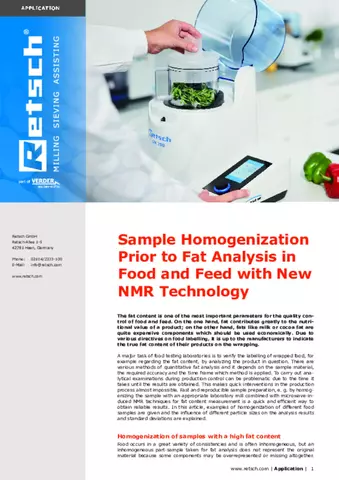
Sample Preparation Prior to Fat Analysis in Food & Feed with New NMR Technology
Thorough sample preparation with laboratory mills is a premise for reliable and reproducible results. Retsch offers mills and crushers for reproducible and fast homogenization of food and feed samples. Combined with the SMART 6 and the Oracle fat analyzers from CEM, fat analysis can be done in less than 10 min.
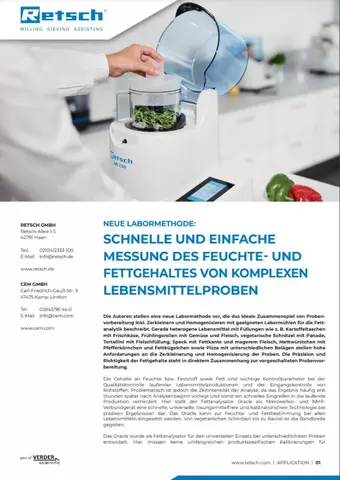
Neue Labormethode: Schnelle und einfache Messung des Feuchte- und Fettgehaltes von komplexen Lebensmittelproben
Die Autoren stellen eine neue Labormethode vor, die das ideale Zusammenspiel von Probenvorbereitung inkl. Zerkleinern und Homogenisieren mit geeigneten Labormühlen für die Fettanalytik beschreibt. Gerade heterogene Lebensmittel mit Füllungen wie z. B. Kartoffeltaschen mit Frischkäse, Frühlingsrollen mit Gemüse und Fleisch, vegetarische Schnitzel mit Panade, Tortellini mit Fleischfüllung, Speck mit Fettkante und magerem Fleisch, Mettwürstchen mit Pfefferkörnchen und Fettkügelchen sowie Pizza mit unterschiedlichen Belägen stellen hohe Anforderungen an die Zerkleinerung und Homogenisierung der Proben. Die Präzision und Richtigkeit der Fettgehalte steht in direktem Zusammenhang zur vorgeschalteten Probenvorbereitung.
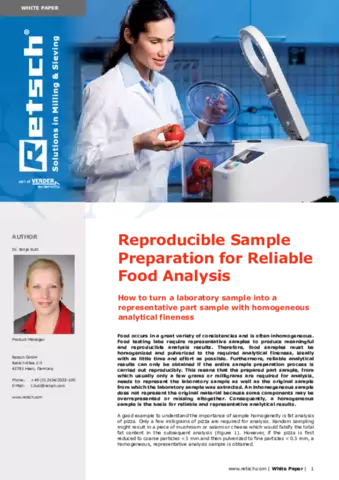
White Paper: Reproducible Sample Preparation for Reliable Food Analysis
Food occurs in a great variety of consistencies and is often inhomogeneous. Food testing labs require representative samples to produce meaningful and reproducible analysis results. Therefore, food samples must be homogenized and pulverized to the required analytical fineness, ideally with as little time and effort as possible.
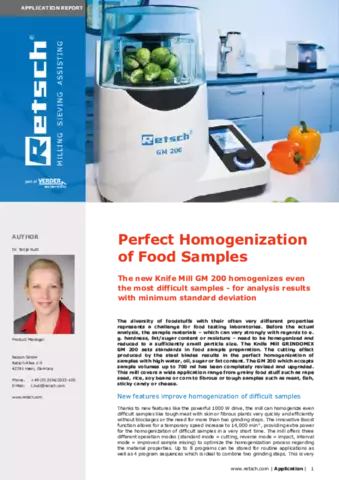
Food samples - perfect homogenization with the knife mill GRINDOMIX GM 200
The diversity of foodstuffs with their often very different properties represents a challenge for food testing laboratories. Before the actual analysis, the sample materials need to be homogenized and reduced to a sufficiently small particle size. The Knife Mill GRINDOMIX GM 200 sets standards in food sample preparation: The cutting effect produced by the steel blades results in the perfect homogenization of samples with high water, oil, sugar or fat content.
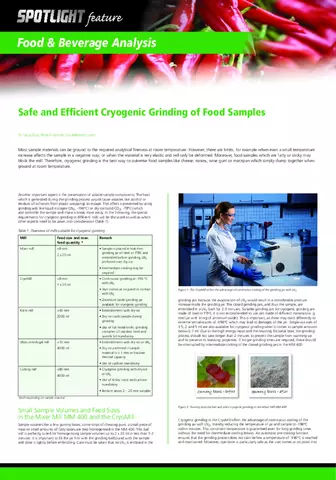
Food samples - safe and efficient cryogenic grinding
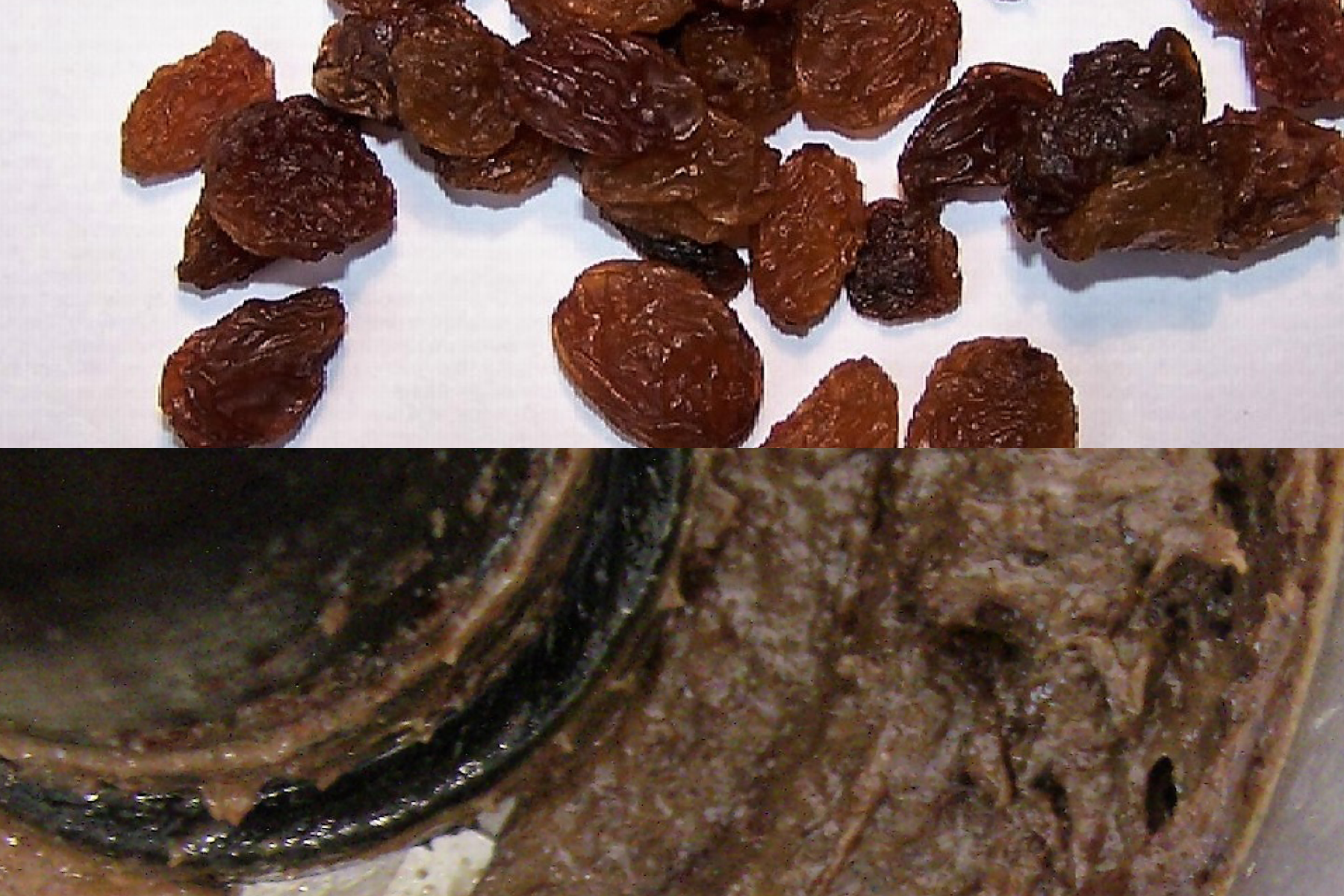
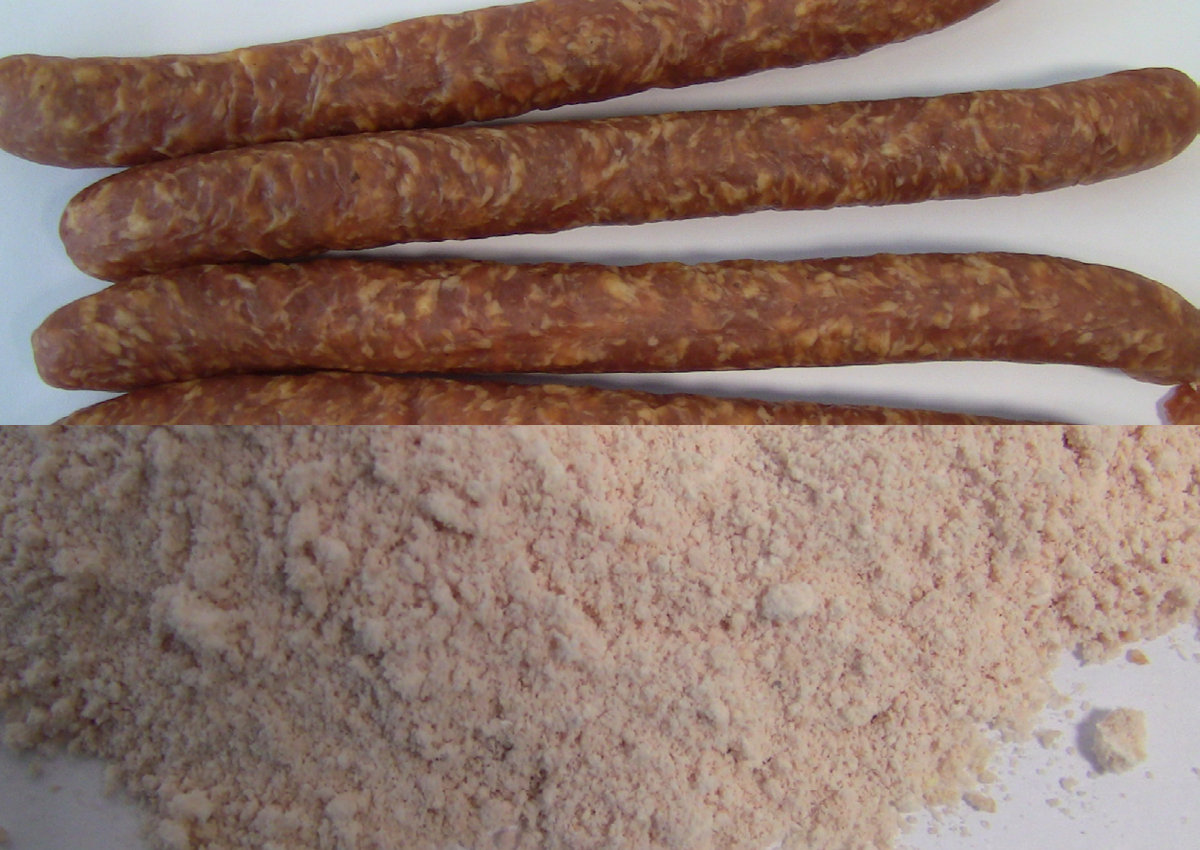
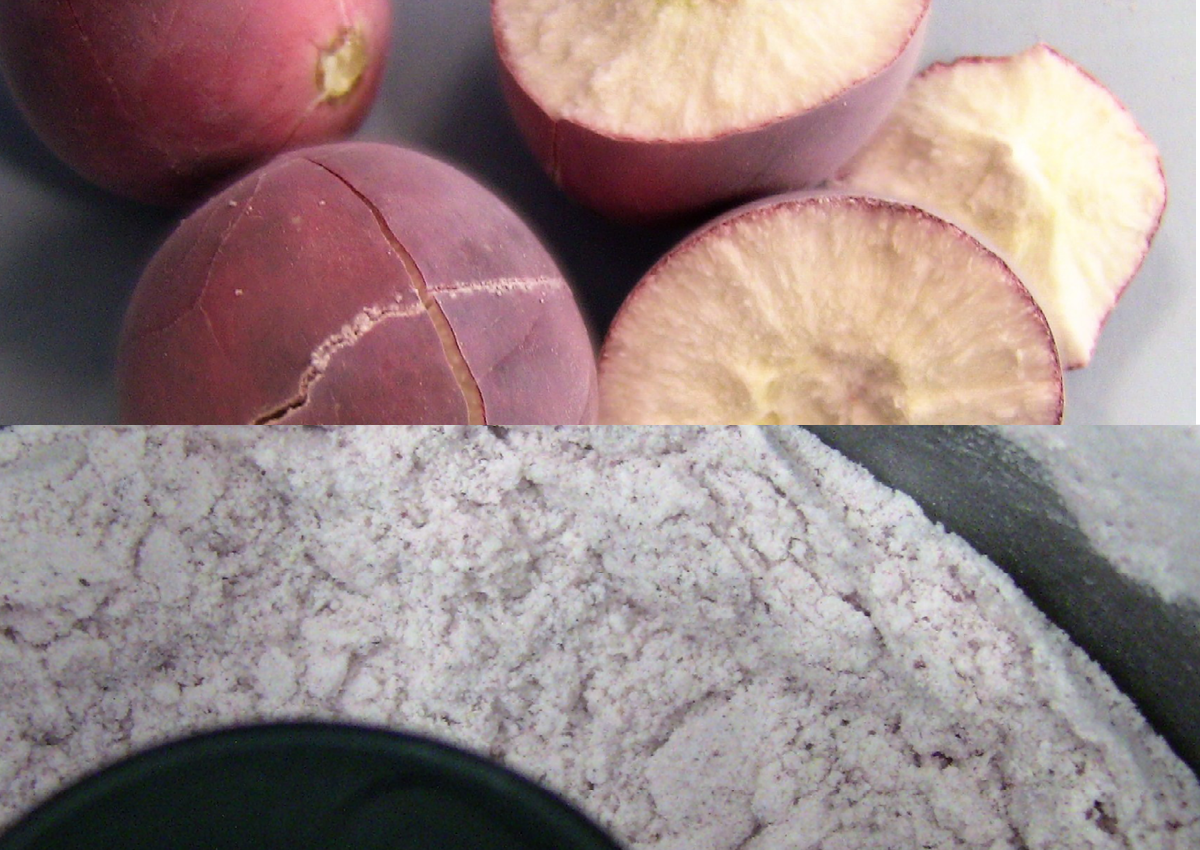
Most sample materials can be ground to the required analytical fineness at room temperature. However, there are limits, for example when even a small temperature increase affects the sample in a negative way; or when the material is very elastic and will only be deformed. Moreover, food samples which are fatty or sticky may block the mill. Therefore, cryogenic grinding is the best way to pulverize food samples like cheese, raisins, wine gum or marzipan which simply clump together when ground at room temperature.
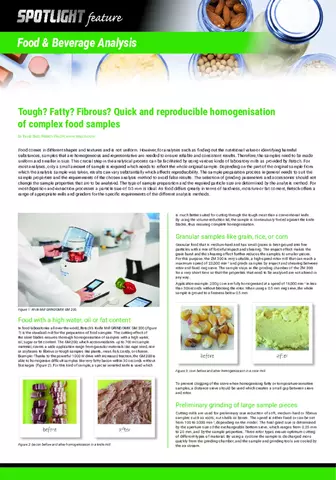
Tough? Fatty? Fibrous? Homogenization of Complex Food Samples
Food comes in different shapes and textures and is not uniform. However, for analyses such as finding out the nutritional value or identifying harmful substances, samples that are homogeneous and representative are needed to ensure reliable and consistent results. Therefore, the samples need to be made uniform and smaller in size. This crucial step in the analytical process can be facilitated by using various kinds of laboratory mills as provided by Retsch.

Contamination-free cutting of raw materials for the food and medical industries with the new SM 300 foodGrade
Raw materials for the food or pharma industry often require a size reduction process to minimize the particle size (tea, herbs, spices). The materials can be ready for consumption, like tea, or they are used for a second processing step, like extraction of valuable ingredients. A current example is CBD oil extraction from ground cannabis plants. For both – direct use or process step prior to extraction, the specific requirements of the food and medical industries must be considered when choosing a suitable size reduction tool. Aspects like smooth surfaces, easy cleaning, and available materials like stainless steel 316L to ensure contamination-free processing should be taken into account. Retsch has launched the new Cutting Mill SM 300 foodGrade for this type of applications and small-scale production of herbs and spices.
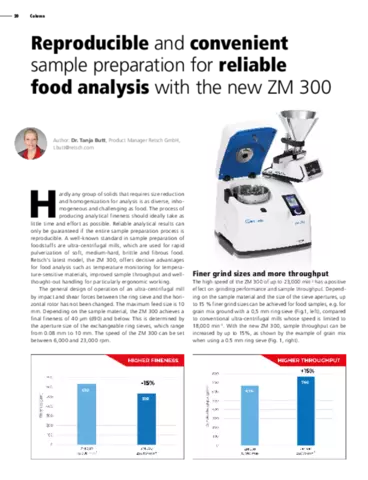
Reproducible and convenient sample preparation for reliable food analysis
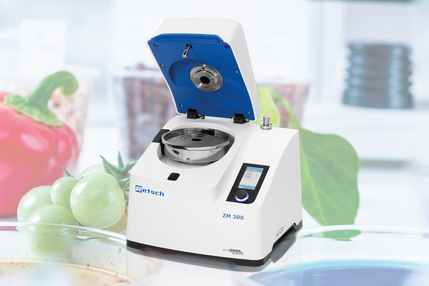
Reliable analytical results can only be guaranteed if the entire sample preparation process is reproducible. A well-known standard in sample preparation of foodstuffs are ultra-centrifugal mills, which are used for rapid pulverization of soft, medium-hard, brittle and fibrous food. Retsch’s latest model, the ZM 300, offers decisive advantages for food analysis such as temperature monitoring for temperature-sensitive materials, improved sample throughput and well-thought-out handling for particularly ergonomic working.
Neue Labormethode: Schnelle und einfache Messung des Feuchte- und Fettgehaltes von komplexen Lebensmittelproben
Die Autoren stellen eine neue Labormethode vor, die das ideale Zusammenspiel von Probenvorbereitung inkl. Zerkleinern und Homogenisieren mit geeigneten Labormühlen für die Fettanalytik beschreibt. Gerade heterogene Lebensmittel mit Füllungen wie z. B. Kartoffeltaschen mit Frischkäse, Frühlingsrollen mit Gemüse und Fleisch, vegetarische Schnitzel mit Panade, Tortellini mit Fleischfüllung, Speck mit Fettkante und magerem Fleisch, Mettwürstchen mit Pfefferkörnchen und Fettkügelchen sowie Pizza mit unterschiedlichen Belägen stellen hohe Anforderungen an die Zerkleinerung und Homogenisierung der Proben. Die Präzision und Richtigkeit der Fettgehalte steht in direktem Zusammenhang zur vorgeschalteten Probenvorbereitung.

Genetically modified organisms (GMO) - detection in food and feed samples
Genetic engineering opens up new possibilities in areas such as medical research, development of alternative fuels or global food supply. It is used to modify the characteristics of plants in order to increase the crop yield, improve defense against predators, pesticides or draught, but also increase concentrations of essential vitamins. However, with regards to food the use of genetic engineering is a fairly controversial issue.
Reproducible and reliable sample preparation
In the book "Ideas and Applications Toward Sample Preparation for Food and Beverage Analysis," (ISBN 978-953-51-3686-6), edited by Mark T. Stauffer, RETSCH has published a chapter on reliable sample preparation of food samples. This chapter describes the process of turning a laboratory sample into a representative part sample with homogeneous analytical fineness by choosing the most suitable mill. Important aspects of size reduction and homogenization are explained, a variety of application examples is given, and specific applications such as cryogenic grinding are discussed in detail.
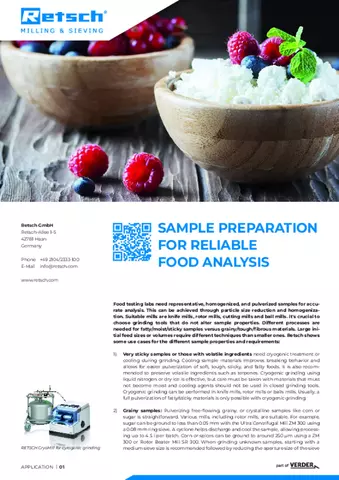
Sample preparation for food analysis
Food testing labs need representative, homogenized, and pulverized samples for accurate analysis. This can be achieved through particle size reduction and homogenization. Suitable mills are knife mills, rotor mills, cutting mills and ball mills. It's crucial to choose grinding tools that do not alter sample properties. Different processes are needed for fatty/moist/sticky samples versus grainy/tough/fibrous materials. Large initial feed sizes or volumes require different techniques than smaller ones. Retsch shows some use cases for the different sample properties and requirements.
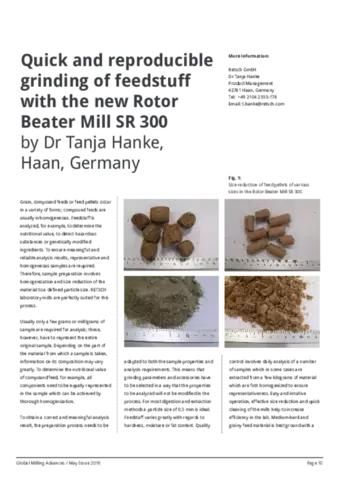
Quick and reproducible grinding of feedstuff
Grain, compound feeds or feed pellets occur in a variety of forms; compound feeds are usually inhomogeneous. Feedstuff is analyzed, for example, to determine the nutritional value, to detect hazardous substances or genetically modified ingredients. To ensure meaningful and reliable analysis results, representative and homogeneous samples are required. Therefore, sample preparation involves homogenization and size reduction of the material to a defined particle size. RETSCH laboratory mills are perfectly suited for this process.
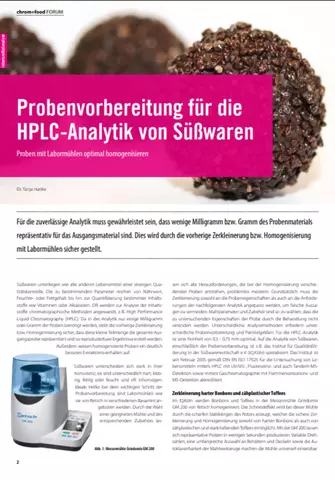
Probenvorbereitung für die HPLC Analytik von Süßwaren
Süßwaren unterliegen wie alle anderen Lebensmittel einer strengen Qualitätskontrolle. Die zu bestimmenden Parameter reichen von Nährwert, Feuchte- oder Fettgehalt bis hin zur Quantifizierung bestimmter Inhaltsstoffe wie Vitaminen oder Alkaloiden. Da in der Analytik nur einige Milligramm oder Gramm der Proben benötigt werden, stellt die vorherige Zerkleinerung bzw. Homogenisierung sicher, dass diese kleine Teilmenge die gesamte Ausgangsprobe repräsentiert und so reproduzierbare Ergebnisse erzielt werden.
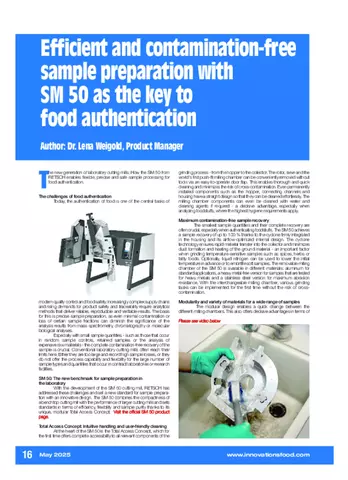
SM 50 innovations for food analysis
Today, the authentication of food is one of the central tasks of modern quality control and food safety. Increasingly complex supply chains and rising demands for product safety and traceability require analytical methods that deliver reliable, reproducible and verifiable results. The basis for this is precise sample preparation, as even minimal contamination or loss of certain sample fractions can diminish the significance of the analysis results from mass spectrometry, chromatography or molecular biological analyses.
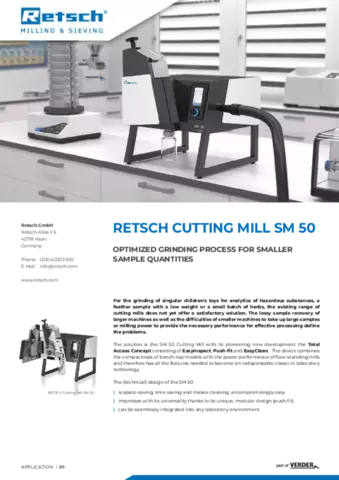
SM 50: Optimized Grinding Process for Smaller Sample Quantities
For the grinding of singular children's toys for analytics of hazardous substances, a feather sample with a low weight or a small batch of herbs, the existing range of cutting mills does not yet offer a satisfactory solution. The lossy sample recovery of larger machines as well as the difficulties of smaller machines to take up large samples or milling power to provide the necessary performance for effective processing define the problems.

How to avoid contamination in food analysis
The analysis of food for contaminants such as heavy metals, pesticides, or other toxic substances is a central component of quality control and consumer protection. Regulatory frameworks such as Regulation (EU) 2023/915 establish clear limits for undesirable substances in food. Modern analytical methods such as ICP-MS enable the reliable detection of even the lowest concentrations. Especially in routine analysis of food and feed, reproducible, contamination-free sample preparation is crucial for valid results.

Reliable Protein Determination Starts Before the Analysis
Carbon, nitrogen and protein are among the most important parameters in food and feed analysis. Standards demand reproducible, traceable results and modern elemental analyzers deliver these with high precision. What is often underestimated, however, is that the quality of the analytical result is already determined before the first measurement step. It depends significantly on how the sample was comminuted and homogenized.
측정 시스템 GrindControl GrindControl shows what’s happening inside the grinding jar – in real time
GrindControl provides real-time visibility into processes inside the grinding jar. Pressure and temperature are continuously monitored—ensuring safe, precise control, even with sensitive or reactive materials. Respond promptly to unexpected pressure spikes, and keep a close eye on temperature-sensitive samples and even mechanochemical reactions at all times.
GrindControl at a glance
- Real-time data on pressure & temperature
- Early detection of critical conditions
- Precise process control
- Protection of sensitive materials
- Reproducible results
무료 상담 문의하기
RETSCH offers a comprehensive portfolio of instruments for recycling processes - from quality control and sample preparation to innovative mechanochemical methods. Whether pre-grinding, sieving, pelletizing or the use of ball mills for sustainable recycling solutions: We have the right instruments for your requirements.
Our global network and experts are available to provide you with personalised advice. Contact us and work with our specialists to find the best solution for your application!

Food & Feed Analysis - FAQ
Which laboratory mills are suitable for homogenizing food samples?
For homogenizing food samples, the most suitable laboratory mills are knife mills, rotor mills, cutting mills, and ball mills. Each type offers specific advantages depending on the sample's characteristics. Knife and cutting mills are ideal for large, tough, or fibrous samples, while rotor and ball mills can efficiently handle hard, brittle, or soft samples. When dealing with fatty, moist, or volatile ingredients, choosing a mill that can operate with cooling or cryogenic treatments is crucial to prevent altering the sample's properties. Selecting the right mill type ensures accurate and reproducible analysis results by minimizing particle size variation.
For which food samples is cryogenic grinding recommendable?
Cryogenic grinding is recommendable for soft, tough, sticky, fatty foods, and for preserving volatile ingredients such as terpenes. It is particularly effective for materials like chocolate, which can turn into a paste at room temperature. Cryogenic methods use liquid nitrogen or dry ice to keep the sample cool, ensuring full pulverization of difficult materials.
Which laboratory mills are used in the QuEChERS extraction of pesticides?
In the QuEChERS method for extracting pesticide residues from food and agricultural products, mixer mils are used for pulverizing the sample with Acetonitrile and additives in 50 ml centrifugal tubes. The MM 400 model can shake up to eight tubes at once, offering a more reproducible extraction process than manual shaking. Within just 3 minutes, the pesticides are extracted, ready for analysis by chromatographic techniques. The MM 400's role in QuEChERS ensures rapid and reliable sample preparation for pesticide residue detection.