





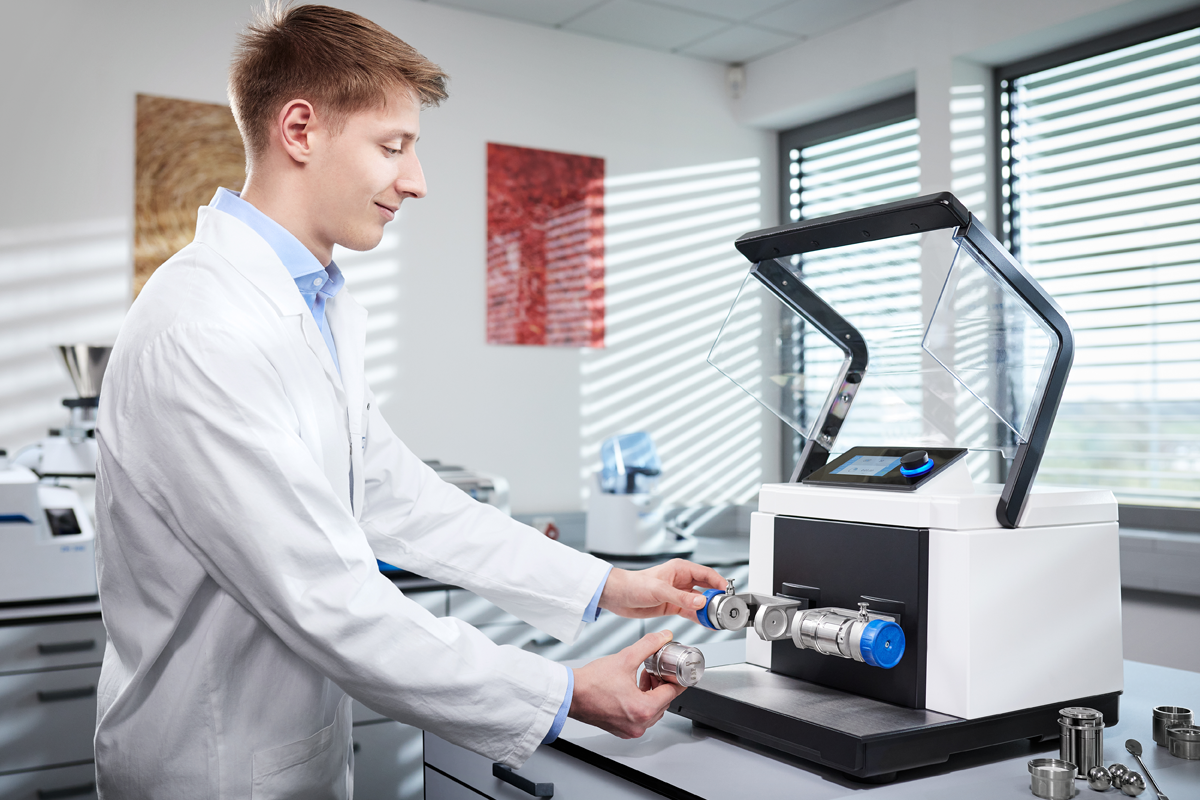
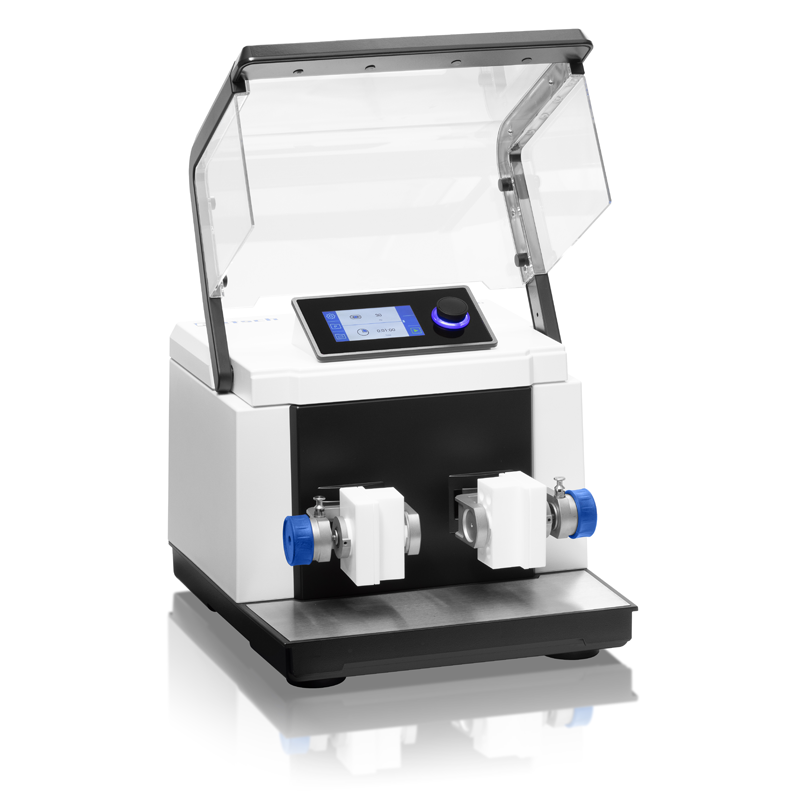

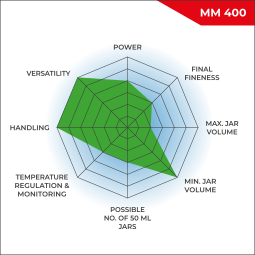
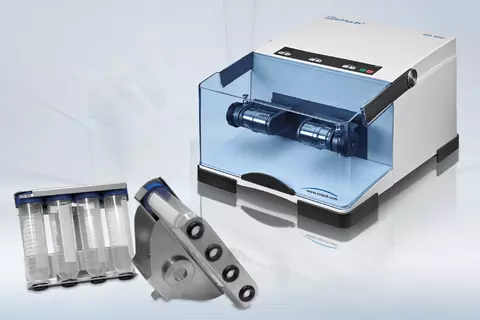
믹서 밀 MM 400 2 x 20 ml까지의 작은 볼륨을 건조, 젖은 및 크리오겐 밀링하기 위해 설계된 진정한 다기능 밀링 장치입니다. 그것은 30 Hz의 주파수로 분말과 서스펜션을 2 초 이내에 혼합하고 동성화합니다 - 뛰어난 속도와 작동하기 쉽습니다.
컴팩트한 테이블 장치는 고전적인 동성화 프로세스뿐만 아니라 DNA / RNA 및 단백질 추출을위한 생물학적 세포 파괴에 적합합니다. 장기간의 처리 시간은 MM 400 기계 화학 등의 연구 응용 분야에 이상적으로 적합하게 만듭니다.
이 밀의 성능과 유연성에 관하여 시장에는 동등한 기술이 없습니다.
또한 MM 500 nano 및 MM 500 vario 모델에 관심이 있을 수 있습니다. 이 믹서 밀은 35Hz의 주파수에서 동일한 기능 원칙으로 작동하지만 실질적으로 더 높은 성능을 제공합니다. 샘플을 냉각하거나 가열해야 하는 응용 프로그램에 대해 RETSCH 믹서 밀 MM 500 control는 완벽한 선택입니다.
제품 비디오
가장 유용한 모든 볼 밀
- 최대 속도 30Hz
- 수평 진동은 효과적인 샘플 처리에 대한 강력한 충격 효과를 유발합니다.
- 최대 8 mm 공급 크기 및 5 μm 최종 정밀도
- 최소 2 ml 및 최대 50 ml의 잔을위한 2 개의 밀링 스테이션, 10 x 2 ml의 단일 용도 병에 대한 어댑터 및 4 x 50 ml의 콘 센트리푸가 튜브
- 강철 병은 액체 질소로 수동으로 사전 냉각 될 수 있습니다.
- 캘리브레이드된 속도와 시간, 작은 벤치탑 모델, 저장 가능한 SOP 및 사이클 프로그램, 7개의 다른 병 재료
믹서 밀 MM 400 Reviews from our customers
Trusted reviews provided by

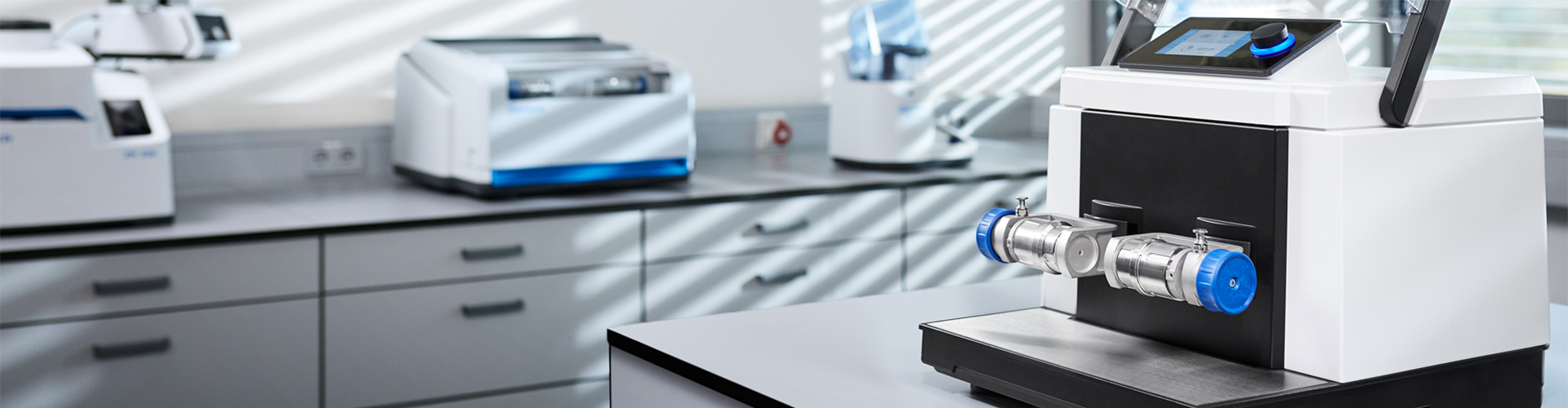
성능 및 디자인
- 최대 30 Hz와 충격력 및 마찰력이 사용된 강력한 분쇄와 균질화
- 회당 최대 20 개의 시료 작업이 가능한 2 개의 분쇄 스테이션 장착
- 12개의 표준 운영 절차(SOP) 및 6개의 프로그램 주기를 위한 메모리
- 편리한 터치 디스플레이, 상당한 소음 감소
타의 추종을 불허하는 범용성
- 3 가지 분쇄 모드 : 건식, 습식 또는 냉동0
- 예를 들어 XRF 분석을 위한 펠렛화 전 플라스틱 용기에서 분말 시료와 바인더를 혼합합니다.
- 기계 화학과 같은 응용 분야 또는 볼 분쇄를 통한 생물학적 시료 파괴에 적합합니다.
- 농약 추출 (QuEChERS) 및 허브 재료
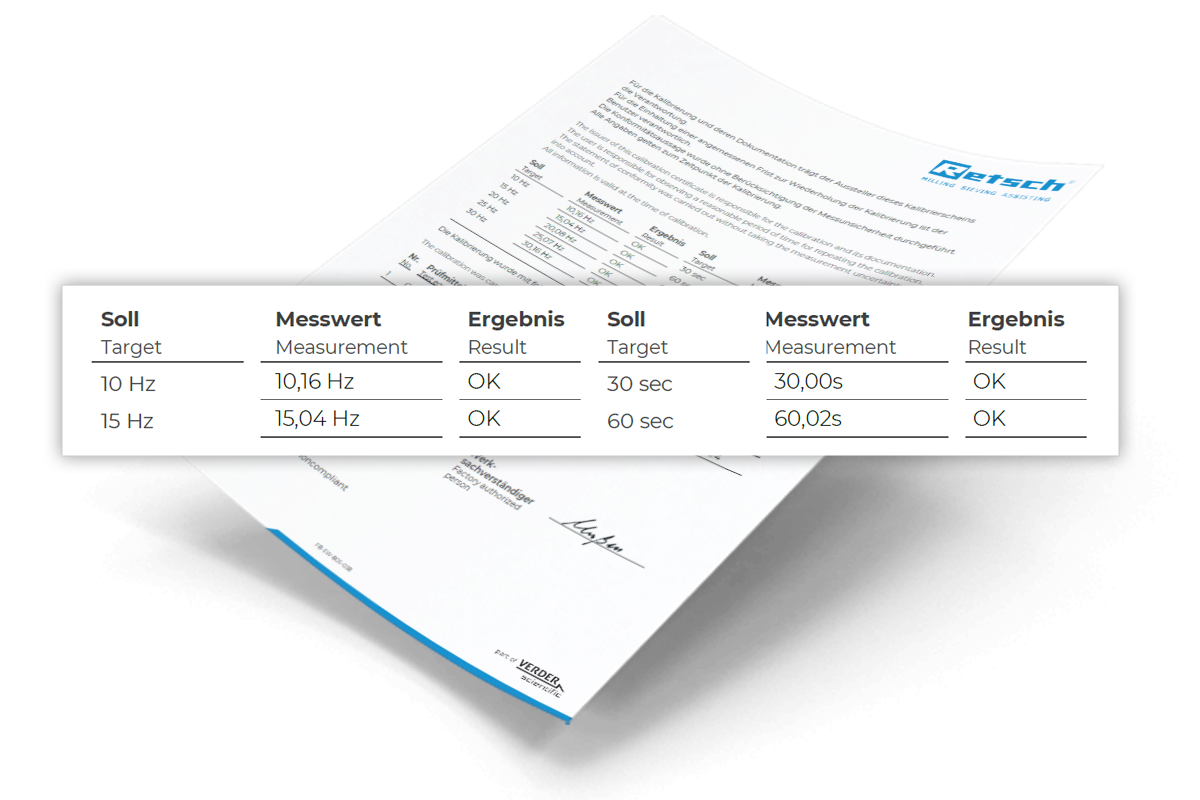
믹서 밀 MM 400 캘리브레이션은 재현 가능한 결과를 보장합니다.
복제성은 샘플링부터 분석까지 프로세스 체인에서 가장 중요합니다. 캘리브레이션이 가능한 실험실 장비는 최소한의 표준 편차로 매번 복제 가능한 결과를 보장합니다. 이것은 다른 위치에서 생산된 결과를 비교할 때 특히 유용합니다.
이 기능은 특히 적합합니다.
- 다른 위치의 테스트 실험실
- ISO/IEC 17025 또는 ISO 9000ff를 적용하는 공인 실험실
- 제약 제품
믹서 밀 MM 400 믹서 밀 MM 400 기계화학 반응의 재생성
Reproducibility is a fundamental principle of scientific research and is essential for ensuring the credibility and reliability of scientific findings. The Mixer Mill MM 400 was tested regarding the reproducibility within a mechanochemical reaction, and it could be proven that it provides excellent reproducibility during several repetitions, for both clamping positions, and also between different devices. [1]
Minor variations of the frequency from 30 Hz to 29 Hz or 28 Hz have an influence on the yield of the reaction. It is of fundamental interest that the mixer mill maintains a set value, e.g. 30 Hz, and does not deviate from it. A premise which is fulfilled by the MM 400 which comes with a calibration certificate.
The mechanochemical reaction γ-Al2O3 + ZnO -> ZnAl2O4 was conducted for 30 min using 25 ml grinding jars, 2 x 15 mm grinding balls, 1 g educts, at 28 Hz, 29 Hz and 30 Hz five times in a row. The comparison between left and right clamping station showed highly reproducible results, also the comparison between the 5 trials.
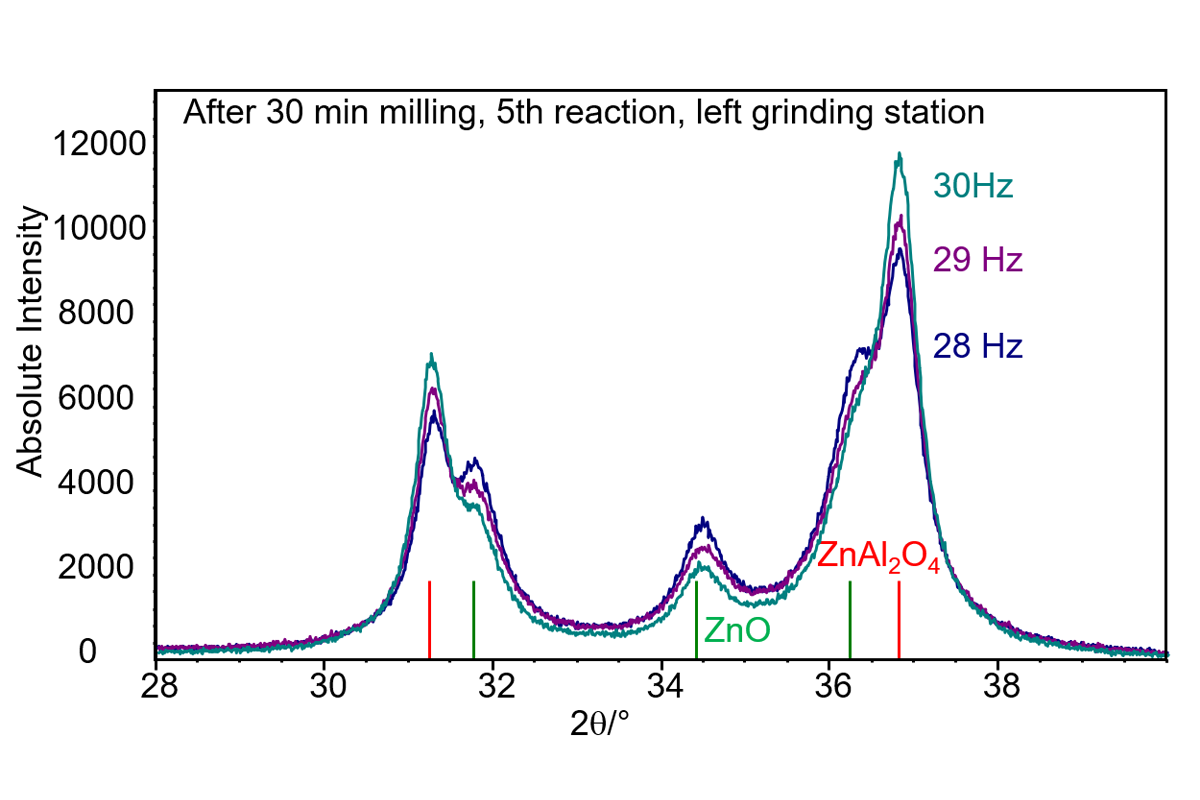
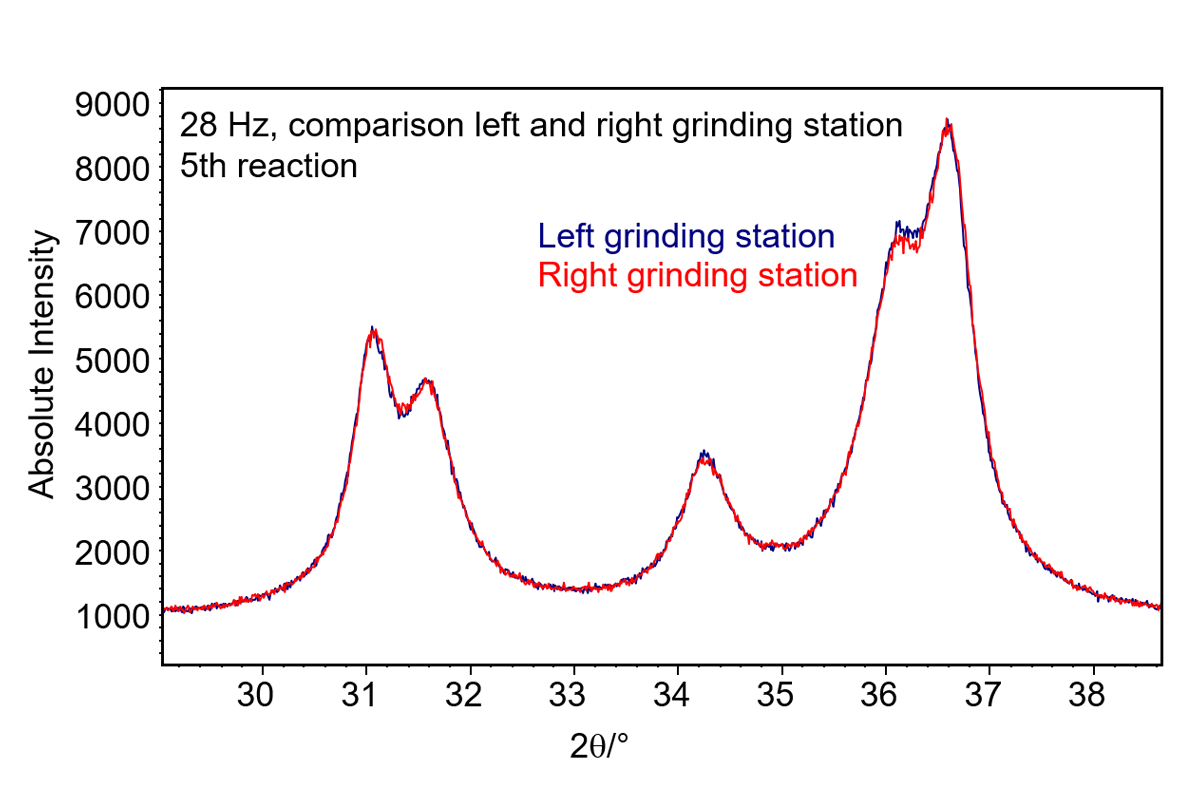
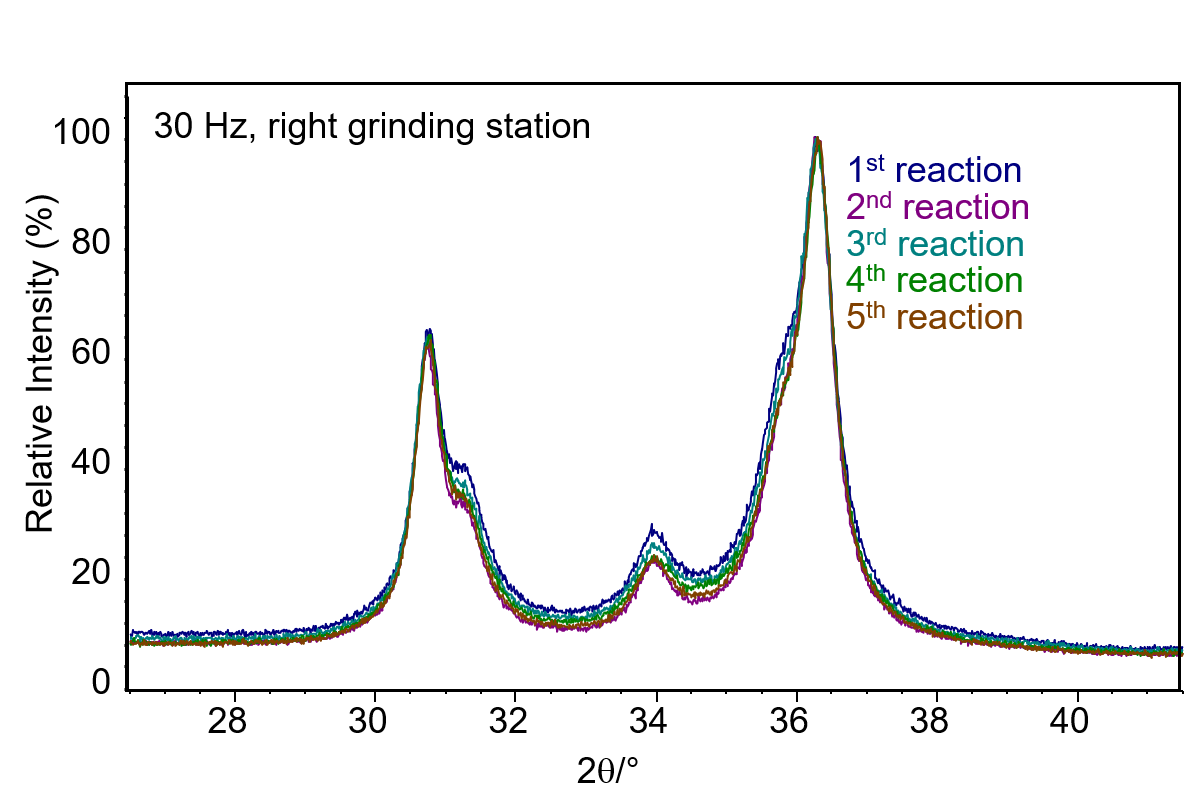
기계화학 반응 γ-Al2O3 + ZnO -> ZnAl2O4:
왼쪽: 28 Hz, 29 Hz 및 30 Hz에서 닦는 결과는 5번째 반응 후에 나타납니다.
중간: 28 Hz 각각 5번째 반응에서 왼쪽과 오른쪽 닦는 스테이션을 비교합니다.
오른쪽: 30 Hz에서 1~5개의 반응, 오른쪽 닦는 스테이션. Claudia Weidenthaler의 그룹에 의해 발표된 결과입니다. [8]
이 실험은 다른 MM 400 장치를 사용하여 반복되었으며, 왼쪽과 오른쪽 모기 스테이션 모두에서 30Hz에서 수행된 5개의 실험에서 우수한 재현성을 확인했습니다.
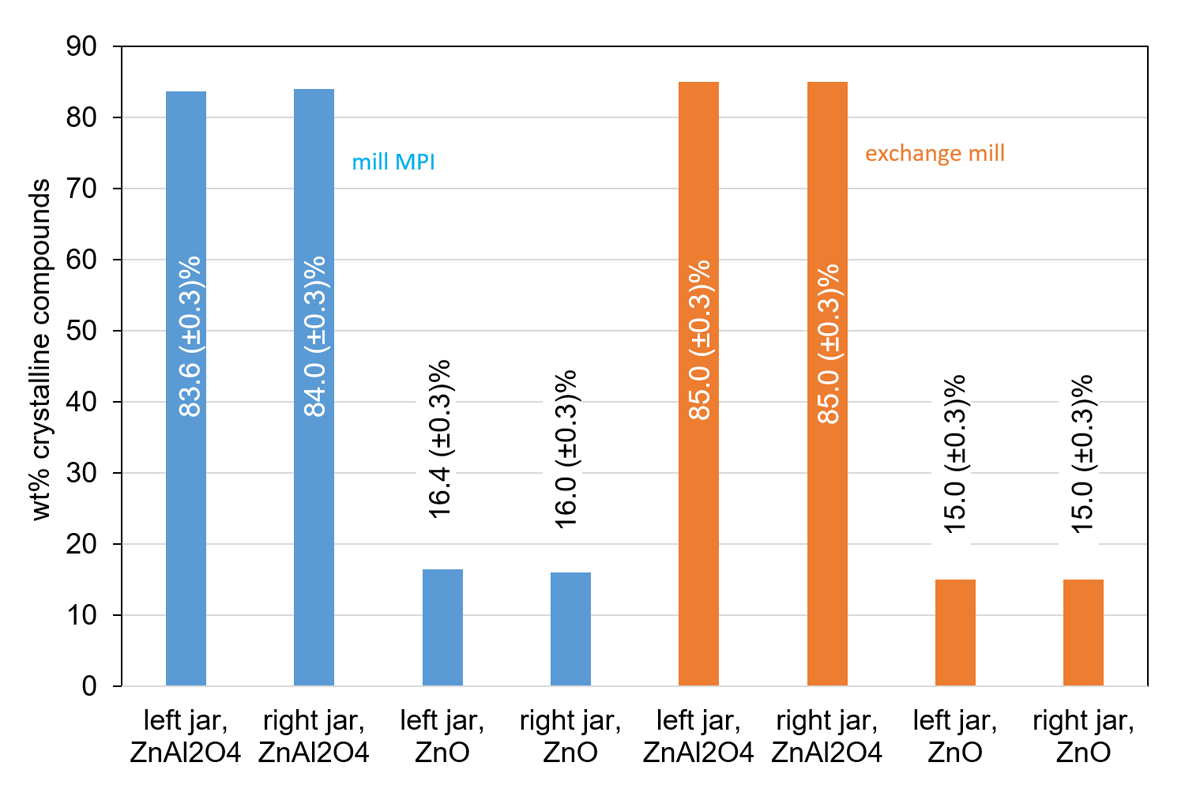
Almost identical results (weight % of educts and product) and reproducibility are obtained with a different MM 400 device. Results presented by the group of Claudia Weidenthaler. [1]
믹서 밀 MM 400 생물학적 응용과 세포 파괴에 대한 솔루션
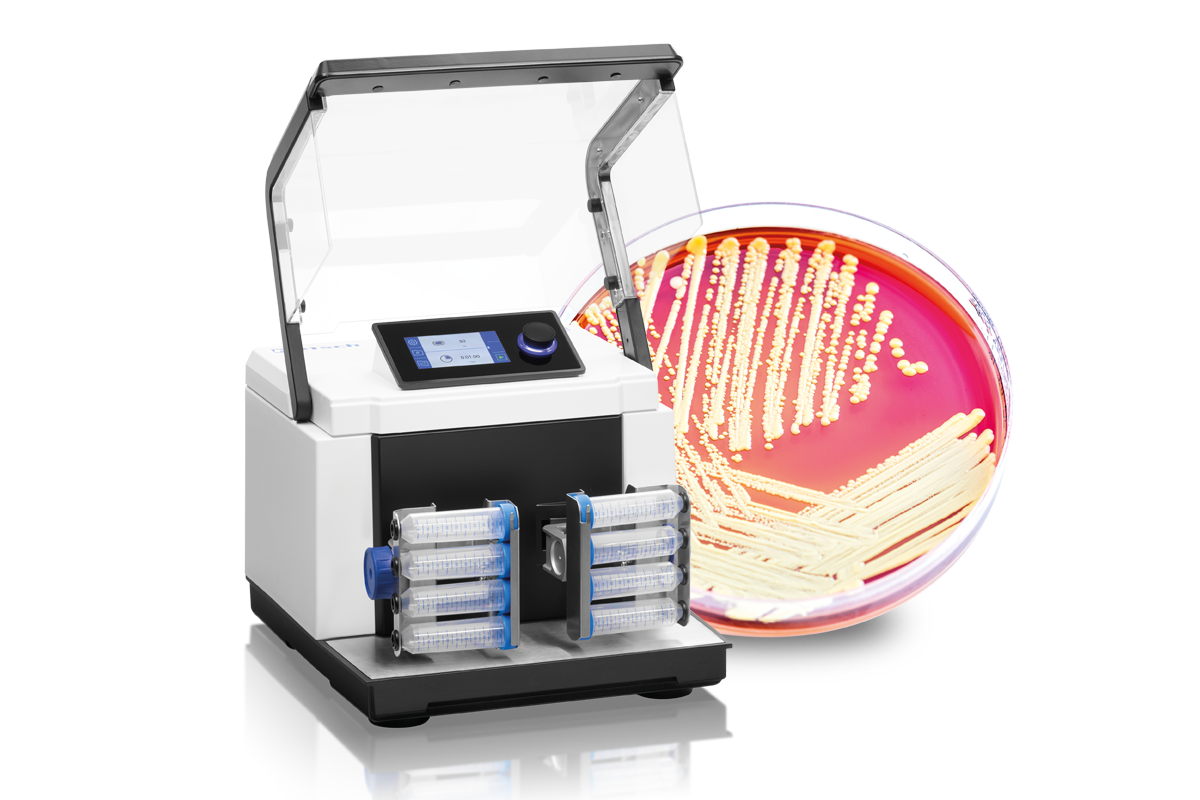
믹서 밀러는 생물학적 샘플을 동성화하는 데 종종 사용됩니다. 소형 유리 펄과 함께 소형 펄을 때리는 것은 유제품, 미생물 또는 박테리아의 세포 파괴를위한 확립 된 방법입니다. 샘플은 사전 냉각을 통해 최소화 할 수있는 과정에서만 중간적으로 가열됩니다.
MM 400은 DNA/RNA 및 단백질 추출을위한 최대 240 ml 세포 정제의 효율적인 세포 파괴를 허용합니다. 감염의 정확한 진단을 위해 어댑터를 사용하여 8 x 30 ml 병 또는 10 x 5 ml 병에서 완전한 세균을 조직에서 분리 할 수 있습니다.
20 x 0.2 ml / 20 x 1.5 or 2 ml / 10 x 5 ml / 8 x 30 ml / 8 x 50 ml
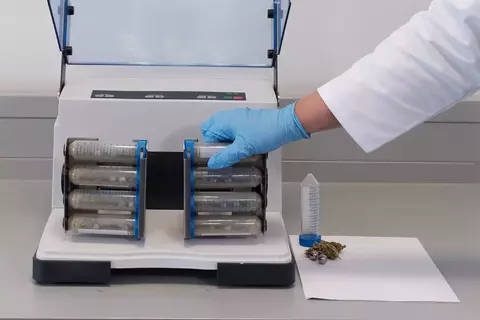
25 ~ 30 g의 식물 재료, 예를 들어 대마초 꽃의 분말을 위해, 콘 센티푸지 튜브가 가장 적합합니다. 푸퍼 솔루션에서 신선한 간과 같은 최대 8 개의 조직 샘플도 이 50 ml 튜브에서 강철 또는 지르코늄 옥시드 공을 사용하여 동성화 할 수 있습니다. 병에 대한 기계적 스트레스를 가능한 한 낮게 유지하려면 감소된 주파수와 높은 채우기 수준을 권장합니다. 예를 들어, 푸퍼와 샘플을 사용하여.
믹서 밀 MM 400 - 이스트 세포 파괴*
믹서 밀 MM 400 - Cannabis의 동성화*
*비디오는 동일한 기능 원리를 가진 이전 모델을 보여줍니다.
믹서 밀 MM 400 cryogenic grinding 용 솔루션
CryoKit 는 MM 400 믹서 밀의 비용 효율적인 샘플 처리 솔루션입니다. 이 세트는 2 개의 절연 컨테이너, 2 개의 탱크 및 안전 유리로 구성됩니다.
우수한 샘플과 밀구는 스테인리스 스틸의 액체 질소와의 직접 접촉을 피하려면 yo CryoMill 링크 또는 밀서 에 대한 샘플이 2 분 후에 충분히 냉각됩니다.
믹서 밀 MM 400 - 냉동 분쇄
믹서 밀 MM 400 기계화학의 응용 프로그램
기하화학은 용액이없는 환경에서 물질의 빠른 반응을 가능하게 합니다. 일부 화학 반응은 행성 볼 밀의 마찰력을 필요로 하며, 다른 반응 유형은 충격을 통해 에너지 공급을 필요로 합니다. MM 400의 반응 시간은 자주 길기 때문에, 여러 시간의 프로그램 시간을 처리할 수 있습니다.
연구 응용 프로그램에 사용할 수있는 샘플 볼륨은 종종 매우 낮습니다. 이것은 MM 400에 사용할 수있는 작은 밀 크기와 마찬가지로 50 ml의 행성 볼 밀보다 유일한 이점을 제공합니다. MM 400의 표준 수평 움직임과 결합된 투명 밸브의 사용은 최적의 응용 프로그램을 최적화하기 위해 최적의 시간을 피할 수 있습니다.
- 프로세스 시간 최대 99 h
- 다양한 밀링 잔 크기 및 재료
- 투명 PMMA 밀링 병은 in-situ RAMAN 스펙트로스코피를 가능하게 합니다.
- 프로그래밍 가능한 주파수 및 휴식 시간
- 4 x 5 ml 스테인레스 스틸 분쇄 용접기 최대 8 개의 동시 반응을 허용
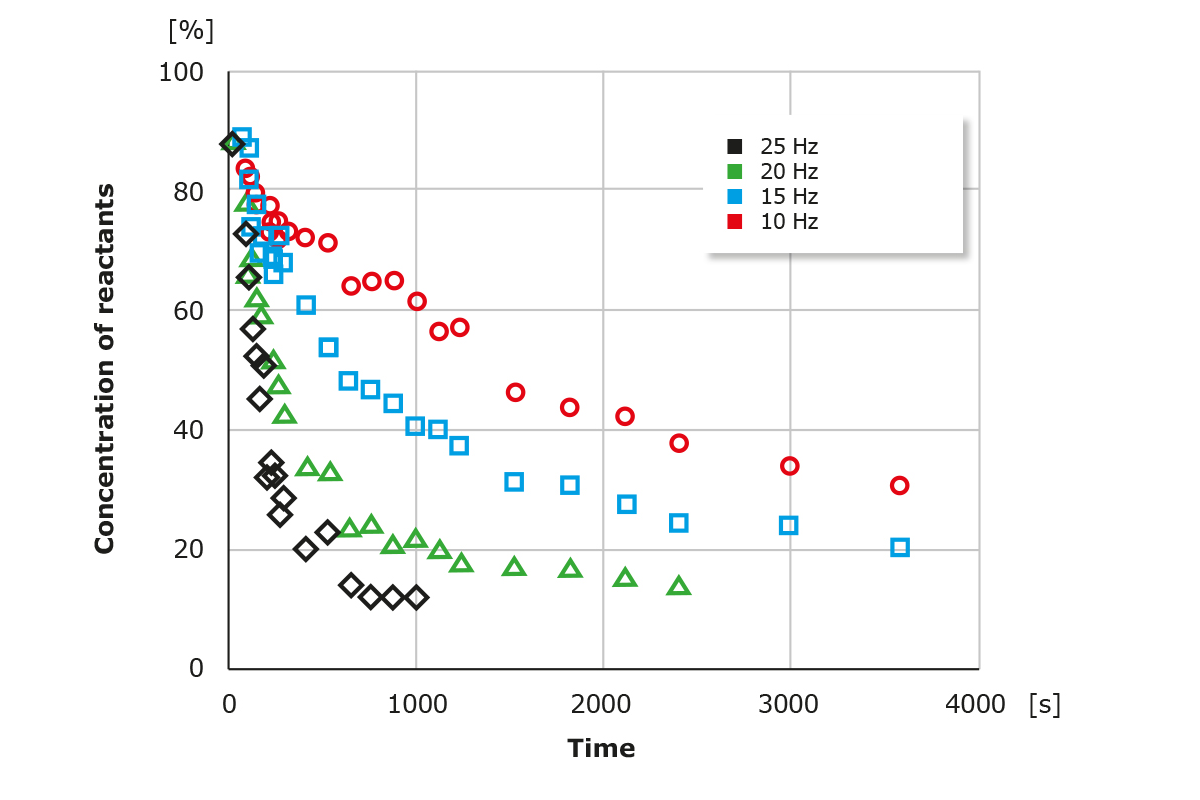
바닐린과 바비투르산 사이의 Knoevenagel 반응의 시간 경과는 기계화학적 조건에서 2x10mm zirconium oxide를 사용하여 19ml PMMA 멜링 바에서 30Hz에 실행됩니다. 30 분 이상 진행되는 반응은 색상 변화로 표시됩니다.
Ruhr-University Bochum, Faculty of Chemistry and Biochemistry, AG Prof. Borchardt 박사의 칭찬.
Co-Crystal Screening with the MM 400
Co-crystal screening can be effectively performed in Mixer Mills. In a study [9] using the MM 400, 2 ml steel tubes and the corresponding PTFE adapter were employed to co-crystallize theophylline and benzamide in a 1:1 ratio under the following conditions:
- 60 min milling time
- 30 Hz frequency
- One 6 mm steel ball per tube
- Four experiments without solvent and four with 20 µL ethanol
X-ray powder diffraction patterns of the eight resulting samples (shown in green) align closely with the simulated reference pattern of the target co-crystal. All observed signals correspond to the desired product, with no significant additional signals, indicating successful and reproducible co-crystal formation. The MM 400 with 2 ml steel tubes delivers consistent results, and this compatibility extends to the MM 500 series, which can also accommodate 2 ml steel tubes.
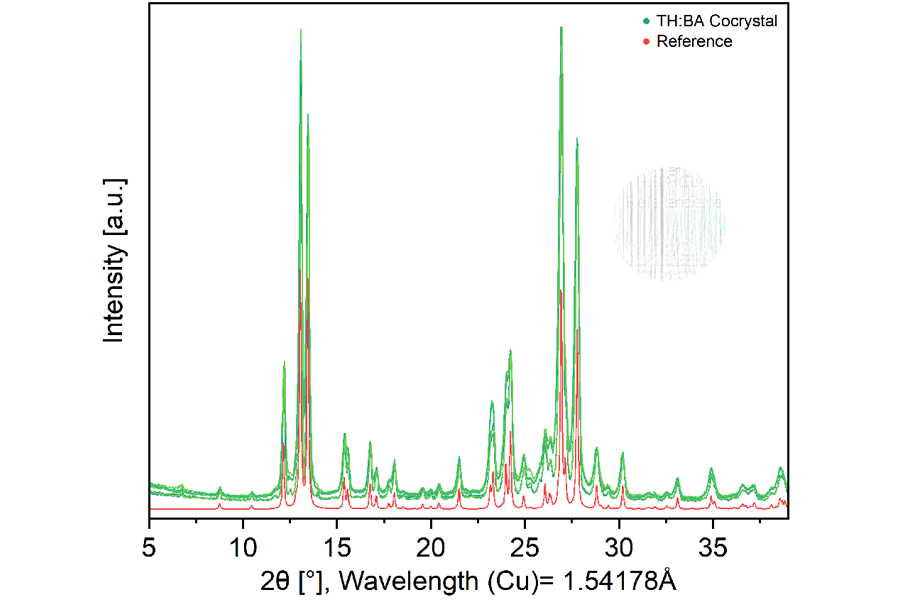
XRD patterns after the co-crystal formation of theophylline and benzamide after 60 min milling time in the MM 400 against a simulated reference. Results presented by experiments of Dominik Al-Sabbagh. [2]
Chemistry in the Mill: Teflon Recycling (PTFE) Using Mechanical Energy
Mechanochemical Recycling of PTFE (Teflon)
Mechanochemistry not only enables new synthetic pathways but also opens up innovative approaches for recycling processes involving materials that are difficult to degrade. A recent example from research shows that even the extremely stable polymer polytetrafluoroethylene (PTFE), better known as Teflon, can be degraded mechanochemically. A decisive factor is continuous mechanical stress: During grinding with the RETSCH MM 400, the reacted surface is constantly removed, exposing new surface area. This allows the reaction to proceed until a large portion of the polymer has been converted. In the study, up to 98% of the PTFE was converted into sodium fluoride and elemental carbon.
The resulting products can then be further utilized, for example as raw materials for battery materials or as fluorine-containing building blocks for pharmaceutical and agrochemical applications.
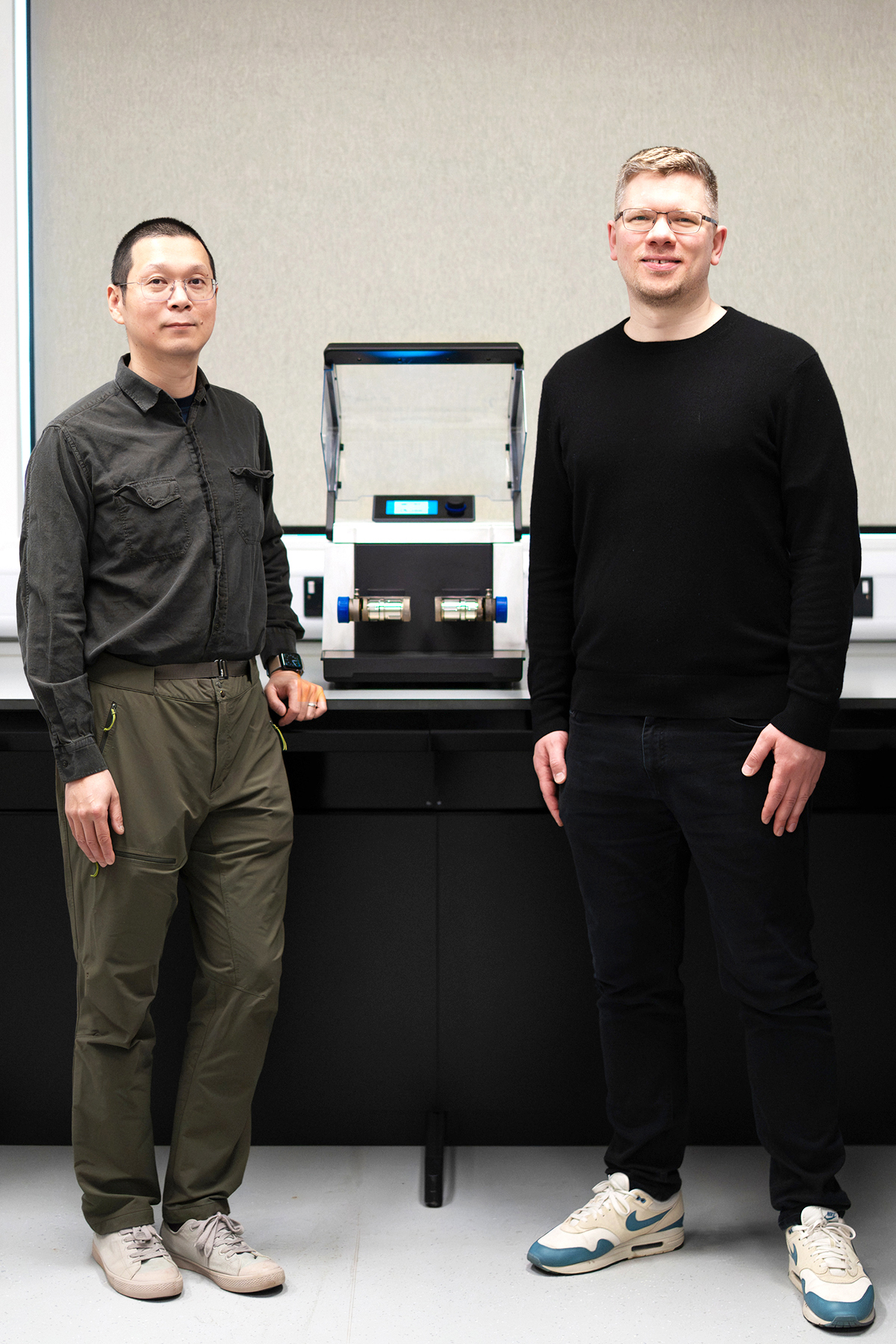
Image on the right: Dr. Erli Lu and Dr. Dominik Kubicki with the Mixer Mill MM 400, which was used to decompose PFAs. [15]
The renowned science program “Forschung aktuell” on Deutschlandfunk radio presented this research approach and its significance for future recycling technologies.
audio
Functionalizing biomass for pharma applications via mechanochemistry
Mechanochemistry is transforming how functional biomaterials are made, and cationic cellulose is a prime example. Using a solvent-free process, cotton fibers are combined with a catalytic base and a minimal additive, then milled together with the cationic reagent to activate the reaction using the Mixer Mill MM 400. This solid-state approach eliminates water and bulk solvents, dramatically reducing chemical use and waste compared to conventional methods. After milling, a short aging step completes the reaction, delivering highly charged cellulose fibers with exceptional performance. [14]
Optimal reaction conditions: Cotton fibers were milled in a 50 ml stainless steel jar with 3 x 10 mm balls for 5 min at 25 Hz, then EPTMAC was added, and the mixture was milled for additional 30 min. The subsequent aging of the reaction mixture at 50 °C for 24 h, followed by Soxhlet extraction (48 h) and freeze drying, resulted in the isolation of pure cCF material.
Why is this exciting for pharma?
These cationic fibers show strong electrostatic binding to viruses, enabling efficient removal of pathogens from water and process streams—critical for sterile manufacturing and clean water applications. Beyond filtration, the material offers potential in drug delivery, antimicrobial surfaces, and bioprocessing aids. The process achieves outstanding sustainability metrics aligning with green chemistry principles and industry goals. It also allows precise control over charge density for tailored performance.
This innovation demonstrates how mechanochemistry can deliver high-value, eco-friendly solutions for pharmaceutical production—combining safety, efficiency, and sustainability in one breakthrough approach.
믹서 밀 MM 400 In-situ Raman spectroscopy
In-situ Raman spectroscopy is a powerful analytical technique that allows for the monitoring and analysis of materials in their natural or process environment. This method utilizes Raman scattering, a phenomenon where light interacts with molecular vibrations, leading to shifts in the wavelength of the scattered light. These shifts provide a unique spectral fingerprint for the material being analyzed, offering insights into its chemical composition or molecular structure.
The "in-situ" aspect refers to the ability to observe and measure these characteristics directly during an ongoing process. This can include observing changes in the presence of various chemical reactions, also the so called mechanochemistry. Mechanochemistry involves the use of impact, shearing, or friction actions to induce chemical changes in solids. This approach is increasingly popular for its ability to bypass the need for solvents, potentially offering a more environmentally friendly and energy-efficient pathway for chemical synthesis. The Raman spectroscopy can provide invaluable insights into the reaction mechanism, phase transformations, reaction kinetics or for optimization of reaction conditions.
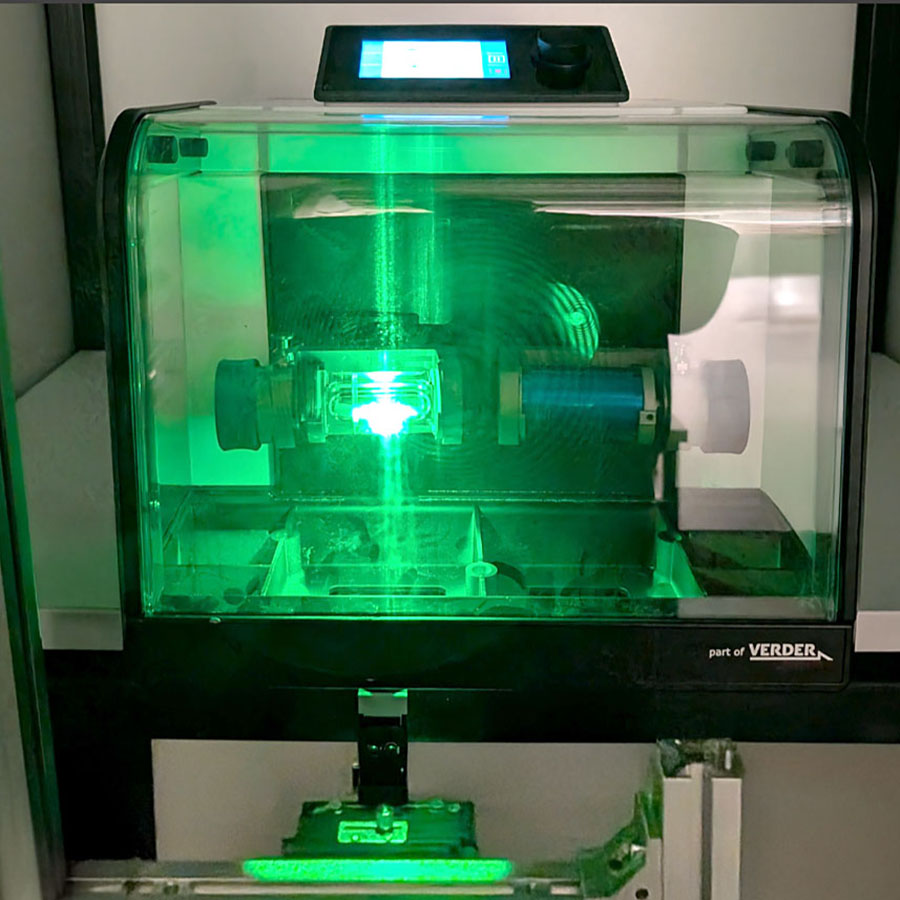
The MM 400 is “Raman-ready”, allowing easy removal of the bottom plate inlay. The bottom plate has openings for the Raman probe to consistently measure at the bottom of the jars by placing the Raman probe underneath the mill and thus underneath the jars, where particle interaction is most intense, ensuring accurate data. The Retsch PMMA grinding jars, with their transparency and chemical resistance, enhance spectral data without contamination. The plane outer shapes of the jars further enhance the spectroscopic data. These design adjustments streamline the experimental workflow. Researchers can now perform in-situ Raman spectroscopy with greater ease and precision, opening new possibilities for in-depth material analysis.
안전하고 효과적인 분쇄 작업을 위해 믹서 밀 MM 400의 액세서리
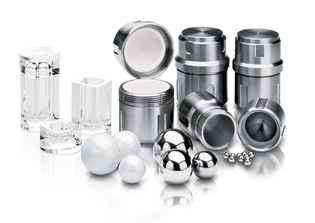
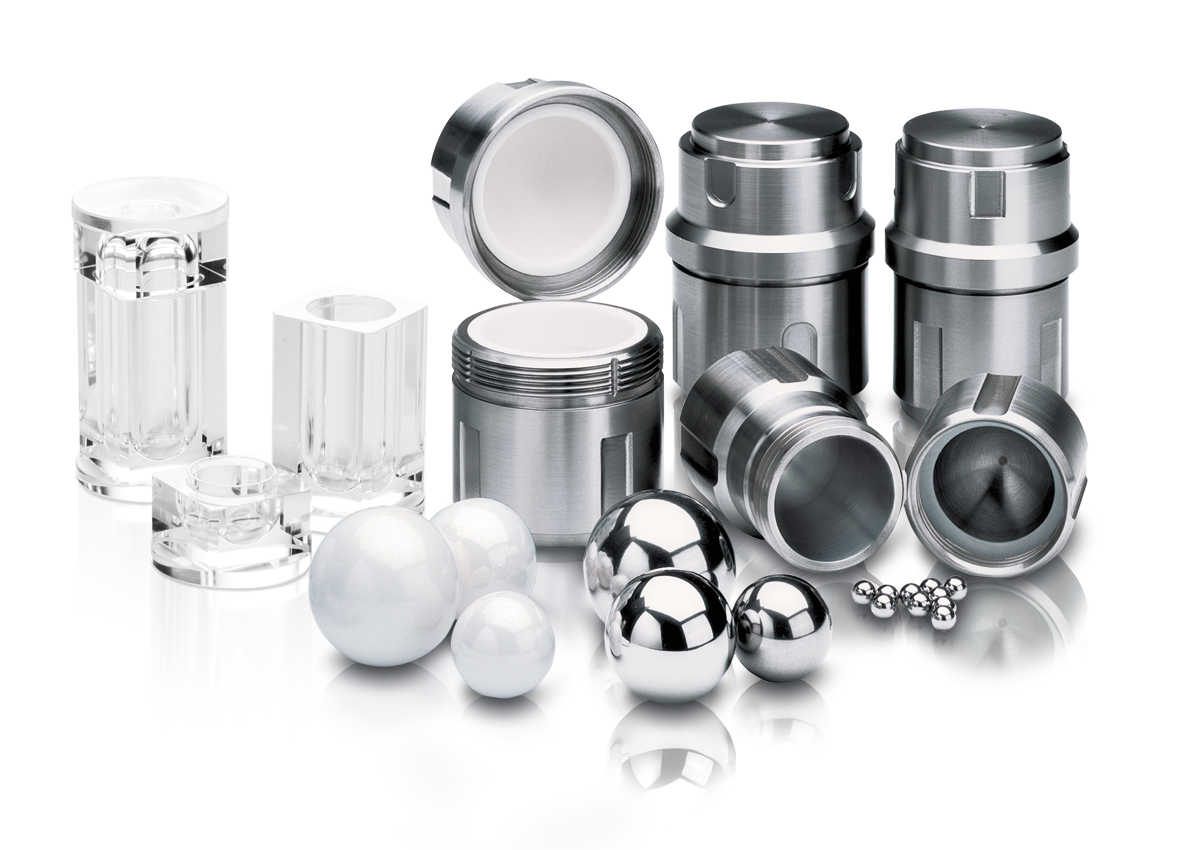
7 개의 다른 재료로 분쇄 용기
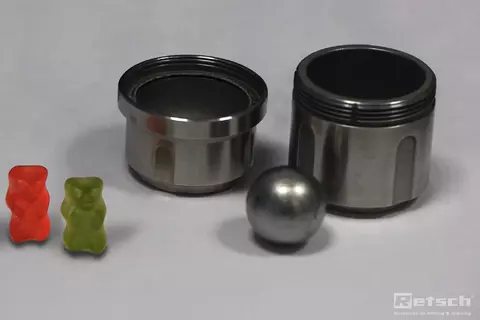
The nominal volume of the screw-top grinding jars ranges from 1.5 ml to 50 ml; available materials include hardened steel, stainless steel, agate, tungsten carbide, zirconium oxide and PTFE, ensuring contamination-free sample preparation.
투명 PMMA 밀링 잔은 in-situ RAMAN 스펙트로스코피에 사용되지만 광화학 반응의 응용 프로그램을 가능하게합니다. 또한, 이들은 다양한 화학 물질에 저항합니다. MM 400의 이전 모델과 마찬가지로 냄비 모델은 최신 믹서 밀 모델과 호환됩니다.
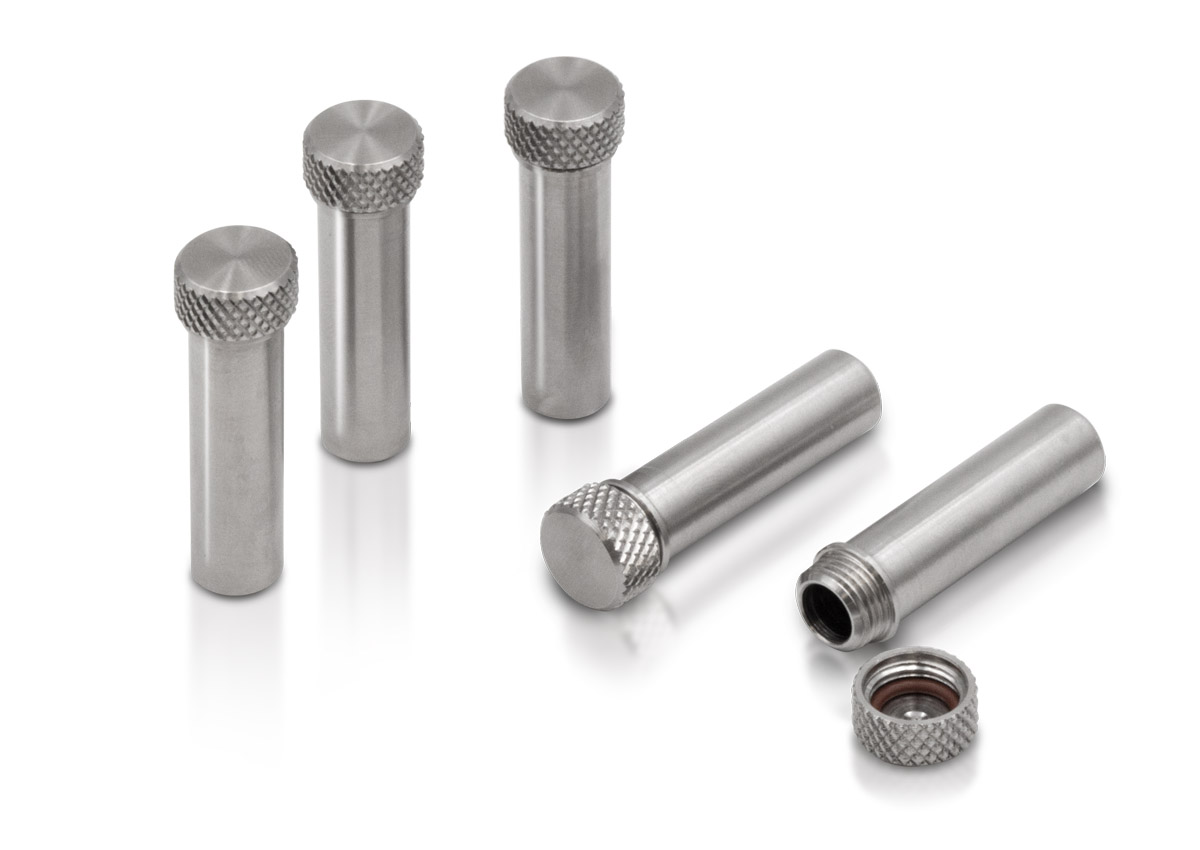
2 ml tubes for cryogenic grinding
Small 2 ml steel tubes are used for cryogenic applications. Up to 20 of these tubes can be clamped into the MM 400 using an adapter. The advantage: they can withstand low temperatures and mechanical stress and do not break like disposable vessels. Ideal for the smallest sample quantities in the cryogenic range.
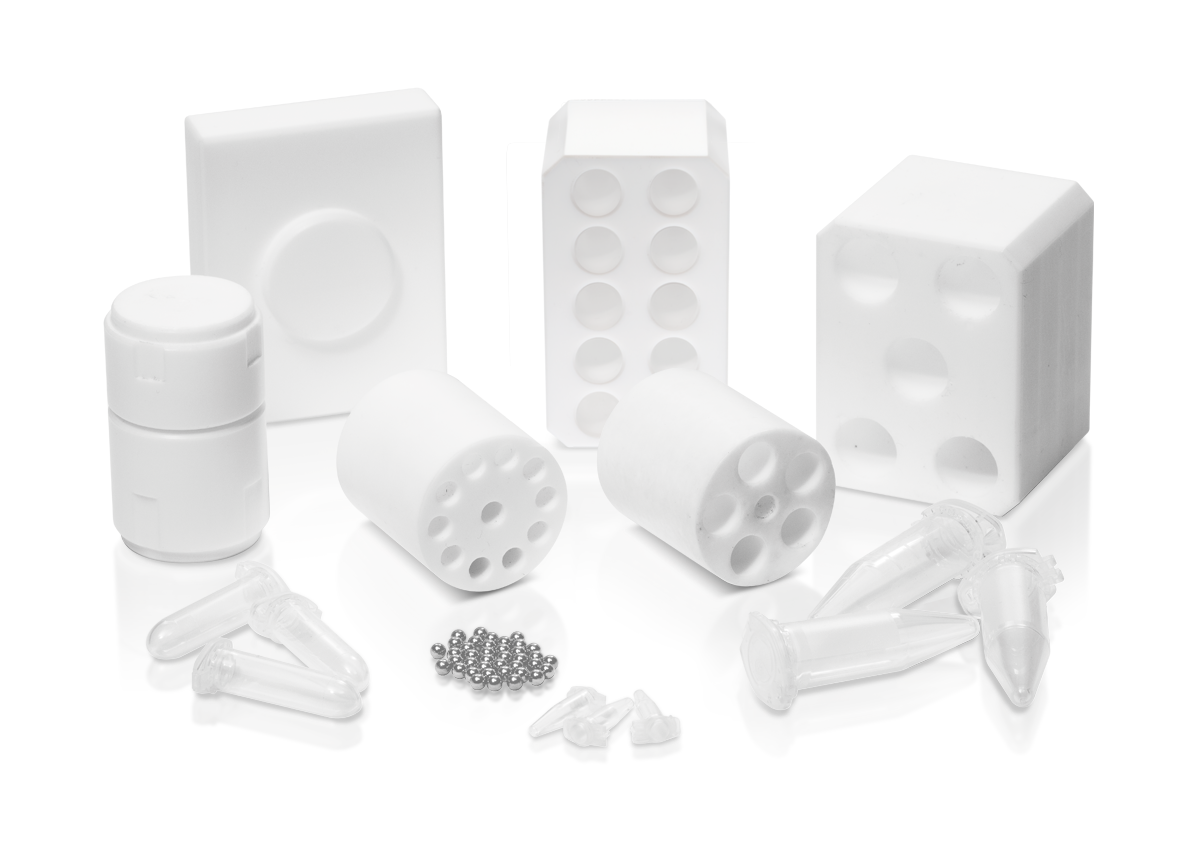
일회용 바이알을 위한 어댑터
0.5 / 1.5 / 2 / 5 ml 일회용 바이알을 위한 어댑터가 MM 400에 사용 가능합니다. 단백질 추출과 같은 대량의 시료를 위해 50 ml 코니컬 원심 분리 튜브 또는 30 ml 광구 병 용 어댑터도 사용될 수 있습니다.
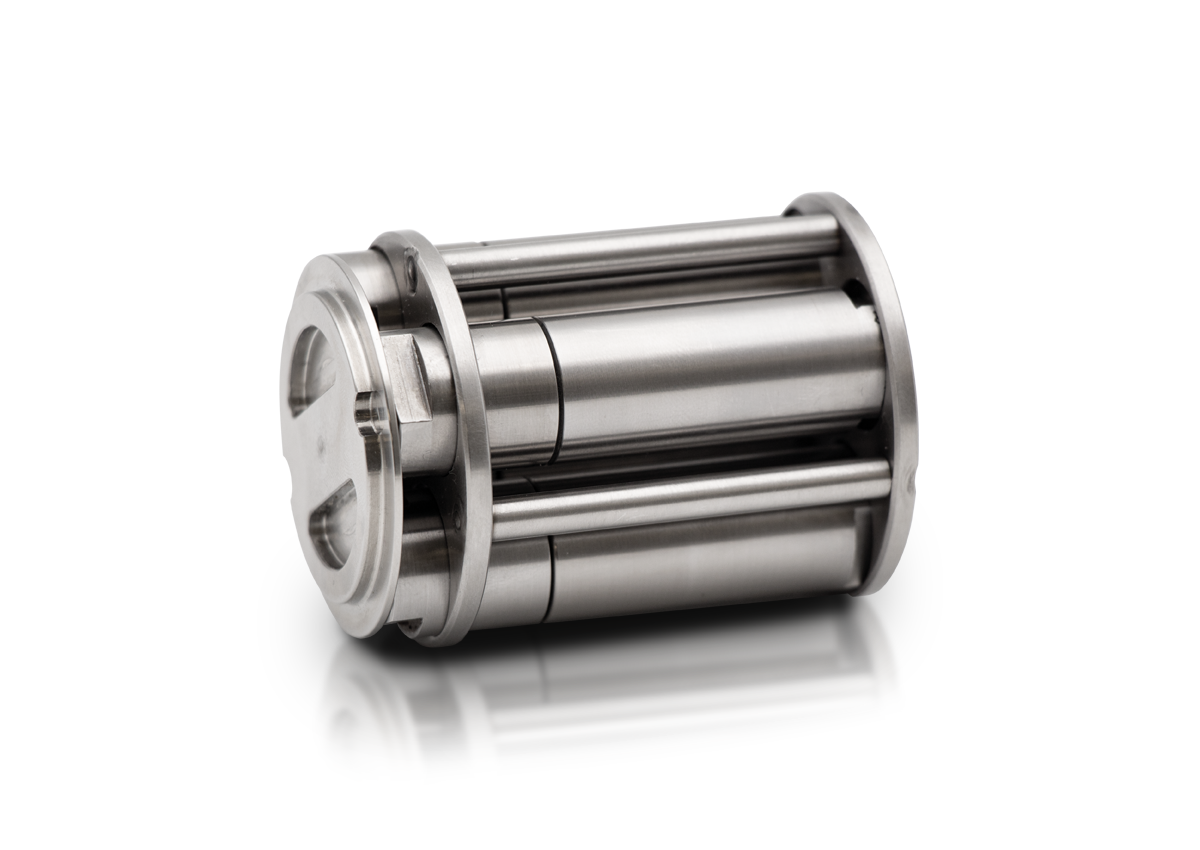
샘플 처리량을 증가시키는 어댑터
MM 400 4 개의 5 ml 스테인레스 스틸 밀링 잔을 수용하는 어댑터로 장착 될 수 있으며, 최대 8 개의 샘플의 동시 분말을 허용합니다.이 증가된 처리량은 기계화학적 응용 분야에서 특히 유용합니다.
병, 병 및 튜브 MM 400
1.5ml 또는 2ml
Safe-lock
single use vials
최대 2 x 10 vials
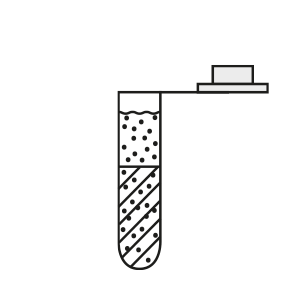
- DNA / RNA 단백질 / 대사체의 세포 중단
- 부드러운 샘플 ( 조직, 식물, 세포 펠릿, 곤충)의 냉각
- 부드러운 샘플의 건조 또는 젖은 균형화 ( 조직, 곤충)
5 ml
Safe-lock
복용 병
최대 2 x 5 병
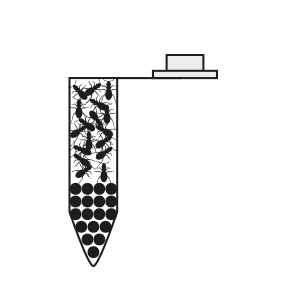
- DNA / RNA 단백질 / 대사체의 세포 중단
- 부드러운 샘플 ( 조직, 식물, 세포 펠릿, 곤충)의 냉각
- 부드러운 샘플의 건조 또는 젖은 균형화 ( 조직, 곤충)
30ml
disposable wide
mouth bottles
2 x 4 bottles max.
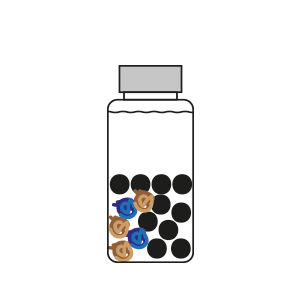
- DNA / RNA 단백질 / 대사체의 세포 중단
- 부드러운 샘플의 건조 또는 젖은 균형화 ( 조직, 곤충)
- 하드 샘플의 건조 밀링 ( 수정 모래)
50 ml
일회용 코니컬
센트리프게이션 튜브
2 x 4 튜브 max.
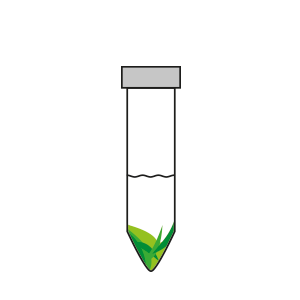
- DNA / RNA 단백질 / 대사체의 세포 중단
- 부드러운 샘플의 건조 또는 젖은 균형화 ( 조직, 곤충)
- 식품/ 식물에서 농약의 추출(QuEChERS)
- XRF를 위한 파우더와 왁스의 혼합 압축 펠릿
믹서 밀 MM 400 권장되는 jar fillings
냄비 크기는 샘플 볼륨에 적응하여 최적의 결과를 보장해야합니다. 이상적으로, 밀링 볼은 가장 큰 샘플 조각의 크기의 3 배입니다. 아래 표에서 제공되는 볼의 수와 크기는 이 손가락 규칙을 따릅니다. 예를 들어, 8mm 크기의 입자로 구성된 20 ml의 샘플을 분말하려면 50 ml 냄비와 25 mm 공의 사용이 권장됩니다. 테이블에 따르면, 한 밀링 볼이 필요합니다. 5mm 입자로 20 ml의 샘플은 4 개의 15 mm 공으로 동성화 될 수 있습니다.
| Milling jar nominal volume |
샘플 금액 | 최대 투입 크기* | Ø 5 mm* | Ø 7 mm* | Ø 10 mm* | Ø 12 mm* | Ø 15 mm* | Ø 20 mm* | Ø 25 mm* |
|---|---|---|---|---|---|---|---|---|---|
| 1.5 ml | 0.2 – 0.5 ml | 1 mm | 1 – 2 | - | - | - | - | - | - |
| 5 ml | 0.5 – 2 ml | 2 mm | - | 1 – 2 | - | - | - | - | - |
| 10 ml | 2 – 4 ml | 4 mm | - | 5 – 7 | 1 – 2 | 1 – 2 | - | - | - |
| 25 ml | 4 – 10 ml | 6 mm | - | - | 5 – 6 | 2 – 4 | 1 – 2 | - | - |
| 35 ml | 6 – 15 ml | 6 mm | - | - | 6 – 9 | 4 – 6 | 2 – 3 | 1 | - |
| 50 ml | 8 - 20 ml | 8 mm | - | - | 12 – 14 | 6 – 8 | 3 – 4 | 1 | 1 |
*테이블은 분쇄 용량, 샘플 수량 및 최대 공급 크기와 관련하여 다른 크기의 분쇄 볼의 권장 충전량 (포인트)을 보여줍니다.
믹서 밀 MM 400 일반적인 샘플 소재
RETSCH mixer mill은 진정한 만능 제품입니다. 제품은 합금, 동물 사료, 뼈, 세라믹, 화학 제품, 석탄. 코크스, 약품, 전자 폐기물, 초자, 과립, 모발, 미네랄, 지방 종자, 광석, 종이, 식물체, 플라스틱, 하수 슬러지, 토양, 짚, 정제, 직물, 조직, 담배, 폐기물, 목재, 양모 등과 같은 시료를 균질화 합니다.
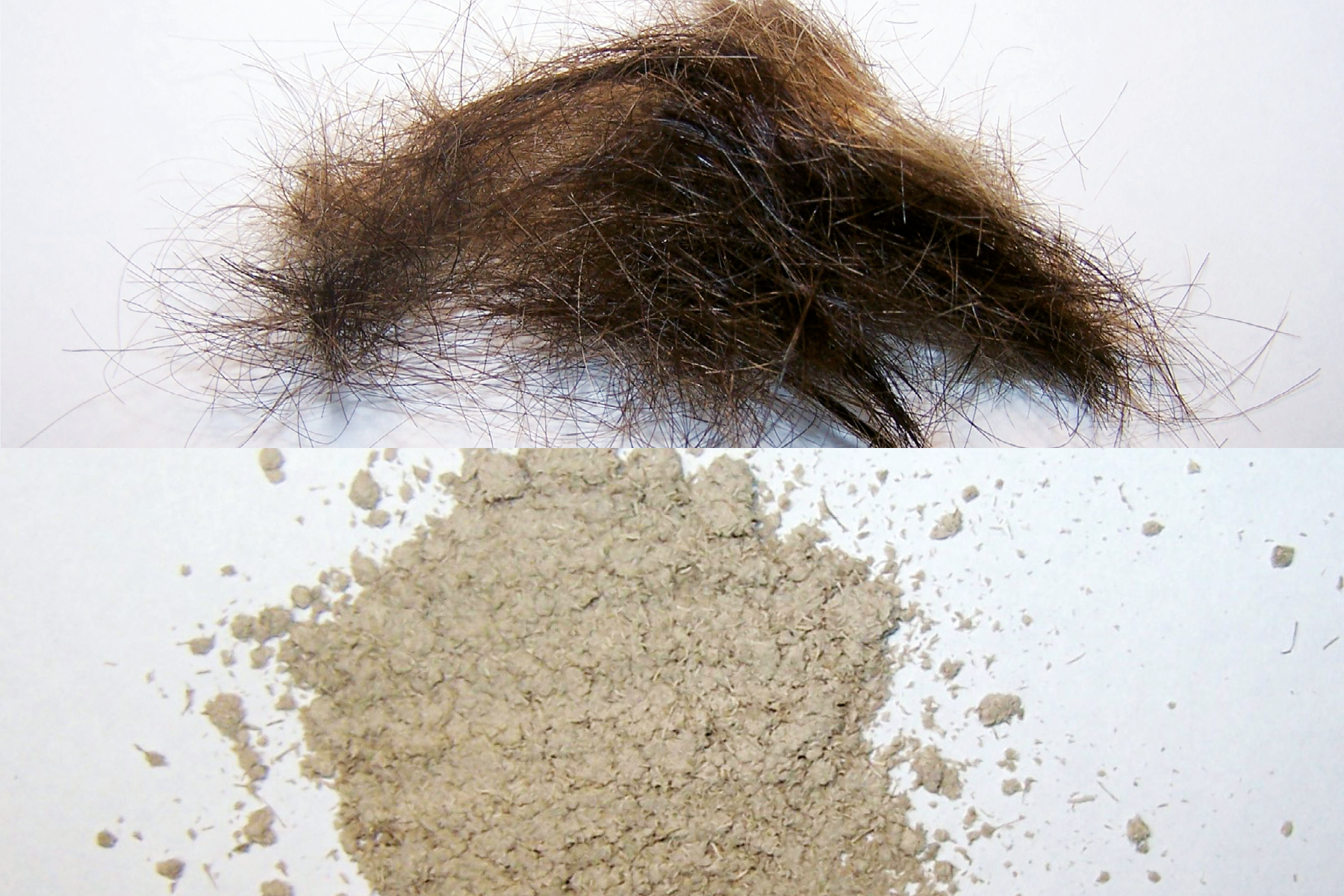
섬유: 머리
30 ml 샘플
50 ml 스테인레스 스틸 병
1 x 25 mm 스테인레스 스틸 볼
2 분 30Hz
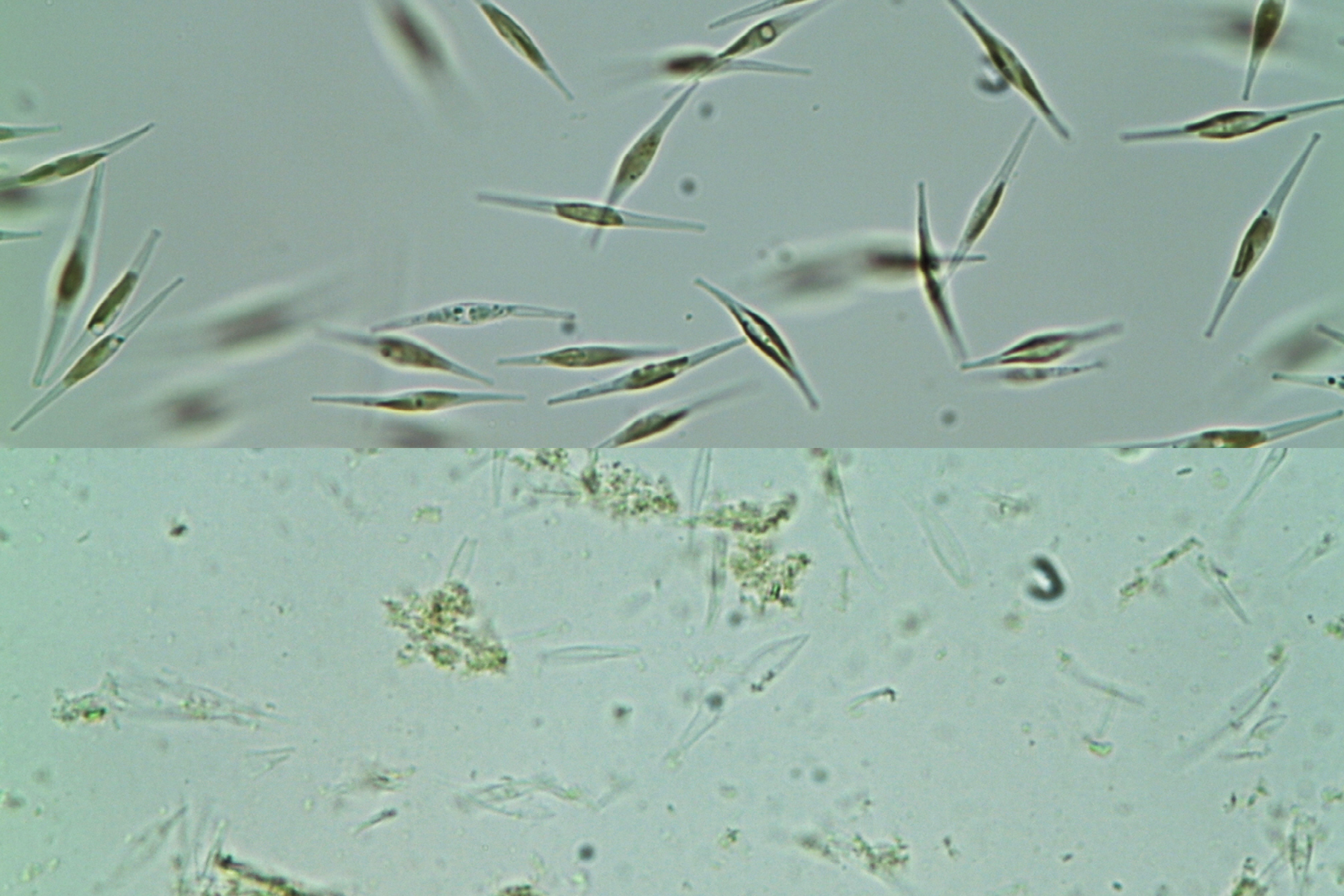
세포 파괴: 마이크로 알레
30 ml 세포 서스펜션
8 x 50 ml 콘 센트리푸지 튜브( 어댑터)
25 ml 유리 펄 각각; 0.5-0,75 mm
30 s 30 Hz
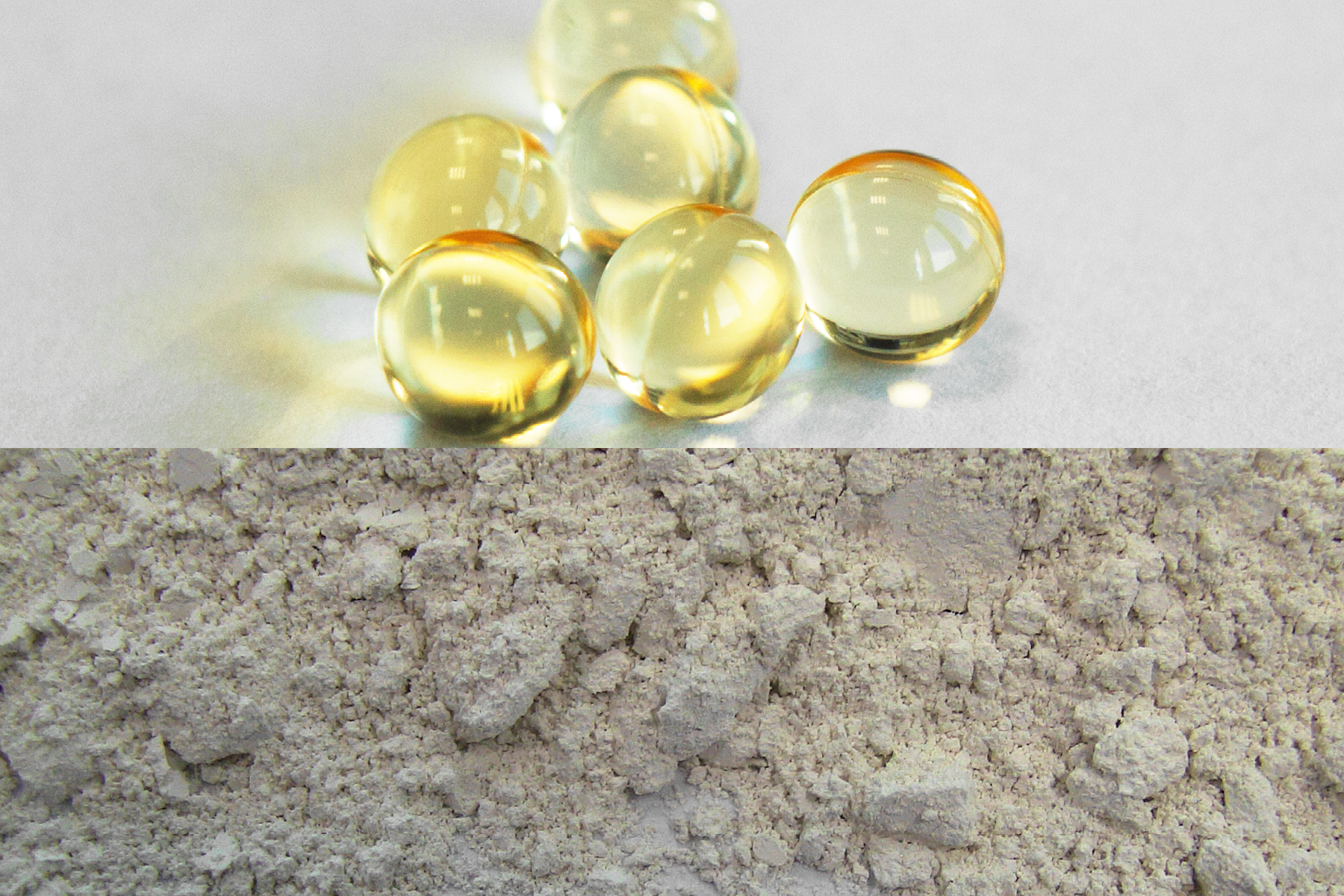
Elastic-Liquid:
액체와 함께 캡슐
15 ml 샘플
50 ml 스테인레스 스틸 병
1 x 25 mm 스테인레스 스틸 볼
LN2에서 3 분 동안
4 x 2 분 30 Hz에서 중간 냉각
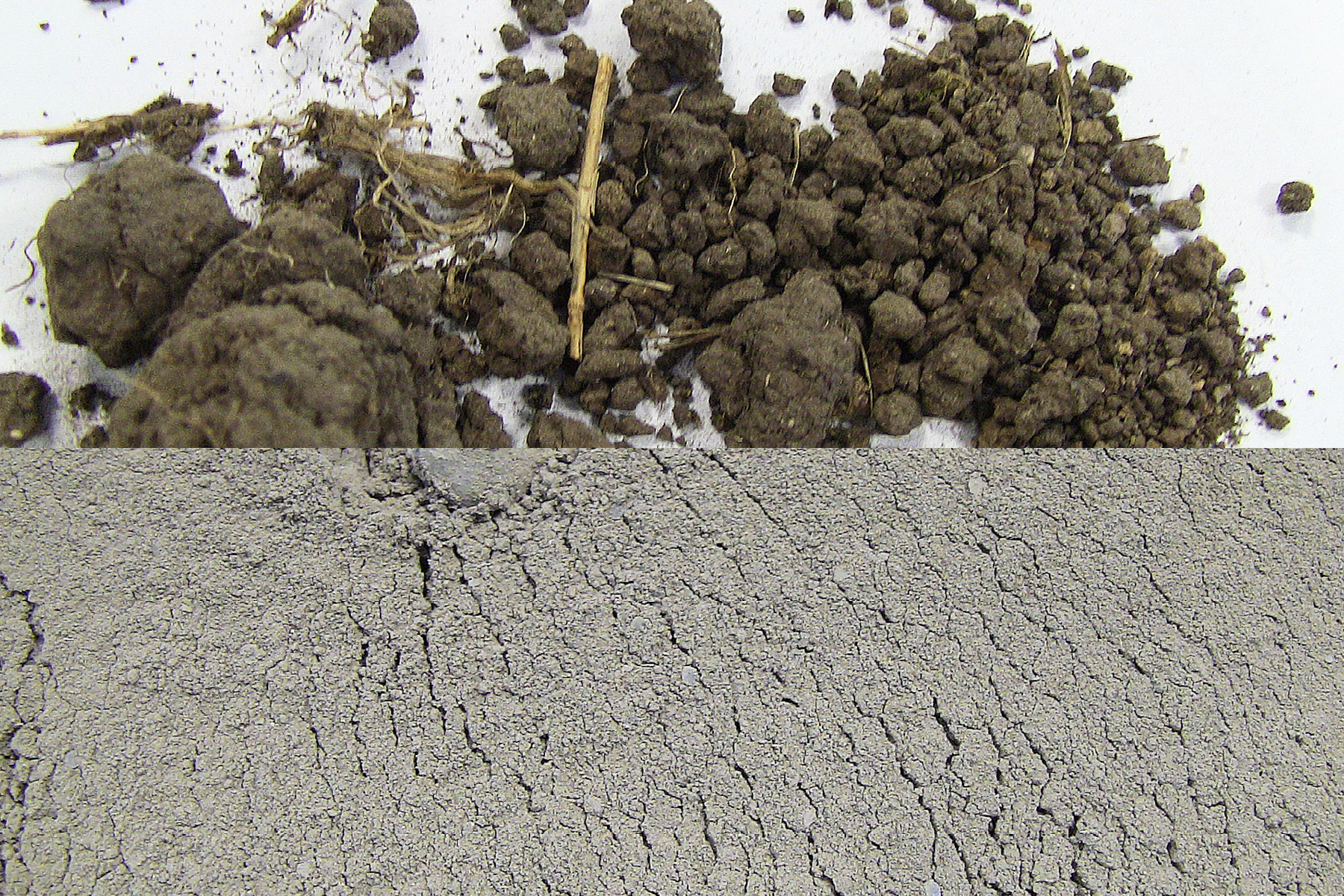
Medium-hard/fibrous: soil
20 ml 샘플
50 ml 스테인레스 스틸 잔
1 x 25 mm 스테인레스 스틸 볼
1 분 30 Hz
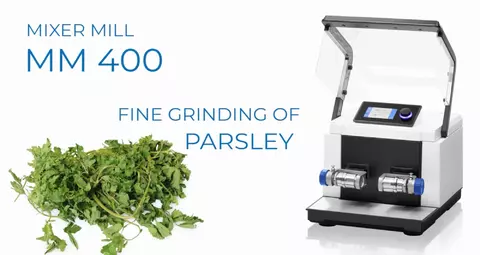
Parsley
20 ml 샘플
50 ml 스테인레스 스틸 잔
1 x 25 mm 스테인레스 스틸 볼
1 분 30 Hz
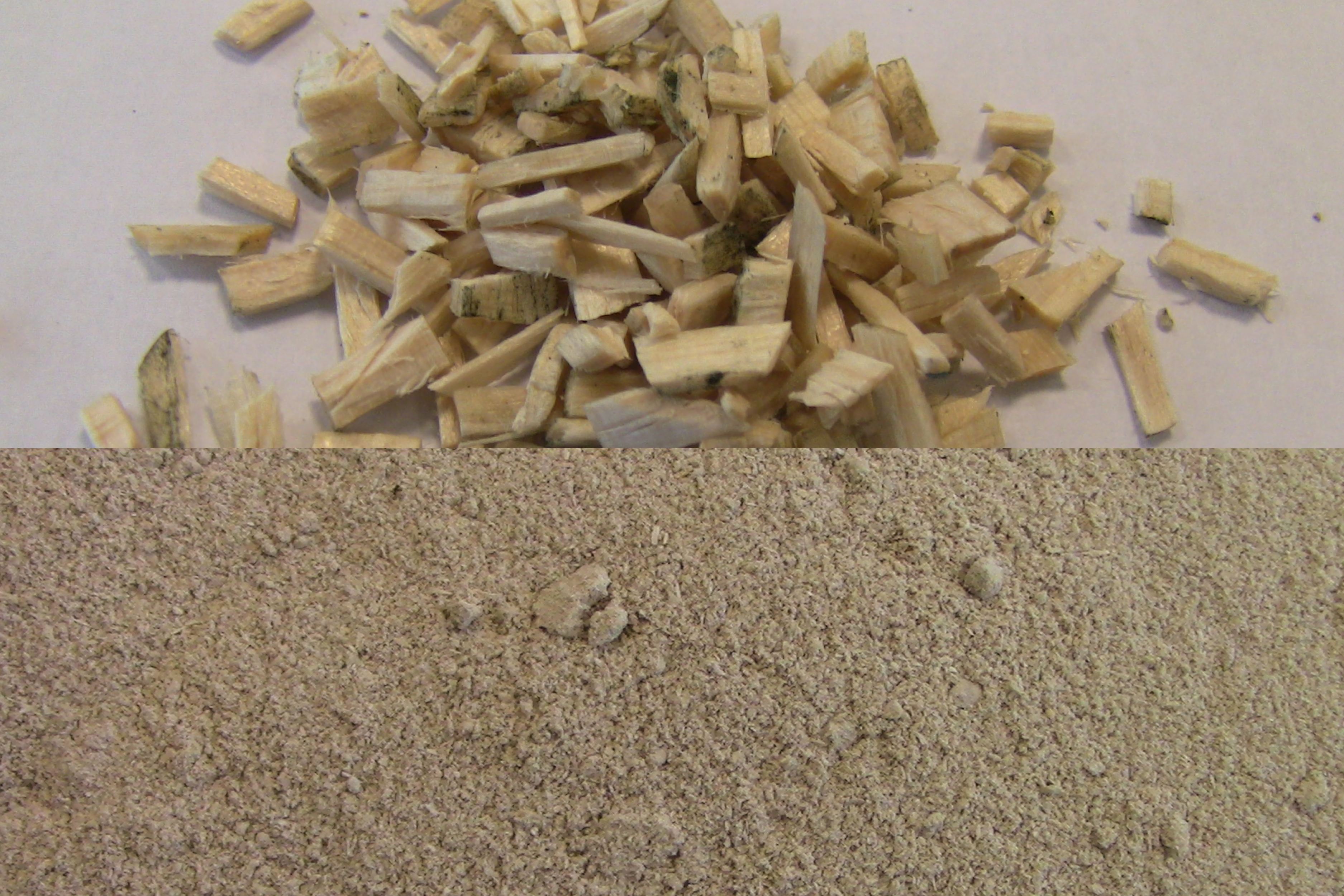
단단한 섬유: 나무
5 ml 샘플
10 ml zirconium oxide jar
2 x 12 mm zirconium oxide balls
3 min at 30 Hz
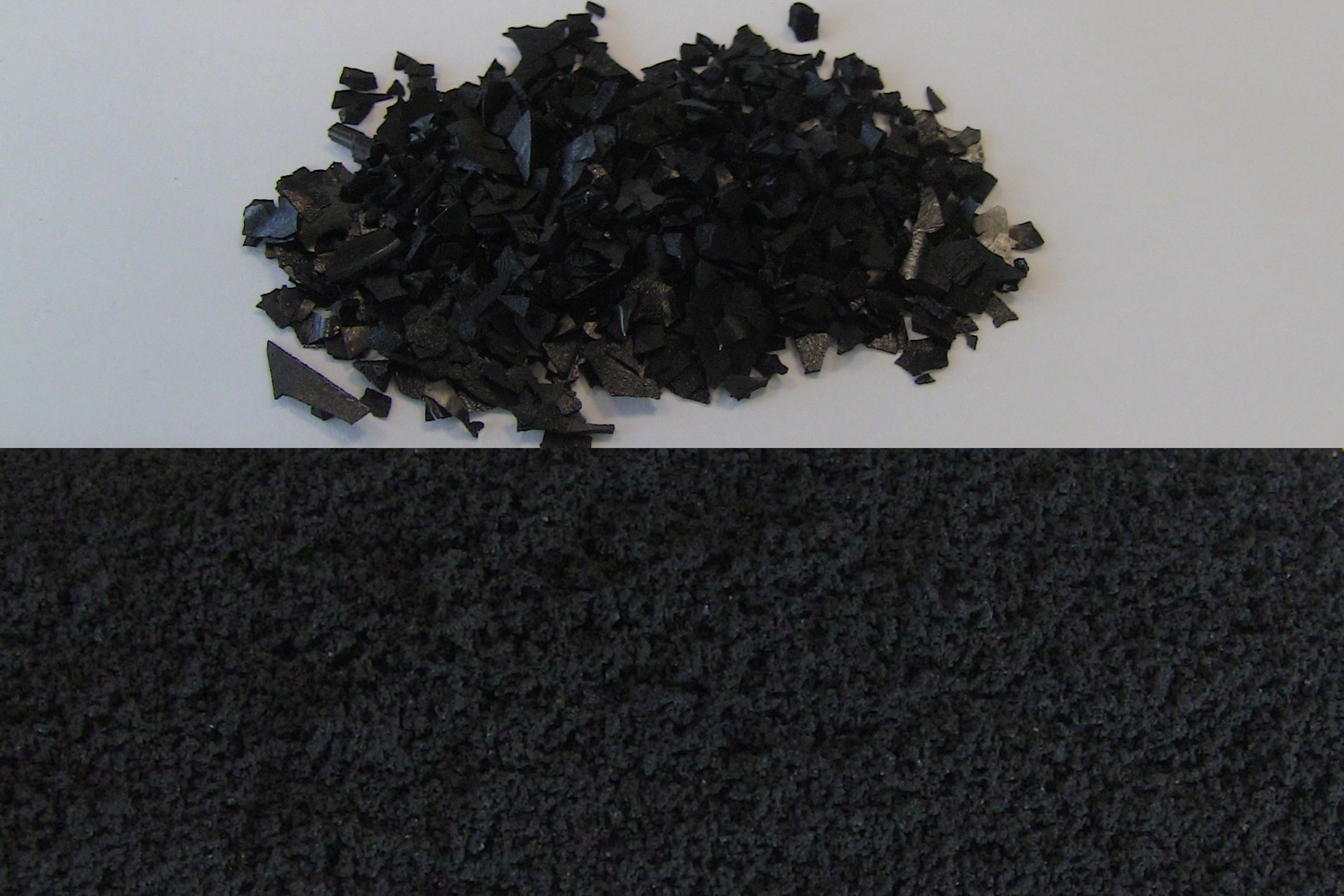
탄력성:
Polyurethane Pellets
20 ml 샘플
50 ml 스테인레스 스틸 병
1 x 25 mm 스테인레스 스틸 볼
LN2에서 3 분 동안
4 x 2 분 30 Hz에서 중간 냉각
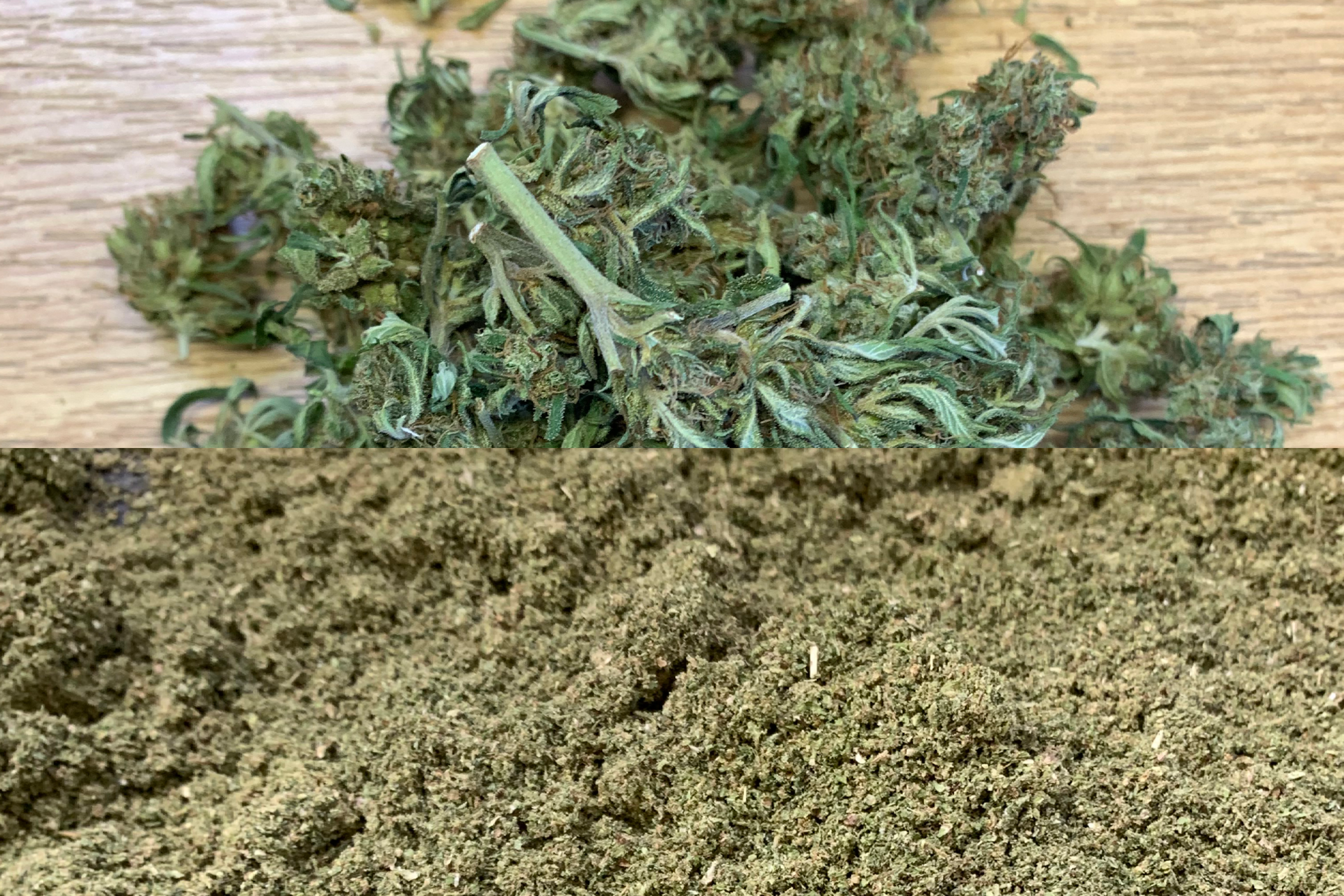
섬유: Cannabis
3g 샘플 50ml 스테인레스 스틸 잔
1 x 25mm 스테인레스 스틸 볼
LN2로 2분간
90s 30Hz로 흡입
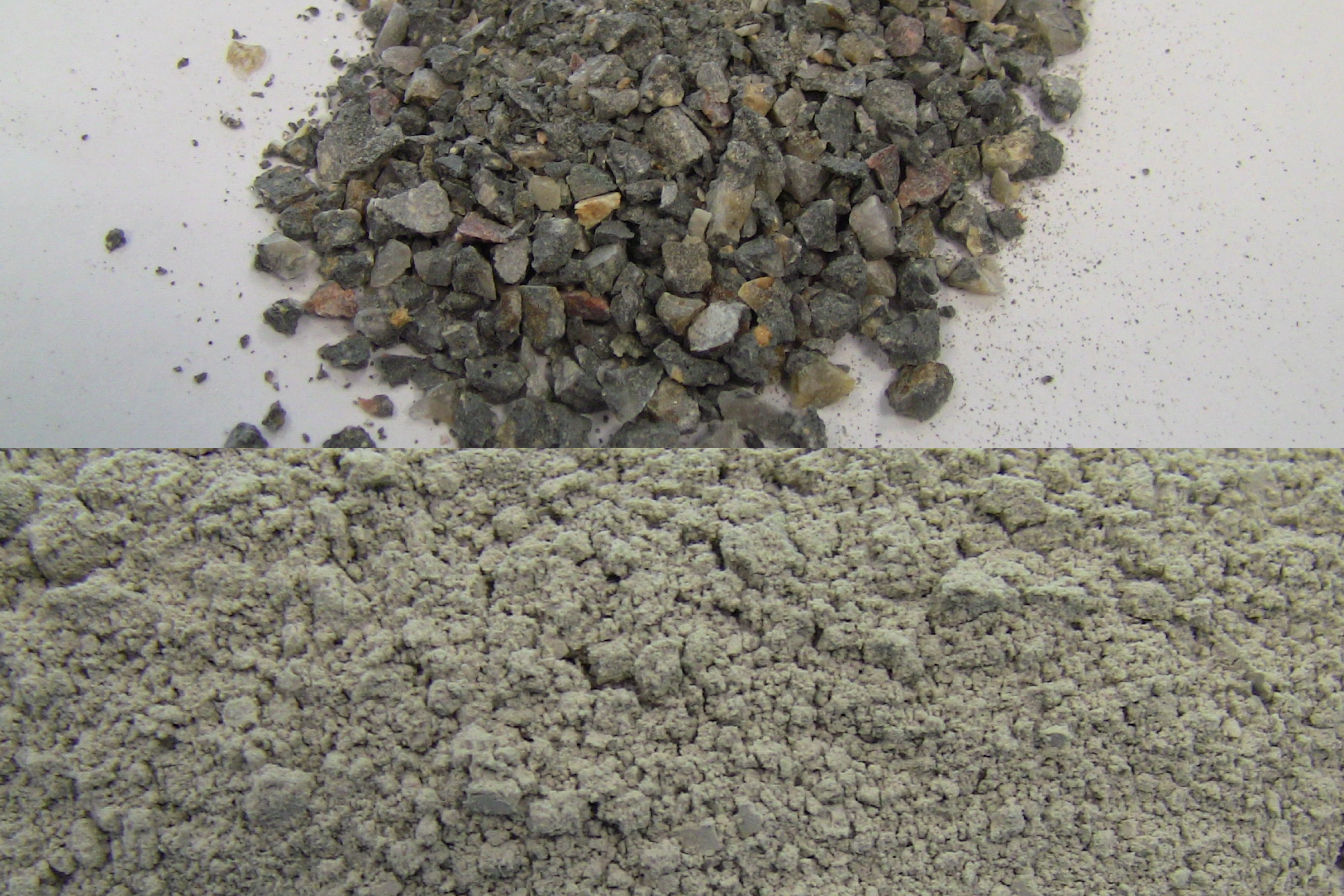
하드 취성: 콘크리트
10 ml 샘플 25 ml zirconium oxide jar 2 x 15 mm zirconium oxide balls 2 min at 30 Hz
샘플 준비 작업에 가장 적합한 솔루션을 찾으려면 애플리케이션 데이터베이스를 방문하십시오.
믹서 밀 MM 400 작동 원리
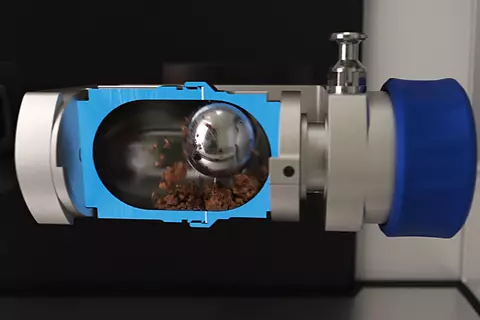
믹서 밀 MM 400의 분쇄 용기는 수평 위치에서 방사형 진동을 수행합니다. 분쇄용 볼의 관성은 용기의 둥근 끝 부분에서 높은 충격 에너지를 발생시켜 시료를 분쇄합니다. 또한 분쇄 용기의 운동운동은 볼의 운동과 조합되어 시료의 집중 혼합을 발생시킵니다.
혼합 정도는 여러개의 작은 볼들을 사용하여 더욱 증가될 수 있습니다. 여러 개의 작은 볼들이 사용되는 경우 (예. 유리 재질 볼) 생물학적 세포가 파괴될 수 있습니다. 볼 사이의 큰 마찰 충격 효과가 효과적인 세포 파괴를 보장합니다.
믹서 밀 MM 400 기술 데이터
| 응용 | size reduction, mixing, homogenization, cell disruption, cryogenic grinding, mechanochemistry |
|---|---|
| 응용분야 | agriculture, biology, chemistry / plastics, construction materials, engineering / electronics, environment / recycling, food, geology / metallurgy, glass / ceramics, medicine / pharmaceuticals |
| 투입 시료 | hard, medium-hard, soft, brittle, elastic, fibrous |
| 크기 축소 원리 | 충격, 마찰 |
| 최대 투입 크기* | = 8 mm |
| 최종 분말 입도* | ~ 5 µm |
| 시료 일괄 처리량* | max. 2 x 20 ml |
| 분쇄조 수 | 2 |
| Vibrational frequency | 3 - 30 Hz (180 - 1800 min-1) |
| 평균 분쇄 시간 | 30 초 - 2 분 |
| Max. grindig time | 99시간 |
| 건식 분쇄 | 가능 |
| 습식 분쇄 | 가능 |
| 냉동 분쇄 | 가능 |
| 바이알을 이용한 세포파쇄 | 가능, 20 x 2.0 ml 까지 |
| 자가 중심 결착기 | 가능 |
| 분쇄 용기 종류 | 스크류형 디자인 |
| 분쇄 도구 재질 | hardened steel, stainless steel, tungsten carbide, agate, zirconium oxide, PTFE, PMMA |
| 분쇄 용기 크기 | 1.5ml / 5ml / 10ml / 25ml / 35ml / 50ml |
| 분쇄 시간 설정 | digital, 10 s - 8 h |
| 표준 운영 절차 저장 가능 수 | 12 |
| 전원 공급 데이터 | 100-240 V, 50/60 Hz |
| 전원 연결 | 단상 |
| 소비 전력 | 165W |
| 안전 보호 코드 | IP 30 |
| 폭 x 높이 x 깊이 닫혔을 때 | 385 x 350 x 470 mm |
| 중량 | ~ 27,5 kg |
| 표준 | CE |
믹서 밀 MM 400 제품 정보
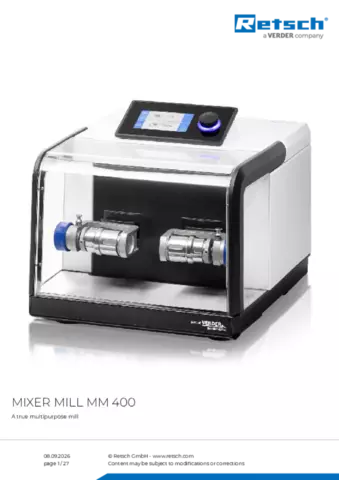
Product data sheet MM 400

Cannabis - Sample Preparation and Quality Control
RETSCH is putting to use its full product portfolio of grinders, sieve shakers and sample dividers to help process and prepare cannabis samples. The sample preparation process needs to be adjustable to the considerable complexity of the various matrices.
Expert Guide Milling
Why Size Reduction? A reliable and accurate analysis can only be guaranteed by reproducible sample preparation. The "Art of Milling" describes the process of turning a laboratory sample into a representative part sample with homogeneous analytical fineness.
General Catalogue

Green Cement - Innovation in the Construction Industry
Green Cement represents a significant innovation in the construction industry, aimed at reducing environmental impact and promoting sustainable development. Traditional cement production is a major contributor to global CO emissions, accounting for approximately 7-8% of the total. With this material these emissions can be minimized by incorporating supplementary cementitious materials (SCMs) such as fly ash, slag and seashell by using alternative fuels and raw materials. Our solutions enable the production of a more sustainable product with high performance characteristics and exceptional physical properties.
Product Overview
The right mill for every application.