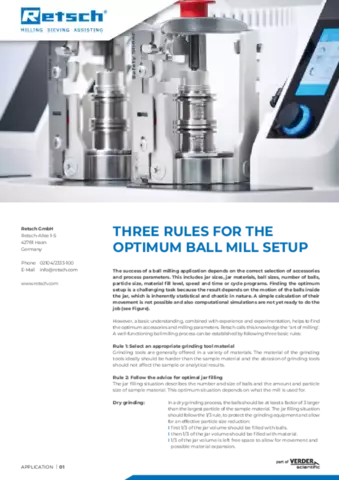






볼 밀은 경질, 취성 또는 섬유질성 시료의 입도 감소와 관련하여 가장 다양하고 효율적인 도구 중 하나입니다. 다양한 부노새 모드, 사용 가능 양 및 사용 가능 분쇄 도구 재질로 볼 밀은 광범위한 응용 분야에 매우 적합합니다.
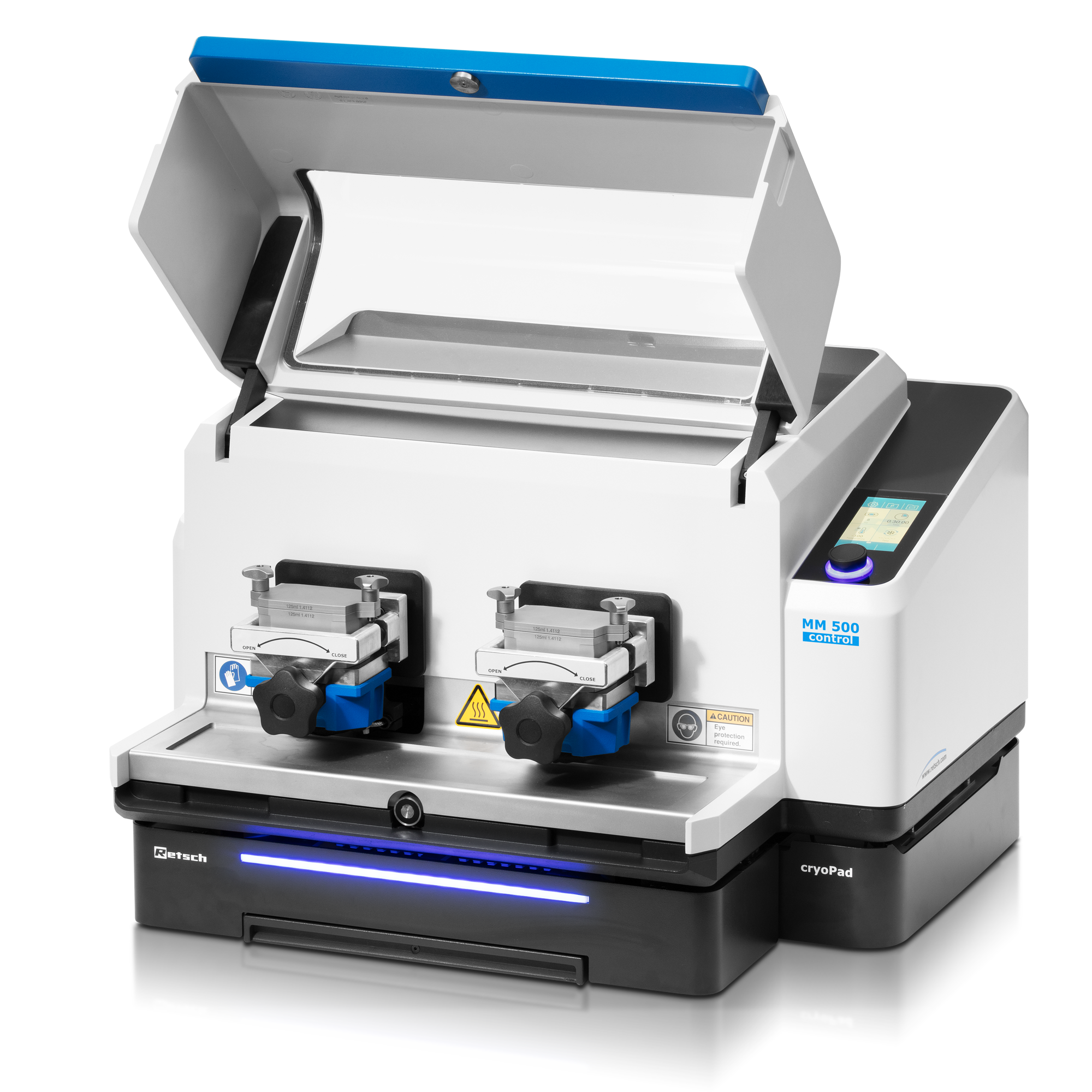
- 샘플 볼륨 최대 6 x 20 ml
- 최종 정밀도*: 0.1 μm
- 세포 붕괴 via bead beating
- Impact and friction에 의한 밀링
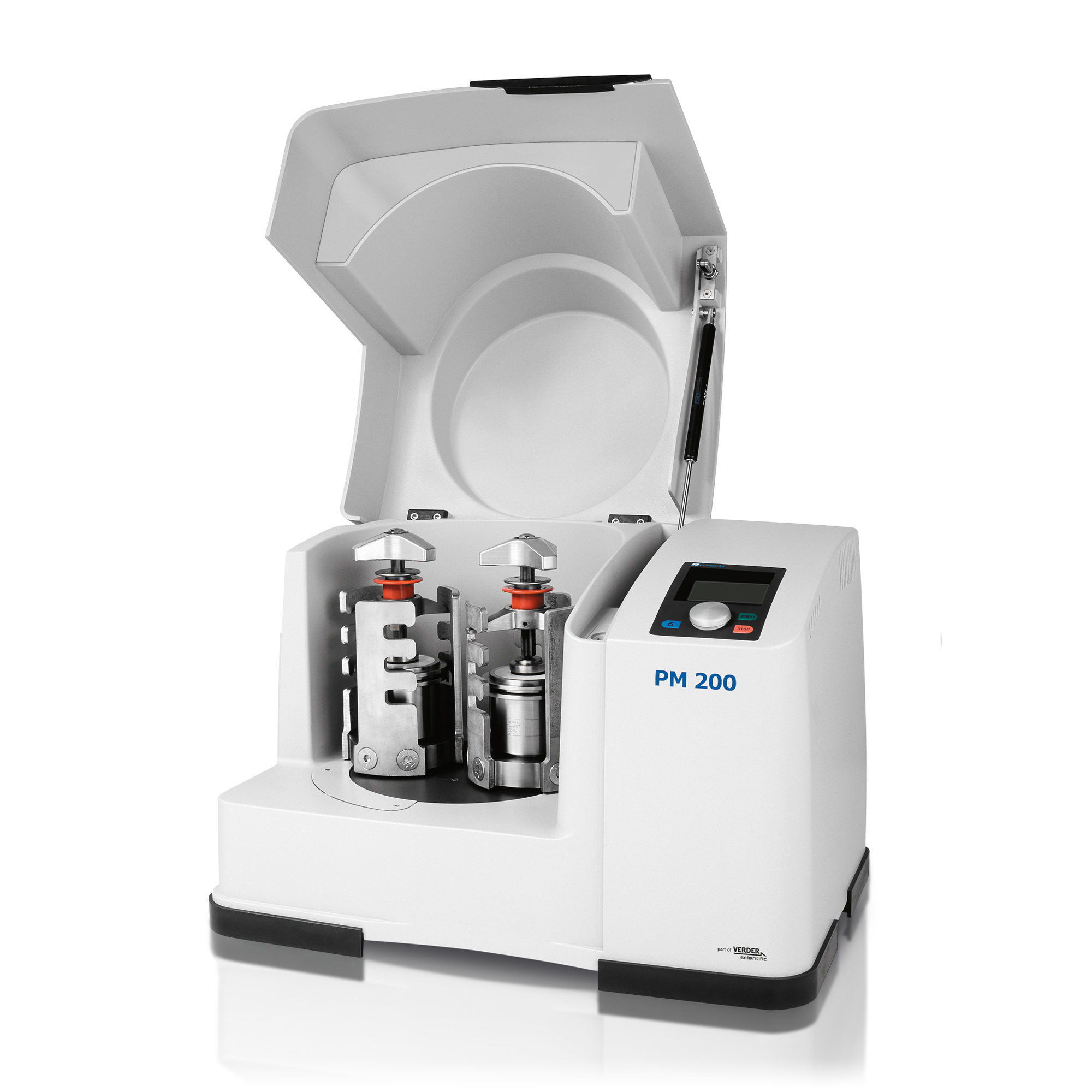
- 샘플 볼륨 최대 4 x 220 ml
- 최종 정밀도*: 0.1 μm
- 극단적으로 높은 센트리볼라 힘은 높은 에너지 입력 결과
- 충격과 마찰에 의해 건조 및 젖은 밀링
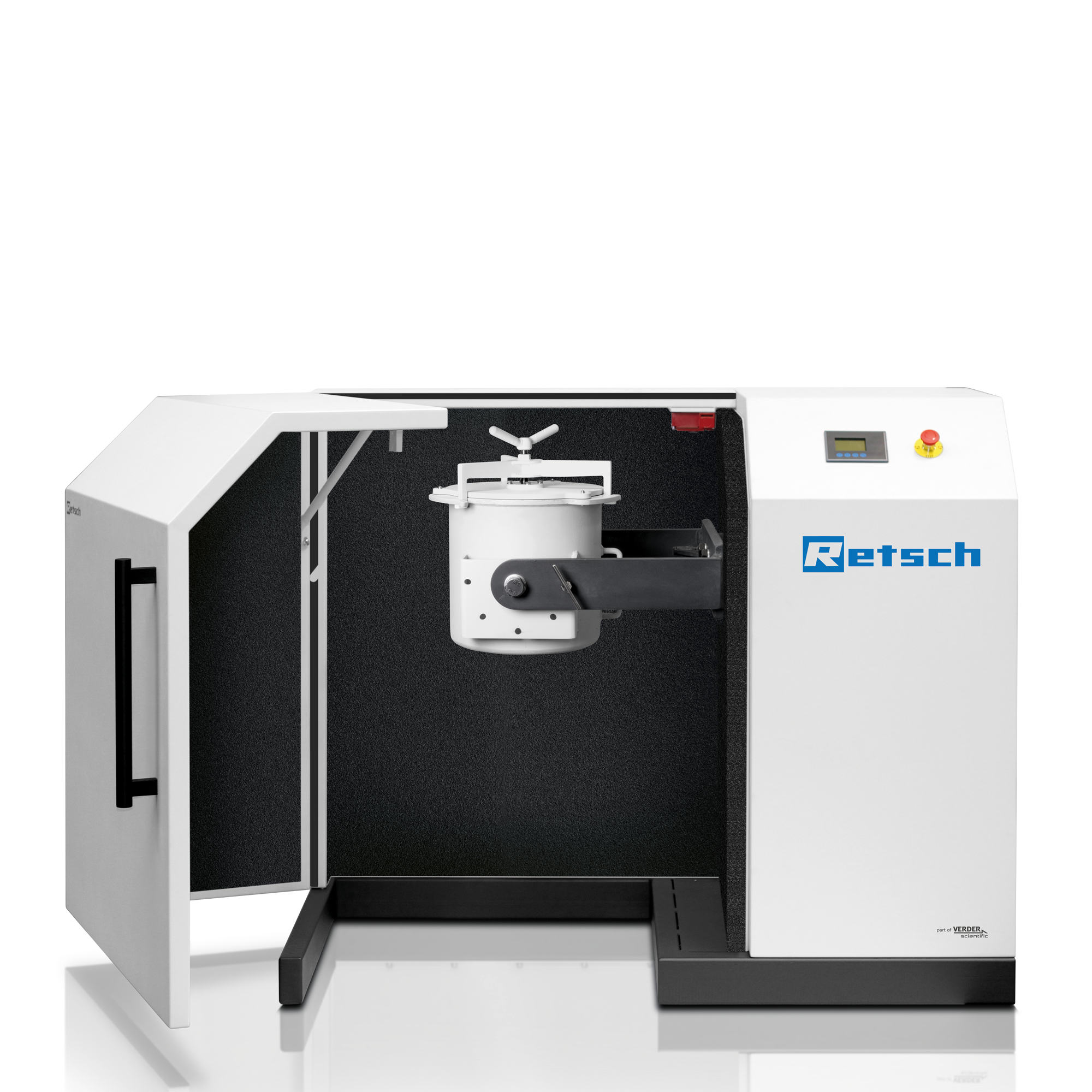
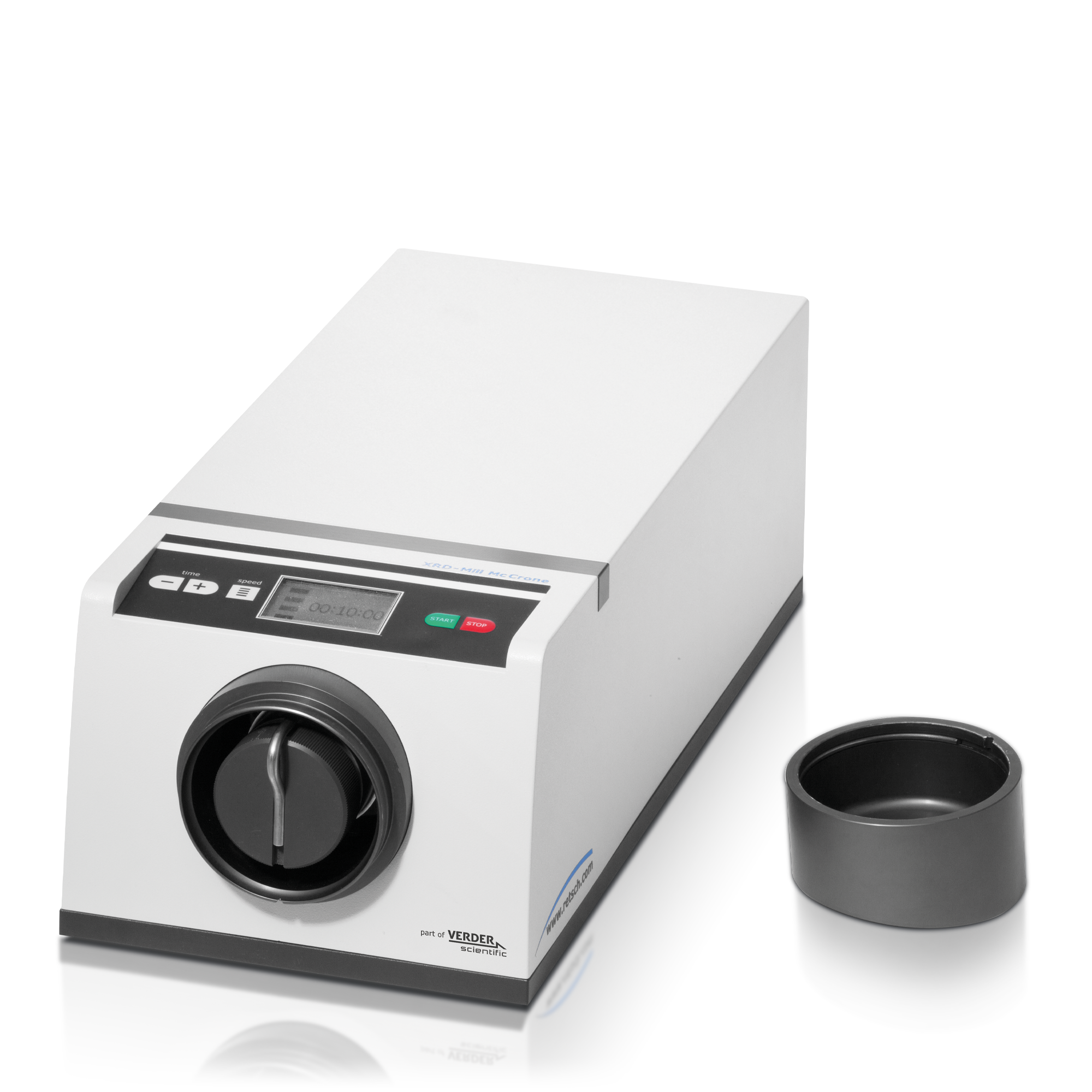
- 후속 X-ray diffraction (XRD)에 대한 샘플 준비
One ball mill is not like the other
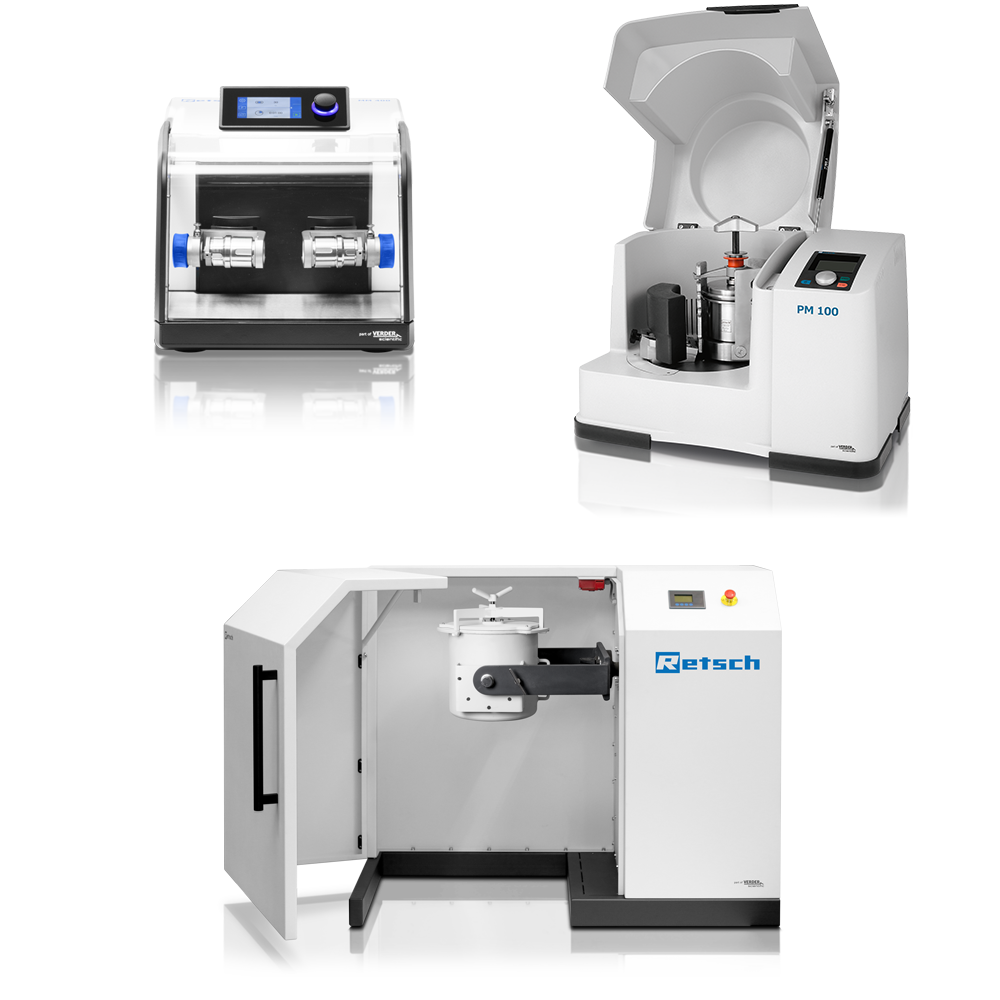
What makes one ball mill better suited for a specific purpose than another? To understand the factors that differentiate ball mill types, we will first look at their common characteristics. Basically, the working principle of each ball mill is the same: it is based on the concept that the sample material is moved potentially together with grinding balls inside a closed jar. This movement results in strong mixing and crushing effects of the material. The apparent difference, which can be seen immediately, lies in the different way the jars move. The classification of ball mills according to their movement is typically reflected in their names. In a planetary ball mill, for example, a jar rotates on a circular path similar like a planet rotates around the sun, in a mixer mill a jar performs an oscillating shaking movement in a horizontal position and in a drum mill the jar simply rotates around its central axis, see Figure 1.
Ball mills are furthermore characterized by significant differences in the sizes of available grinding jars. Retsch offers mills with jar capacities from 1.5 ml up to 150 l and balls are available from 0.1 mm to 40 mm, see Figure 2.
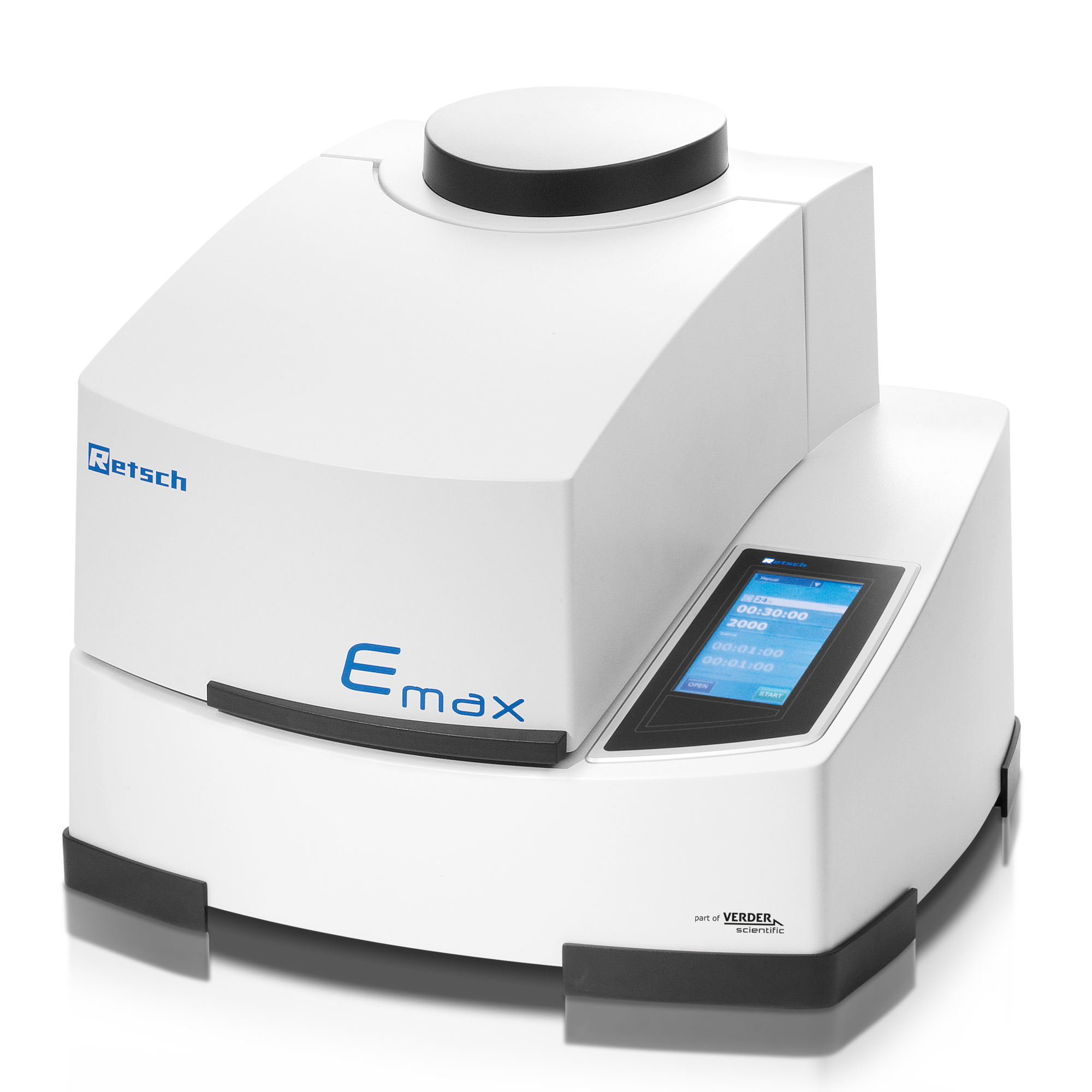
A third and very important characteristic of a ball mill, which also has a great influence on the result of a milling process, is the power of a mill. Depending on the application, jars should be moved either slowly for gentle material processing or, most commonly, at high speed for effective grinding effects. Here, the maximum speed, which is given as maximum frequency or maximum revolutions per minute (rpm), is often used as a synonym for performance. A more meaningful physical quantity than speed is the acceleration force "g", which is induced by the kinetic energy of a ball mill. In the High-Energy Ball Mill Emax for example, an unrivalled acceleration of 76 g can be obtained, if running at its maximum speed of 2000 rpm.
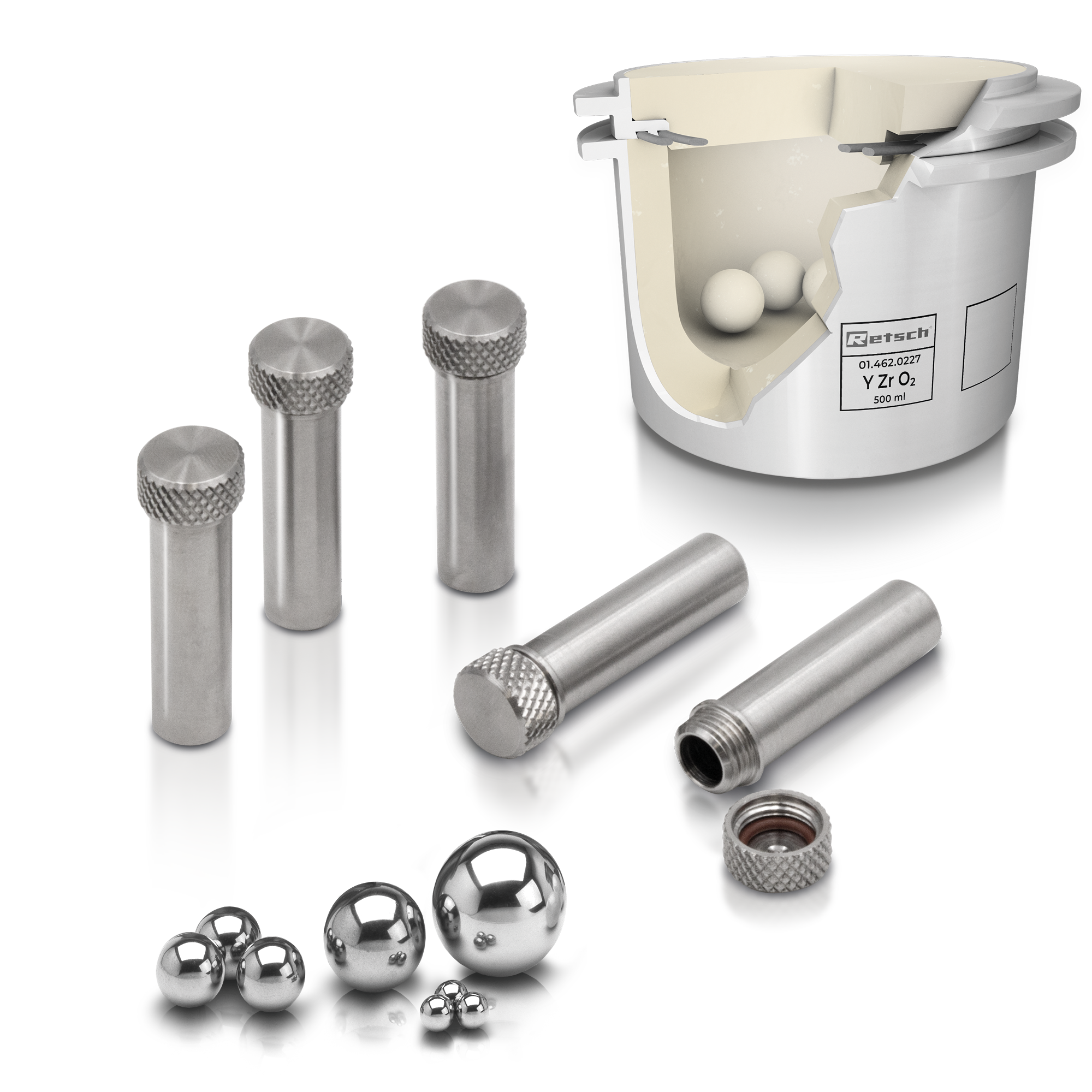
- 2 mL metal cups
- 500 mL EasyFit jar
- Grinding balls of various sizes
Selecting the most suitable ball mill
To identify the most suitable ball mill for a particular application, the task and required outcome need to be defined. Sample size, batch volume, process time, available materials of grinding tools and final fineness are the keywords here. Once the application requirements are clear, a suitable mill can be selected. To facilitate this process, Retsch displays the strength and efficiency of each ball mill model in a spider-net diagram, see Figure 3.
A planetary ball mill, for example, offers a big jar volume compared to a mixer mill and shows a high value on this diagonal. A mixer mill in contrast offers various possibilities for temperature control and has a high value in this field. Considering that a single ball mill is most often used for a variety of applications, a good compromise must be found to ensure that all application requirements can be optimally met.
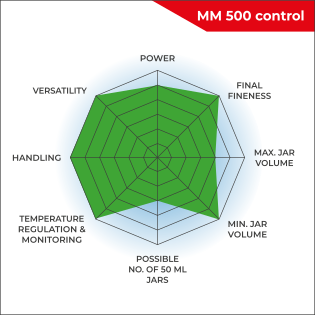
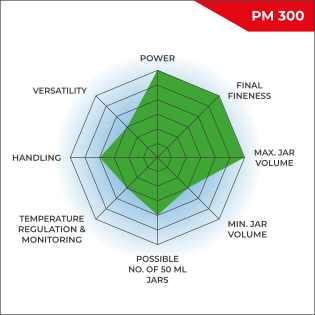
Figure 3
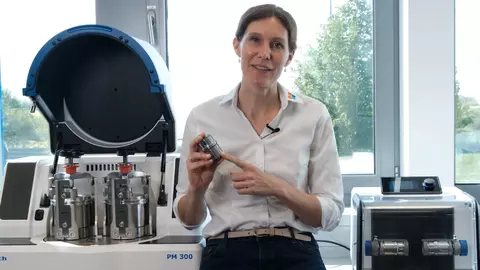
Dr. Lena Weigold는 가장 적합한 볼 밀을 선택하는 방법을 설명합니다.
이 컴팩트 가이드는 최적의 볼 밀링 설정을 달성하기위한 세 가지 필수 규칙을 요약하고 최고의 결과를 달성하기 위해 액세서리 및 프로세스 파라미터의 선택을 통해 안내합니다.