





완벽하고 비교 가능한 분석은 정확한 시료 처리와 밀접하게 연관되어 있습니다. 최초 물질의 대표 시료만이 의미 있는 분석 결과를 제공할 수 있습니다. 회전식 튜브 분배기는 시료의 대표성을 보장하므로 분석의 재현성을 보장합니다.
회전식 튜브 분배기 PT 200은 방진이 필요한 부서 및 대형 벌크 시료의 부피 감소를 위한 필수 조건 입니다. 제품은 분말 또는 과립 형태의 벌크 시료에 적합합니다. 슬롯의 폭은 분획의 비율을 조정하므로 시료의 양을 조정합니다.
장점
- 많은 양의 정확한 분배
- 모듈형 설계
- 분배율 조절 가능
- 1 - 3 개의 시료 추출
- Quick-release 타입의 시료 배출구 및 bottom cone의 간편한 결착
- 일괄 및 연속 운영 가능
- 속도 제어식 회전 튜브
- Vibratory Feeder DR 100을 위한 직접 디지털 연결
- DIN 51701에 따른 분배 공정
유사분야 적용사례
세멘트클링크, 시약, 커피, 건축자재, 비료, 충전재, 밀가루, 곡물, 금속 파우더, 광물, 견과류, 모래, 씨앗, 흙, 와싱 파우더,..
작동 원리
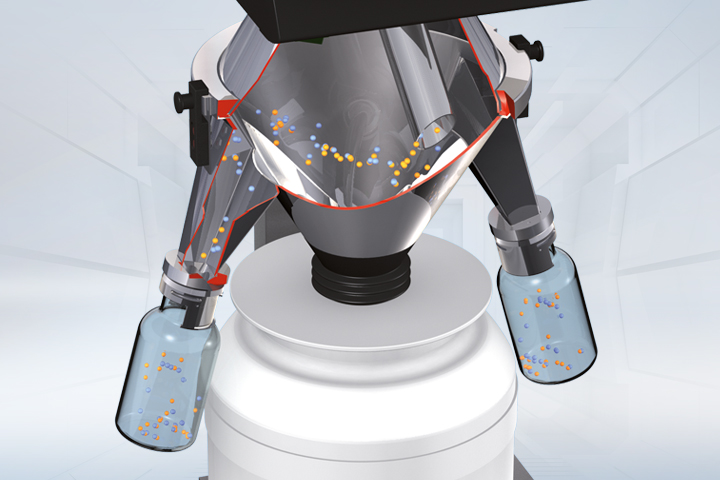
분배 될 시료가 진동 투입기의 활송로를 지나 투입구를 통해 회전 튜브 분배기 내부로 투입됩니다. 모든 시료의 유량은 일정한 속도 (50 min-1)에서 상부 콘에서 회전하는 튜브에 의해 하부 콘 경사면 원주 전체에 고르게 분배됩니다. 교체식 하부 콘은 1 개, 2 개 또는 3개의 연속 조절 샘플 슬롯이 장착될 수 있습니다. 각 회전 과정에서 슬롯의 폭에 해당하는 분획이 용기에 수집됩니다. 나머지는 배출 용기에 수집됩니다.
회전 튜브 분배기 PT 200 기술 데이터
| 응용 | 샘플링, 시료 분할, 시료 축분 |
|---|---|
| 응용분야 | agriculture, biology, chemistry / plastics, construction materials, engineering / electronics, environment / recycling, food, geology / metallurgy, glass / ceramics, medicine / pharmaceuticals |
| 투입 시료 | 대용량 |
| 투입시료 크기* | <= 10 mm |
| 로터리 속도 | 50 min-1 |
| 분할 수 | 1 / 2 / 3 (하부 용기에 따라) |
| 시간 설정 | 디지털, 1, 3, 5, 10 - 60 분 연속 작업 |
| 슬롯 폭 연속 조정 가능 | 0 - 159 mm (시료 취출부 1개) 0 - 110 mm ( 시료 취출부 2개) 0 - 53 mm (시료 취출부 3개) |
| 최대 분할 비율 | 1 x 1:5 (시료 취출부 1개) 2 x 1:7,2 (시료 취출부 2개) 3 x 1:15 (시료 취출부 3개) |
| 최소 분할 비율* | 1 x 1:26 (시료 취출부 1개) 2 x 1:26 (시료 취출부 2개) 3 x 1:26 (시료 취출부 3개) |
| 배출량 | 26L |
| 수집 용기 용량 | 250ml / 500ml |
| 전원 공급 데이터 | 100-240 V, 50/60 Hz |
| 전원 연결 | 단상 |
| 폭 x 높이 x 깊이 | 520 x 1050 x 551 mm / 572 x 1307 x 551 mm DR 100 포함 |
| 중량 | ~ 46 kg (DR 100 포함) |
| 표준 | CE |
회전 튜브 분배기 PT 200 제품 정보
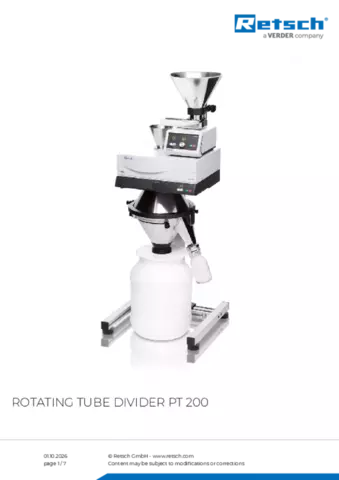
Product data sheet PT 200
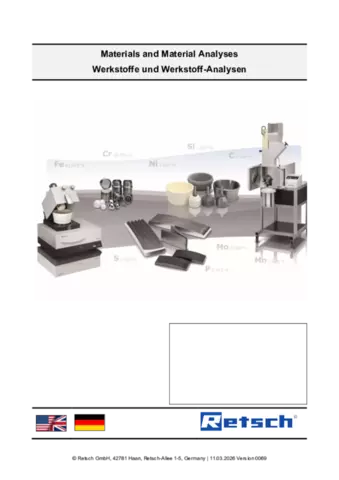
Material Analyses of Equipment & Accessories
How does the material of a grinding tool affect sample preparation and the analysis results? This document provides a detailed overview of the materials used by RETSCH and their properties.
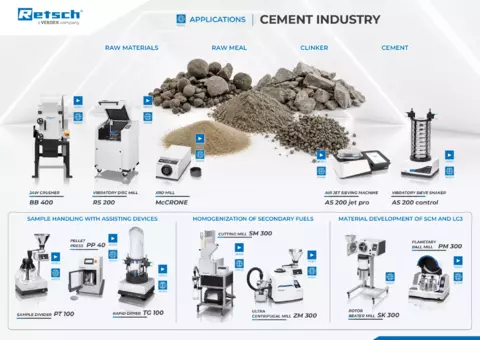
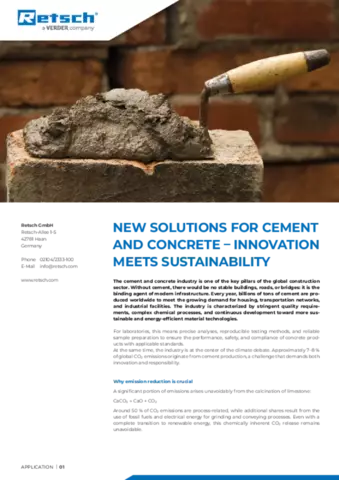
New Solutions for Cement and Concrete
The cement and concrete industry is one of the key pillars of the global construction sector. Without cement, there would be no stable buildings, roads, or bridges: it is the binding agent of modern infrastructure. Every year, billions of tons of cement are produced worldwide to meet the growing demand for housing, transportation networks, and industrial facilities. The industry is characterized by stringent quality requirements, complex chemical processes, and continuous development toward more sustainable and energy‑efficient material technologies.