






Sieving analysis is a method for determining the particle size distribution of various bulk materials, described in a multitude of international standards. Sieve analysis is one of the most established methods in quality assurance and can be performed as either dry or wet sieving.
Manual sieving is also possible, but due to the individual influences of the operator like speed and strength, it is to be disregarded in a professional context.
Sieving analysis allows the characterization of particle size distributions of bulk materials of various shapes and sizes, enabling the determination and comparison of specific product properties such as solubility, flow behavior, and reactivity of different materials.
Sieve analysis
Sieve analyses are indispensable for production and quality control of powdery and granular bulk materials in many industries (including food, pharmaceutical, and chemical). Advantages of sieve analysis include:
- easy handling
- low investment costs
- rapid delivery of precise and reproducible results
- the ability to obtain individual particle size fractions
Therefore, this method can certainly compete with modern analytical techniques such as laser light scattering or image analysis methods.
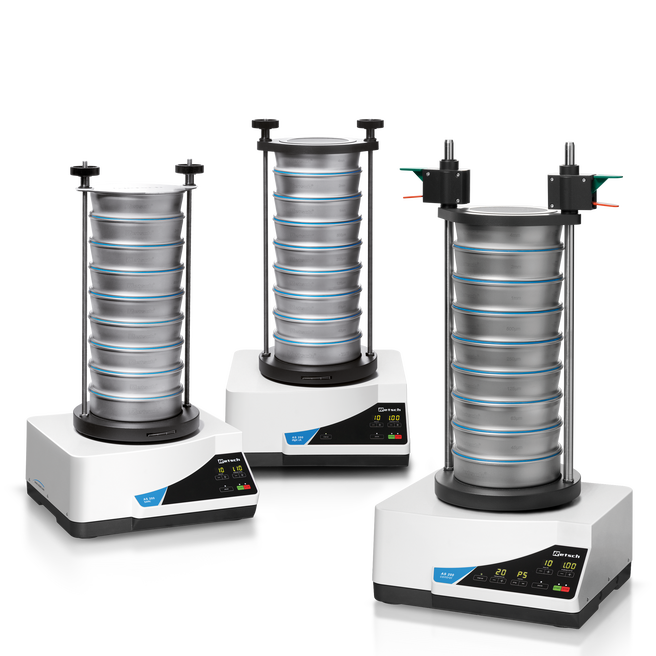
To ensure high reproducibility and reliability, the sieve shaker and accessories must meet stringent requirements that comply with (inter)national standards. RETSCH analytical sieves and sieve shakers, as well as all other measuring equipment (e.g., balances) needed for characterizing particle size distribution, are therefore calibratable and are subject to test equipment monitoring as part of quality management systems. For comprehensive process reliability, careful sample preparation is also essential. Only in combination can sieving results be achieved that enable reliable characterization of your products.
Overview of Sieving Principles
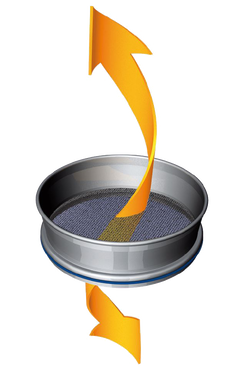
Proba este proiectată în sus de vibrațiile fundului sitei și cade înapoi în jos datorită forțelor gravitaționale. Amplitudinea indică înălțimea oscilației verticale a fundului sitei.
În cazul cernerii vibratoare, proba este supusă unei mișcări tridimensionale, adică o mișcare circulară suprapune mișcarea verticală de proiectare. Datorită acestei mișcări combinate, materialul probei este răspândit uniform pe întreaga suprafață a sitei. Particulele sunt accelerate în direcție verticală, se rotesc liber și apoi cad orientate statistic. La sitele vibrante RETSCH, o acționare electromagnetică pune în mișcare un sistem arc/masă și transferă oscilațiile către stiva de site. Amplitudinea poate fi reglată continuu până la câțiva milimetri.
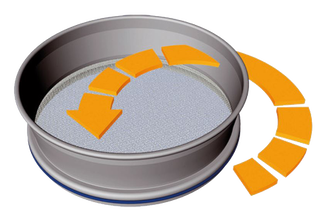
Într-o sită vibratoare orizontală, sitele se mișcă în cercuri orizontale într-un plan. Sitele vibratoare orizontale sunt utilizate de preferință pentru probe în formă de ac, plate, lungi sau fibroase. Datorită mișcării de cernere orizontale, aproape nicio particulă nu își schimbă orientarea pe sită.
Într-o sită vibratoare cu robinet, o mișcare circulară orizontală este suprapusă de o mișcare verticală generată de un impuls de sitare. Sitele vibratoare cu robinet sunt specificate în diverse standarde pentru analiza dimensiunii particulelor.
Numărul de comparații între particule și deschiderile sitei este substanțial mai mic la sitele vibratoare decât la sitele vibratoare (2,5 s-1 comparativ cu ~50 s-1), ceea ce duce la timpi de sitare mai lungi. Pe de altă parte, mișcarea de sitare oferă particulelor un impuls mai mare, prin urmare, cu unele materiale, cum ar fi abrazivele, fracția de particule fine este de obicei mai mare. Cu materiale ușoare, cum ar fi talcul sau făina, însă, fracția de particule fine este mai mică.

Sita cu jet de aer este o mașină de cernere pentru o singură cernere, adică pentru fiecare proces de cernere se folosește o singură sită. Sita în sine nu este mișcată în timpul procesului.
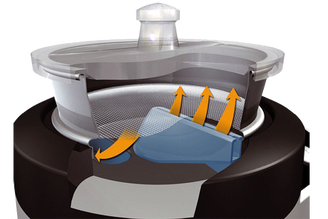
Materialul de pe sită este mișcat de un jet de aer rotativ: Un aspirator conectat la mașina de cernere generează un vid în interiorul camerei de cernere și aspiră aer proaspăt printr-o duză rotativă. La trecerea prin fanta îngustă a duzei, fluxul de aer este accelerat și suflat împotriva ochiurilor sitei, dispersând particulele. Deasupra ochiurilor, jetul de aer este distribuit pe întreaga suprafață a sitei și este aspirat cu viteză mică prin ochiurile sitei. Astfel, particulele mai fine sunt transportate prin deschiderile ochiurilor în aspirator sau, opțional, într-un ciclon.
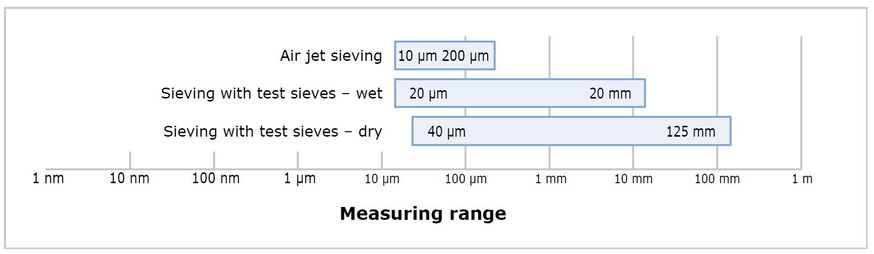
In air jet sieving, only a single sieve is used at a time, and it is not moved during the sieving process. A rotating nozzle below the sieve directs a jet of air onto the material to be sieved, causing particles to deagglomerate and then be sucked through the sieve. Air jet sieving is suitable for size ranges from 10 µm to 4 mm.
Dry sieving is the most popular method of reproducible sieve analysis, including vibration, horizontal and tap sieving. Air jet sieving is also considered a dry sieving method, but it is a special process (see below). If necessary, the sample is dried in advance to avoid clumping. Before sieving, the sample is weighed, then placed in the sieving system and weighed again at a later point in time.
Sieving is used to determine the percentage of the sample that remains on the sieve or is smaller than the selected mesh size. If a particle size determination of the various fractions is to be carried out (set sieving), a sieve stack is used that contains several sieves with different mesh sizes (40 µm – 125 mm).
However, to ensure that the results are reproducible beyond doubt, the machine should be set up completely digitally. Furthermore, the integrated control unit should be constantly monitored to avoid unintentional changes and deviations during the test.
Wet sieving is used to determine particle sizes in moist, greasy or oily samples. It is also the method of choice when the material to be analyzed is already present as a suspension and cannot be dried, as well as for particles that tend to agglomerate (usually < 45 µm), which would otherwise clog the sieve openings.
The material to be sieved is suspended and, as with dry sieving, applied to the uppermost sieve and then rinsed with water under vibration until the liquid emerging from below the sieve stack is unclouded. Wet sieving is carried out in the range 20 µm - 20 mm.
Different Requirements, Different Sieving Parameters
The optimal parameter settings depend on the respective material. Depending on the chosen sieve shaker, interval, speed, sieving time, amplitude, or even negative pressure may come into play. Although numerous (inter)national standards and guidelines exist for product-specific sieve analysis parameters, for some materials, suitable parameters must be determined experimentally. We are happy to assist you.
Take advantage of our offer for a free test sieving!
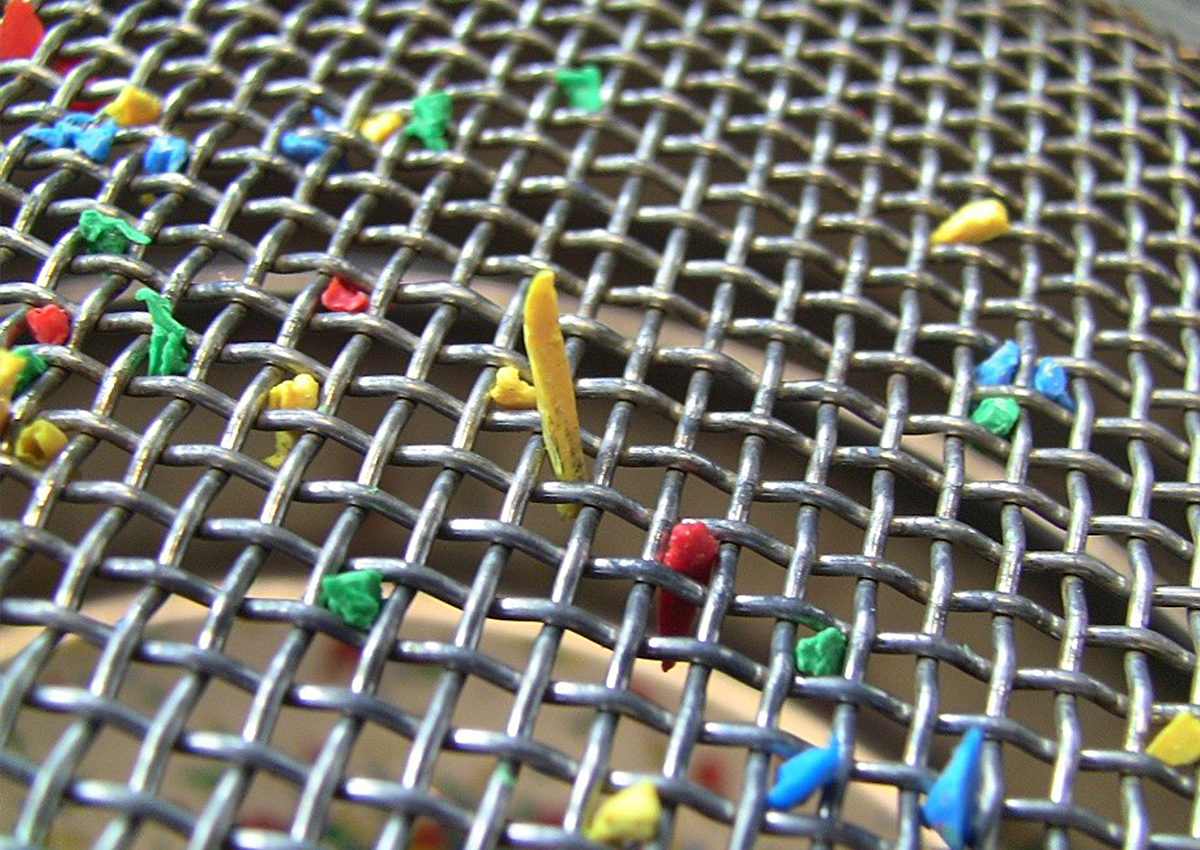
Horizontal sieving:
For flakes, sticks...
-> Long particles stay on the sieve
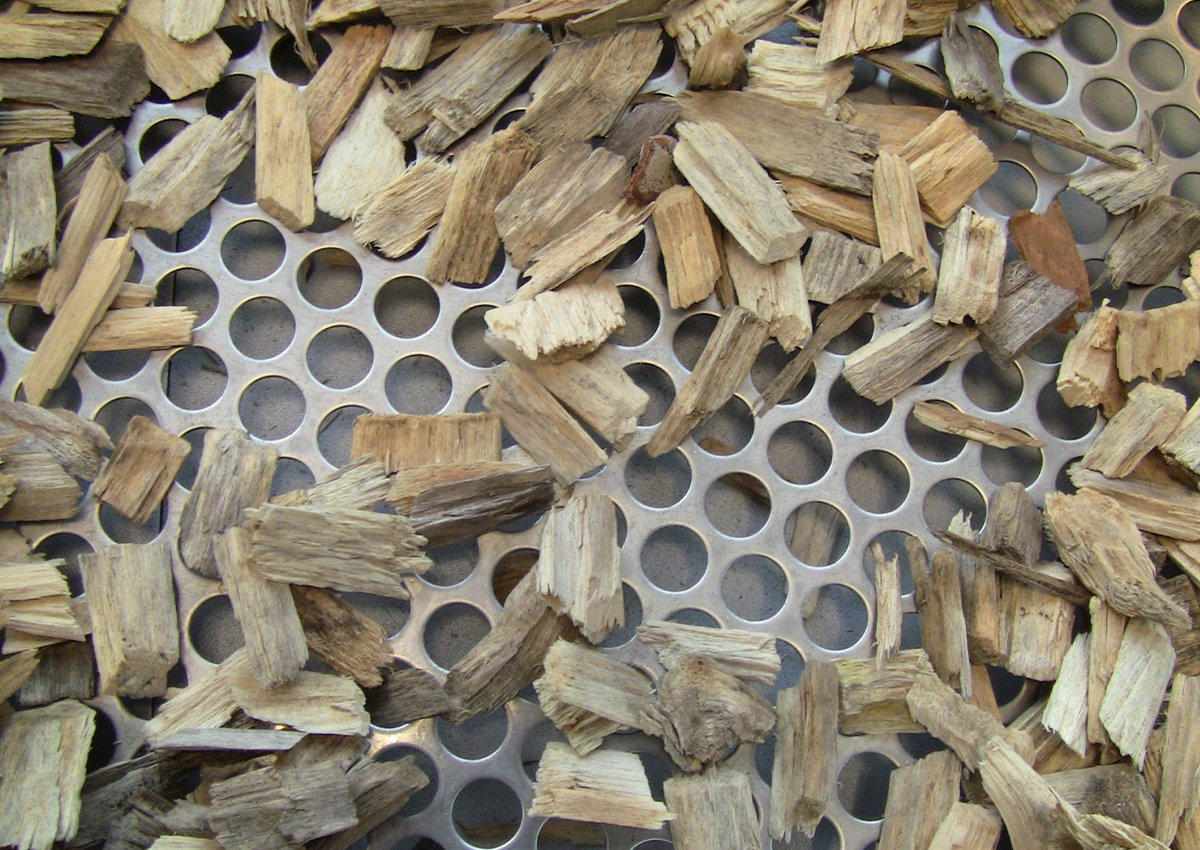
Vibratory sieving:
Lenghtwise passing of the particles through the pores.
-> Sample seems to be finer
Different sieving methods lead to different sieving results, which can be reflected in the particle size distribution. The diagrams illustrate how the horizontal sieving method and the vibratory sieving method each affect the particle size fractions. While the horizontal method achieves specific sorting through uniform movements, the vibratory sieving method utilizes 3D throwing motions for alternative separation. This results in different particle distributions, clearly shown in the diagrams.
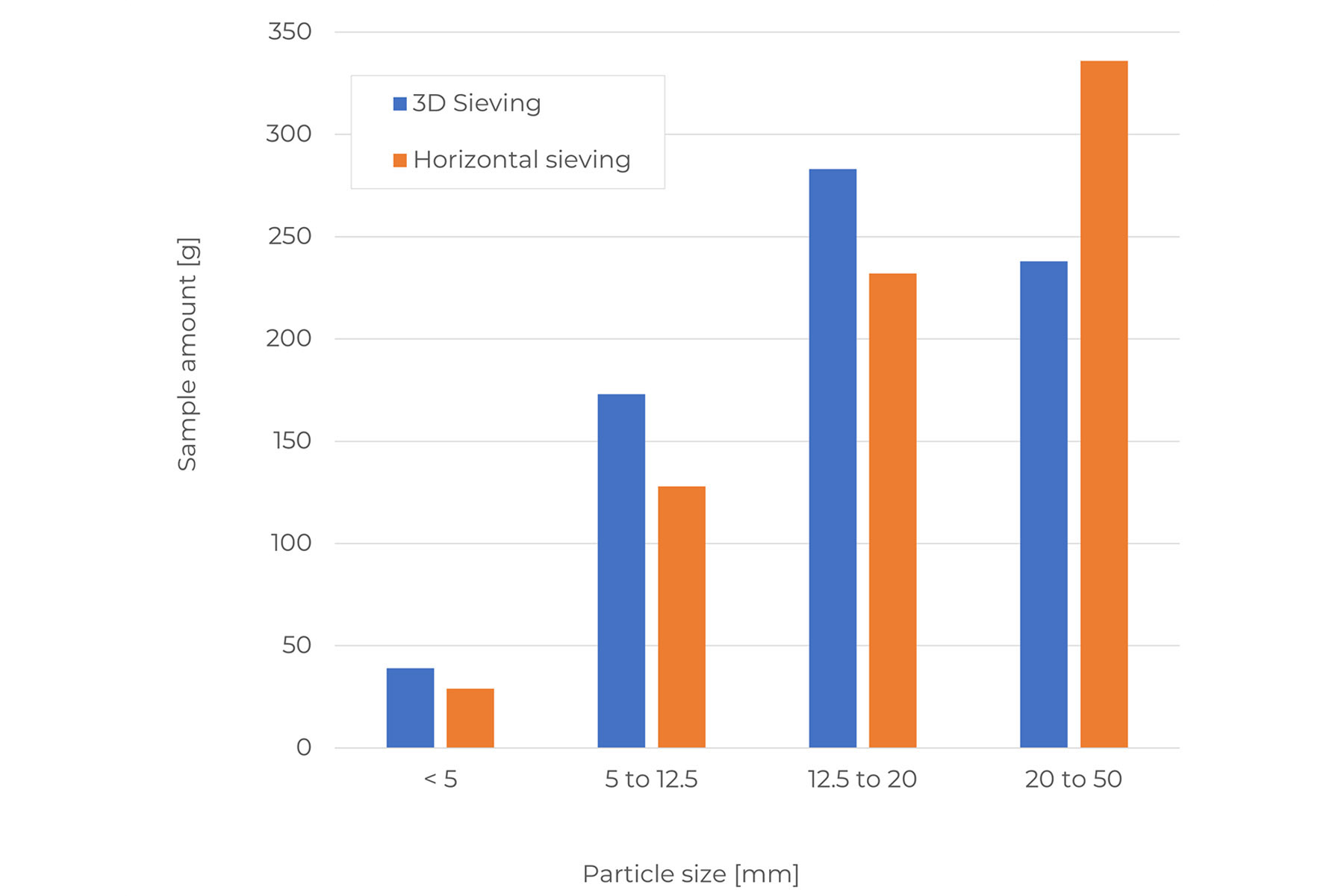
AS 450 control: 5 min, amplitude 1mm
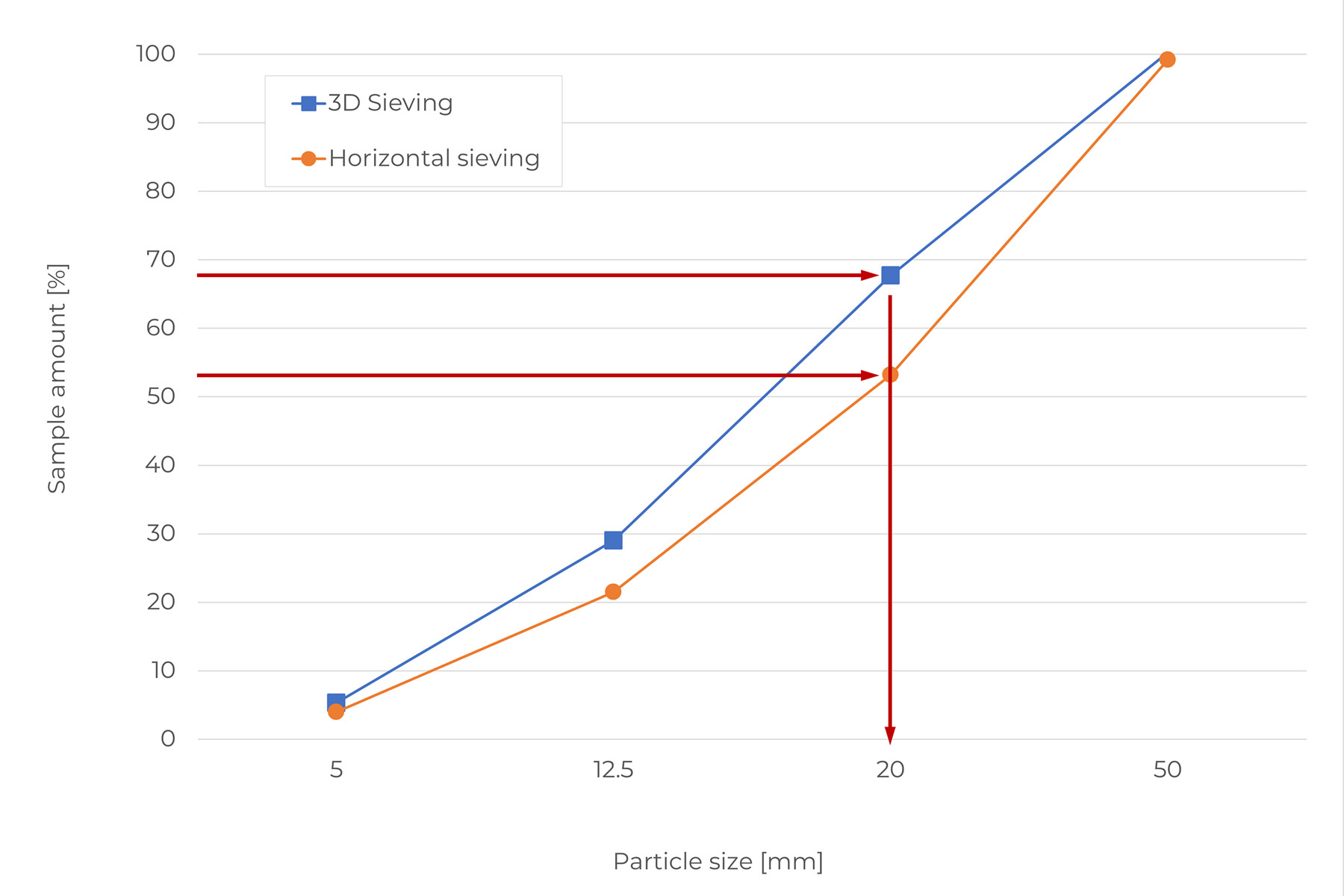
AS 400 control: 5 min, 170 rpm
Both times an identical sample of wood pieces was sieved
Sieving is a comparative method. Every particle that can pass through the mesh is accordingly smaller than the mesh size. Sieving usually considers the volume or mass fractions of a sample. Number (Q0), length (Q1), or area (Q2) are usually determined by optical methods (e.g., Camsizer). The problem: Camsizers only capture the measurement parameters without being able to fractionate the sample.
In most cases, the Q3 dimension (volume) is suitable as a parameter for reliable quantification of particle size distribution. This is because volume is directly proportional to mass and thus the simplest property to use to reliably determine particle size distribution with minimal effort.
Only optical instruments provide information about particle shape
- Dependening on the falling orientation of the particles, it can be detected in different ways.
- Sticks might be detected as spheres or coins.
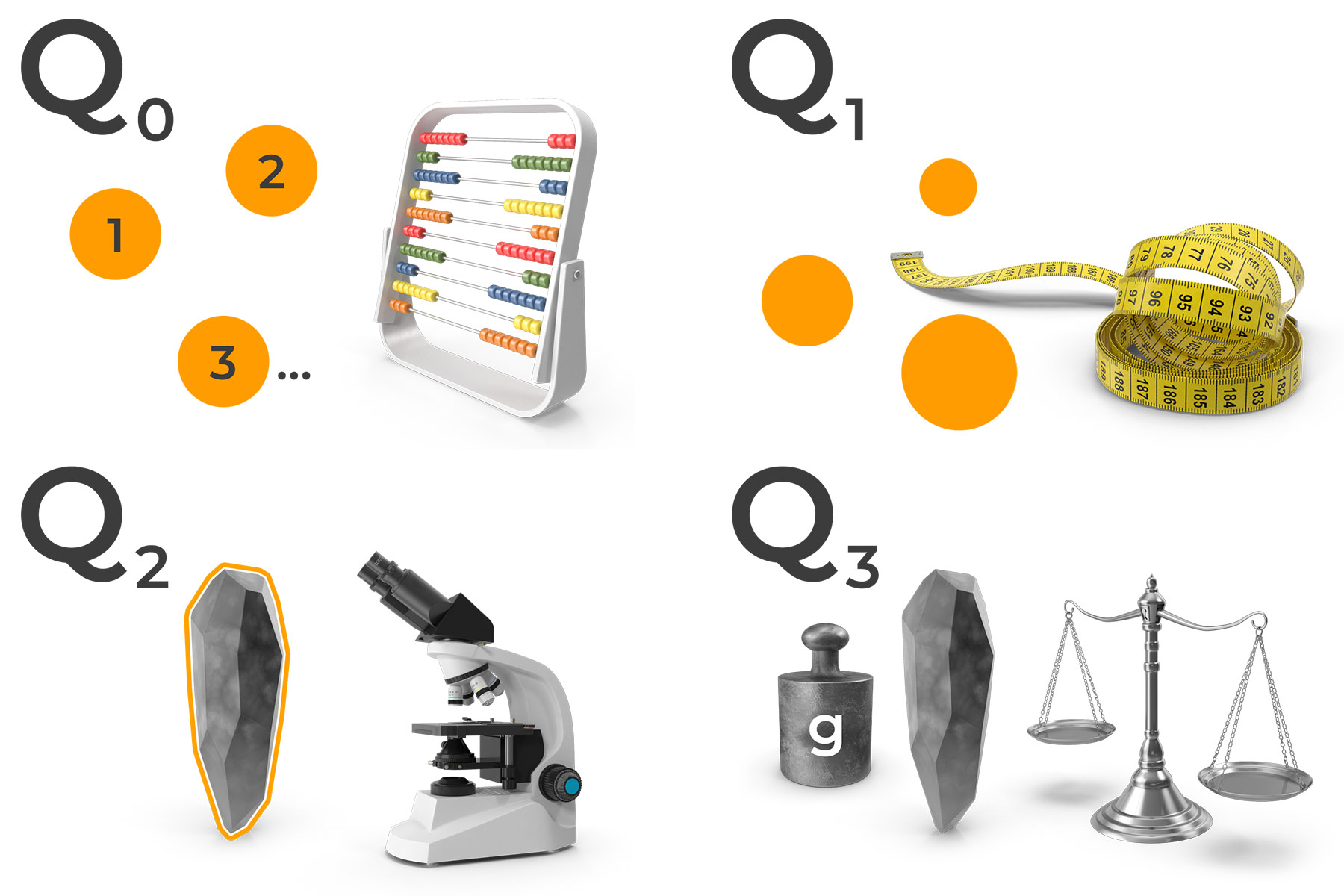
Quantification
Q0 number
Q1 length
Q2 area (surface or projection surface)
Q3 mass or volume

Comparability
Distribution of volume, surface and number, e.g. of cubes which have the same total volume.
| Q0 number | 1 | 103 | 106 number |
| Q1 length | 10 | 1 | 0.1 [mm1] |
| Q2 surface | 600 | 6,000 | 60,000 [mm2] |
| Q3 volume | 103 | 103 | 103 [mm3] |
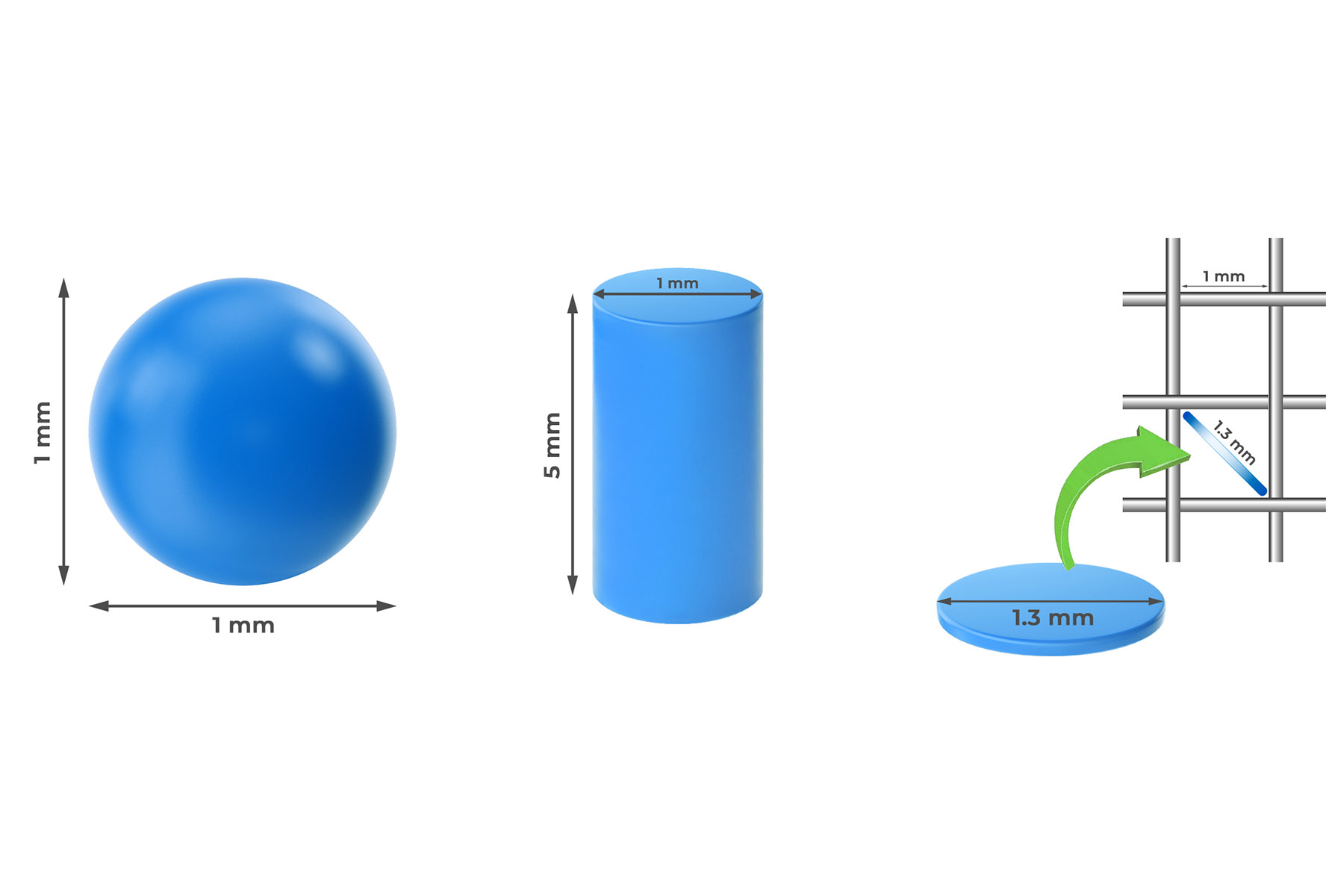
Equivalent Diameter
- Sphere: Diameter independant from site of view - 1 mm real size
- Stick: Particle can pass mesh lengthwise - particle is longer than 1 mm equivalent diameter.
- Coin: Has also equivalent diameter of 1 mm, but can be up to 1.3 mm in real.
Grain size analysis
The formal size of individual particles in a mixture is referred to as the “grain size”, and grain size analysis is used to determine this size. The subsequent size distribution of the particles has a significant influence on the properties of a material, both scientifically and technically.
Due to numerous differentiations and even different methods of determination, grain size analysis is considered an independent discipline of granulometry.
Methods of grain size analysis
Although there are different methods for analyzing and determining grain sizes, the equivalent diameter is always determined in all variants. Which method is ultimately used depends heavily on the question, possible regulations and the grain size range itself.
Larger particles, from a size of about 40 mm, are usually measured by hand or on the basis of photos, while sieving is often used for the particle size analysis of very small particles, down to a size of 10 µm. For sieving, sieves of different sizes are first stacked on top of each other and clamped in a sieving machine. The sample is then placed in the top sieve (with the largest hole size) and subjected to a defined sieving motion for a certain period of time to ensure precise sieving.
The particles of the sample are separated according to their size on the sieves. After that, the percentage of the individual fractions remaining on the sieves with different hole sizes is determined. The percentage mass fractions of the individual fractions are referred to as p3. The cumulative distribution curve Q3 provides information about the added masses of the individual fractions. It is common to provide information about the size of the sample smaller than 90%, 50% and 10%.
Optical particle characterization
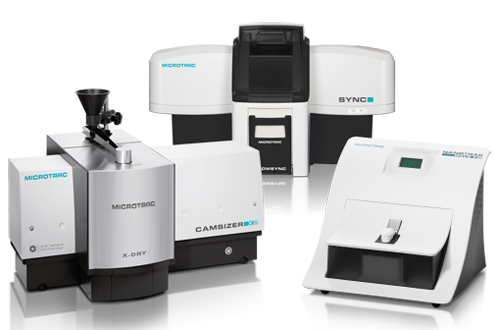
The particle size analysis can also be carried out using optical measurement technology. Depending on the measurement variant, statements can also be made about the particle shape. The measuring range is between 0.3 nm and 30 mm, depending on the system. The particle characterization can be carried out in suspensions, emulsions, colloidal systems, powders, granules and bulk materials.
Our sister company MICROTRAC is a technology leader, with an extensive global network and an unrivaled offering in particle characterization.
ANALIZA CU SITĂ PENTRU CONTROLUL CALITĂȚII
Cu toții cunoaștem termenul „calitate”. Este utilizat pe scară largă pentru a descrie un produs cu o valoare deosebit de mare. Cu toate acestea, definiția exactă a calității este următoarea: Calitatea este conformitatea proprietăților definite cu proprietățile detectate ale unui produs, determinate prin efectuarea testelor. Un produs poate fi descris ca fiind de înaltă calitate dacă o măsurătoare de testare constată că proprietățile dorite se încadrează într-o anumită toleranță. Dacă valorile măsurate deviază prea mult, calitatea este mai scăzută. Multe materiale, fie naturale, fie artificiale, apar sub formă dispersată (material care nu formează o unitate consistentă, ci este împărțit în elemente care pot fi separate unele de altele, de exemplu, o grămadă de nisip). Dimensiunile particulelor și distribuția lor în cadrul unei cantități de material - adică fracțiunile de particule de diferite dimensiuni - au o influență crucială asupra proprietăților fizice și chimice.
Câteva exemple de proprietăți care pot fi influențate de distribuția dimensiunii particulelor:
- rezistența betonului
- gustul ciocolatei
- proprietățile de dizolvare ale tabletelor
- turnabilitatea și solubilitatea pulberilor de spălat
- activitatea de suprafață a materialelor filtrante
Aceste exemple arată clar cât de importantă este cunoașterea distribuției dimensiunii particulelor, în special în contextul asigurării calității produselor vrac pentru procesele de producție. Dacă distribuția dimensiunii particulelor se modifică în timpul procesului de producție, se va modifica și calitatea produsului.
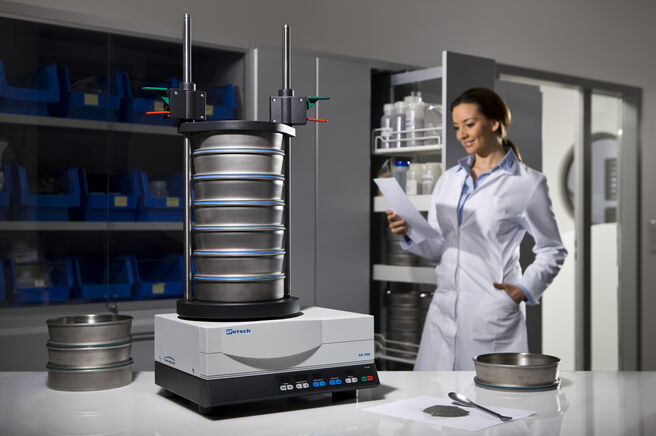
RETSCH Sieve Shakers for Reproducible Results
RETSCH sieve shakers cover a comprehensive measurement and application range for your requirements. Different sieving movements and sieve sizes enable you to use the appropriate RETSCH sieve shaker for every material that can be sieved. This ensures you always obtain exact and reproducible results – naturally in accordance with test equipment monitoring (DIN EN ISO 9001ff).
Contact us for a free consultation
Filialele noastre, împreună cu o reţea vastă de companii şi agenţii înrudite din peste 80 de ţări, pun la dispoziţie, la nivel mondial, consultanţă de specialitate privind produsele şi aplicaţiile noastre, precum şi servicii de reparaţii comprehensive.