






Sieving analysis is a method for determining the particle size distribution of various bulk materials, described in a multitude of international standards. Sieve analysis is one of the most established methods in quality assurance and can be performed as either dry or wet sieving.
Manual sieving is also possible, but due to the individual influences of the operator like speed and strength, it is to be disregarded in a professional context.
Sieving analysis allows the characterization of particle size distributions of bulk materials of various shapes and sizes, enabling the determination and comparison of specific product properties such as solubility, flow behavior, and reactivity of different materials.
Sieve analysis
Sieve analyses are indispensable for production and quality control of powdery and granular bulk materials in many industries (including food, pharmaceutical, and chemical). Advantages of sieve analysis include:
- easy handling
- low investment costs
- rapid delivery of precise and reproducible results
- the ability to obtain individual particle size fractions
Therefore, this method can certainly compete with modern analytical techniques such as laser light scattering or image analysis methods.
To ensure high reproducibility and reliability, the sieve shaker and accessories must meet stringent requirements that comply with (inter)national standards. RETSCH analytical sieves and sieve shakers, as well as all other measuring equipment (e.g., balances) needed for characterizing particle size distribution, are therefore calibratable and are subject to test equipment monitoring as part of quality management systems. For comprehensive process reliability, careful sample preparation is also essential. Only in combination can sieving results be achieved that enable reliable characterization of your products.
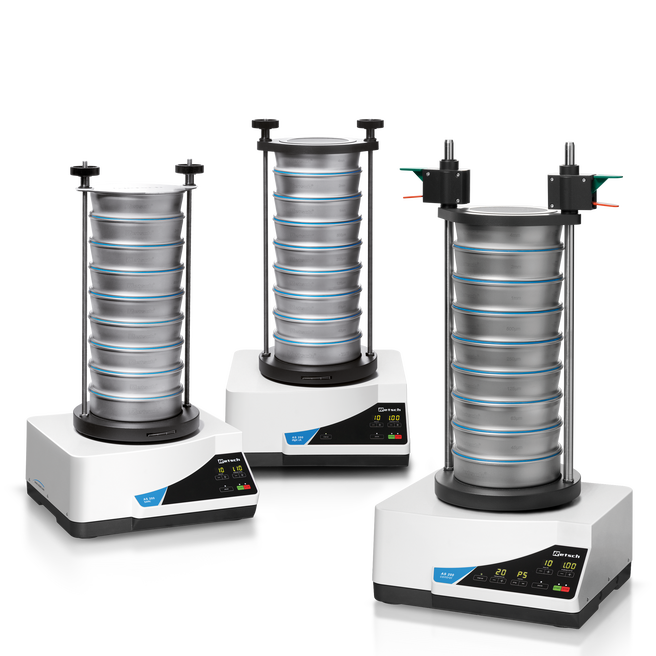
Overview of Sieving Principles
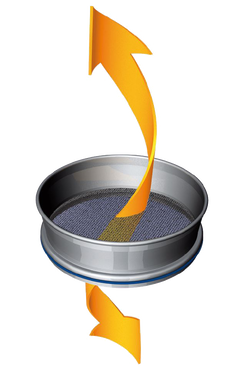
Образец под действием вибраций дна сита отбрасывается вверх, а под действием сил тяжести опускается вниз. Амплитуда указывает на высоту вертикальных колебаний дна сита.
При вибропросеивании образец подвергается трехмерному движению, т. е. круговое движение накладывает вертикальное метательное движение . Благодаря этому совместному движению материал образца равномерно распределяется по всей площади сита. Частицы ускоряются в вертикальном направлении, свободно вращаются и затем снова статистически ориентированы. В Просеивающих машинах Retsch электромагнитный привод приводит в движение пружинную/массовую систему и передает колебания в стеку сита. Амплитуда может быть непрерывно отрегулирована до нескольких миллиметров.
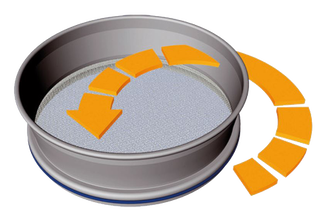
При горизонтальном рассеве сита совершают горизонтальные циркуляционные движения. Горизонтальные просеивающие машины особенно эффективны для рассева проб с частицами игольчатой, продолговатой или плоской формы, а также волокнистых проб. Благодаря движению сит в одной плоскости частицы сохраняют свою ориентацию в пространстве.
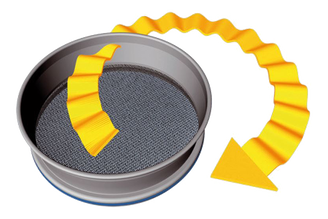
В Ударной просеивающей машине горизонтальное, круговое движение накладывается на вертикальное движение, создаваемое постукивающим импульсом. Просеивающие машины указаны в различных стандартах для Анализа Размера Частиц.
Число сравнений между частицами и отверстиями Просеивающих машин существенно меньше, чем в вибрационных Просеивающих машинах (2,5 с-1 по сравнению с ~50 с-1), что приводит к увеличению времени просеивания. С другой стороны, постукивающее движение придает частицам больший импульс, поэтому при использовании некоторых материалов, таких как абразивные материалы, доля мелких частиц обычно выше. Однако при использовании легких материалов, таких как тальк или мука, доля мелких частиц ниже.
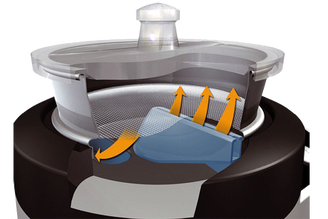
Струя воздуха — это машина для одиночного просеивания, т.е. для каждого процесса просеивания используется только одно сито. Само сито не перемещается в процессе.
Материал на сите перемещается вращающейся струей воздуха: пылесос, который соединен с печью для просеивания, образует вакуум внутри Камерной печи и всасывает свежий воздух через вращающуюся щелевую форсунку. При прохождении узкой щели форсунки поток воздуха ускоряется и дует против сетки сита, рассеивая частицы. Над сеткой струя воздуха распределяется по всей поверхности сита и всасывается с низкой скоростью через сетку сита. Таким образом, мелкие частицы переносятся через отверстия сетки в пылесос или, по желанию, в циклон.
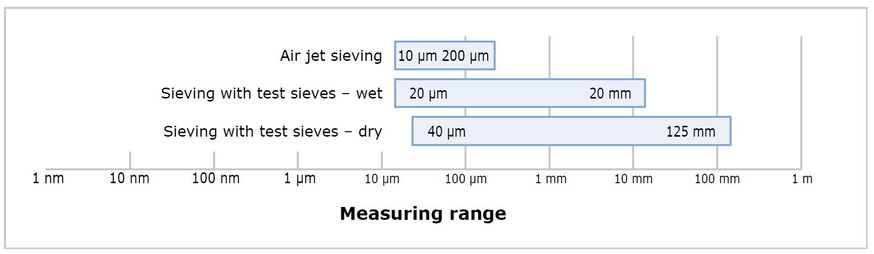
In air jet sieving, only a single sieve is used at a time, and it is not moved during the sieving process. A rotating nozzle below the sieve directs a jet of air onto the material to be sieved, causing particles to deagglomerate and then be sucked through the sieve. Air jet sieving is suitable for size ranges from 10 µm to 4 mm.
Dry sieving is the most popular method of reproducible sieve analysis, including vibration, horizontal and tap sieving. Air jet sieving is also considered a dry sieving method, but it is a special process (see below). If necessary, the sample is dried in advance to avoid clumping. Before sieving, the sample is weighed, then placed in the sieving system and weighed again at a later point in time.
Sieving is used to determine the percentage of the sample that remains on the sieve or is smaller than the selected mesh size. If a particle size determination of the various fractions is to be carried out (set sieving), a sieve stack is used that contains several sieves with different mesh sizes (40 µm – 125 mm).
However, to ensure that the results are reproducible beyond doubt, the machine should be set up completely digitally. Furthermore, the integrated control unit should be constantly monitored to avoid unintentional changes and deviations during the test.
Wet sieving is used to determine particle sizes in moist, greasy or oily samples. It is also the method of choice when the material to be analyzed is already present as a suspension and cannot be dried, as well as for particles that tend to agglomerate (usually < 45 µm), which would otherwise clog the sieve openings.
The material to be sieved is suspended and, as with dry sieving, applied to the uppermost sieve and then rinsed with water under vibration until the liquid emerging from below the sieve stack is unclouded. Wet sieving is carried out in the range 20 µm - 20 mm.
Different Requirements, Different Sieving Parameters
The optimal parameter settings depend on the respective material. Depending on the chosen sieve shaker, interval, speed, sieving time, amplitude, or even negative pressure may come into play. Although numerous (inter)national standards and guidelines exist for product-specific sieve analysis parameters, for some materials, suitable parameters must be determined experimentally. We are happy to assist you.
Take advantage of our offer for a free test sieving!
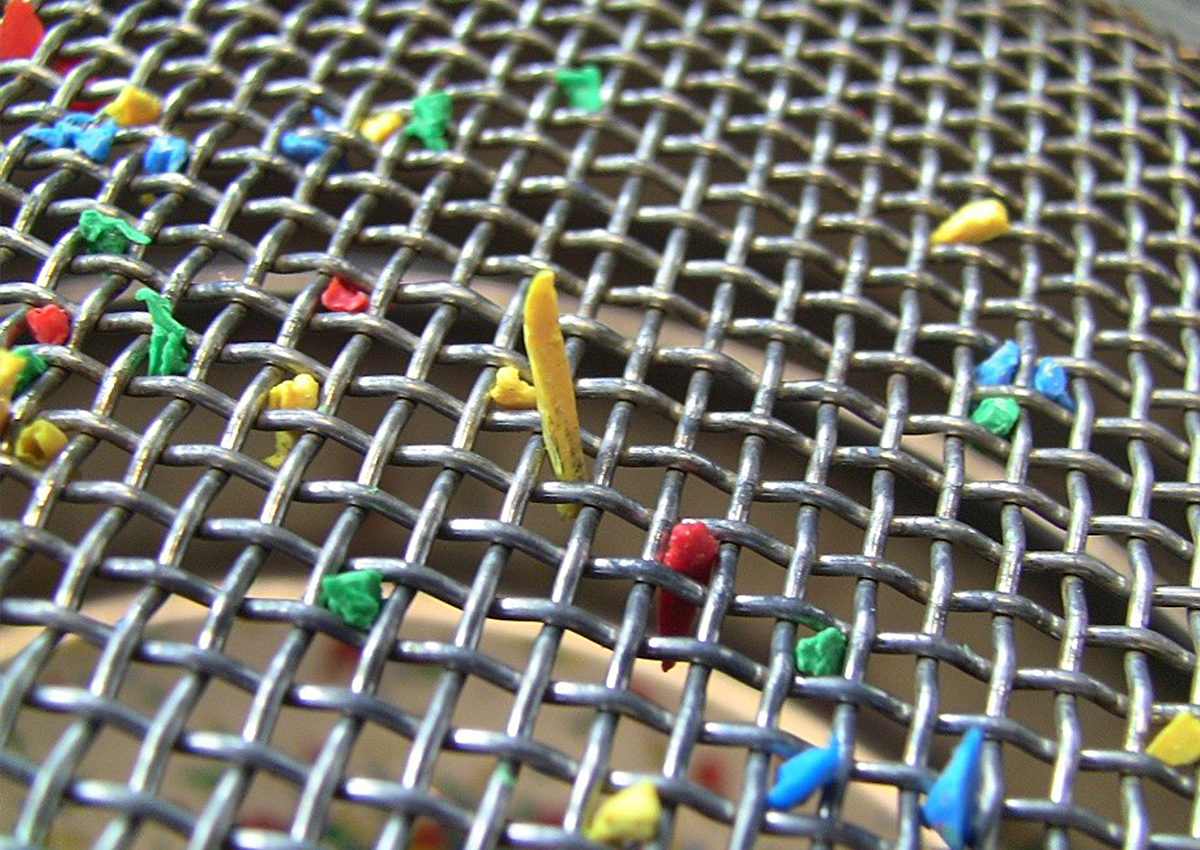
Horizontal sieving:
For flakes, sticks...
-> Long particles stay on the sieve
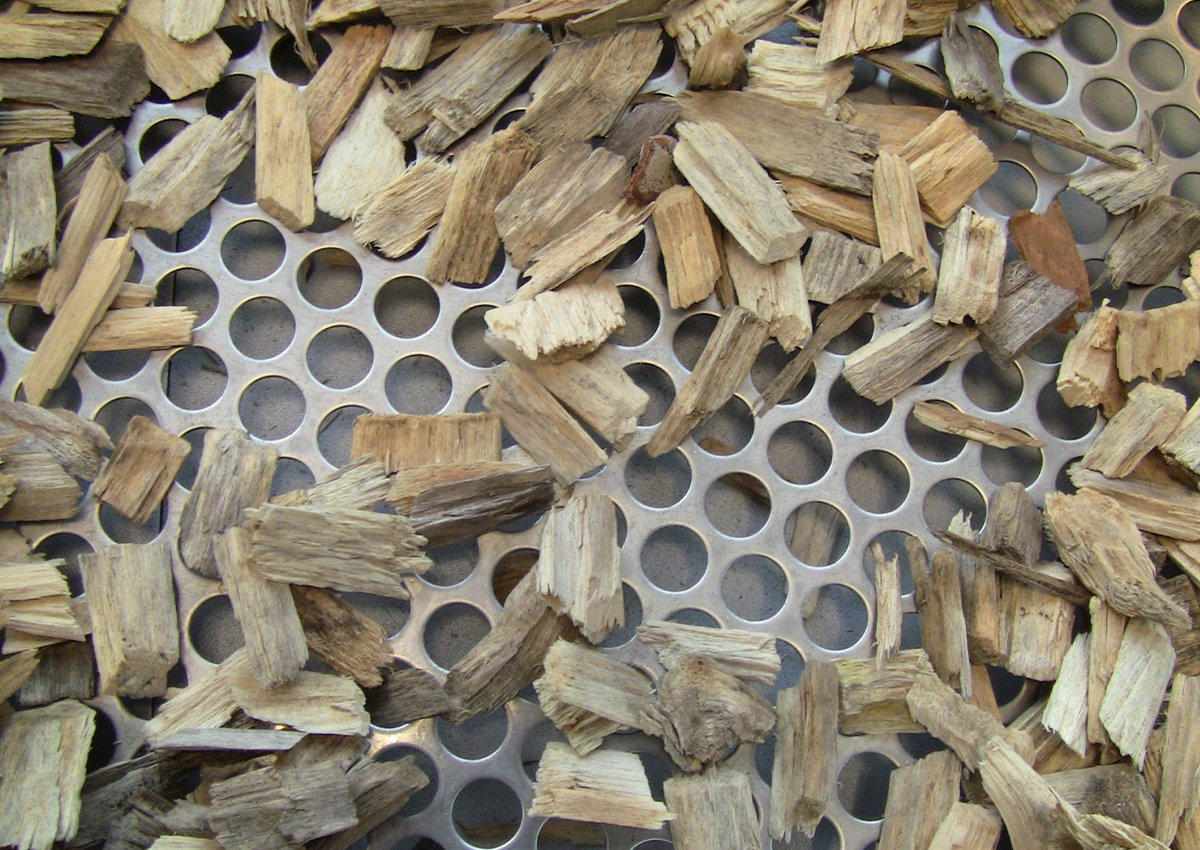
Vibratory sieving:
Lenghtwise passing of the particles through the pores.
-> Sample seems to be finer
Different sieving methods lead to different sieving results, which can be reflected in the particle size distribution. The diagrams illustrate how the horizontal sieving method and the vibratory sieving method each affect the particle size fractions. While the horizontal method achieves specific sorting through uniform movements, the vibratory sieving method utilizes 3D throwing motions for alternative separation. This results in different particle distributions, clearly shown in the diagrams.
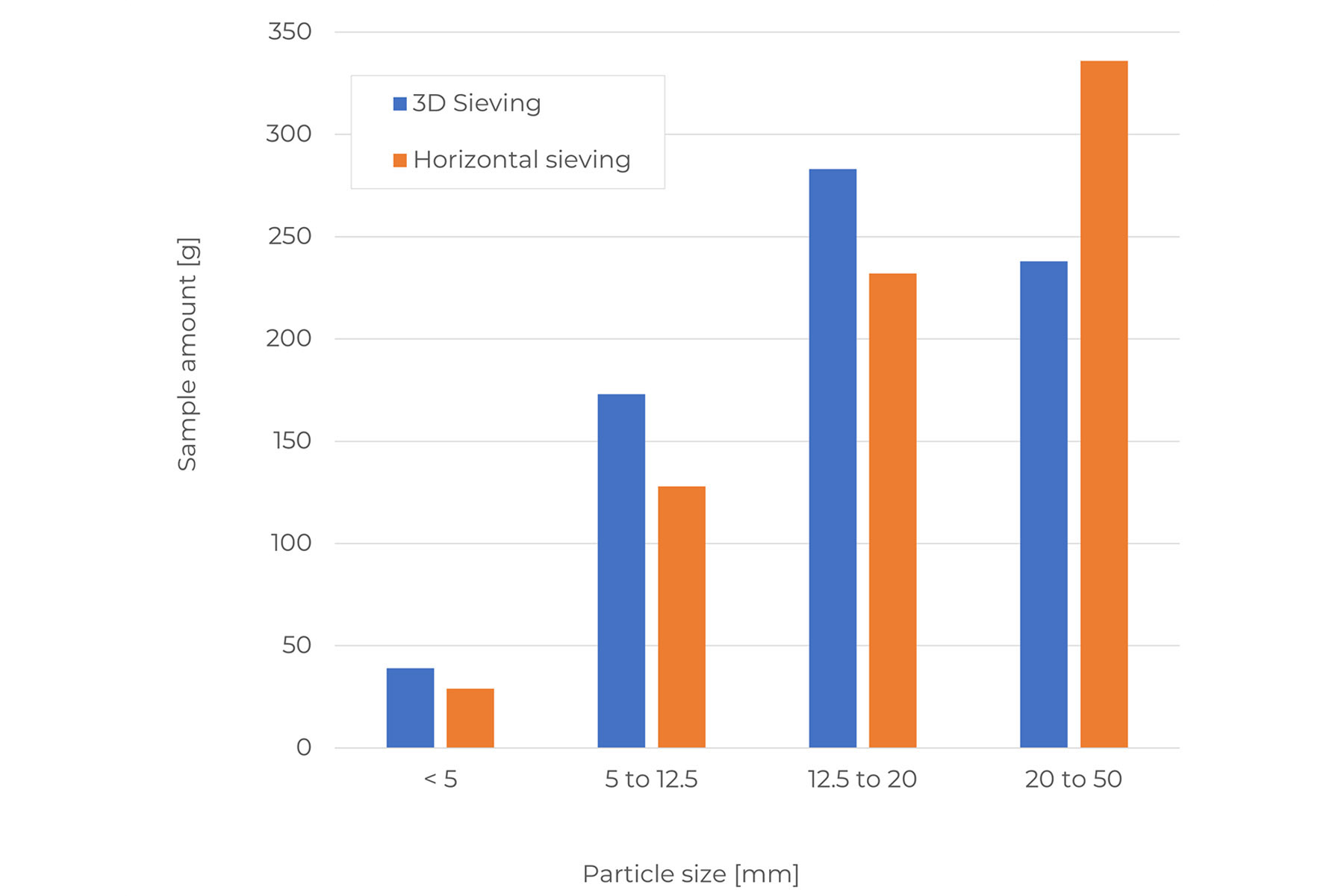
AS 450 control: 5 min, amplitude 1mm
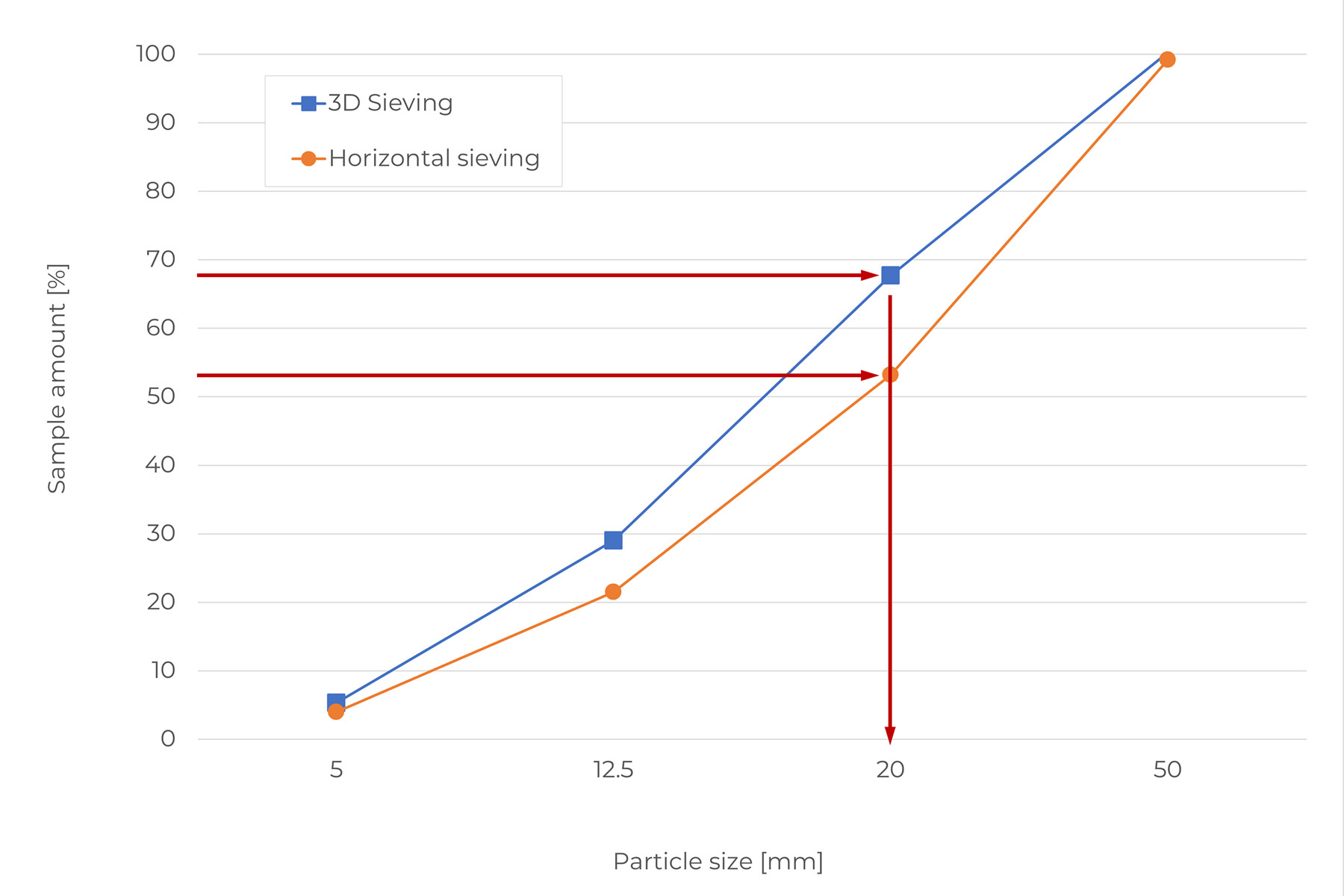
AS 400 control: 5 min, 170 rpm
Both times an identical sample of wood pieces was sieved
Sieving is a comparative method. Every particle that can pass through the mesh is accordingly smaller than the mesh size. Sieving usually considers the volume or mass fractions of a sample. Number (Q0), length (Q1), or area (Q2) are usually determined by optical methods (e.g., Camsizer). The problem: Camsizers only capture the measurement parameters without being able to fractionate the sample.
In most cases, the Q3 dimension (volume) is suitable as a parameter for reliable quantification of particle size distribution. This is because volume is directly proportional to mass and thus the simplest property to use to reliably determine particle size distribution with minimal effort.
Only optical instruments provide information about particle shape
- Dependening on the falling orientation of the particles, it can be detected in different ways.
- Sticks might be detected as spheres or coins.
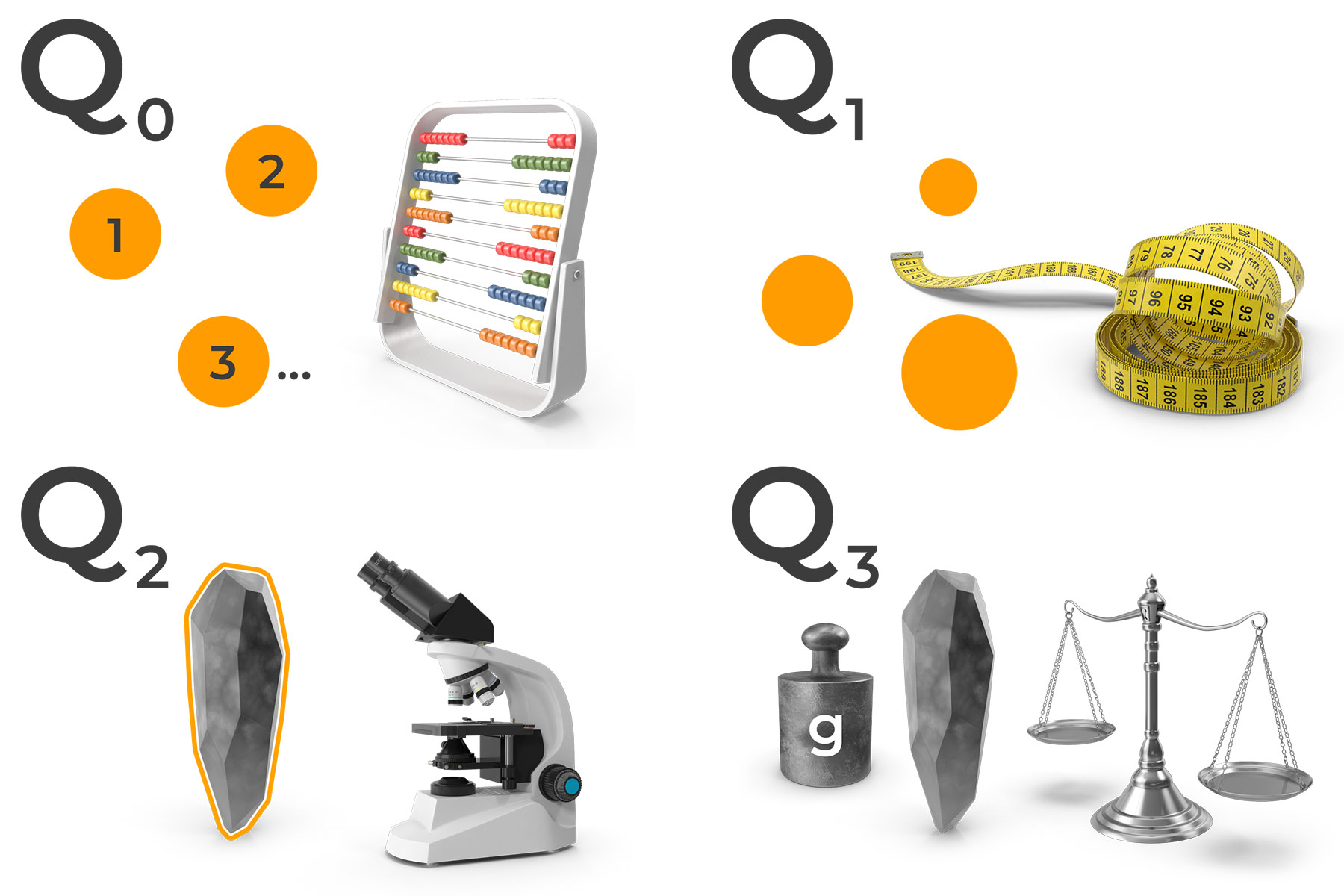
Quantification
Q0 number
Q1 length
Q2 area (surface or projection surface)
Q3 mass or volume

Comparability
Distribution of volume, surface and number, e.g. of cubes which have the same total volume.
| Q0 number | 1 | 103 | 106 number |
| Q1 length | 10 | 1 | 0.1 [mm1] |
| Q2 surface | 600 | 6,000 | 60,000 [mm2] |
| Q3 volume | 103 | 103 | 103 [mm3] |
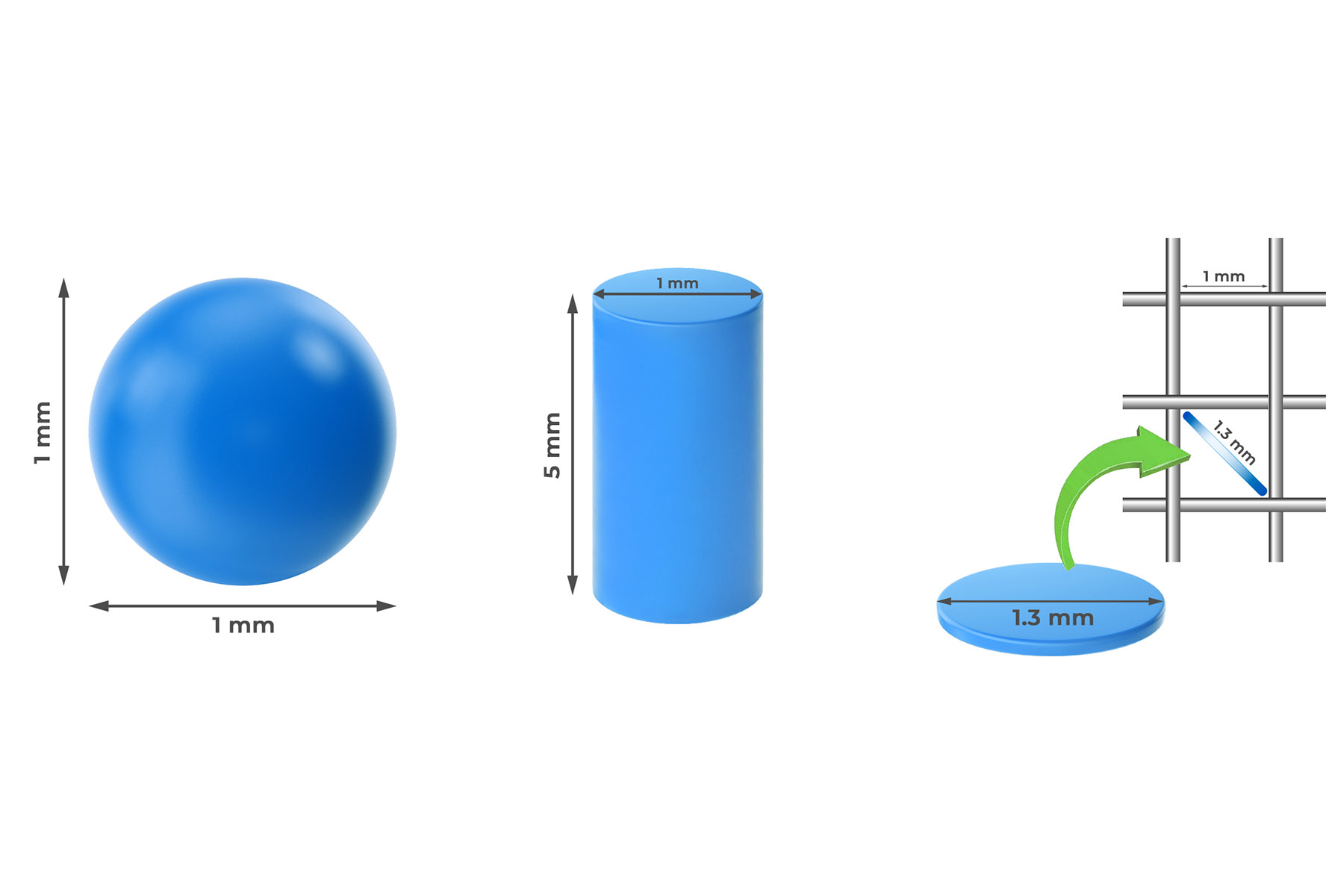
Equivalent Diameter
- Sphere: Diameter independant from site of view - 1 mm real size
- Stick: Particle can pass mesh lengthwise - particle is longer than 1 mm equivalent diameter.
- Coin: Has also equivalent diameter of 1 mm, but can be up to 1.3 mm in real.
Grain size analysis
The formal size of individual particles in a mixture is referred to as the “grain size”, and grain size analysis is used to determine this size. The subsequent size distribution of the particles has a significant influence on the properties of a material, both scientifically and technically.
Due to numerous differentiations and even different methods of determination, grain size analysis is considered an independent discipline of granulometry.
Methods of grain size analysis
Although there are different methods for analyzing and determining grain sizes, the equivalent diameter is always determined in all variants. Which method is ultimately used depends heavily on the question, possible regulations and the grain size range itself.
Larger particles, from a size of about 40 mm, are usually measured by hand or on the basis of photos, while sieving is often used for the particle size analysis of very small particles, down to a size of 10 µm. For sieving, sieves of different sizes are first stacked on top of each other and clamped in a sieving machine. The sample is then placed in the top sieve (with the largest hole size) and subjected to a defined sieving motion for a certain period of time to ensure precise sieving.
The particles of the sample are separated according to their size on the sieves. After that, the percentage of the individual fractions remaining on the sieves with different hole sizes is determined. The percentage mass fractions of the individual fractions are referred to as p3. The cumulative distribution curve Q3 provides information about the added masses of the individual fractions. It is common to provide information about the size of the sample smaller than 90%, 50% and 10%.
Optical particle characterization
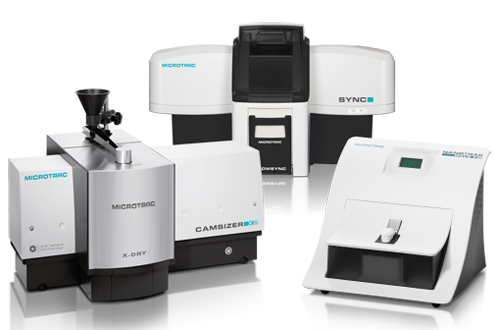
The particle size analysis can also be carried out using optical measurement technology. Depending on the measurement variant, statements can also be made about the particle shape. The measuring range is between 0.3 nm and 30 mm, depending on the system. The particle characterization can be carried out in suspensions, emulsions, colloidal systems, powders, granules and bulk materials.
Our sister company MICROTRAC is a technology leader, with an extensive global network and an unrivaled offering in particle characterization.
АНАЛИЗ СИТА ДЛЯ КОНТРОЛЯ КАЧЕСТВА
Мы все знаем термин «качество». Он широко используется для описания продукта, имеющего особую ценность. Однако точное определение качества таково: качество — это соответствие определенных свойств обнаруженным свойствам продукта, определяемым в ходе испытаний. Продукт может быть охарактеризован как высококачественный, если тестовое измерение удостоверится, что желаемые свойства находятся в пределах заданного допуска. Если измеренные значения слишком сильно отклоняются, качество ниже. Многие материалы, как натуральные, так и искусственные, встречаются в дисперсном виде (материал, который не образует последовательного единства, но разделен на элементы, которые могут быть отделены друг от друга, например, груда песка). Размеры частиц и их распределение внутри количества материала — то есть доли частиц разных размеров — оказывают решающее влияние на физические и химические свойства.
Несколько примеров свойств, на которые может влиять гранулометрический состав:
- прочность бетона
- вкус шоколада
- свойства растворения таблеток
- порошкообразность и растворимость стиральных порошков
- поверхностная активность фильтрующих материалов
Эти примеры наглядно показывают, насколько важно знать гранулометрический состав, особенно в контексте обеспечения качества сыпучих продуктов для производственных процессов. Если гранулометрический состав изменится в процессе производства, то изменится и качество продукта.
RETSCH Sieve Shakers for Reproducible Results
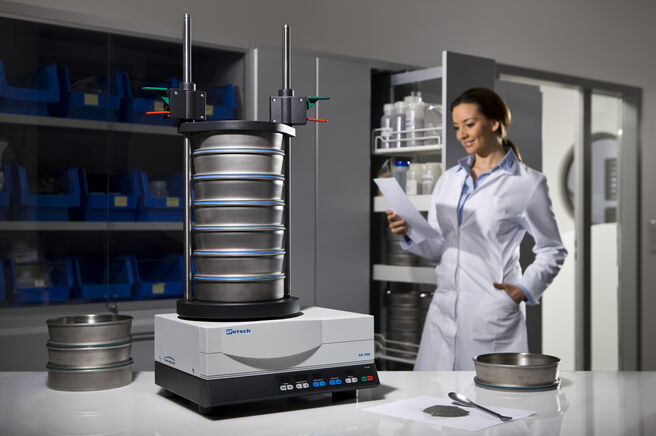
RETSCH sieve shakers cover a comprehensive measurement and application range for your requirements. Different sieving movements and sieve sizes enable you to use the appropriate RETSCH sieve shaker for every material that can be sieved. This ensures you always obtain exact and reproducible results – naturally in accordance with test equipment monitoring (DIN EN ISO 9001ff).
Свяжитесь с нами для получения бесплатной консультации
Продукты и услуги RETSCH доступны через глобальную сеть дочерних компаний и дистрибьюторов. Наши сотрудники будут рады помочь Вам с любыми возникшими вопросами.