






Sieving analysis is a method for determining the particle size distribution of various bulk materials, described in a multitude of international standards. Sieve analysis is one of the most established methods in quality assurance and can be performed as either dry or wet sieving.
Manual sieving is also possible, but due to the individual influences of the operator like speed and strength, it is to be disregarded in a professional context.
Sieving analysis allows the characterization of particle size distributions of bulk materials of various shapes and sizes, enabling the determination and comparison of specific product properties such as solubility, flow behavior, and reactivity of different materials.
Sieve analysis
Sieve analyses are indispensable for production and quality control of powdery and granular bulk materials in many industries (including food, pharmaceutical, and chemical). Advantages of sieve analysis include:
- easy handling
- low investment costs
- rapid delivery of precise and reproducible results
- the ability to obtain individual particle size fractions
Therefore, this method can certainly compete with modern analytical techniques such as laser light scattering or image analysis methods.
To ensure high reproducibility and reliability, the sieve shaker and accessories must meet stringent requirements that comply with (inter)national standards. RETSCH analytical sieves and sieve shakers, as well as all other measuring equipment (e.g., balances) needed for characterizing particle size distribution, are therefore calibratable and are subject to test equipment monitoring as part of quality management systems. For comprehensive process reliability, careful sample preparation is also essential. Only in combination can sieving results be achieved that enable reliable characterization of your products.
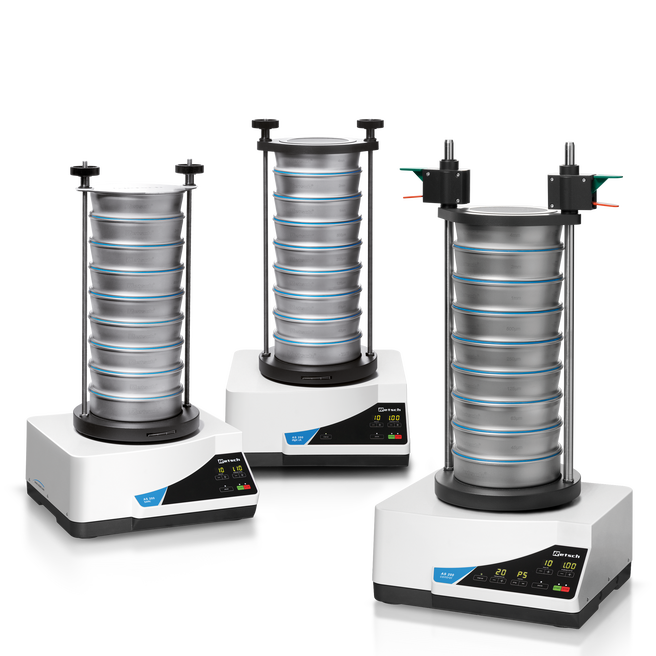
Overview of Sieving Principles
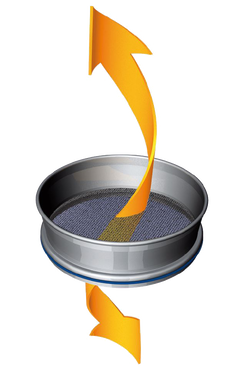
試料はふるい底の振動によって上方に投げ出され、重力によって下方に落下します。
この複合的な運動により、試料はふるい領域全体に均一に広がります。粒子は垂直方向に加速され、自由に回転し、統計的な方向に落下します。レッチェのふるい振とう機では、電磁駆動装置によってスプリングと質量システムを動かし、その振動をふるいスタックに伝えます。振幅は数ミリまで連続的に調整できます。
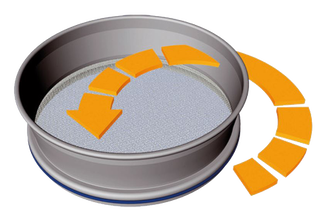
水平式ふるい振とう機では、ふるいは平面上で水平方向に円を描くように動きます。水平式ふるい振とう機は、針状、平たい、長い、繊維状の試料に適しています。水平方向の動きのため、ふるいの上で向きを変える粒子はほとんどありません。
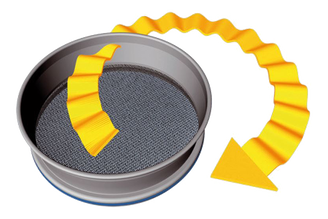
タップ式ふるい振とう機では、水平方向の円運動と、タッピングインパルスによる垂直方向の運動が重なります。
タップ式ふるい振とう機は、振動式ふるい振とう機に比べ、粒子とふるい目の比較回数が大幅に少ないため(2.5秒-1、~50秒-1)、ふるい分け時間が長くなります。一方、タップ式ふるい振とう機は粒子に大きな衝撃を与えるため、粉砕剤などでは微粒子の割合が高くなります。しかし、タルカムや小麦粉のような軽い材料では、微粒子の割合は低くなります。
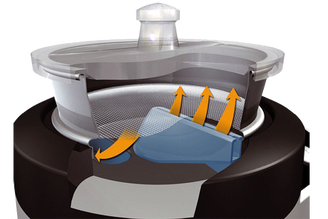
エアジェットシーブは、ふるい分けを1回で行うふるい機です。
ふるい上の原料は、回転するジェット気流によって移動します:ふるい機に接続されたバキュームクリーナーがふるい室内を真空にし、回転するスリットノズルから新鮮な空気を吸い込みます。ノズルの狭いスリットを通過する際、空気流は加速され、ふるいメッシュに吹き付けられ、粒子を分散させます。メッシュの上では、エアジェットがふるい面全体に分散され、ふるいメッシュを通して低速で吸い込まれます。こうして、より細かい粒子はメッシュの開口部を通って真空掃除機、またはオプションでサイクロンに運ばれます。
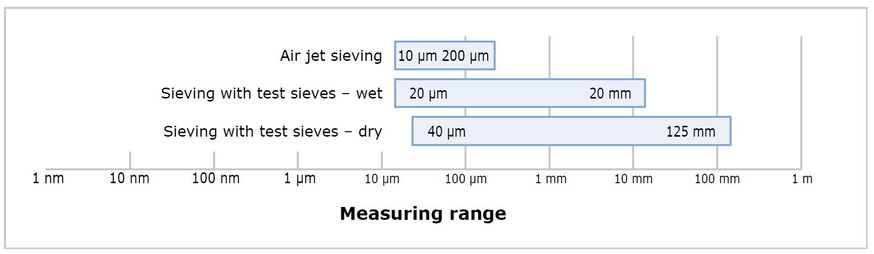
エアジェットシーブでは、一度に使用するふるい は1枚のみで、ふるい分け工程中にふるい を動かすことはありません。ふるい下部の回転ノズルからふるい試料に噴射される空気により粒子が凝集し、ふるいから吸引されます。エアジェットシーブは、10 µmから4 mmまでの粒度に適しています。
乾式ふるい分けは、振動ふるい分け、水平ふるい分け、タップふるい分けなど、再現性の高いふるい分け分析の最も一般的な方法です。エアジェットシーブも乾式ふるい分け法と考えられていますが、特殊なプロセスです(下記参照)。必要であれば、試料が固まらないようにあらかじめ乾燥させます。
ふるい分けは、ふるい上に残った試料の割合、または選択したメッシュサイズより小さい試料の割合を測定するために行われます。
ただし、結果の再現性を確保するため、装置は完全にデジタル化する必要があります。さらに、試験中の意図しない変化や逸脱を避けるため、統合制御ユニットを常時監視する必要があります。
湿式ふるい分けは、湿った試料、油分の多い試料、油性の試料の粒子径を測定するために使用します。
試料を懸濁し、乾式ふるい分けと同様、最上部のふるいにかけてから、振動を加えながら、ふるいの下から出てくる液体が濁らなくなるまで水ですすぎます。湿式ふるい分けは20 µm~20mmの範囲で行われます。
Different Requirements, Different Sieving Parameters
The optimal parameter settings depend on the respective material. Depending on the chosen sieve shaker, interval, speed, sieving time, amplitude, or even negative pressure may come into play. Although numerous (inter)national standards and guidelines exist for product-specific sieve analysis parameters, for some materials, suitable parameters must be determined experimentally. We are happy to assist you.
Take advantage of our offer for a free test sieving!
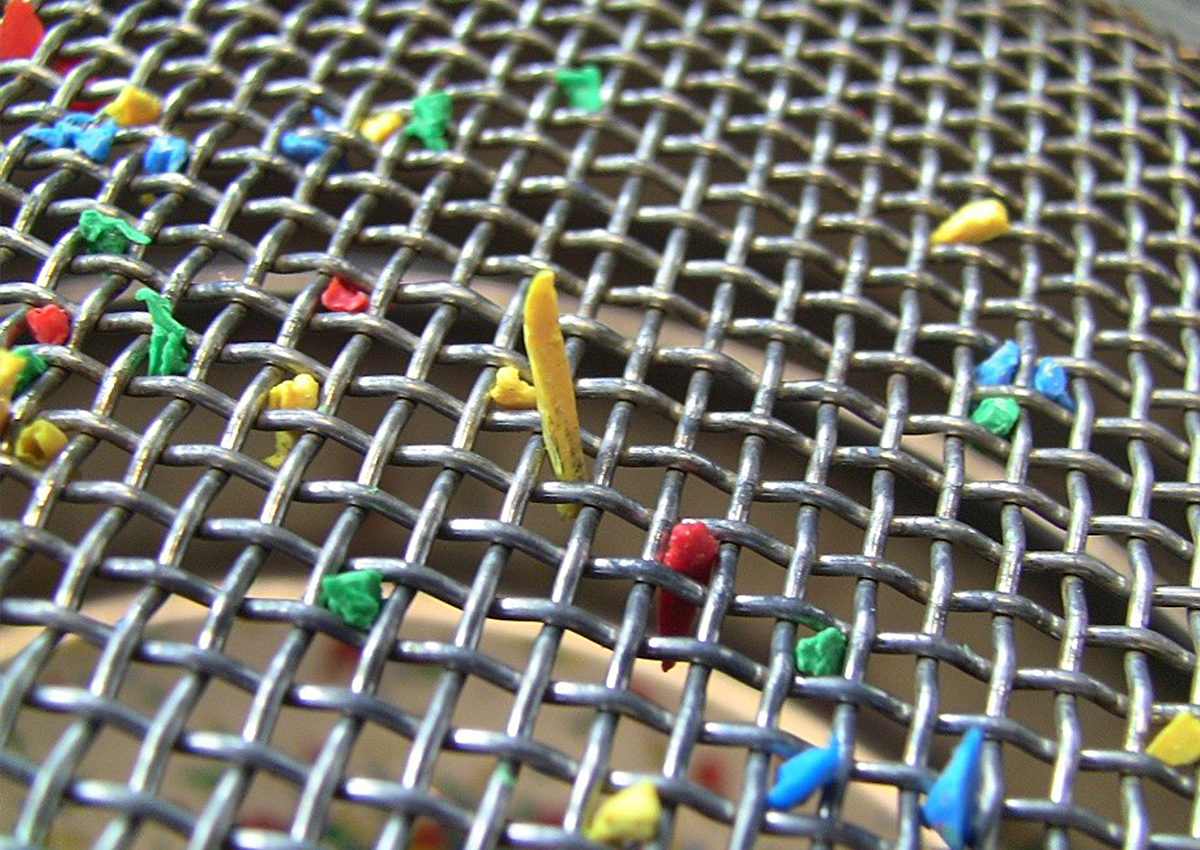
Horizontal sieving:
For flakes, sticks...
-> Long particles stay on the sieve
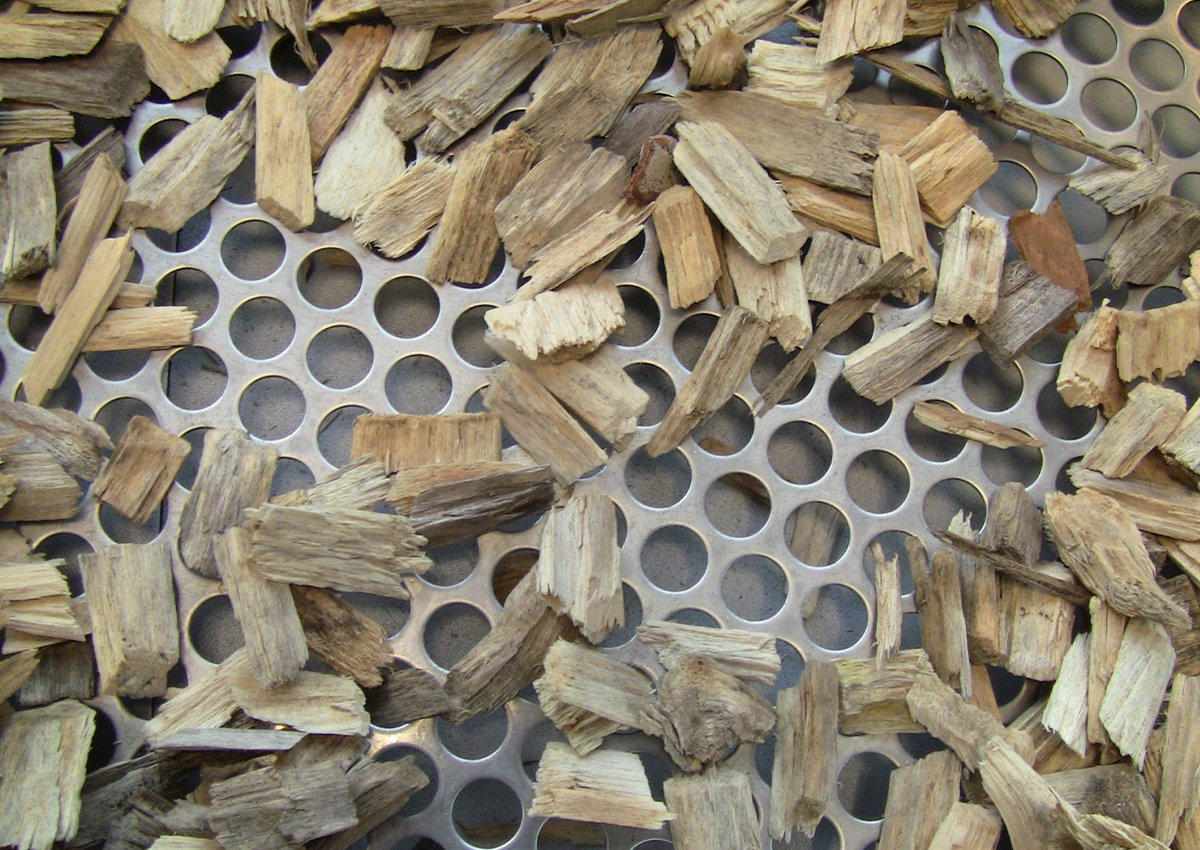
Vibratory sieving:
Lenghtwise passing of the particles through the pores.
-> Sample seems to be finer
Different sieving methods lead to different sieving results, which can be reflected in the particle size distribution. The diagrams illustrate how the horizontal sieving method and the vibratory sieving method each affect the particle size fractions. While the horizontal method achieves specific sorting through uniform movements, the vibratory sieving method utilizes 3D throwing motions for alternative separation. This results in different particle distributions, clearly shown in the diagrams.
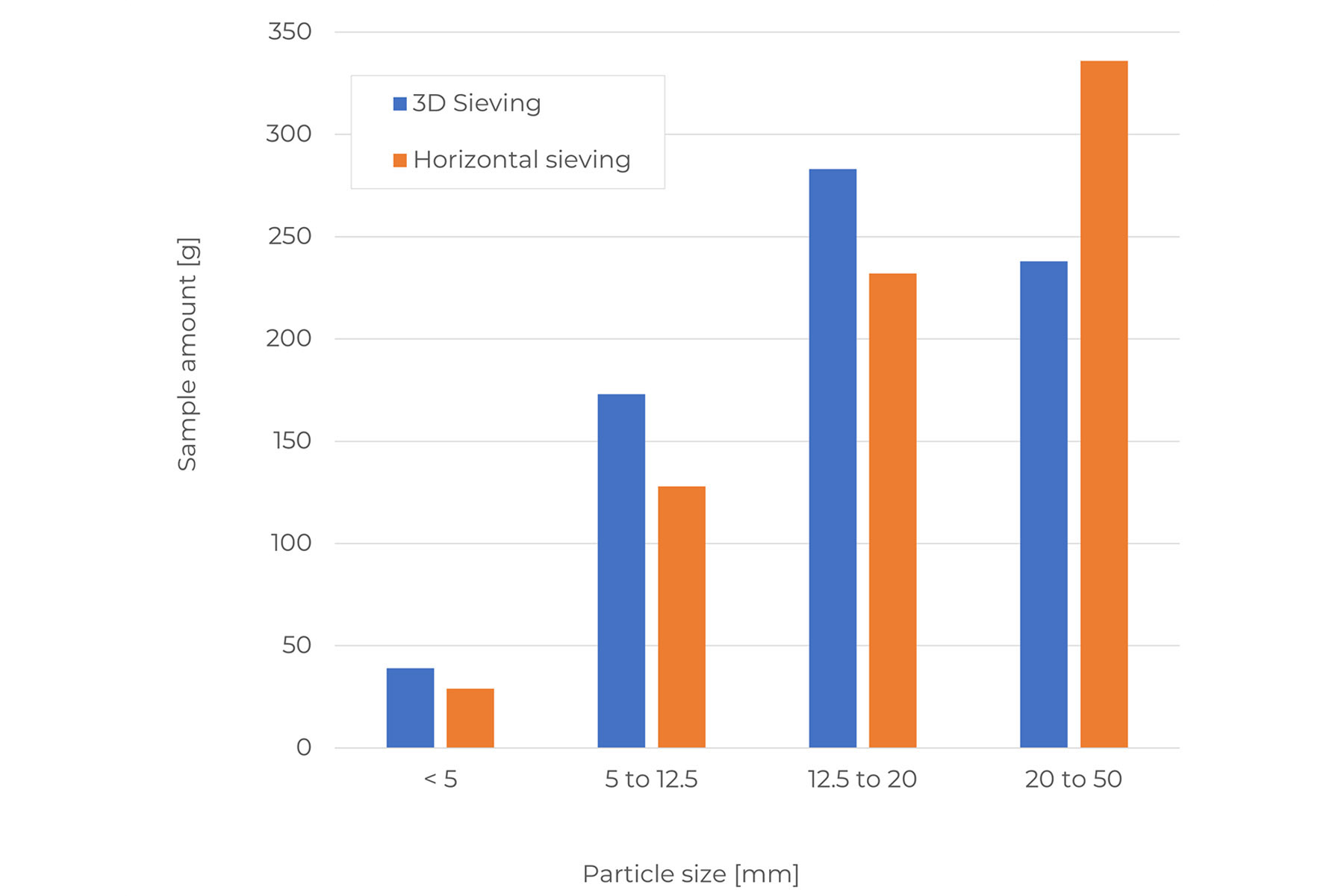
AS 450 control: 5 min, amplitude 1mm
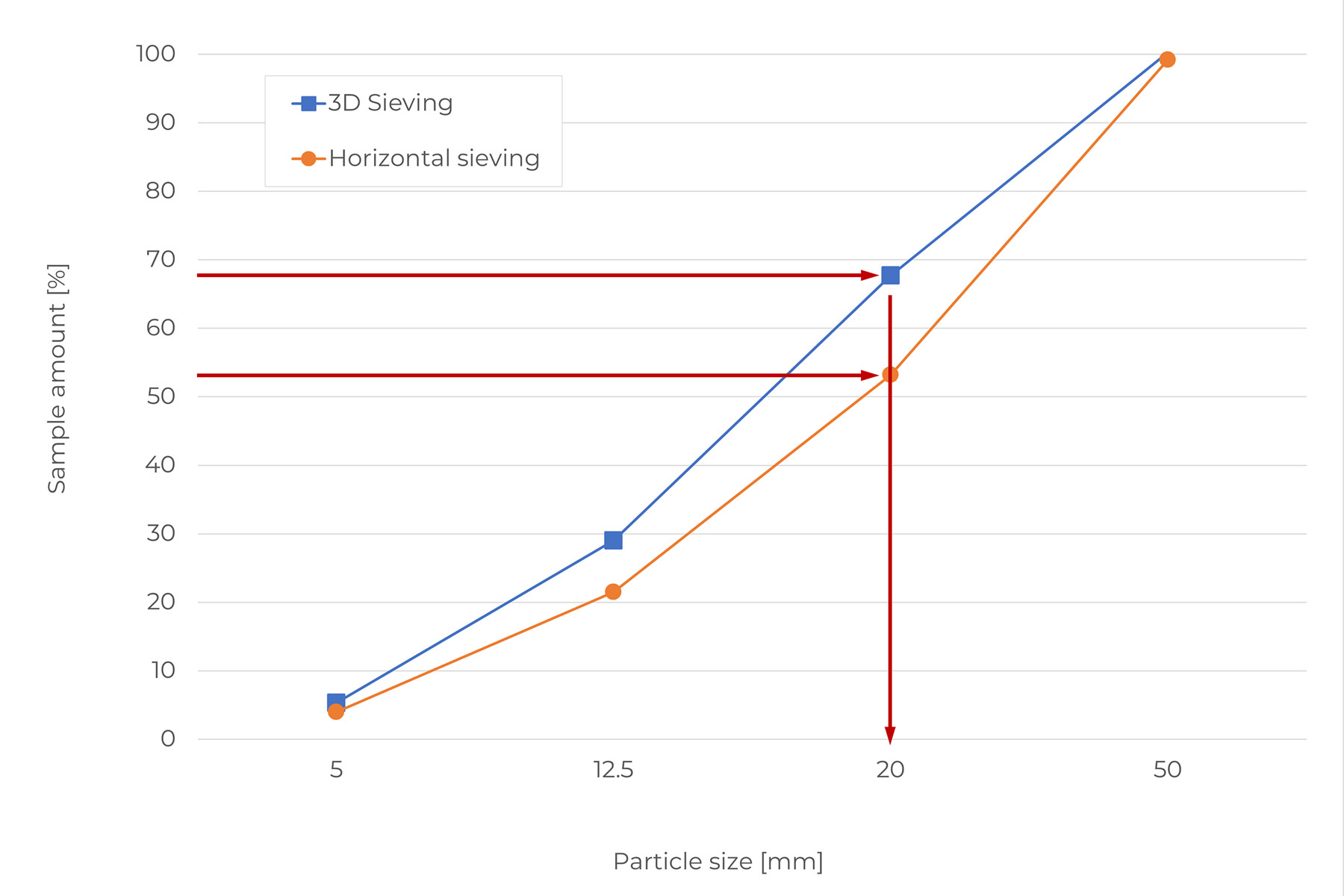
AS 400 control: 5 min, 170 rpm
Both times an identical sample of wood pieces was sieved
Sieving is a comparative method. Every particle that can pass through the mesh is accordingly smaller than the mesh size. Sieving usually considers the volume or mass fractions of a sample. Number (Q0), length (Q1), or area (Q2) are usually determined by optical methods (e.g., Camsizer). The problem: Camsizers only capture the measurement parameters without being able to fractionate the sample.
In most cases, the Q3 dimension (volume) is suitable as a parameter for reliable quantification of particle size distribution. This is because volume is directly proportional to mass and thus the simplest property to use to reliably determine particle size distribution with minimal effort.
Only optical instruments provide information about particle shape
- Dependening on the falling orientation of the particles, it can be detected in different ways.
- Sticks might be detected as spheres or coins.
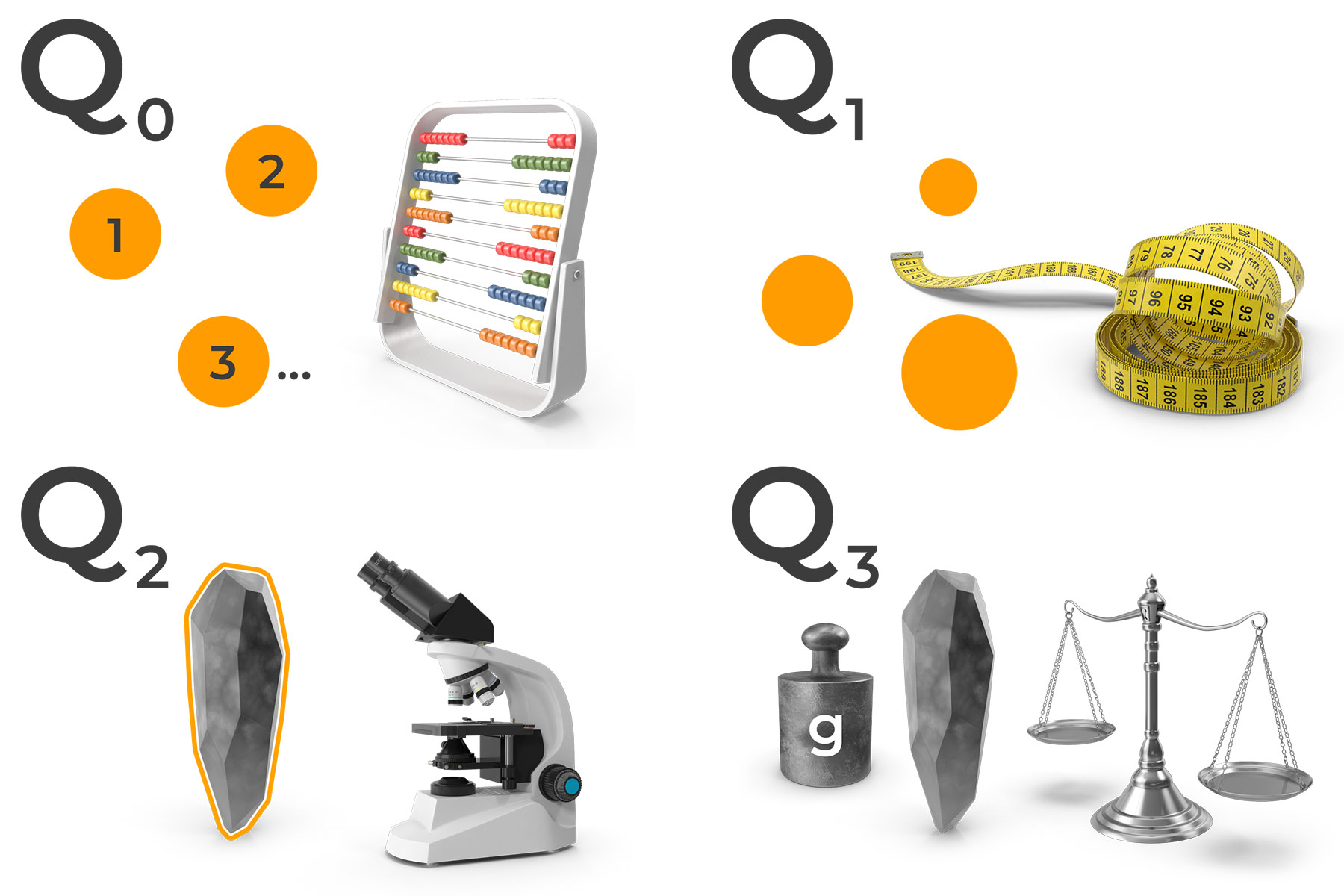
Quantification
Q0 number
Q1 length
Q2 area (surface or projection surface)
Q3 mass or volume

Comparability
Distribution of volume, surface and number, e.g. of cubes which have the same total volume.
| Q0 number | 1 | 103 | 106 number |
| Q1 length | 10 | 1 | 0.1 [mm1] |
| Q2 surface | 600 | 6,000 | 60,000 [mm2] |
| Q3 volume | 103 | 103 | 103 [mm3] |
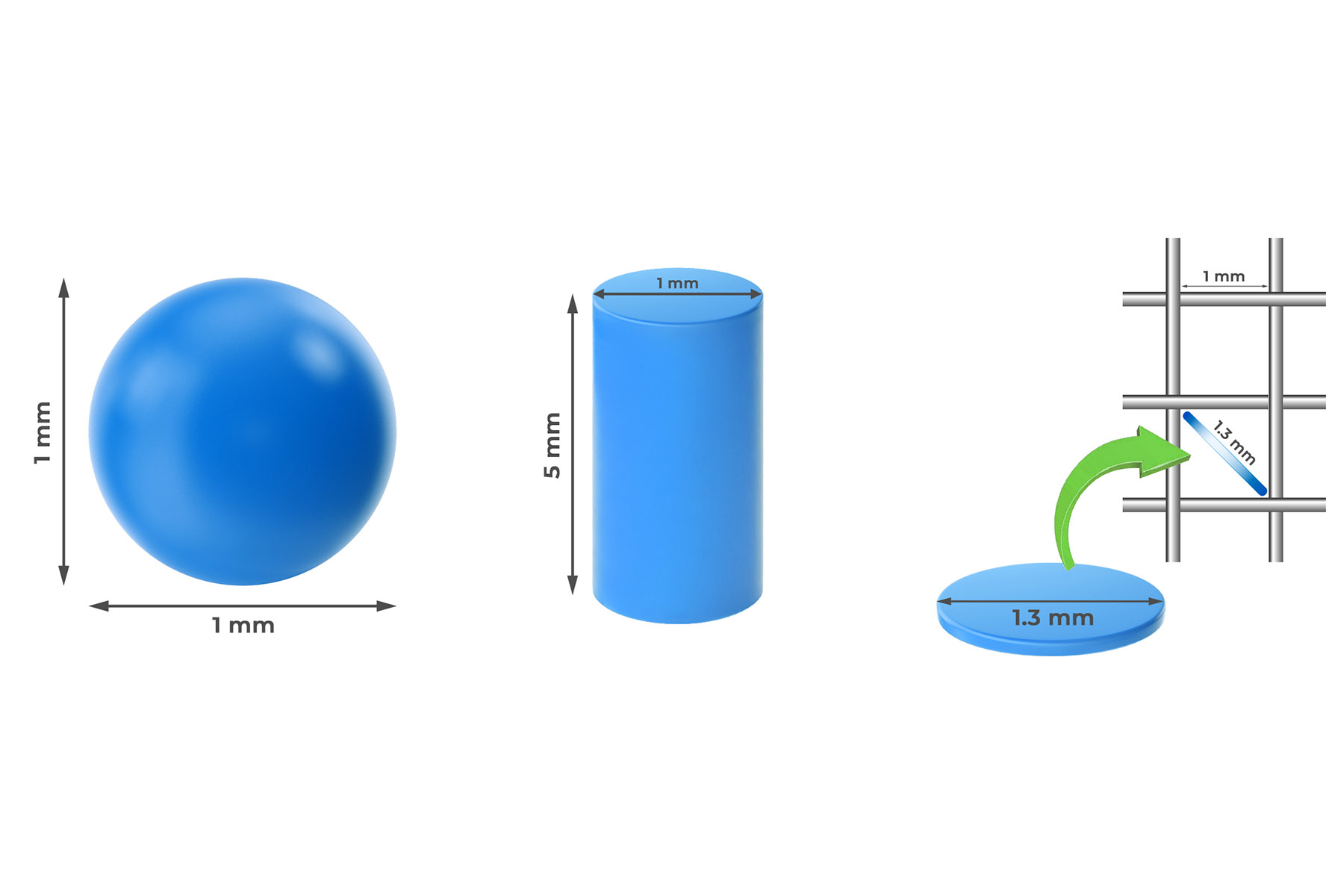
Equivalent Diameter
- Sphere: Diameter independant from site of view - 1 mm real size
- Stick: Particle can pass mesh lengthwise - particle is longer than 1 mm equivalent diameter.
- Coin: Has also equivalent diameter of 1 mm, but can be up to 1.3 mm in real.
粒度分析
混合物中の個々の粒子の正式なサイズは「粒度」と呼ばれ、粒度分析はこのサイズを決定するために使用されます。
粒度分布は、科学的にも技術的にも、材料の特性に大きな影響を与えます。
粒度分析は、多くの相違点および異なる決定方法さえもあるため、粒度分析とは独立した学問分野と考えられています。
粒度分析方法
粒度を分析し、決定するための異なる方法がありますが、等価直径は常にすべてのバリエーションで決定されます。
40mm程度の大きな粒子は通常、手作業または写真に基づいて測定されますが、10μm以下の非常に小さな粒子の粒度分析にはふるい分けがよく使用されます。ふるい分けでは、まずサイズの異なるふるいを重ねてふるい分け機にクランプする。
試料の粒子は、ふるいにかけられた大きさによって分けられます。その後、穴の大きさが異なるふるい上に残った個々の画分の割合が測定されます。個々の画分の質量百分率はp3と呼ばれます。累積分布曲線Q3は、個々のフラクションの付加質量に関する情報を提供します。90%、50%、10%より小さい試料のサイズに関する情報を提供するのが一般的です。
光学的粒子特性評価
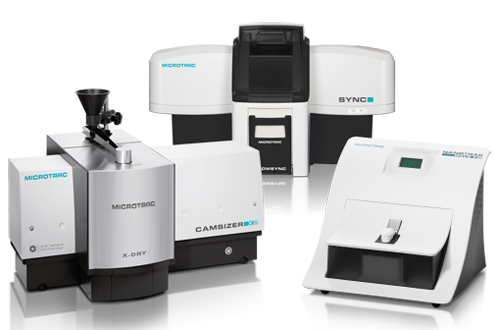
粒度分析は、光学測定技術を使用して実施することもできる。測定のバリエーションによっては、粒子形状に関する記述も可能です。測定範囲は、システムによって0.3nmから30mmです。粒子の特性評価は、懸濁液、エマルション、コロイド系、粉末、顆粒、バルク材料で実施できます。
当社の姉妹会社であるMICROTRACは、広範なグローバルネットワークと粒子特性評価における比類のないサービスを提供するテクノロジーリーダーです。
品質管理のためのふるい分析
品質」という言葉は誰もが知っている。特に価値の高い製品を表す言葉として広く使われている。しかし、品質の正確な定義は以下の通りである:品質とは、定義された特性が、試験を実施することによって決定される製品の検出された特性に適合していることである。試験測定により、望ましい特性が所定の許容範囲内にあることが確認された場合、製品は高品質と言える。測定値が大きく逸脱している場合、品質は低くなる。天然であれ人工であれ、多くの材料は分散した形で存在する(一貫した単一体を形成せず、互いに分離可能な要素に分割された材料、例えば砂の山)。粒子の大きさと、物質量内でのその分布、つまり異なる大きさの粒子の割合が、物理的・化学的特性に決定的な影響を与える。
粒度分布の影響を受ける特性の例をいくつか挙げてみましょう。
- コンクリートの強さ
- チョコレートの味
- 錠剤の溶出特性
- 粉末洗剤の流動性と溶解性
- フィルター材の表面活性
これらの例は、特に生産工程におけるバルク品の品質保証の観点から、粒度分布を知ることがいかに重要であるかを明確に示しています。生産工程で粒度分布が変化すると、製品の品質も変化してしまいます。
RETSCH Sieve Shakers for Reproducible Results
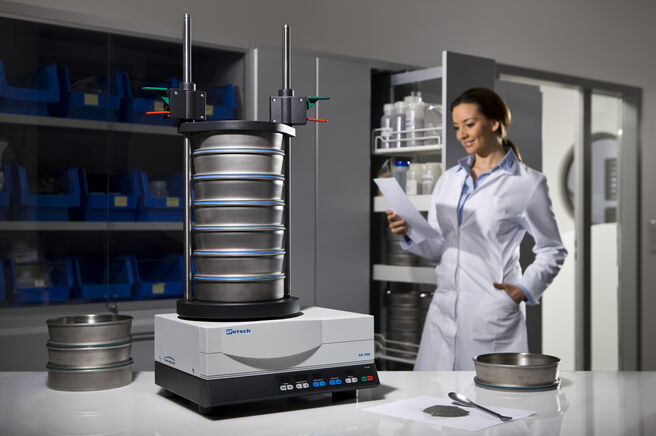
RETSCH sieve shakers cover a comprehensive measurement and application range for your requirements. Different sieving movements and sieve sizes enable you to use the appropriate RETSCH sieve shaker for every material that can be sieved. This ensures you always obtain exact and reproducible results – naturally in accordance with test equipment monitoring (DIN EN ISO 9001ff).
無料相談のお問い合わせ
ヴァーダー・サイエンティフィックは日本国内だけでなく、世界中に広がる販売網で、お客様のニーズに迅速にお答えしています。
ヴァーダー・サイエンティフィック株式会社
東京本社:〒151-0061 東京都渋⾕区初台1丁⽬46番3号 シモモトビル
1階(アプリケーションラボ、サービス) 10階(オフィス)
TEL:03-6276-0073
FAX:03-6276-0076
東京本社へのアクセス
info@verder-scientific.co.jp
大阪営業所:〒559-0031 大阪市住之江区南港東8丁目2番52号
TEL:06-6655-0003
大阪営業所へのアクセス
メッセージを送信