





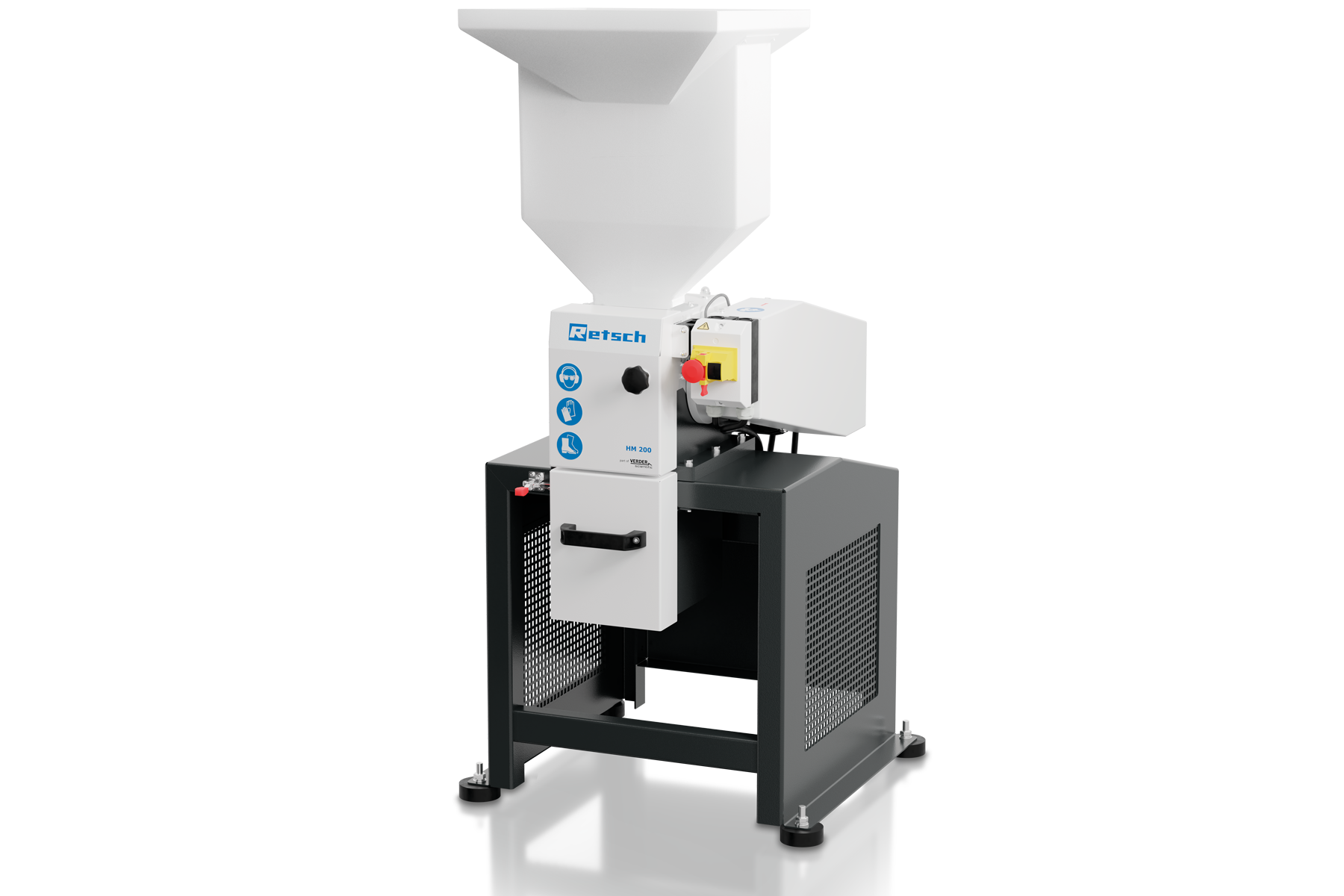
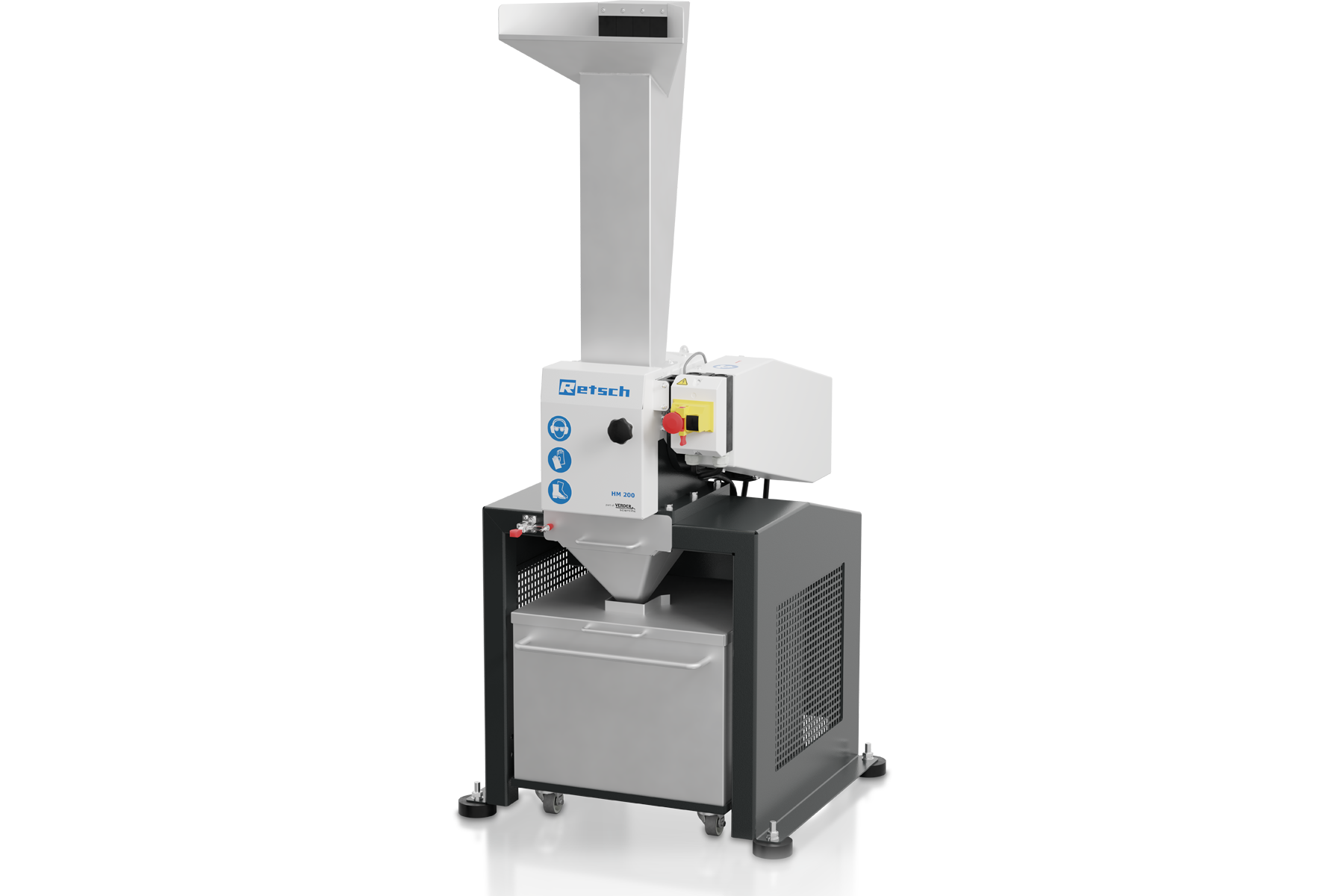

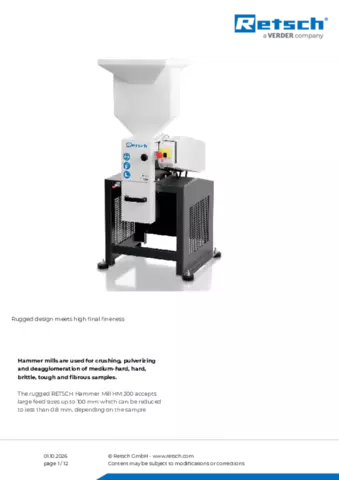
Hammer mills are used for crushing, pulverizing and deagglomeration of medium-hard, hard, brittle, tough and fibrous samples.
The rugged RETSCH Hammer Mill HM 200 accepts large feed sizes up to 100 mm which can be reduced to less than 0.8 mm, depending on the sample properties.
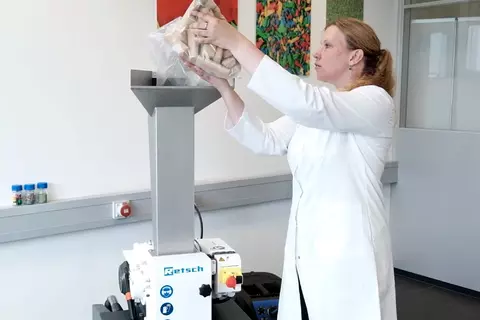
Product Video
Hammer Mill HM 200 High throughput & defined final fineness
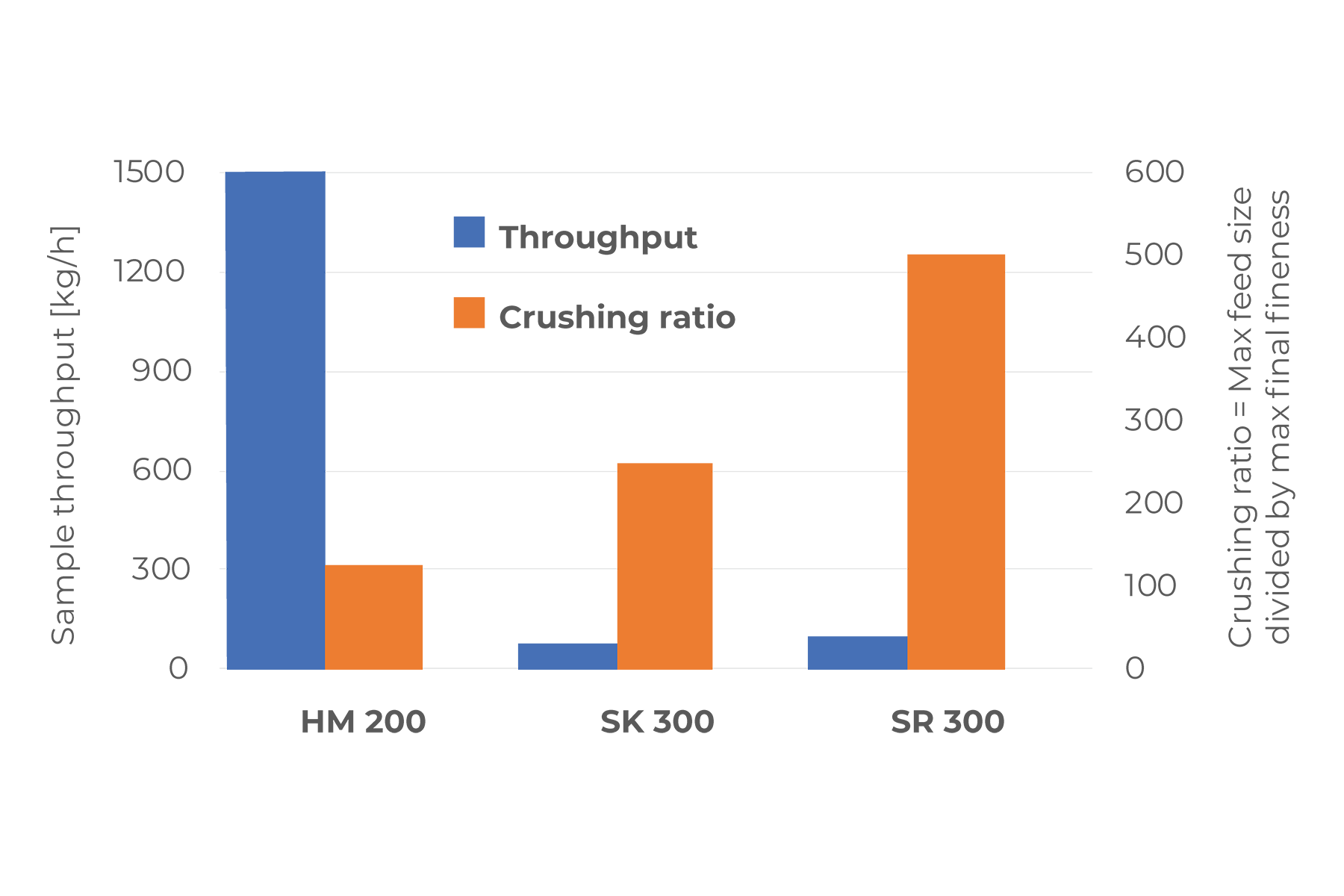
This diagram shows a comparison of the Hammer Mill HM 200 with two rotor mills. The extremely high sample throughput of the HM 200 is clearly visible. The HM 200 shows a good crushing efficiency of 125, which is the value of the maximum feed size divided by the finest achievable grind size. The SR 300 and SK 300 accept a maximum feed size of 25 mm (unlike the HM 200 which accepts sizes up to 100 mm) and crush particles to a size below 0.05 mm or 0.1 mm respectively - resulting in a higher crushing ratio.
- Excellent crushing performance
- Very high throughput of up to 1500 kg/h
- Fixed speed of 3000 min-1
- Sieve range from 2 - 40 mm
- Feed size up to 100 mm, grind size < 0.8 mm
- Easy access to crushing chamber facilitates cleaning
- For batchwise or continuous grinding
- Connector for dust extraction
Hammer Mill HM 200 User convenience combined with maximum safety
Easy cleaning of the rotor and the hammers thanks to
- Fold-back hopper to gain access to the crushing chamber from above
- Additional fold back option in the middle part of the machine allows easy cleaning of rotor and hammers from below
To ensure a long service life of the machine, even when mostly used for tough crushing tasks, the following parts can be exchanged by the user:
- Wear plates inside the mill
- Rotor with the swing hammers
A safety switch and the brake motor ensure that the unit comes to an immediate stop, e.g. if the door is openend unintendently.
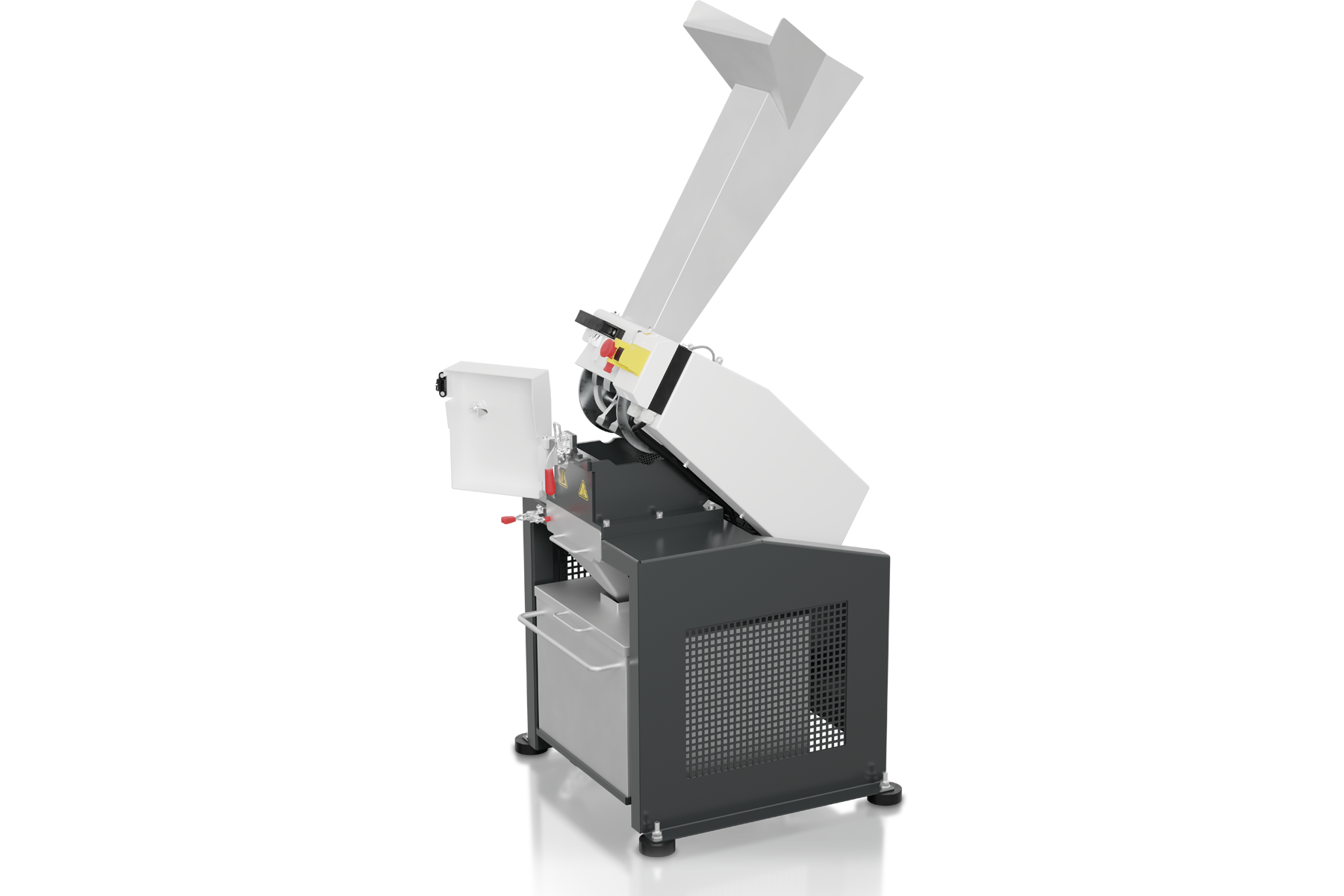
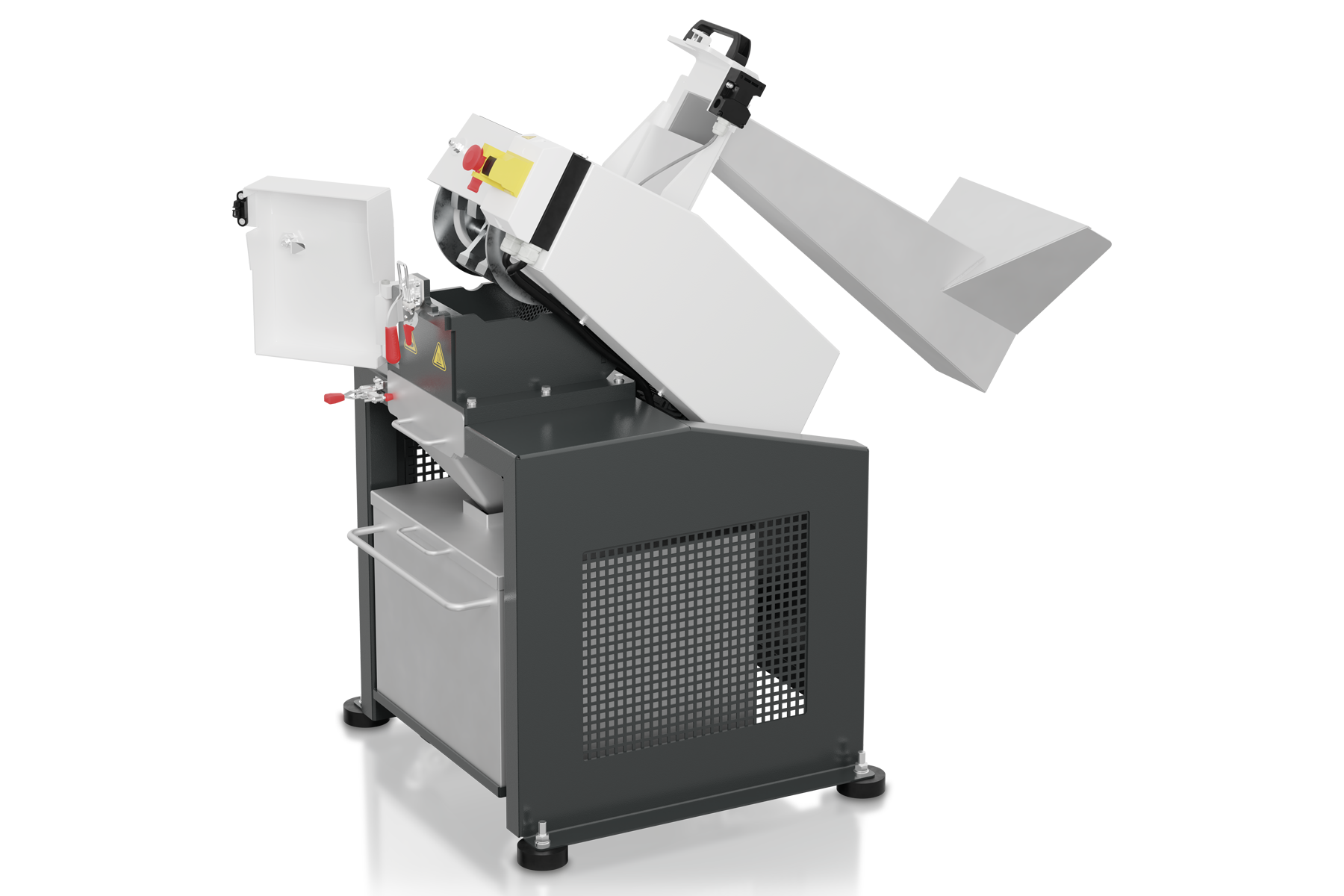
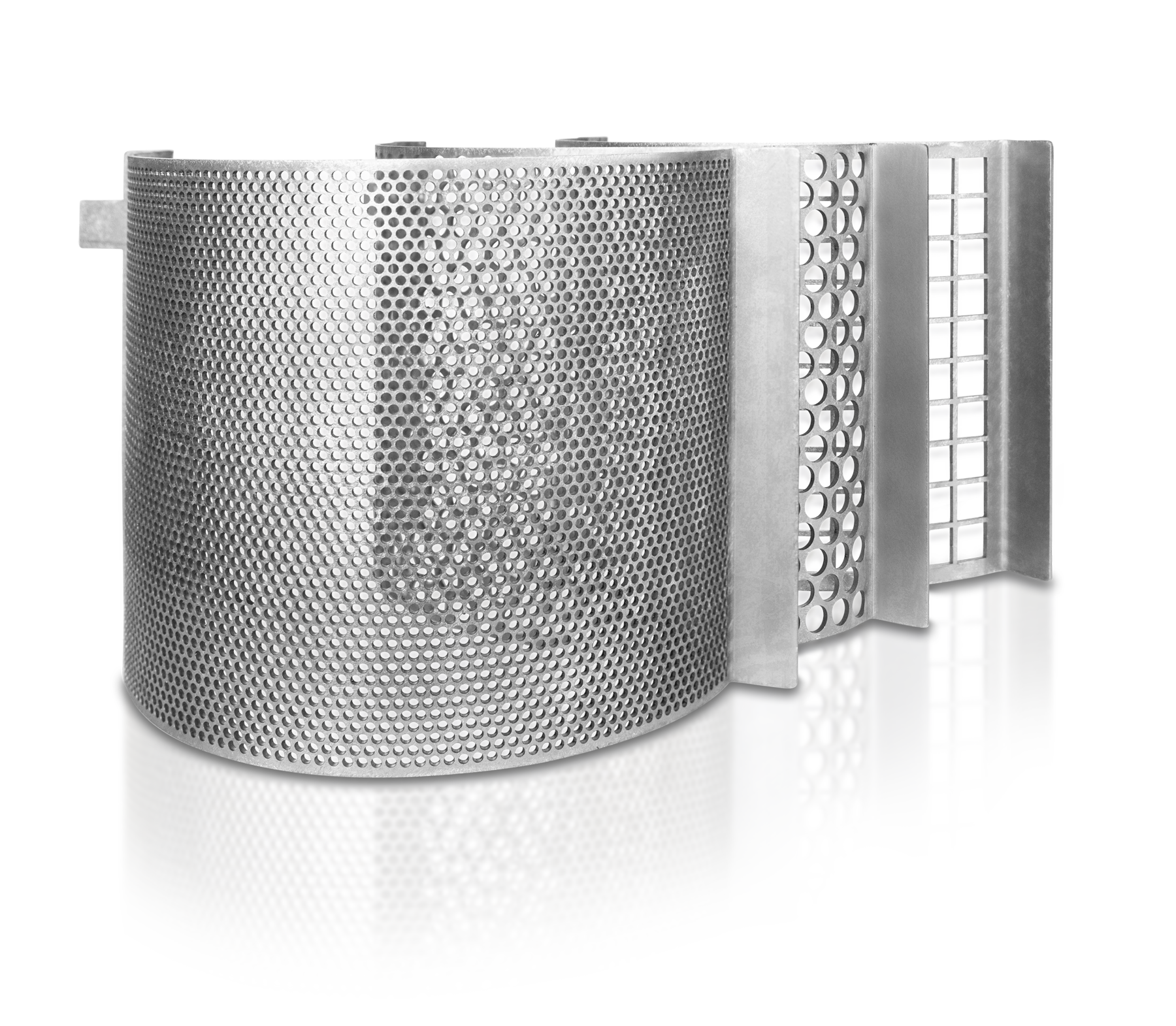
Hammer Mill HM 200 Defined particle size thanks to different sieves
The achievable final fineness of the sample depends on the material's properties. Hard and brittle materials can be easily crushed in the HM 200 down to particle sizes below 0.8 mm. The range of sieves with aperture sizes from 2 mm to 40 mm allows for perfect adaption to application requirements.
Tough, fibrous, or moist samples like plastic toys, wood or humid coal can be successfully crushed in the hammer mill when choosing a sieve with medium to large aperture size.
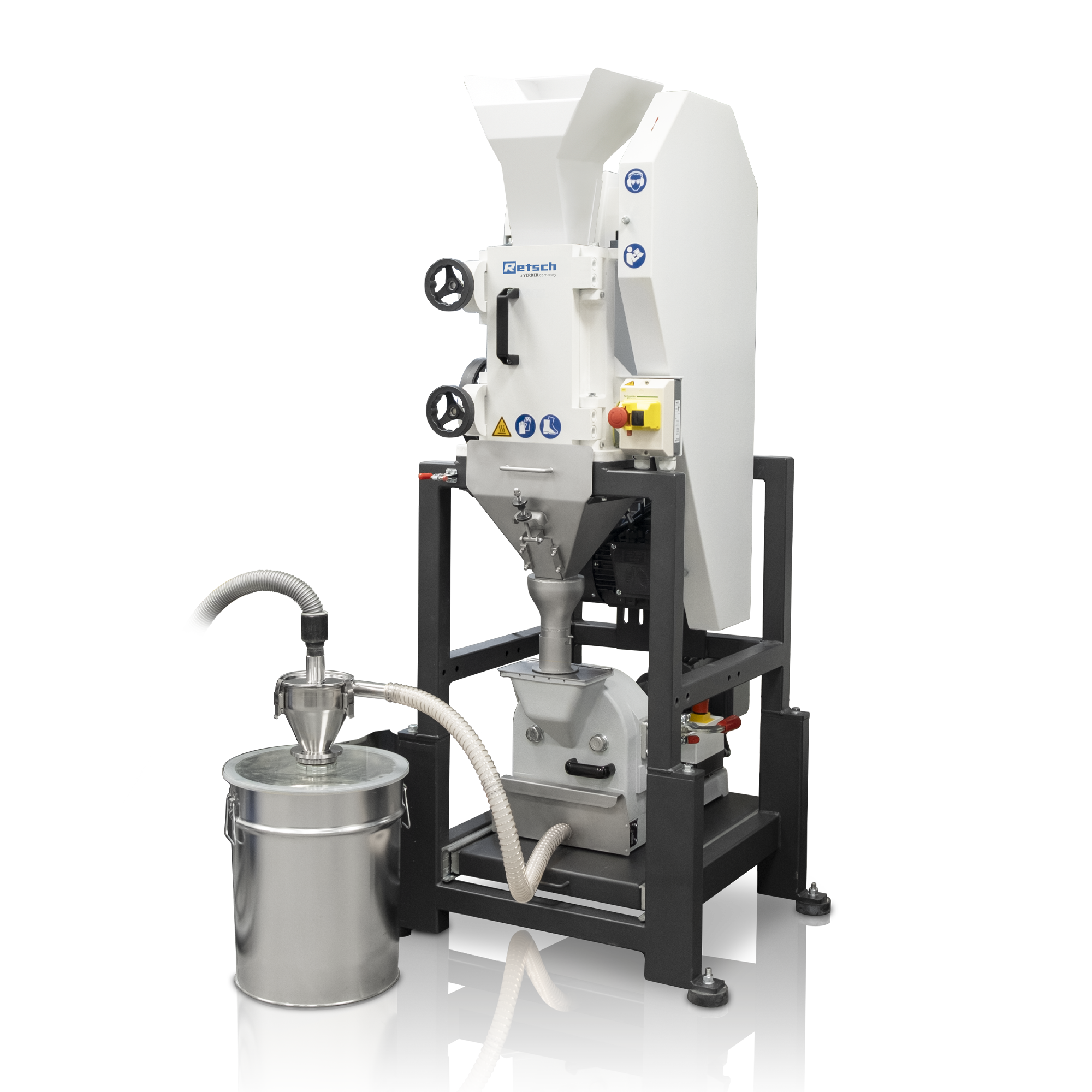
Cyclone System Bye-bye Dust and Sample Loss
Whether you’re preparing samples in mining, precious metals, materials research, or environmental analysis, the RETSCH Cyclone System ensures efficiency, precision and safety like never before!
Why should you choose the RETSCH Cyclone System?
- Total Sample Recovery
Eliminate sample loss during crushing with our cyclone, ensuring accurate and reproducible results for every analysis! - Enhanced Operator Safety
Our cyclone significantly reduces dust exposure, creating a safer and cleaner working environment for your team!
Plus: Existing instruments can be retrofitted with the cyclone system
Hammer Mill HM 200 Hoppers and collecting systems
The HM 200 is suitable for batchwise as well as continuous grinding and can be equipped with different hoppers and collecting systems.
- Standard hopper for quick and easy feeding of large sample amounts
- The Long stock hopper is beneficial for feeding elongated particles
- Standard collector for size reduction of sample amounts up to 10 l
- For large volumes a collector is available which accommodates up to 30 l
- Continuous operation: Use the continuous gravity outlet and a customer specific collecting system

Long stock hopper

Collecting receptacle 10L

Collecting receptacle 30L

Gravity outlet for continuous operation
Hammer Mill HM 200 Typical Sample Materials
RETSCH’s powerful hammer mill is ideally suited for preliminary crushing and fine grinding of ores, minerals, ceramics, quartz, slag, soil, coal, glass, cement clinker, wood, plastics, feed pellets, dry animal feed, dried herbs etc.
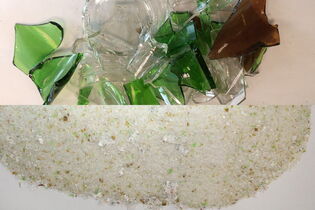
glass
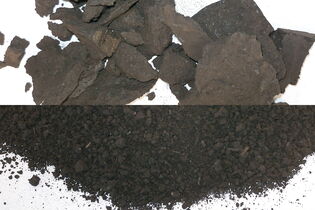
coal
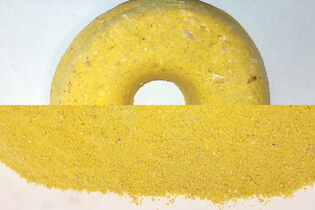
animal feed
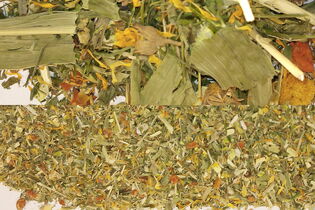
herbs
To find the best solution for your sample preparation task, visit our application database.
Hammer Mill HM 200 Functional Principle
A hopper leads the sample material into the grinding chamber of the hammer mill.
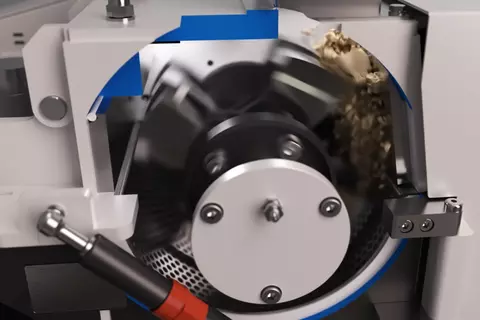
The HM 200 is equipped with a horizontal rotating shaft on which 10 freely swinging hammers are mounted. Those hammers crush the material at high speed inside the grinding chamber. With the swing hammers in contrast to fixed hammers, the risk of blocking the machine as well as the wear is minimized. The material is crushed by impact when hit by each hammer and while bouncing inside the grinding chamber. As soon as the sample is fine enough to pass through the sieve, it falls through the gravity outlet into a collecting vessel.
Hammer Mill HM 200 Technical Data
| Applications | coarse and pre-crushing, desagglomeration |
|---|---|
| Field of application | agriculture, geology / metallurgy, glass / ceramics, coal, chemistry / plastics, construction materials, engineering / electronics, environment / recycling, food / feed |
| Feed material | medium-hard, hard, brittle, tough, fibrous |
| Size reduction principle | impact, shearing |
| Max. feed size | < 100 mm |
| Final fineness | < 0.8 mm |
| Batch size / feed quantity | up to 30 l depending on collecting receptacle |
| Speed at 50 Hz (60 Hz) | 3000 min-1 (3500 min-1) |
| Throughput | 1500 kg/h |
| Rotor peripheral speed | 31.4 m/s |
| Rotor diameter | 200 mm |
| Types of rotors | 10 swing hammer |
| Dry grinding | yes |
| Wet grinding | no |
| Cryogenic grinding | no |
| Material of grinding tools | hardened steel 1.0503 (hammers); steel 1.0330 (sieves) |
| Sieve sizes | 2 / 3 / 4 / 5 / 6 / 8 / 10 / 15 / 40 mm |
| Dust extraction unit | yes |
| Process line version | yes |
| Collector capacity | 10 l, 30 l, continuous outlet |
| Drive | 3-phase motor |
| Drive power | 1.5 kW |
| Electrical supply data | different voltages |
| Power connection | 3-phase |
| Protection code | IP 54 |
| W x H x D closed | 700 x 1570 x 750 mm |
| Net weight | ~ 150 kg |
| Standards | CE |
Hammer Mill HM 200 Downloads
Product data sheet HM 200
Material Analyses of Equipment & Accessories
How does the material of a grinding tool affect sample preparation and the analysis results? This document provides a detailed overview of the materials used by RETSCH and their properties.
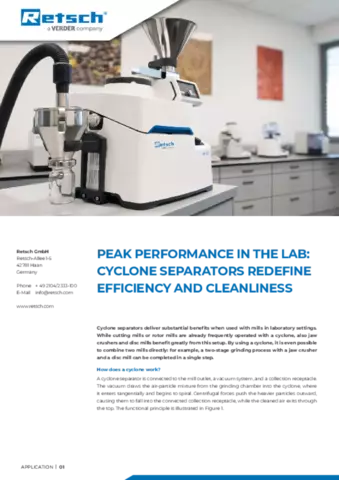
How Cyclone Separators Redefine Efficiency and Cleanliness in the Lab
Cyclone separators deliver substantial benefits when used with mills in laboratory settings. While cutting mills or rotor mills are already frequently operated with a cyclone, also jaw crushers and disc mills benefit greatly from this setup. By using a cyclone, it is even possible to combine two mills directly: for example, a two-stage grinding process with a jaw crusher and a disc mill can be completed in a single step.