





The TM 300 Drum Mill is utilized for preparing granules and powders through a grinding process conducted in either dry or wet conditions. This versatile grinder can function as either a Ball or a Rod Mill by employing the corresponding module. To ensure an efficient grinding process, it is essential to use a sufficient number of balls or rods. Depending on the sample material, a final fineness below 20 microns can be achieved.
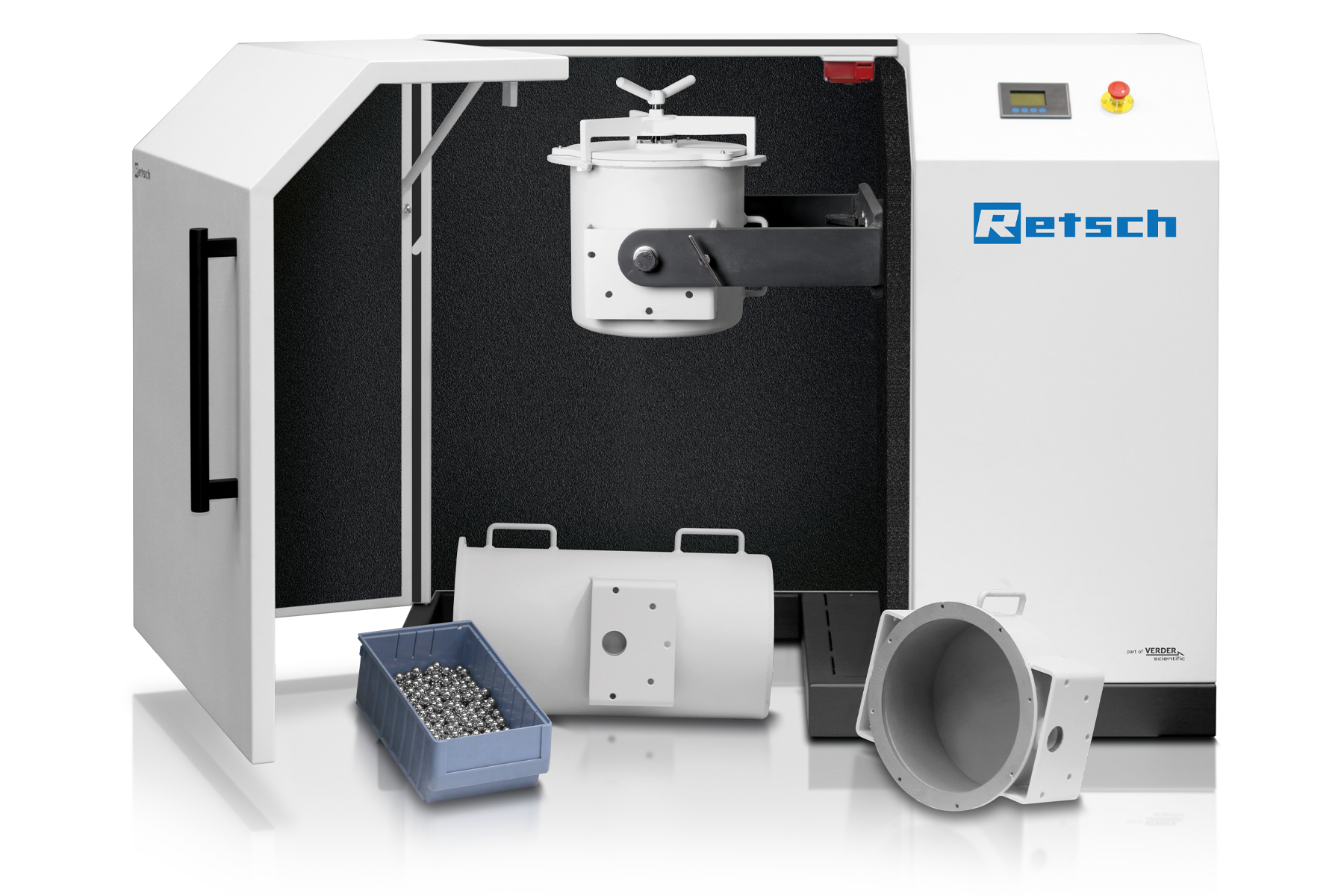
The drum mill comprises a gear motor mounted on a robust steel frame, a set of separation grids, and a sample collector. The TM 300 is designed with a yoke and locking mechanism that facilitates easy access to the sample. Cleaning is made convenient by a quick-release locking mechanism, allowing effortless removal of the drum cover.
The TM 300 accepts sample volumes up to 9 l and is therefore also suited for upscaling processes.
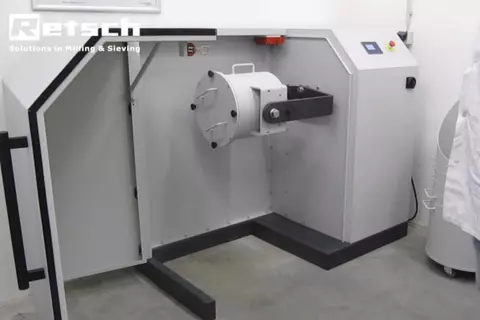
Product Video
Drum Mill TM 300 Benefits at a glance
- Powerful and quick processing of large quantities up to 9 l
- Suitable for dry and wet grinding
- Standard drum sizes range from 5 l to 43.4 l
- Variable speed and reproducible results
- Suitable for long term grindings
- Ball and rod modules available
- Ideal for upscaling tests in mechanochemistry
- Perfect seal with single-screw lids
Drum Mill TM 300 Safe and convenient operation
The TM 300 stands out for its user-friendly features. The easy tilt mechanism facilitates the swift and uncomplicated emptying of the grinding jar. The removable sample collector simplifies the sample retrieval process, making it convenient for operators to access their collected materials.
The solid noise-protection hood contributes to a quieter and more comfortable working environment.
The TM 300 is equipped with an emergency switch, providing a quick and reliable means to halt the milling process in case of unforeseen circumstances, underscoring the commitment to user safety.
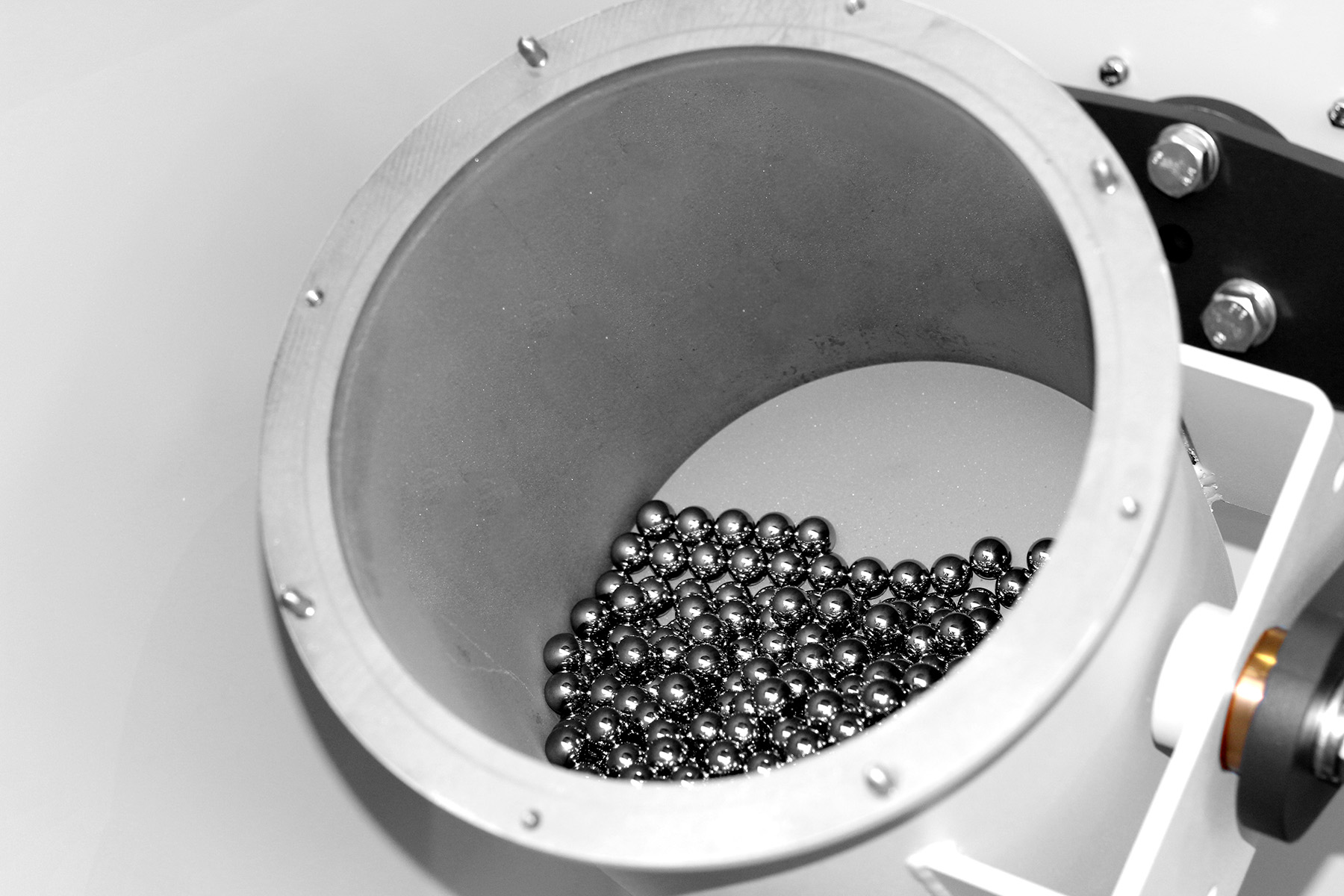
The redesigned drums and drum covers of the TM 300 feature improved handling, allowing the lid to be secured with just one screw for a perfect seal, even during wet grinding.
Parameter setting
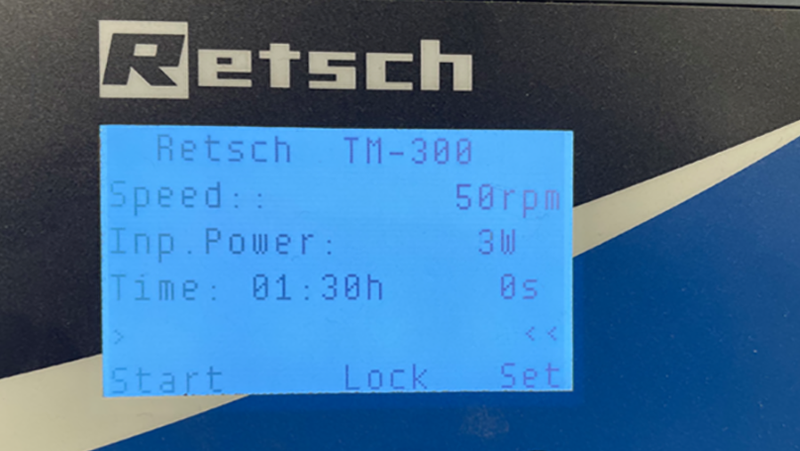
Process parameters like grinding time or start/stop are conveniently set via the TM 300's large display interface. Settings include:
- Variable speed from 1 to 80 rpm
- Grinding time of up to 99:59:59 h:min:s
- Rotation direction, e. g. to reduce caking effects
- Programmable interval & break options for temperature-sensitive samples
- Delayed start function
Drum Mill TM 300 Accessories for effective grinding processes
Catering to various application needs, the TM 300 offers standard grinding drums ranging from 5 to 43.4 liters. This ensures that the mill is adaptable to a wide spectrum of processing tasks.
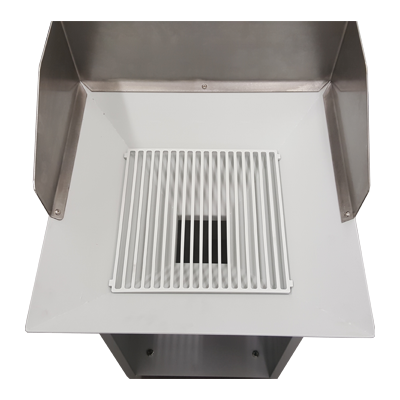
An optional separation grid provides convenient separation of balls and sample after the grinding process. It is suitable for grinding balls sized 10, 20 or 30 mm. A connection for dust extraction prevents release of dust.
The grinding jar comes equipped with a gasket, ensuring a secure seal for loss-free milling operations. This feature not only enhances the efficiency of the process but also minimizes the risk of material waste.
Drum Mill TM 300 Drum filling level for grinding balls and rods
While the maximum sample feed size depends on properties like hardness and breaking behaviour, a particle size of approximately 5 mm is ideal for the TM 300. Larger sizes are acceptable but should not exceed 15 mm. For sample lumps which break very easily or for deagglomeration effects, a feed size between 20 and 30 mm is feasible. For such easy-to-process samples, the sample filling level may be increased to 9 l.
If special drums of stainless steel 1.4404 in sizes 21.7 / 10 / 5 l together with grinding balls of steel 1.4404 are employed, it is possible to carry out wet grinding in the TM 300. The total filling volume for wet grinding may exceed the recommended amount for dry grinding. It may be helpful to use a large number of small grinding balls to increase friction.
| Grinding drum | Mass of grinding balls | Grinding ball size (mm) | Number of rods | Optimum sample volume (l) |
|---|---|---|---|---|
| 5 l | 10 kg | <5 | 10 | 20 | 30 | - | 1 - 1.5 |
| 10 l | up to 20 kg | <5 | 10 | 20 | 30 | - | 2 - 2.5 |
| 21.4 l | 40 kg | <5 | 10 | 20 | 30 | - | 4 - 5 |
| 43.4 l | - | - | 8 | 9 |
Drum Mill TM 300 Five drum positions for convenient handling
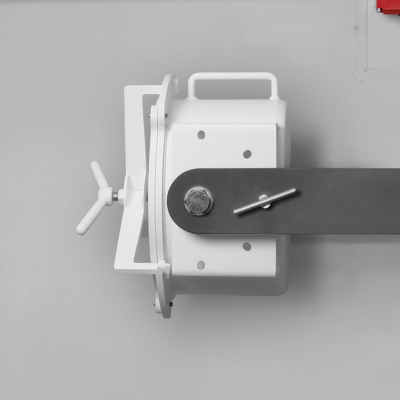
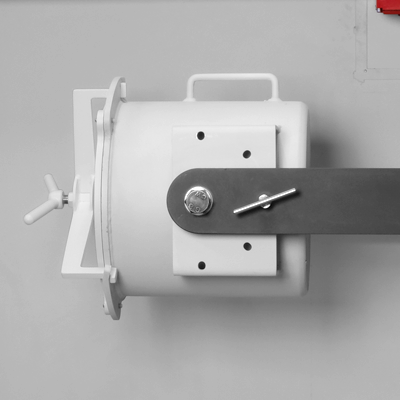
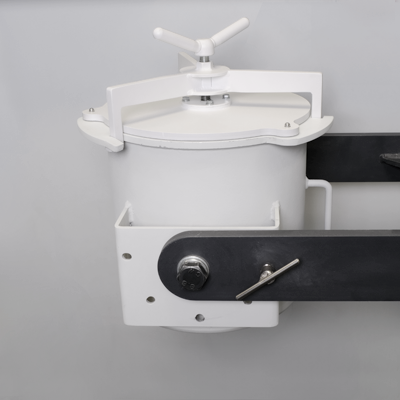
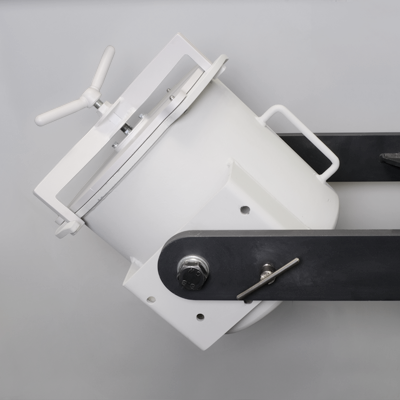
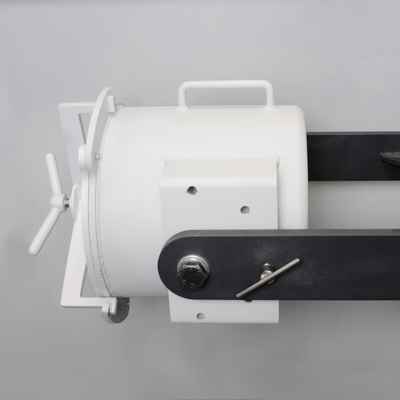
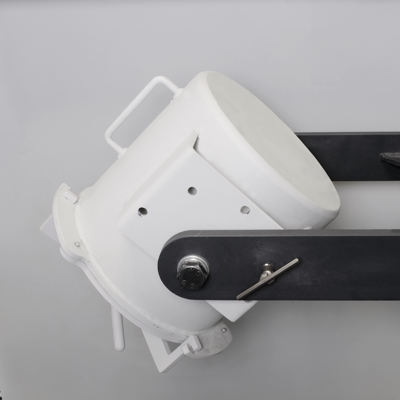
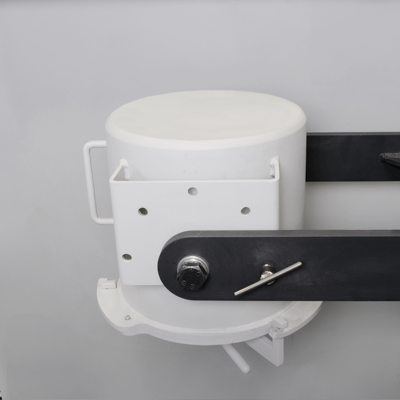
The user can set the grinding drums in five different positions which are secured by a screw. This ensures easy filling and emptying of the drum but also improves the mixing and grinding process. The largest rod module of 43.4 l cannot be brought into the mixing position due to lack of space.
Drum Mill TM 300 The solution for efficient and sustainable co-crystal synthesis
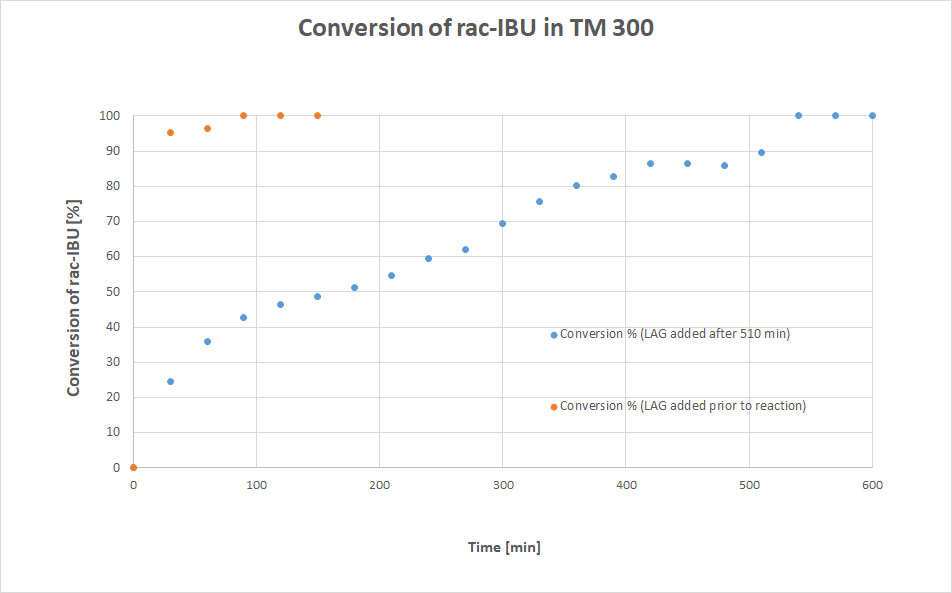
The TM 300 is capable of meeting the demands of modern pharmaceutical manufacturing. This can be demonstrated by the example of the mechanochemical synthesis of rac-Ibuprofen:Nicotinamide co-crystals. The TM 300 is an environmentally friendly alternative to conventional solution-based methods. In just 90 minutes, 3.2 kg of co-crystals with a yield of 99 % were produced, using only minimal amounts of solvent in the so-called liquid assisted grinding (LAG) process. This reduces energy consumption compared to conventional methods and drastically minimizes environmental impact.
Conversion of rac-IBU. Blue plot: neat grinding approach with addition of 10 kg of balls (d = 10 mm) after 270 min and 10 kg of balls (d = 30 mm) after 360 min; addition of LAG additive EtOH after 510 min. Orange plot: LAG-assisted approach with EtOH added prior to the reaction and 20 kg balls 10 mm.
Results presented by the research group of Michael Felderhoff [1]
Grinding of barium titanate in heptane and oleic acid mixture with 0.5 mm grinding balls.
Blue curve: original sample; green curve: pulverized sample after 5 h.
TM 300 enables mechanochemical processes to be carried out on a kilogram scale, opening up new possibilities for sustainable industrial manufacturing processes. Particularly interesting is the minimal metal abrasion – the measured values were well below concerning levels and significantly lower than, for example, in eccentric vibratory mills. The table shows the minimal abrasion values in the TM 300 during the test run.
| Sample | Al [ppm] | Cr [ppm] | Co [ppm] | Fe [ppm] | Ni [ppm] |
|---|---|---|---|---|---|
| Raw material IBU | 11.3 | 39.0 | 25.7 | 71.9 | 34.9 |
| Raw material Nicotinamid | 8.9 | 33.3 | 26.7 | 40 | 33.3 |
| Co-crystals after 30 min | 10.8 | 35.9 | 30.8 | 51.3 | 38.5 |
| After 60 min | 11.0 | 37.0 | 31.7 | 63.4 | 39.6 |
| After 90 min | 17.2 | 43.8 | 35.9 | 64.6 | 45.3 |
Setup:
- 2,03 kg rac IBU; 1,20 kg NIC
- 10 l drum for wet grinding, 20 kg 10 mm grinding balls stainless steel
- LAG Ethanol 0.1 ml/g
- 60 rpm for 90 min
- 99 % yield
Drum Mill TM 300 Special Application: Bond Index Test
Another application area of the TM 300 is Bond Index Testing. The Bond Work Index is used to assess the grinding efficiency and to calculate the necessary grinding power when choosing comminution equipment in the design phase of, for example, a mining plant. Precise determination of BWI is crucial for the accurate design and estimation of costs linked to the comminution process in industries like cement, mining or steel.
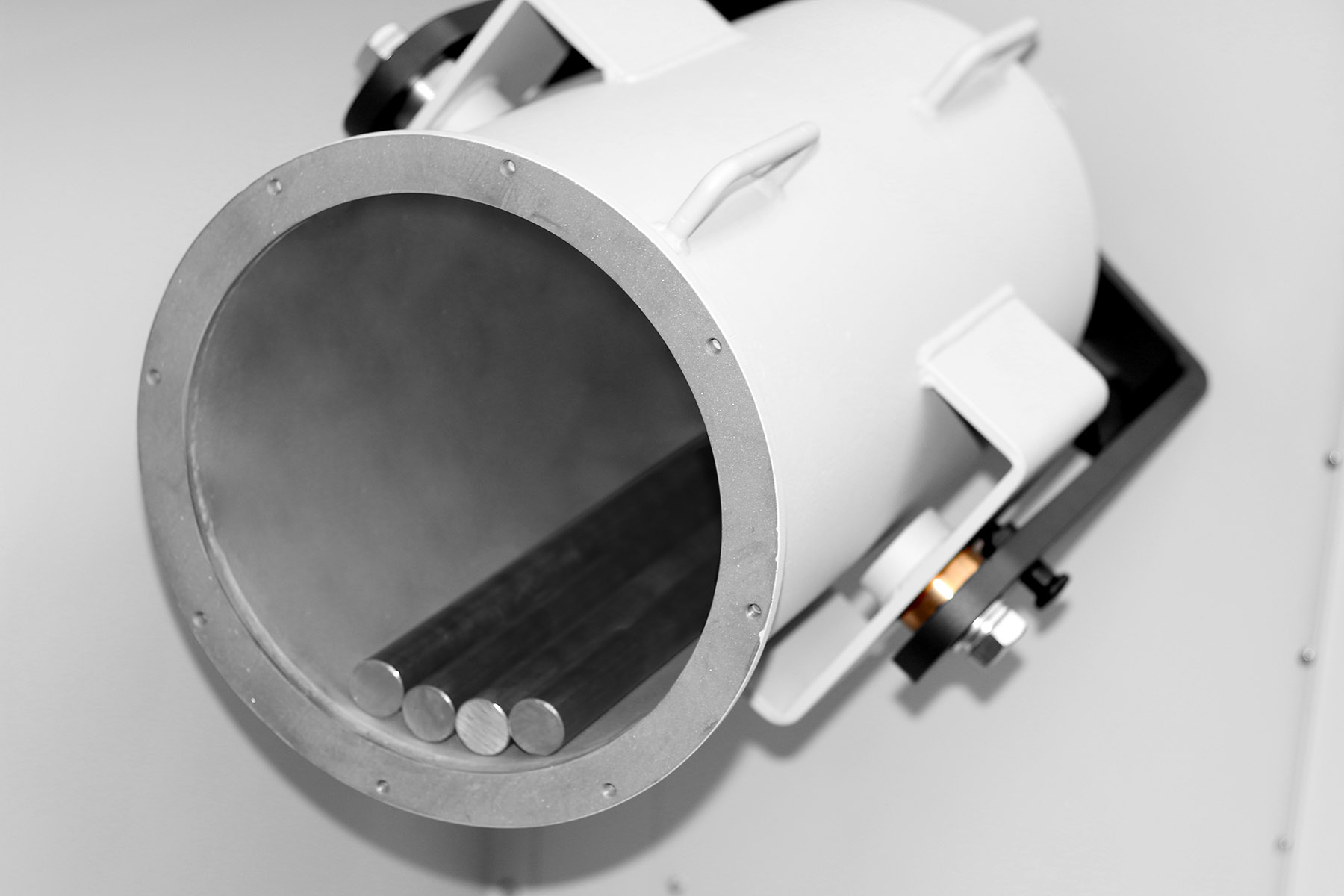
Both the Ball Mill and the Rod Mill module can be used for the process. At least 15 to 20 kg sample material is required to simulate a closed grinding circuit.
Ball Mill Module
The Ball Mill Work Index (BWI) is used for the range from 2.1 mm down to 100 µm. The sample needs to be pre-crushed to particle sizes as defined below.
- Minerals: < 3.35 mm and sieved
- Drillcore: < 3.35 mm and sieved
- Half Drillcore: < 3.35 mm and sieved
The grinding jar of the Bond Index Ball Mill measures 12'' x 12'' and has well-rounded corners.
Rod Mill Module
The Rod Mill Work Index (RWI) is used for particle size determination in a size range from 25 mm down to 2.1 mm. The sample needs to be pre-crushed to particle sizes as defined below.
- Minerals: < 12.50 mm and sieved
- Drillcore: < 12.50 mm and sieved
- Half a drillcore: < 12.50 mm and sieved
The grinding jar for the Bond Index Rod Mill is 12″ x 24″ in size and has a wave-shaped design.
Drum Mill TM 300 Typical Sample Materials
RETSCH drum mills are true allrounders. They homogenize, for example: activated carbon, alloys, bentonite, bones, carbon fibers, catalysts, cellulose, cement clinker, ceramics, chemical products, clay minerals, coal, coke, compost, concrete, electronic scrap, fibers, gypsum, glass, hair, hydroxyl apatite, kaolin, lime stone, metal oxides, minerals, ores, paint and varnish, paper, pharmaceutical products, pigments, plants, polymers, quartz, seeds, semi-precious stones, sewage sludge, slag, soil, tissue, tobacco, waste, wood, etc.
Hard-brittle: ceramics
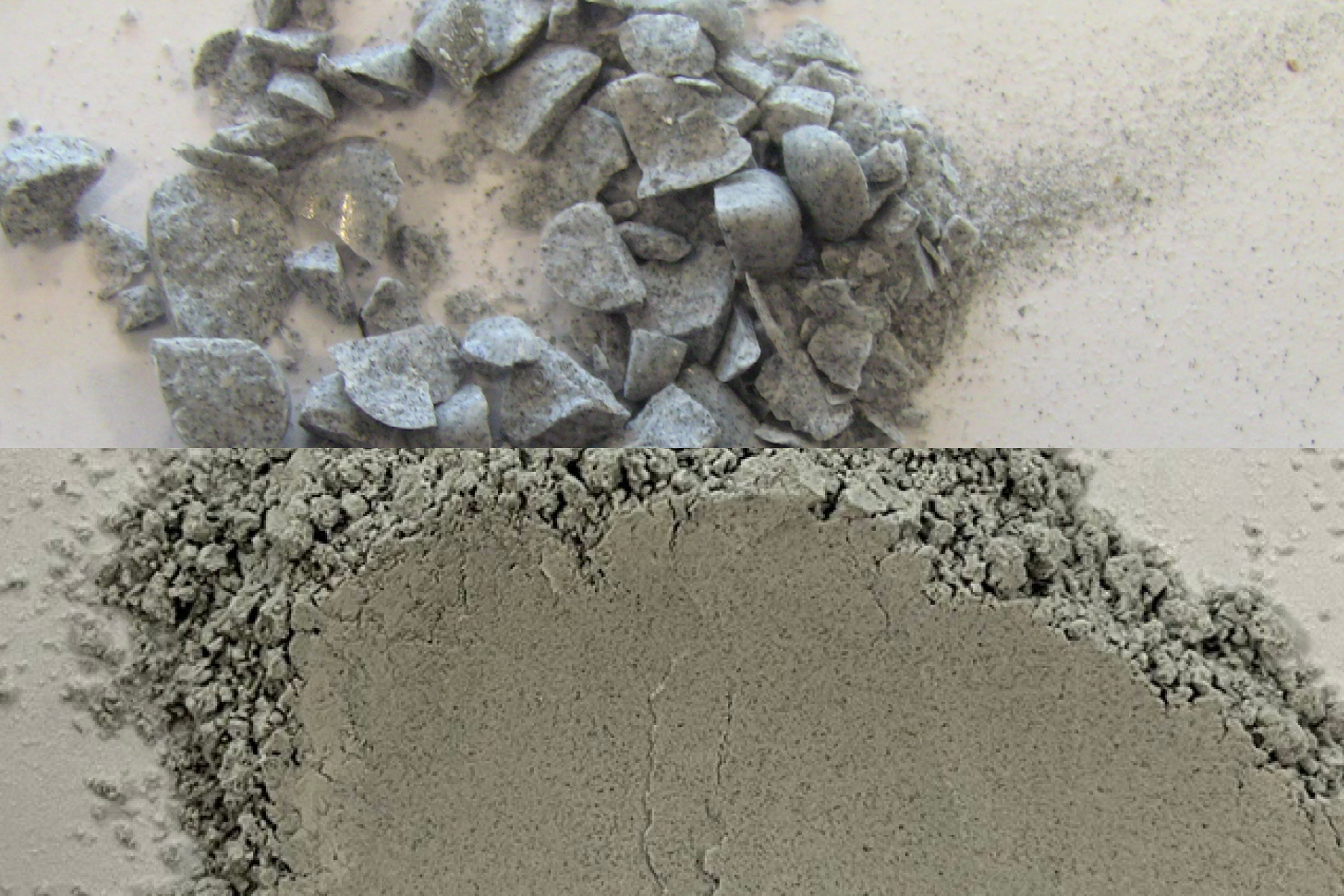
21.7 l ball module
Pre-grinding:
40 kg x 20 mm grinding balls
4 h at 60 rpm
Fine grinding:
40 kg x 10 mm grinding balls
5 h at 60 rpm
Hard-brittle: plastics
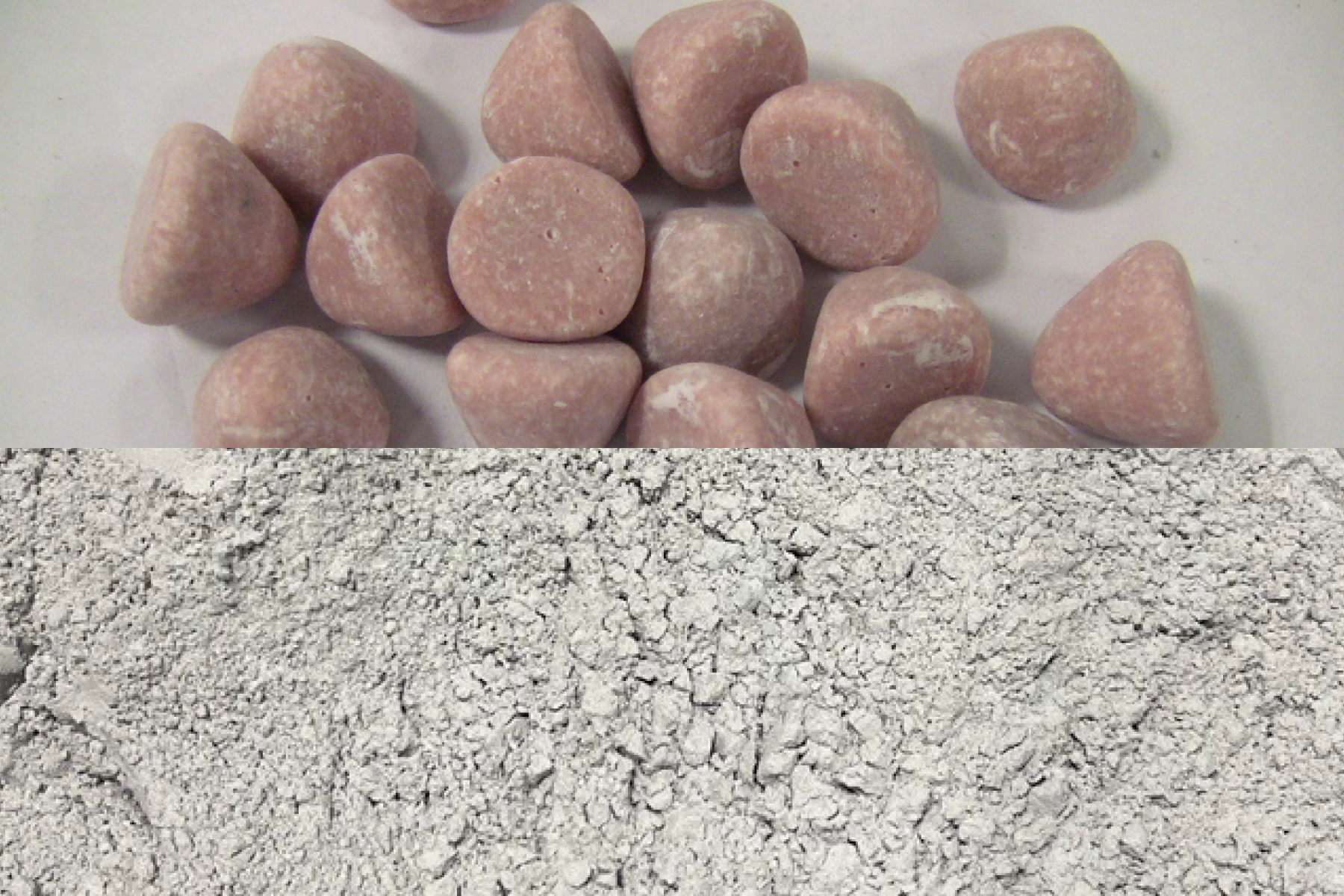
21.7 l ball module
Pre-grinding:
40 kg x 30 mm grinding balls
3 h at 60 rpm
Fine grinding:
40 kg x 10 mm grinding balls
4 h at 60 rpm
Medium-hard: soil
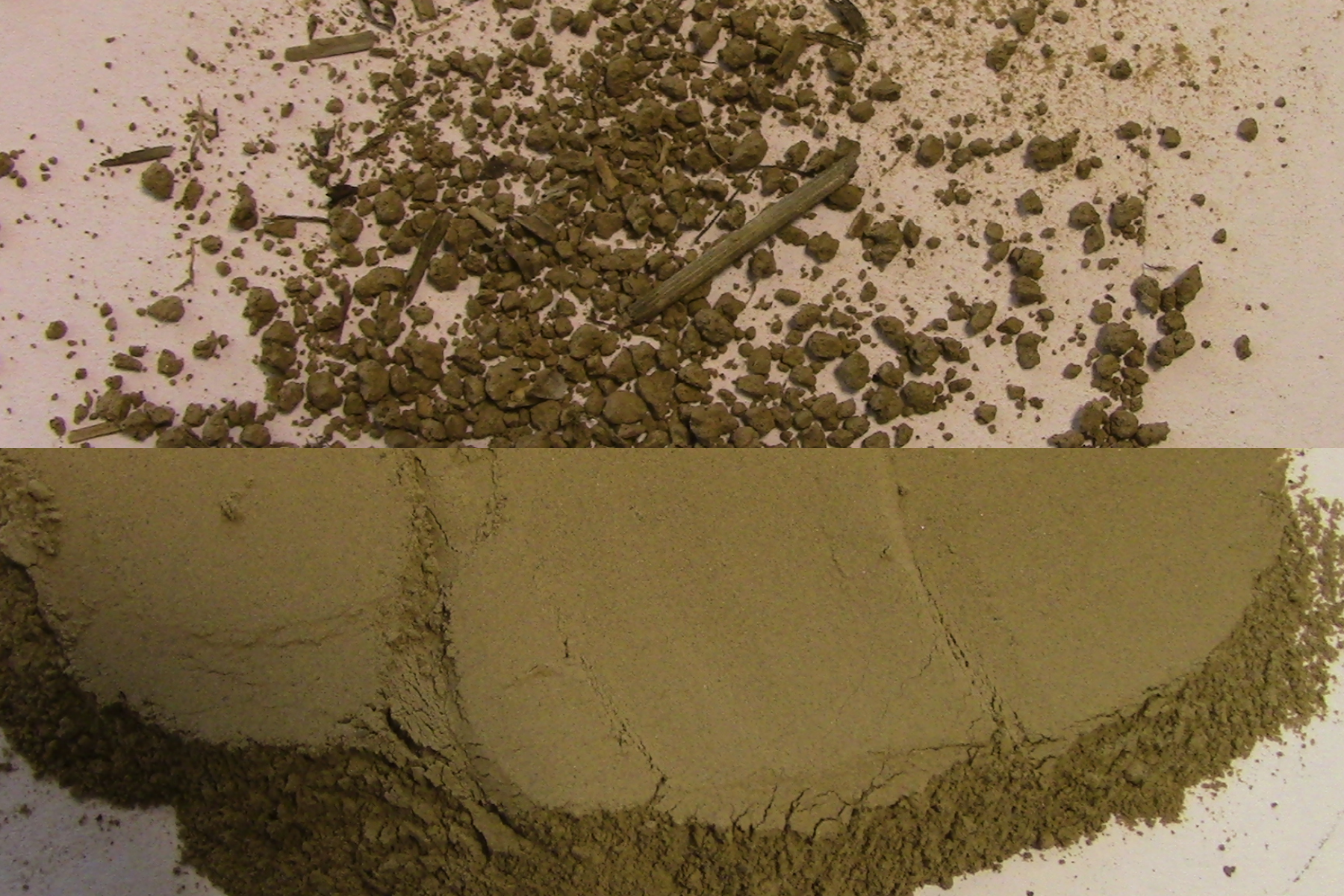
43.4 l rod module
8 grinding rods
1 h at 80 rpm
Fibrous-tough: Sawdust
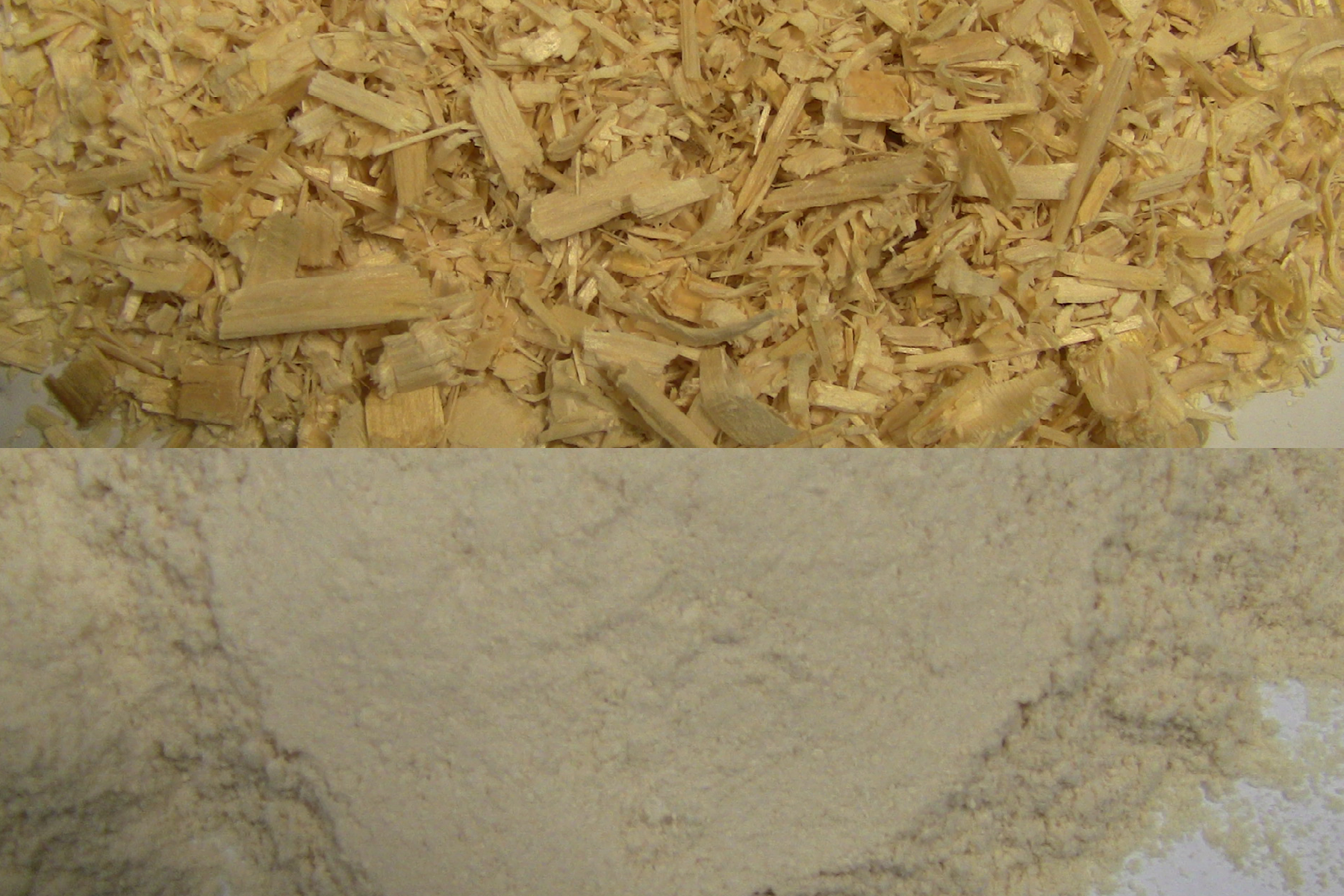
21.7 l ball module
40 kg x 30 mm grinding balls
5 h at 70 rpm
To find the best solution for your sample preparation task, visit our application database.
Drum Mill TM 300 Functional Principle
In a drum mill the sample (usually pre-crushed material) is placed inside the drum with the grinding balls and subjected to external forces.
The Ball Mill is used for fine grinding of solid matter by impact and friction in dry condition. The drum, which contains the sample and grinding balls, rotates around a horizontal axis. Whereas particles break more easily when larger grinding ball diameters are used, smaller diameters lead to a substantially higher final fineness.
The ball and the rod mill basically have the same concept comprising either a 12''x12'' jar with grinding balls or a 12''x24'' jar with grinding rods.
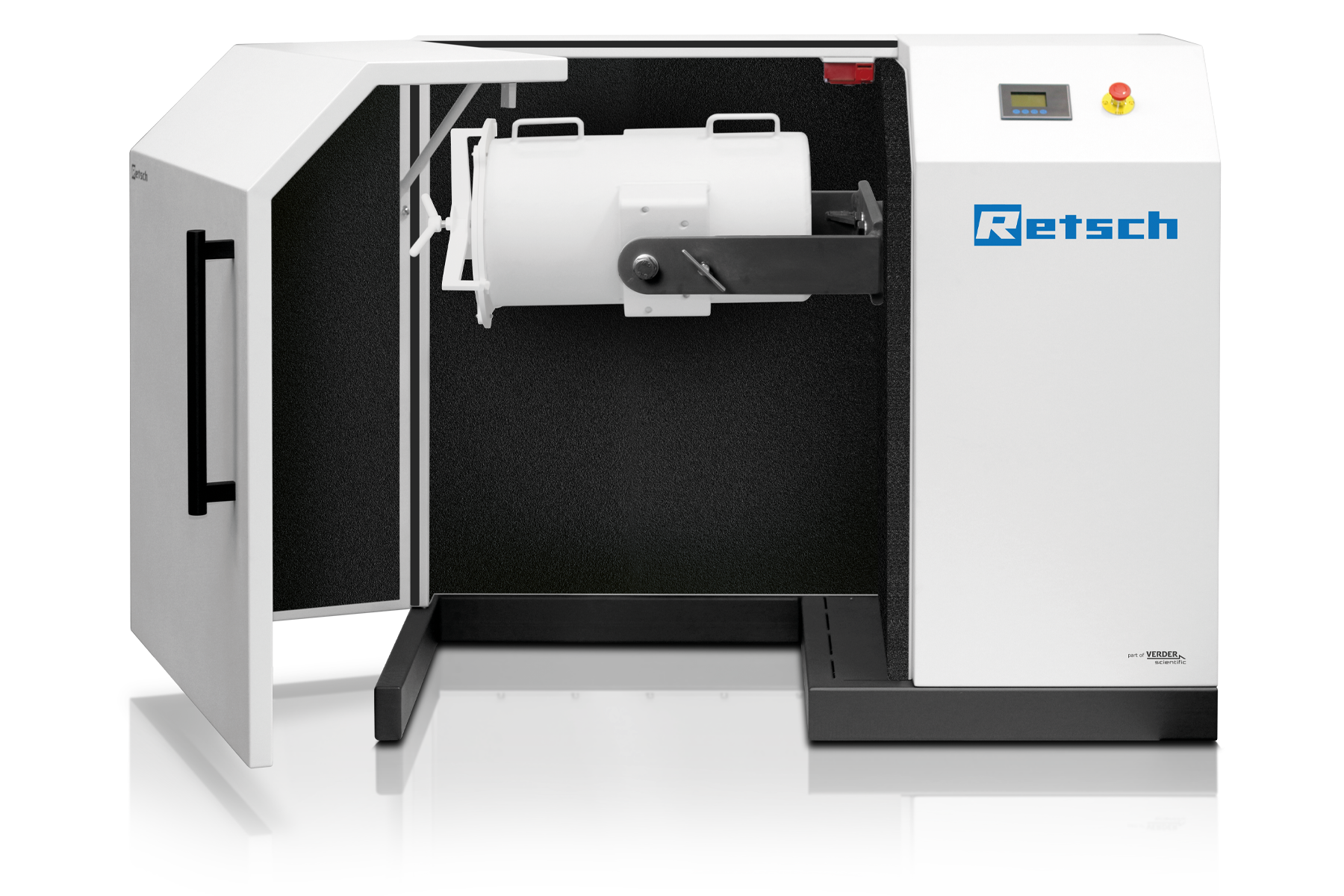
The jar is attached to a rotating yoke which is driven by a motor and can be placed in three different positions: Upwards for loading, horizontal for grinding, downwards for discharging.
To carry out the Bond Index test the pre-defined number of grinding balls or grinding rods is required. The electronic control integrated in the drive is equipped with an overload protection and permits and controls different speeds.
During the grinding process the difference in speeds between the balls / rods and grinding jar produces an interaction between frictional and impact forces, which releases the required comminution energy. The interplay between these forces produces a very effective degree of size reduction.
Drum Mill TM 300 Technical Data
| Applications | pulverizing, mixing used as Bond Index Tester: quantification of grindability of ores and minerals |
|---|---|
| Field of application | agriculture, biology, chemistry, construction materials, engineering / electronics, environment / recycling, geology / metallurgy, glass / ceramics, medicine / pharmaceuticals |
| Feed material | soft, hard, brittle, fibrous - dry or wet |
| Size reduction principle | friction |
| Final fineness | 20 µm (Bond Index: 100 µm ball, 2,100 µm rod) |
| Batch size / feed quantity | minimum 1 l / maximum 20 l used as Bond Index Tester: min. 15 kg with ball module / min. 20 kg with rod module |
| Rotation speed | 1 - 80 min-1 used as Bond Index Tester: 70 min-1 with ball module / 46 min-1 with rod module |
| No. of grinding stations | 1 |
| Material of grinding tools | hardened steel, stainless steel used as Bond Index Tester: hardened steel |
| Grinding drum sizes | 5 l / 10 l / 21.7 l / 43.3 l (Bond Index: 21.7 l ball, 43.3 l rod) |
| Setting of grinding time | digital |
| Drive | 3-phase asynchronous motor with frequency converter |
| Drive power | 0.75 kW |
| Electrical supply data | different voltages |
| Power connection | 1-phase |
| Power consumption | ~ 1800 VA |
| Protection code | IP 41 |
| W x H x D closed | 1500 x 1200 x 700 mm |
| Net weight | ~ 306 kg |
| Standards | CE |
Drum Mill TM 300 Downloads
General Catalogue
Green Cement - Innovation in the Construction Industry
Green Cement represents a significant innovation in the construction industry, aimed at reducing environmental impact and promoting sustainable development. Traditional cement production is a major contributor to global CO emissions, accounting for approximately 7-8% of the total. With this material these emissions can be minimized by incorporating supplementary cementitious materials (SCMs) such as fly ash, slag and seashell by using alternative fuels and raw materials. Our solutions enable the production of a more sustainable product with high performance characteristics and exceptional physical properties.
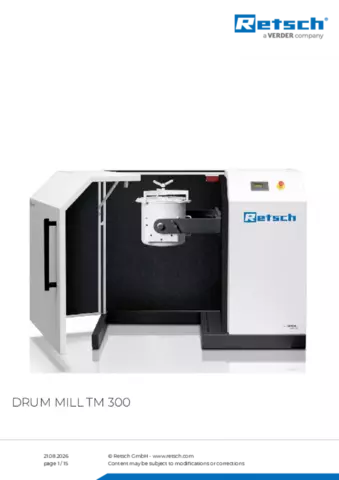
Product data sheet TM 300
Product Overview
The right mill for every application.

The Sample - Customer Magazine No. 44
Ball Mills - From Nano Grinding to Mechanochemical Synthesis