





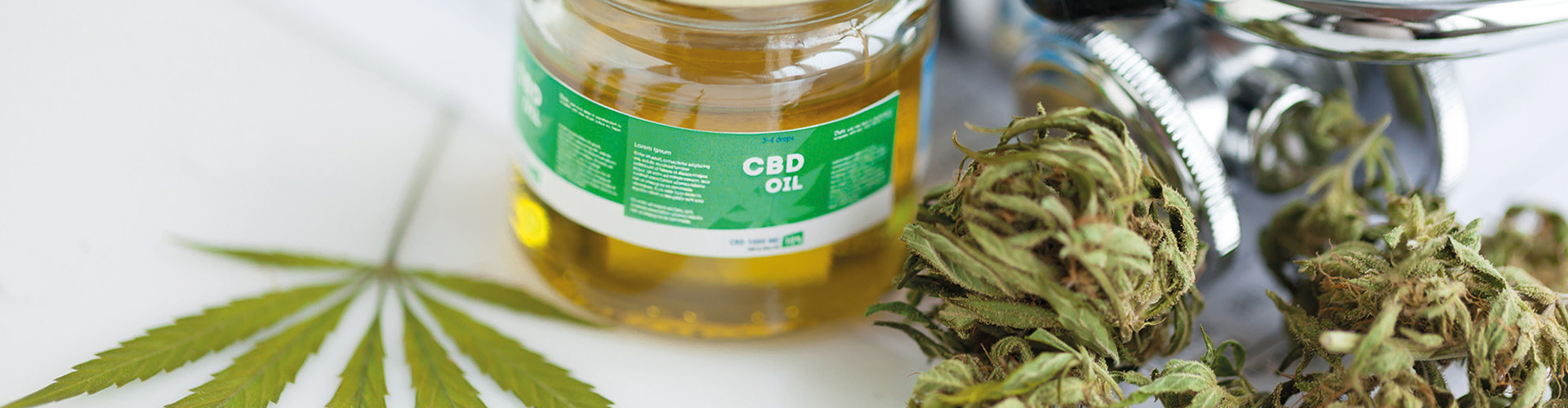
Kenevir ürünleri CBD yağlarının ekstraksiyonundan önce kalite kontrolü ve öğütme için numune hazırlığı
Laboratuvar ölçeğinde kalite kontrolü:
Esrar endüstrisi büyümeye devam ettikçe, ürün kalitesinin güvenlik ve etiketleme standartlarını karşılamasını sağlamak için yasalar ve düzenlemeler de gelişmeye devam etmektedir. Güvenilir ve doğru sonuçlar elde etmek için numunenin doğru şekilde hazırlanması gerekir! Numune hazırlama konusunda dünya lideri olan Retsch, güvenilir analitik sonuçlar sağlamak için boyut küçültme ve numune homojenizasyonu için laboratuvar değirmenleri sunmaktadır.
Test laboratuvarları ve üreticiler, ürün matrisinden bağımsız olarak, esrar ürünlerinin test edilmesi hem çiçek hem de yenilebilir ürünleri içerdiğinden, uyumluluk raporlaması için test taleplerini ve gereksinimlerini artırmaya devam etmektedir. Çeşitli matrislerin karmaşıklığı nedeniyle, numuneyi analiz için yeterince hazırlamada aşılması gereken birçok zorluk vardır.
Bu talebin bir sonucu olarak, RETSCH, numunelerin işlenmesine ve hazırlanmasına yardımcı olmak için tüm ürün portföyünü kullanmaktadır. Numuneler ister jelibon, ister kek, ister şeker veya esrar çiçeği olsun, RETSCH uygulama gereksinimlerini karşılamak için ideal cihazı seçmede yardımcı olabilir.
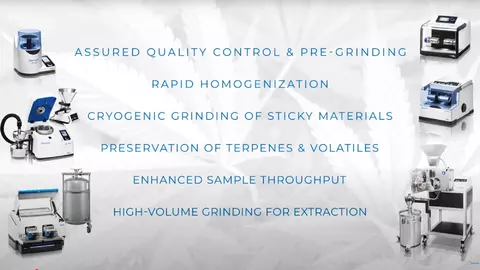
RETSCH aşağıdaki araştırma ağlarının bir üyesidir:


Küçük ölçekli üretim - CBD yağı ekstraksiyonu
Tıbbi gereksinimleri karşılamak amacıyla kenevir çiçeklerinden CBD yağı ekstraksiyonu, dünya çapında giderek daha fazla ilgi görmektedir. Tipik ekstraksiyon yöntemleri etanol veya süperkritik CO2 ile yapılır. Her iki durumda da, ekstraksiyon ünitesindeki numune yoğunluğunu artırmak için numune malzemesinin öğütülmesi gerekir. Genellikle 2-5 mm veya 1-2 mm civarındaki numune boyutları en uygundur.
Retsch SM 300 316L Bıçaklı öğütücü, ekstraksiyon işleminden önce numune işleme gereksinimlerini, herhangi bir ısınma etkisi olmadan, dolayısıyla uçucu bileşenlerin kaybı ve yapışma etkisi olmadan karşılar. Saatte 40 kg'dan daha yüksek numune işleme kapasitesi mümkündür ve alt eleklerin açıklık boyutlarının seçimiyle, nihai incelik kullanıcının gereksinimlerine göre uyarlanabilir. Gelişmiş tasarımı sayesinde, SM 300 316L saniyeler içinde sökülebilir ve çok kolay bir şekilde temizlenebilir.
Sağdaki video, Retsch SM 300 ile CBD yağı ekstraksiyonu için numune hazırlığı yapılırken kurutulmuş kenevir çiçeklerinin ne kadar kolay öğütüldüğünü göstermektedir. Öğütücü, 700 rpm'de ısıtma yapmadan, saatte 40 kg'ın üzerinde bir verim ve 1-2 mm incelik (alt elek seçilerek farklı incelikler de elde edilebilir) ile bu işlemi gerçekleştirir. Ürünle temas eden tüm parçalar 316L paslanmaz çelikten yapılmıştır ve özellikle pürüzsüz yüzeyleri sayesinde hızlı ve kolay temizlik sağlar.

SM 300 316L Paslanmaz Çelik ile kurutulmuş kenevir çiçeklerini öğütme.
Optimized Cannabis Processing: Expert Insights
In this video, Dr Tanja Butt, application expert at RETSCH, answers key questions about cannabis processing. She explains why grinding and homogenising cannabis is essential for precise quality control and effective extraction. Dr Butt explains how the right choice of equipment influences the impact on analyses and the preservation of terpenes and introduces innovative RETSCH technologies such as cryogenic grinding and rapid homogenisation.

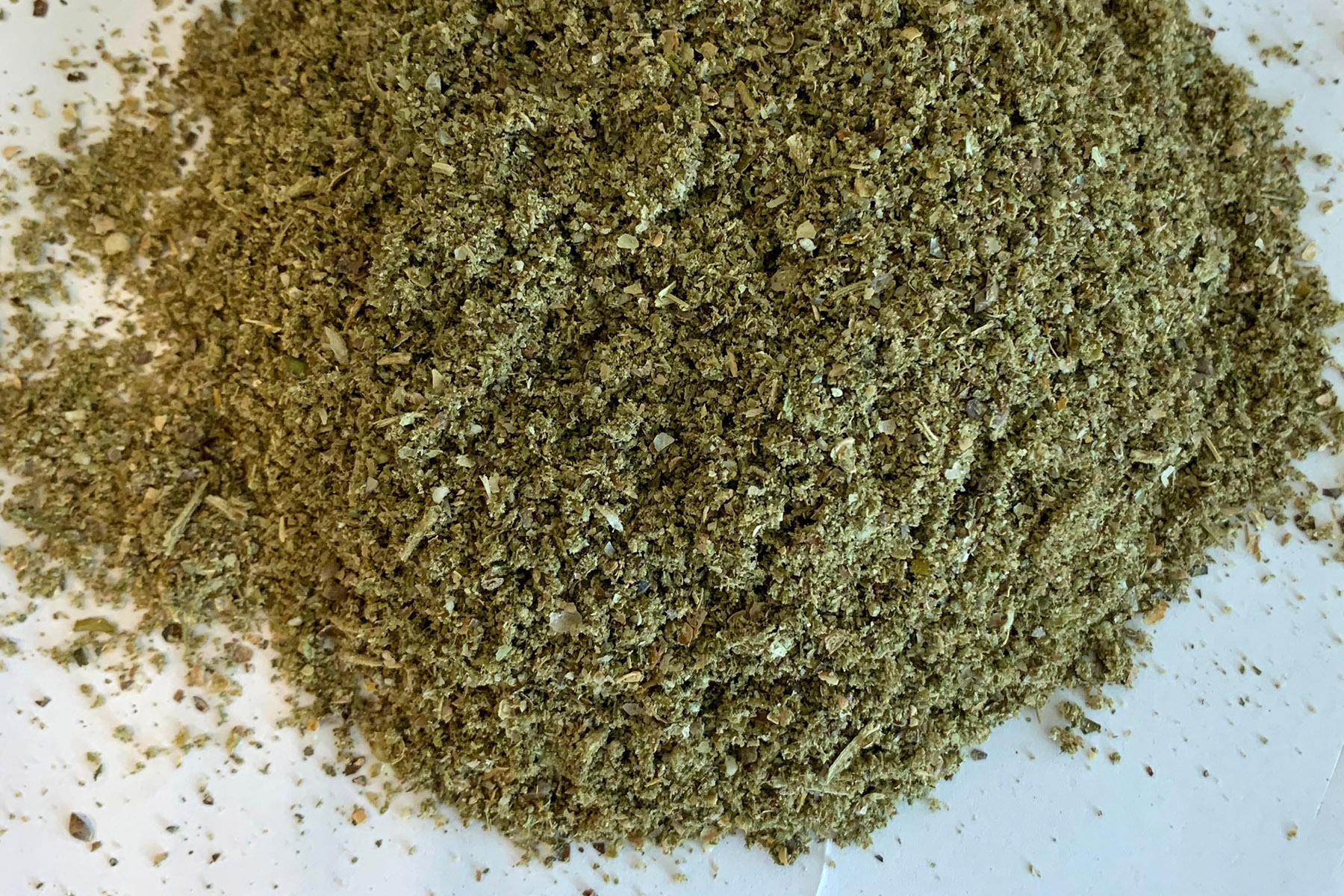
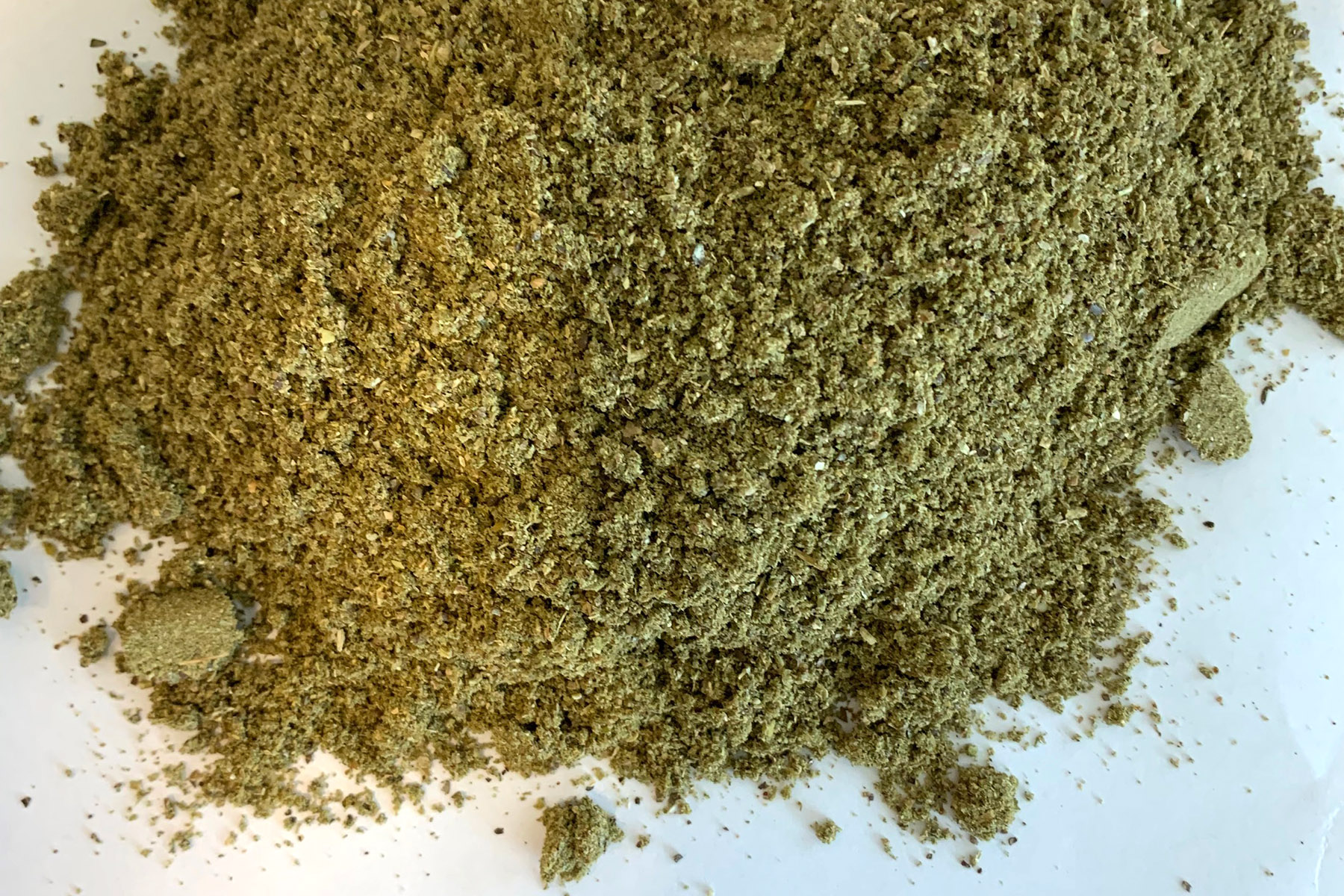
Samples before and after test grinding
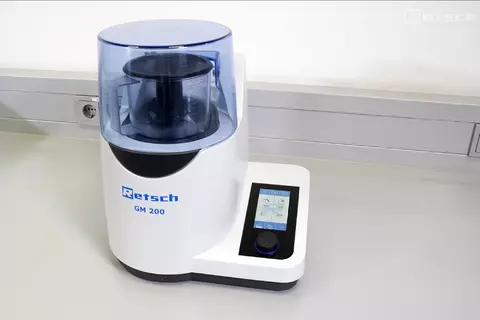
Bu video, Bıçaklı Öğütücü GM 200 ile çeşitli numunelerin öğütülmesini gösterir
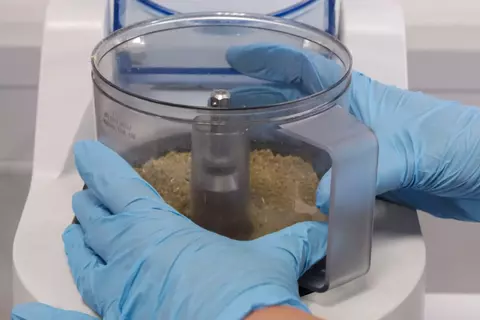
GM 200 ile kenevirin saniyeler içinde homojenleştirilmesi.
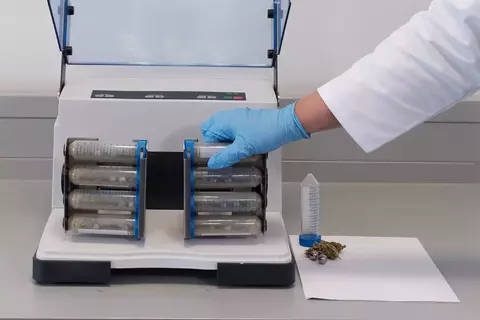
MM400 karıştırıcı değirmeni ile 8 adet kenevir numunesinin tek adımda homojenleştirilmesi.
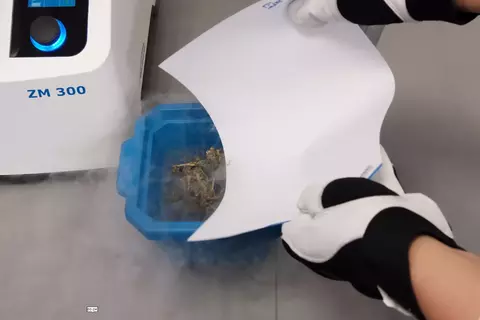
ZM 300 ultra santrifüjlü değirmen ile kurutulmuş kenevir çiçeği tomurcuklarının kriyojenik öğütülmesi.
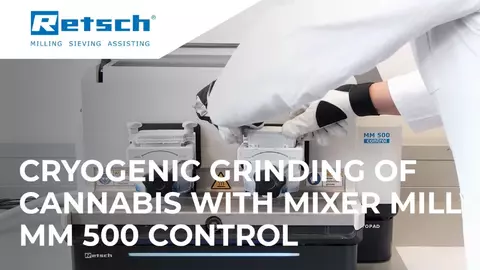
MM 500 Kontrollü Mikserli Öğütücü ile kenevirin kriyojenik öğütülmesi.
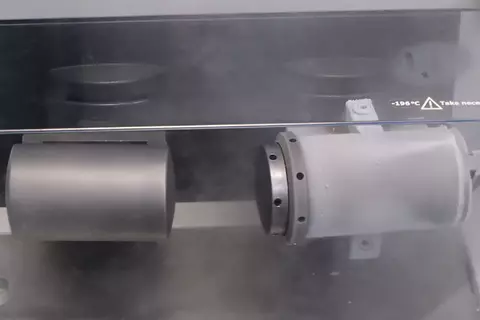
Cryomill ile az miktarda kenevirin kriyojenik öğütülmesi.
Değirmenlerin kullanımı, analiz sonuçları ve ipuçları hakkında daha fazla bilgiyi, kısa bir kayıt işleminden sonra indirebileceğiniz "Esrar Genel Bakış - Hammaddeden Son Ürünlere" başlıklı web semineri kaydımızda bulabilirsiniz.
THC / Kanabinoidlerin Elde Edilme Yöntemi Shimadzu protokolünden türetilmiş geliştirilmiş yöntem.
Solution for Potency Testing
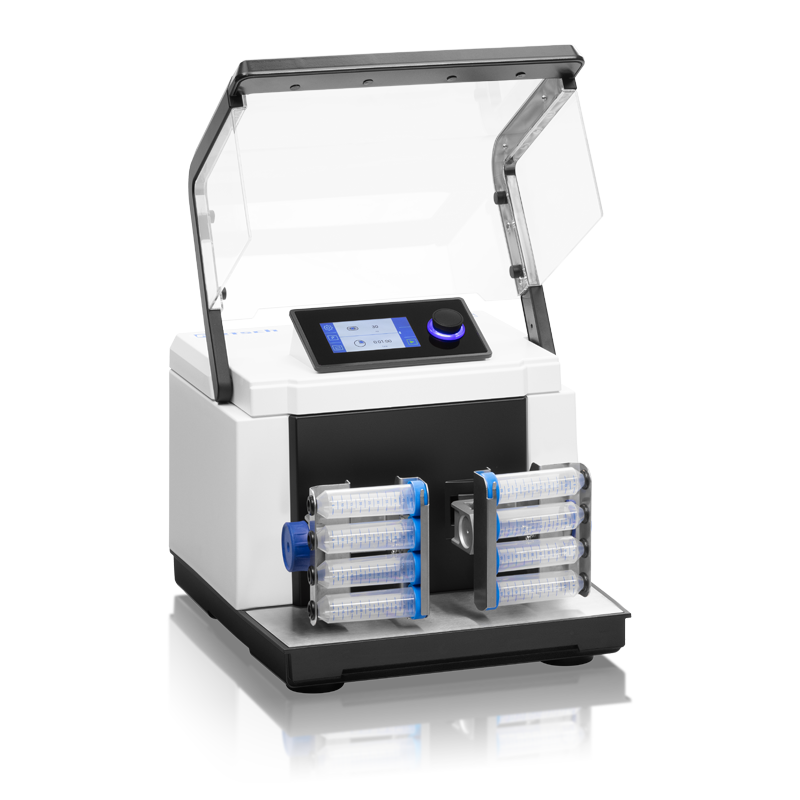
For potency testing, the Mixer Mill MM 400 with the falcon tube adapter can be used to simultaneously homogenize up to 8 samples. For this purpose, the dried flowers are deep-frozen at -20°C and then 4 g are filled in each tube. After adding 2 x 15 mm steel grinding balls, homogenization can take place at 30 Hz for 3 minutes. A grind size of 1-2 mm can be achieved in this way. This method leads to highly reproducible analysis values with minimized sample loss for CBD, CBDA, THC and THCA and also saves time due to high sample throughput, short grinding times and disposable tubes which don’t require cleaning. After grinding, a portion of 500 mg can be used for the subsequent steps like extartion. This method is also suitable for homogenizing samples for pesticide analysis.
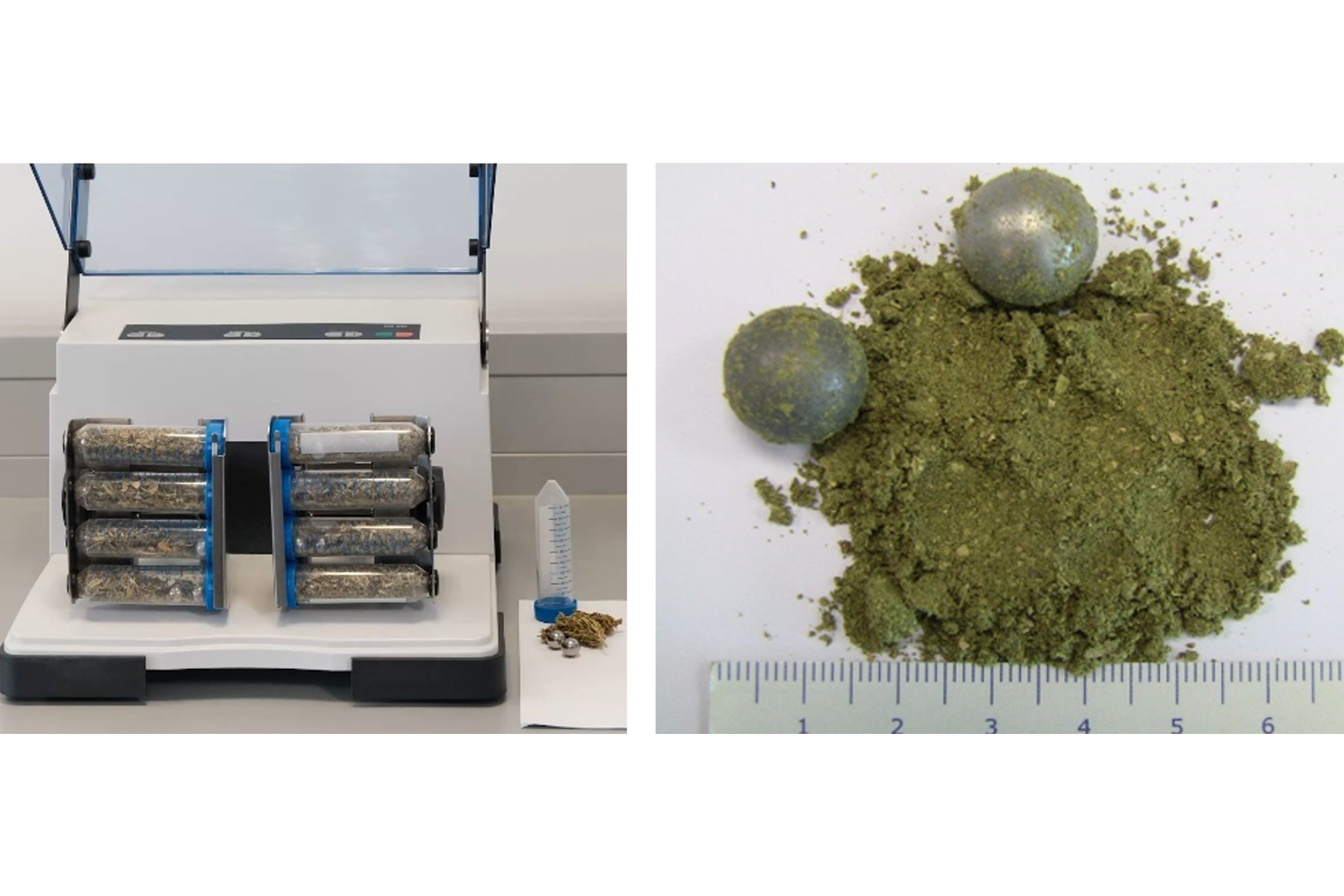
- 50 ml'lik bir Falcon tüpüne 200 mg öğütülmüş numune ekleyin.
- 2 adet 10 mm'lik çelik bilye ekleyin.
- Değirmende 25 Hz frekansta 2 dakika boyunca çalkalayın.
- Tüpe 20 ml metanol ekleyin.
- Değirmende 25 Hz frekansta 2 dakika boyunca çalkalayın.
- 15 dakika bekleyin, ardından ekstraksiyon işlemine devam edin.
Terpene Analysis: Volatile components!
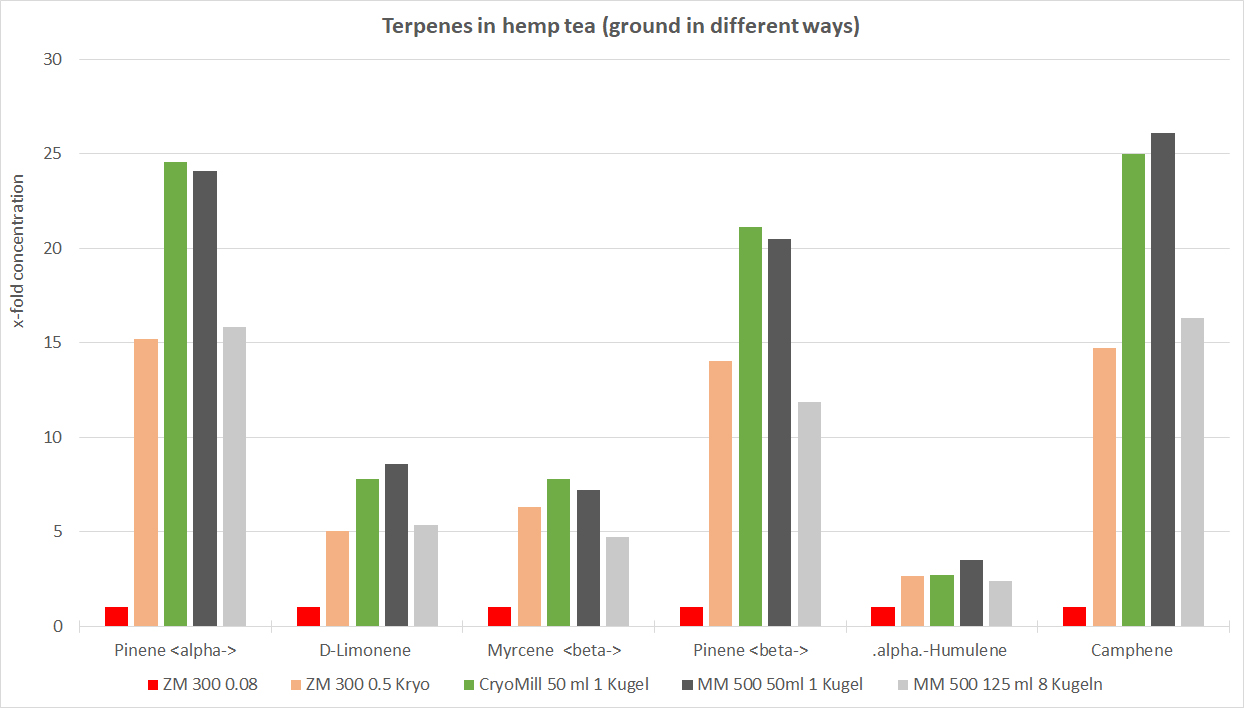
A very important consideration when homogenizing samples for terpene analysis is to avoid heat as this could lead to the volatile terpenes’ loss, which would falsify the results of all subsequent analyses. Closed grinding systems such as ball mills are particularly suitable for the analysis of terpenes. In addition, they can also be used cryogenically, which prevents the loss of volatile components and at the same time improves the breaking properties of oily samples so that thorough homogenization is possible. In the CryoMill or in the MM 500 control, a maximum of 1 x 20 ml sample or 2 x 40 ml samples can first be embrittled with liquid nitrogen within a few minutes and then pulverized. Both systems are particularly safe and convenient. The cooling is automated, and there are no freely accessible liquid nitrogen baths the user could come into contact with. Programmable cooling breaks should be long enough to really prevent heat generation.
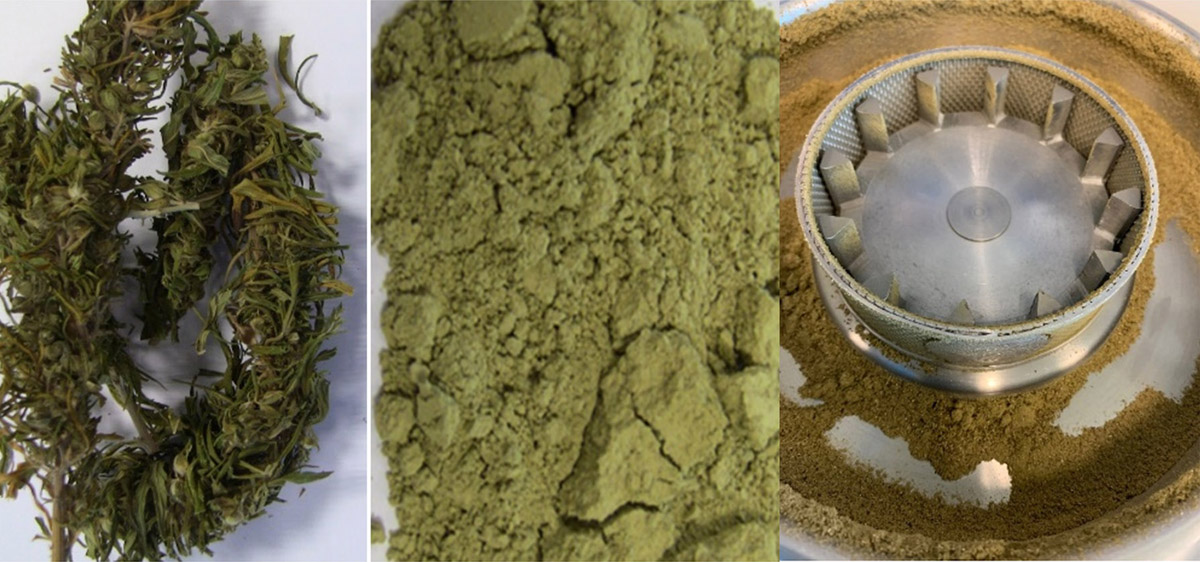
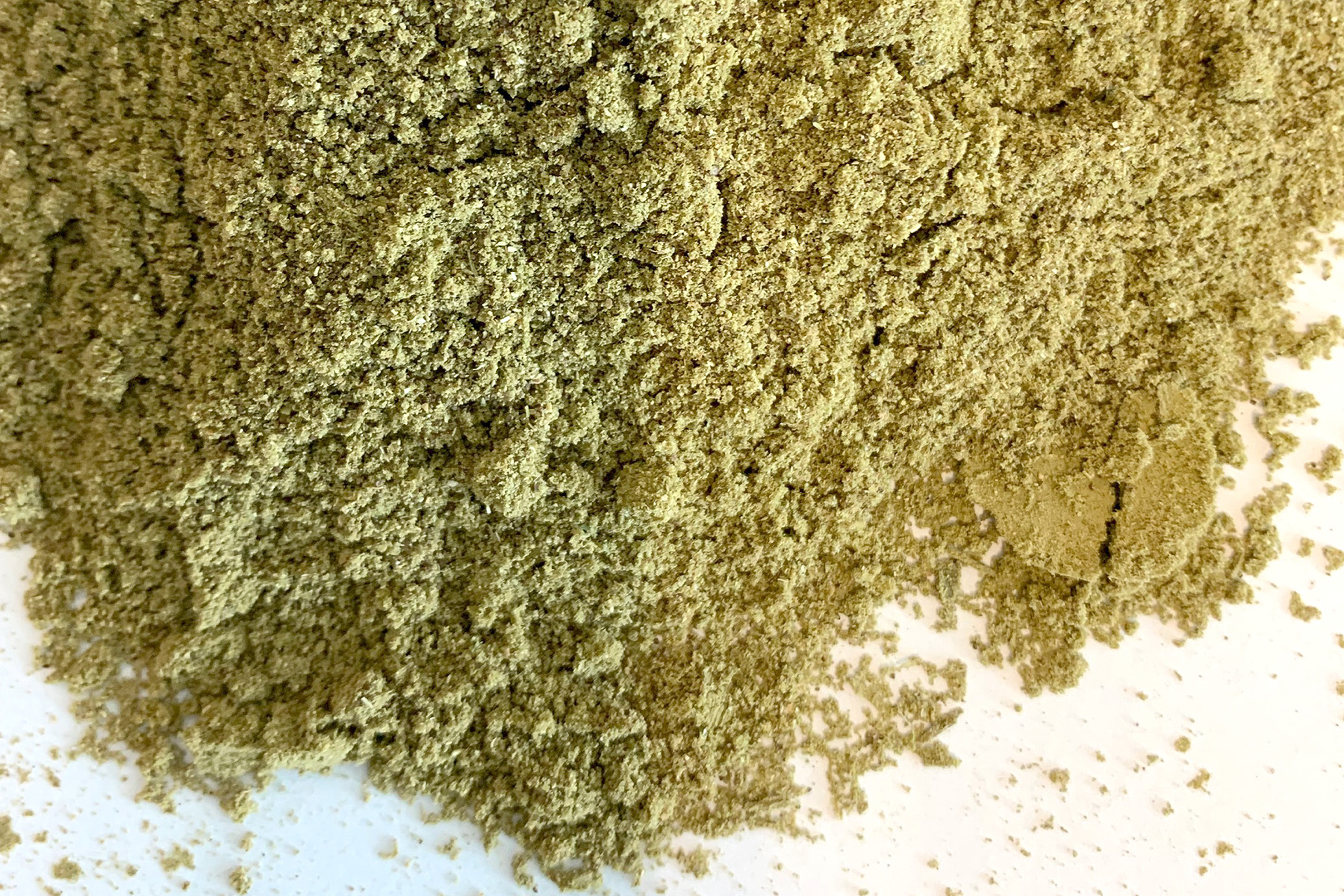
In ball mills, samples such as dried cannabis flowers can be ground down to 0.1 mm. Larger sample quantities of up to approx. 4 liters can be homogenized in the Ultra Centrifugal Mill ZM 300. An optional cyclone generates an air flow to cool the sample. To keep heating to a minimum, ring sieves <0.5 mm should not be used. A final fineness of approx. 300 µm is typical and sufficient for good follow-up analysis. The ground samples can be analyzed directly e.g. in gas chromatography systems.
Heavy Metal Analysis
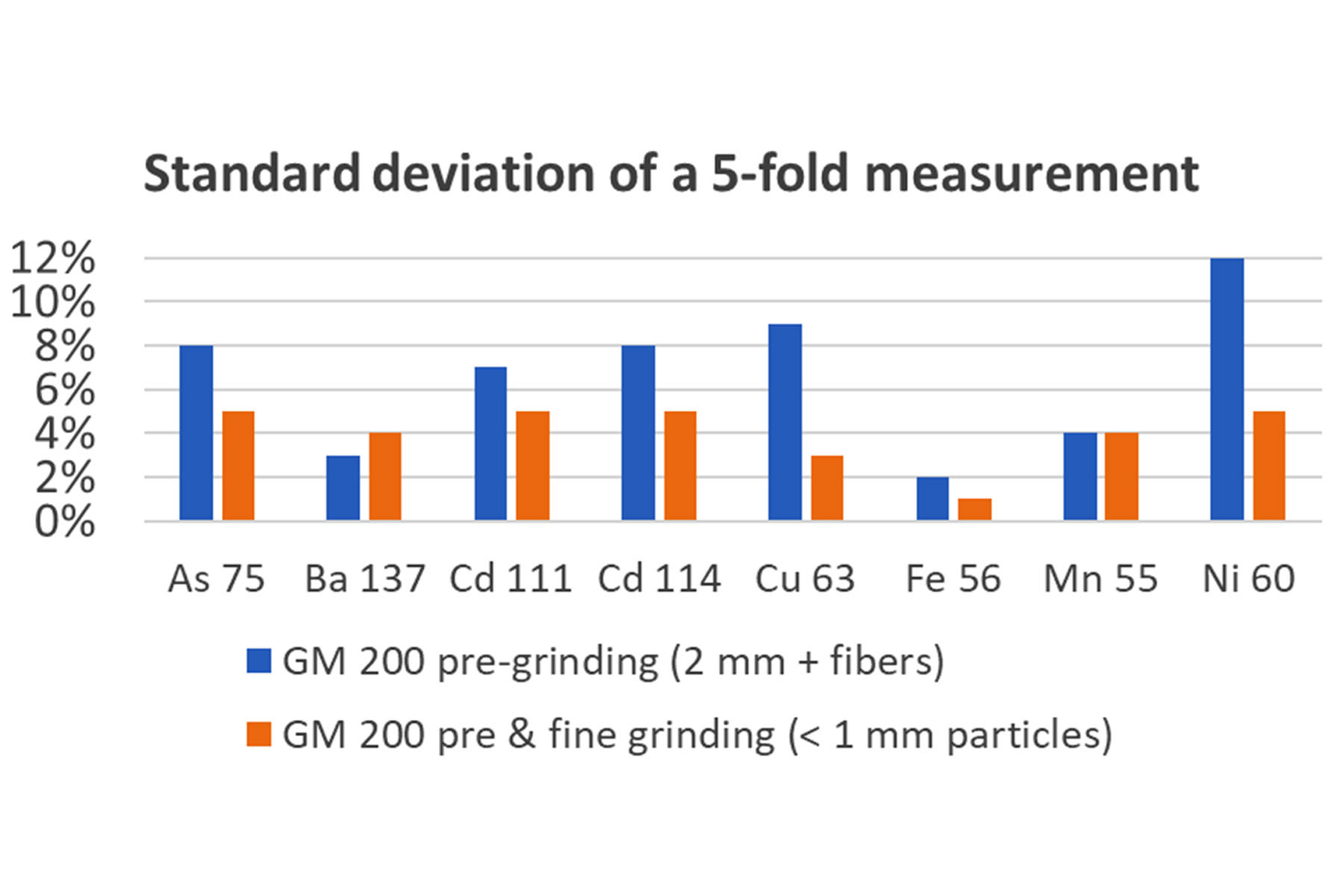
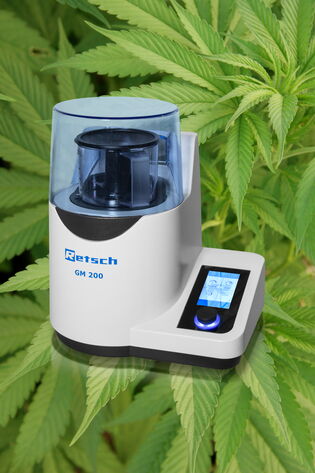
During their growth, cannabis plants can absorb toxic heavy metals such as lead, cadmium, arsenic and mercury from the soil. If samples are analyzed for heavy metals, the Knife Mill GM 200 is also suitable in addition to ball mills and the ZM 300 rotor mill. It is particularly easy to use and homogenizes samples up to 200 ml in one go. A particle size of <1 mm is sufficient to achieve very good reproducibility. The standard deviation was below 5 % for all analyzed elements. If a shorter grinding time is selected, which results in larger (2 mm) particles, standard deviations of up to 12 % can be expected. Appropriate care in the homogenization process therefore pays off by minimizing such particle size effects.
In the case of heavy metal analysis, special attention must be paid to choosing the right grinding tools. Since mechanical particle size reduction is always associated with abrasion of the grinding tool, the use of steel tools inevitably leads to a falsification (increase) of the heavy metal values in the sample. This can be avoided by choosing, for example, zirconium oxide tools in the case of ball mills or titanium tools in the case of GM 200 or ZM 300. Steel tools increase the measured concentration of heavy metals and lead to incorrect results.
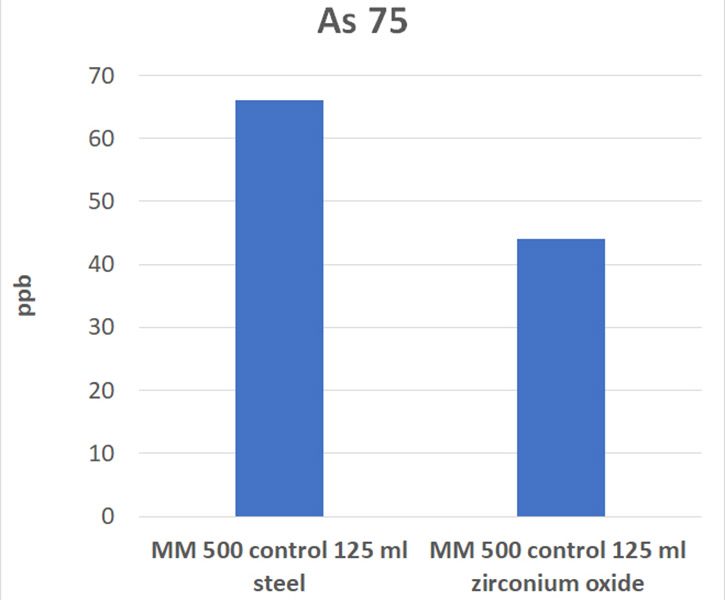
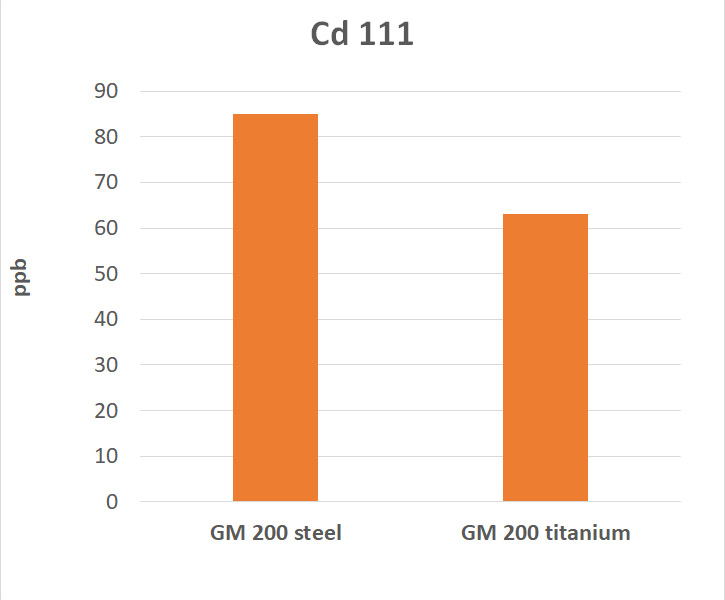
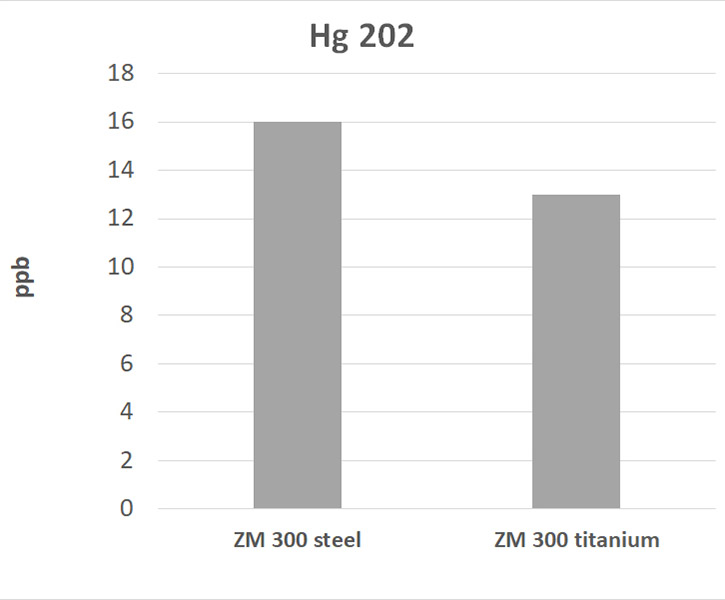
Effects of the grinding tool material on analysis results. Abrasion from steel tools leads to increased values of heavy metals and thus falsifies the analysis. This falsification can be avoided by using zirconium oxide or titanium tools.
There are different methods for determining trace metals in plant material such as cannabis and hemp or edibles. All require mineral acid digestion to destroy the organic matrix and dissolve trace metals to obtain a liquid sample. For microwave systems, 0.5 g ground sample are sufficient.
Toplam süre: 4 dakika karıştırma.
Numune başına sadece 20 ml metanol gereklidir.
MM 400, Falcon tüplerinde 25 Hz'de otomatik olarak miks yapar.
- İşlem süresini kısaltır (60 dakika yerine 4 dakika) ve farklı operatörlerin yapabileceği hataları önler!
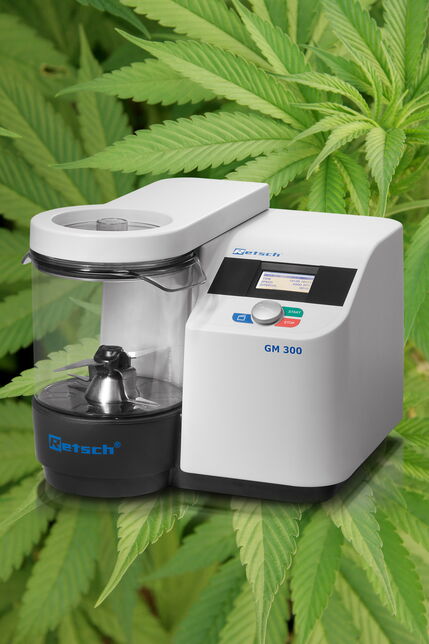
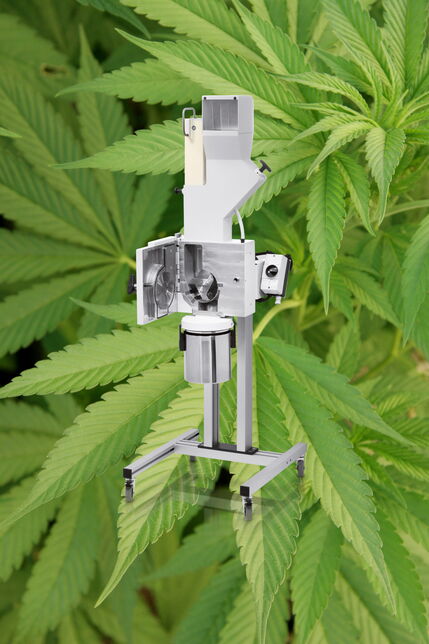
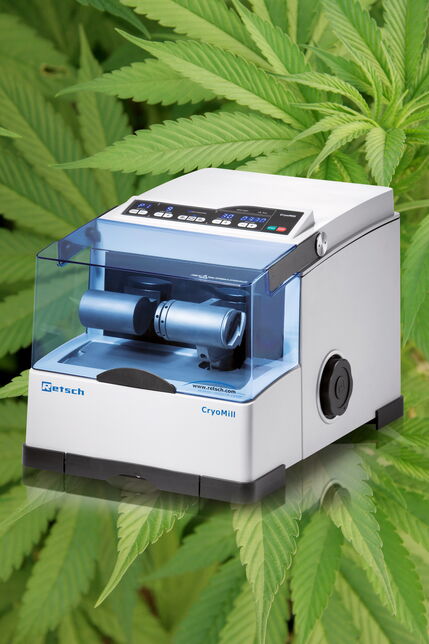
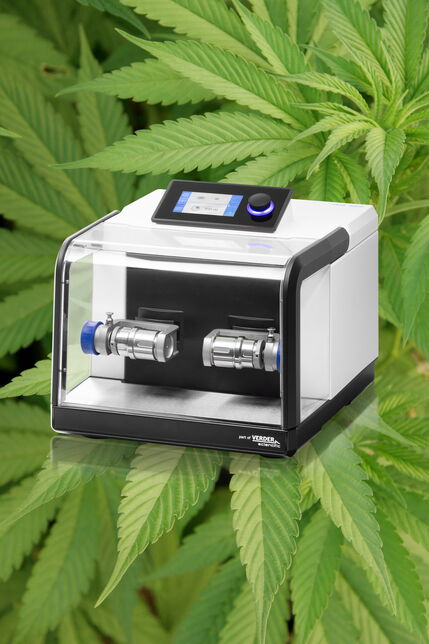
Esrar örneklerinin kalite kontrolü için uygun değirmenler
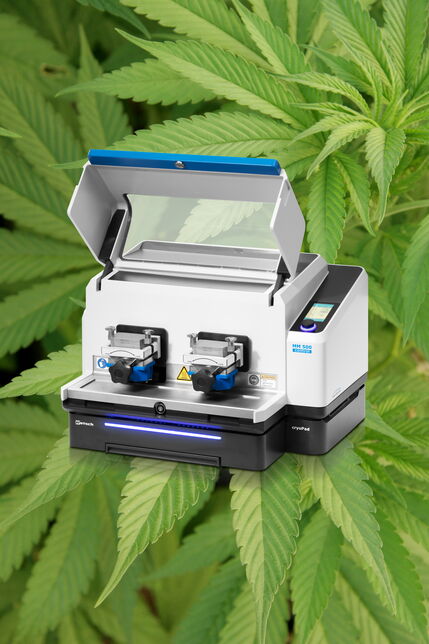


Reviews from our customers
"SM 300, kanabinoidlerin ekstraksiyonunda kullanılan tıbbi kenevir çiçeği tomurcukları ve bitki parçaları için mükemmel bir öğütme sonucu sunar. Değirmenin kullanımı ve temizliği kolaydır. Optimize edilmiş partikül boyutu ile yüksek numune işleme kapasitesi elde edilir."
Prof. Dr. Simone Graeff-Hönninger
Hohenheim Üniversitesi
"Sessiz çalışma, uygun fiyatlı sistem: MM 400 güvenilir ve kullanımı kolaydır."
Ing. Christian Fuczik
Viyana Kenevir Analizi Enstitüsü
Hemp application examples
Hemp is a versatile plant material that has gained increasing attention in recent years due to its numerous applications and industrial importance. Hemp is a variety of the cannabis sativa plant species and is known for its high levels of cannabidiol and low levels of tetrahydrocannabinol. Hemp has been used for centuries for a variety of purposes including fiber, food, and medicine. However, in the last three years, there has been a significant development in the use of hemp for industrial purposes such as building materials, biofuels, and textiles.
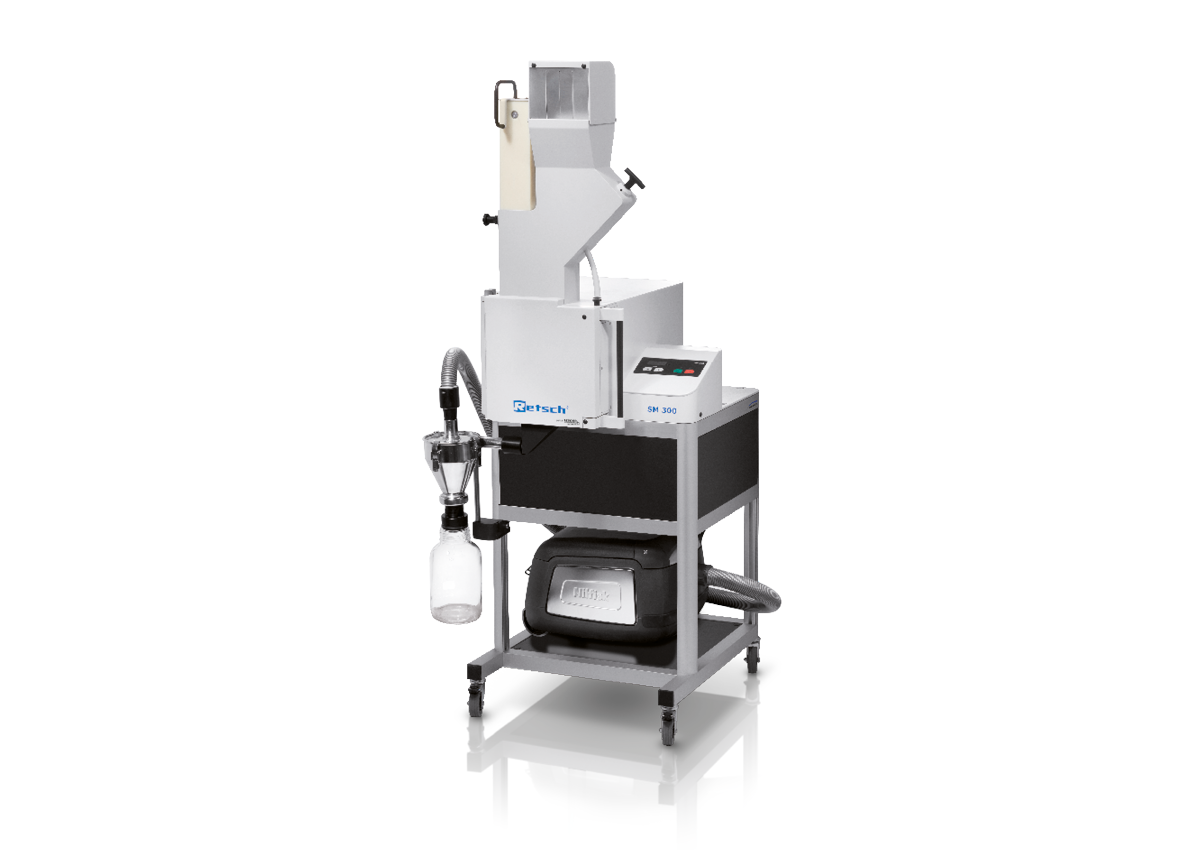
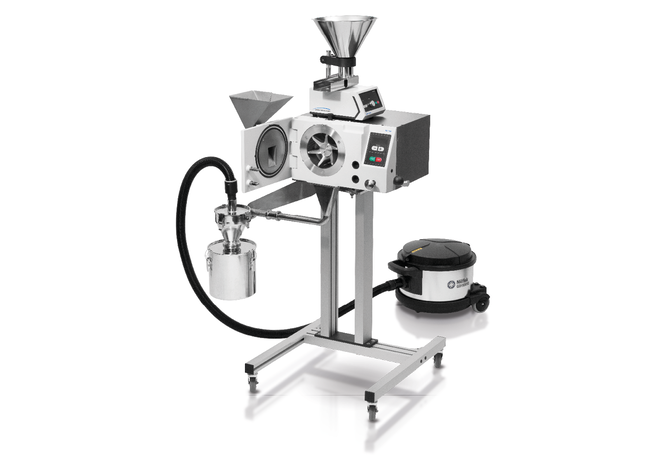
The RETSCH Cutting Mill SM 300 was used for grinding pre-cut stem parts of the plants down to 1 mm particles without too long fiber parts > 10 mm. The 6-disc rotor and a 0.75 mm bottom sieve were employed, and the mill was operated at 3000 rpm. Depending on the individual sample, a throughput of 1 kg in 5 min was possible, resulting in an average throughput of ~7.5 kg / h. It is strongly recommended to use the cyclone unit to improve the sample discharge from the grinding chamber and prevent clogging of the sieve with fine particles. Glass bottles of various sizes or receptacles of 5 l or 30 l can be attached to the cyclone for sample collection.
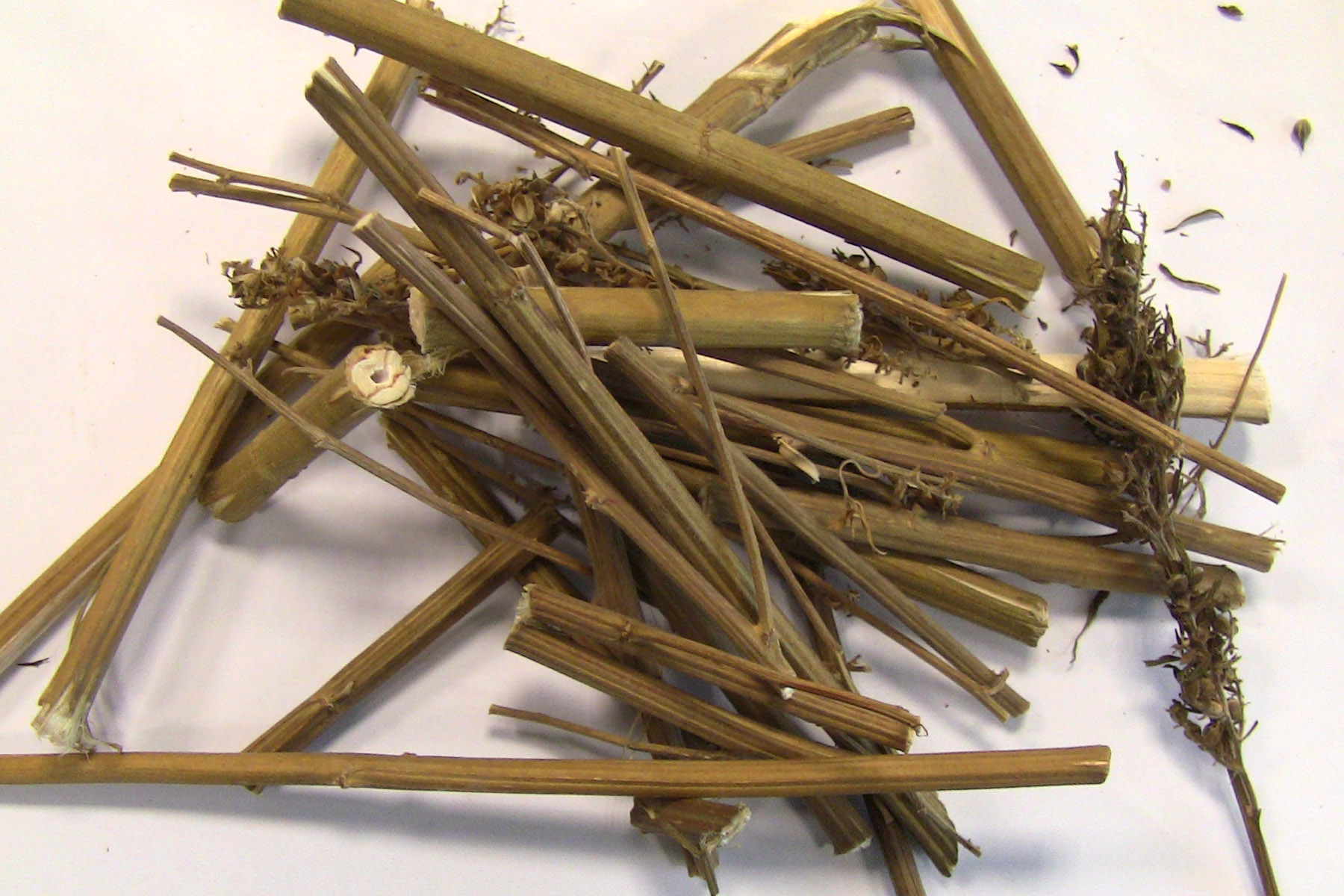
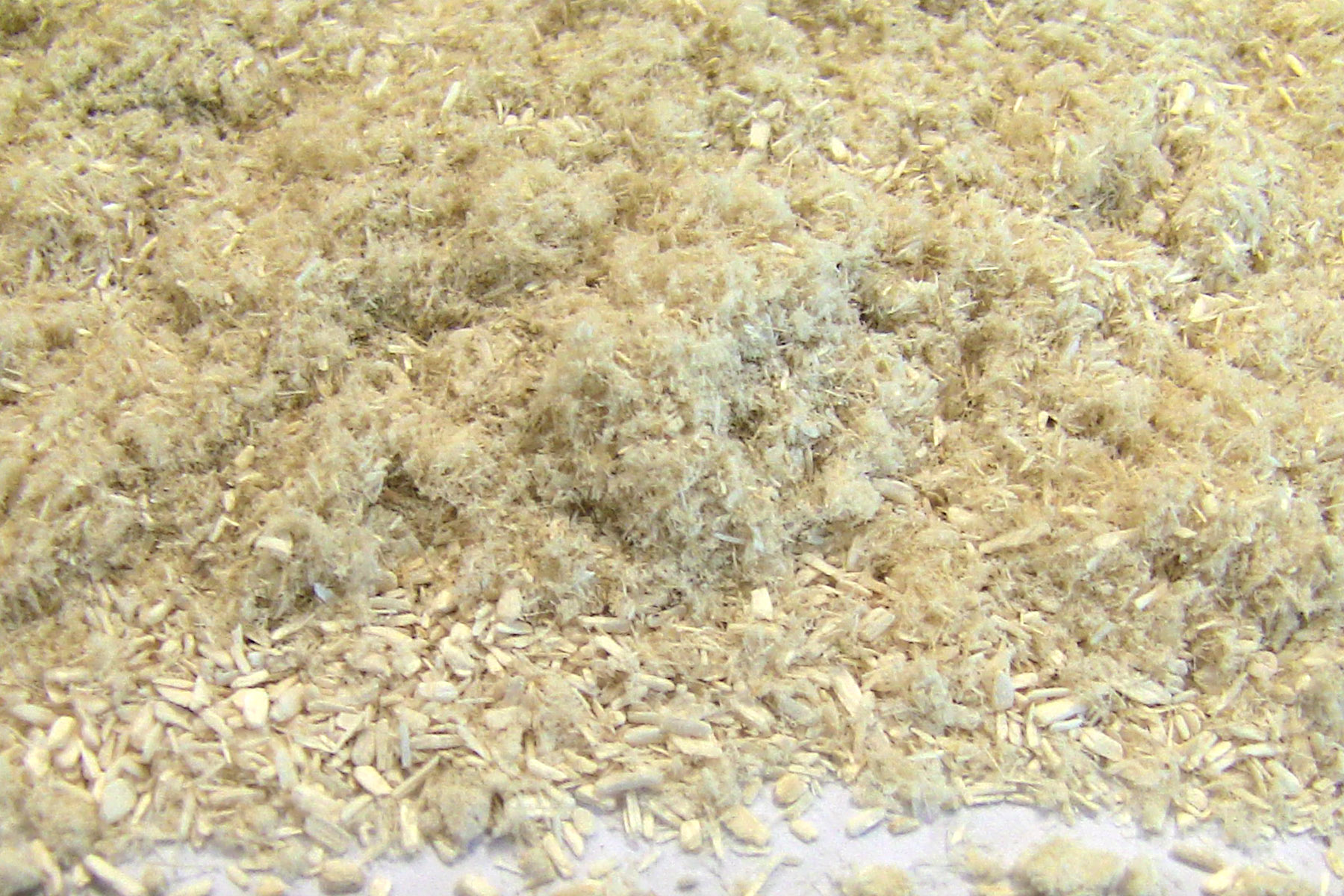
Pre-cut stems of hemp plants before (left) and after grinding in the Cutting Mill SM 300 (right)
Cutting Mill SM 300 with cyclone
To obtain finer particles, a two-step grinding process using the Cutting Mill SM 300 for-precutting and the Rotor Beater Mill SR 300 for fine grinding is recommended. While the SM 300 grinds the sample much quicker, the SR 300 produces much finer particles. Therefore, combining the two milling systems greatly improves the process. This is demonstrated in the following with two samples, hemp hurd and hemp fibers.
The hemp hurd sample was slowly poured into the funnel of the mill whereas the hemp fibers were fed as bundles to the machine. Both samples were pre-cut in the SM 300 using the V-rotor and a 1 mm bottom sieve. To facilitate sample discharge, the cyclone was used as described above. The sample was ground in both cases to fibers sized approximately 1-10 mm.
The fine-grinding step was done for both samples in the SR 300 at 10.000 rpm using a 360° ring sieve with aperture size 0.08 mm. Again, the cyclone was employed to improve sample discharge. The hemp hurd was pulverized to 86 % < 100 μm, the hemp fibers to 76 % < 100 μm. The required grinding times for 1 kg of sample are shown in table 1.
| Sample | pre-crushing time [min] | fine grinding time [min] | total process time [min] | sample throughput [kg/h] |
|---|---|---|---|---|
| Hemp hurd | 5 | 15 | 20 | 3 |
| Hemp fibres | 5 | 25 | 30 | 2 |
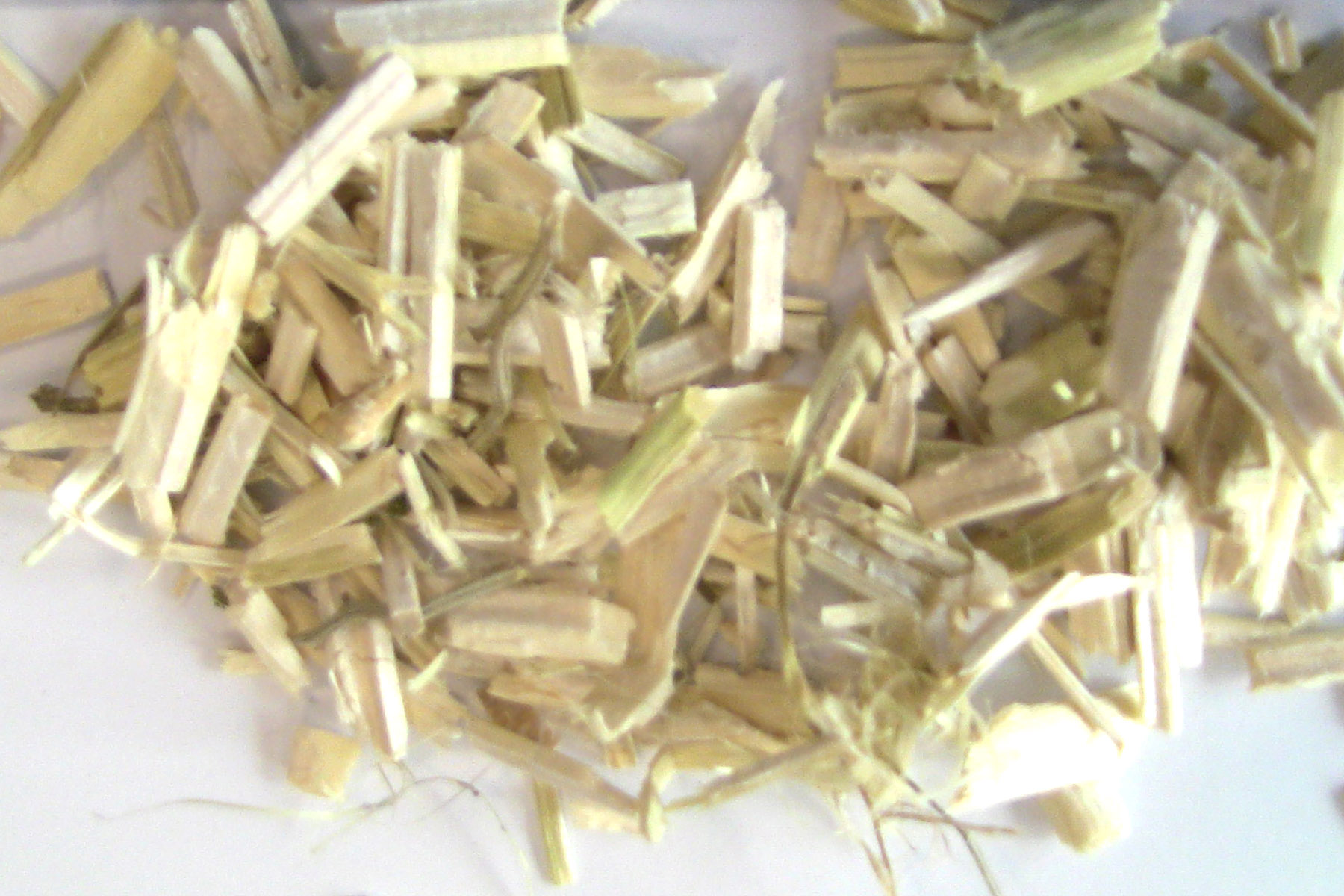
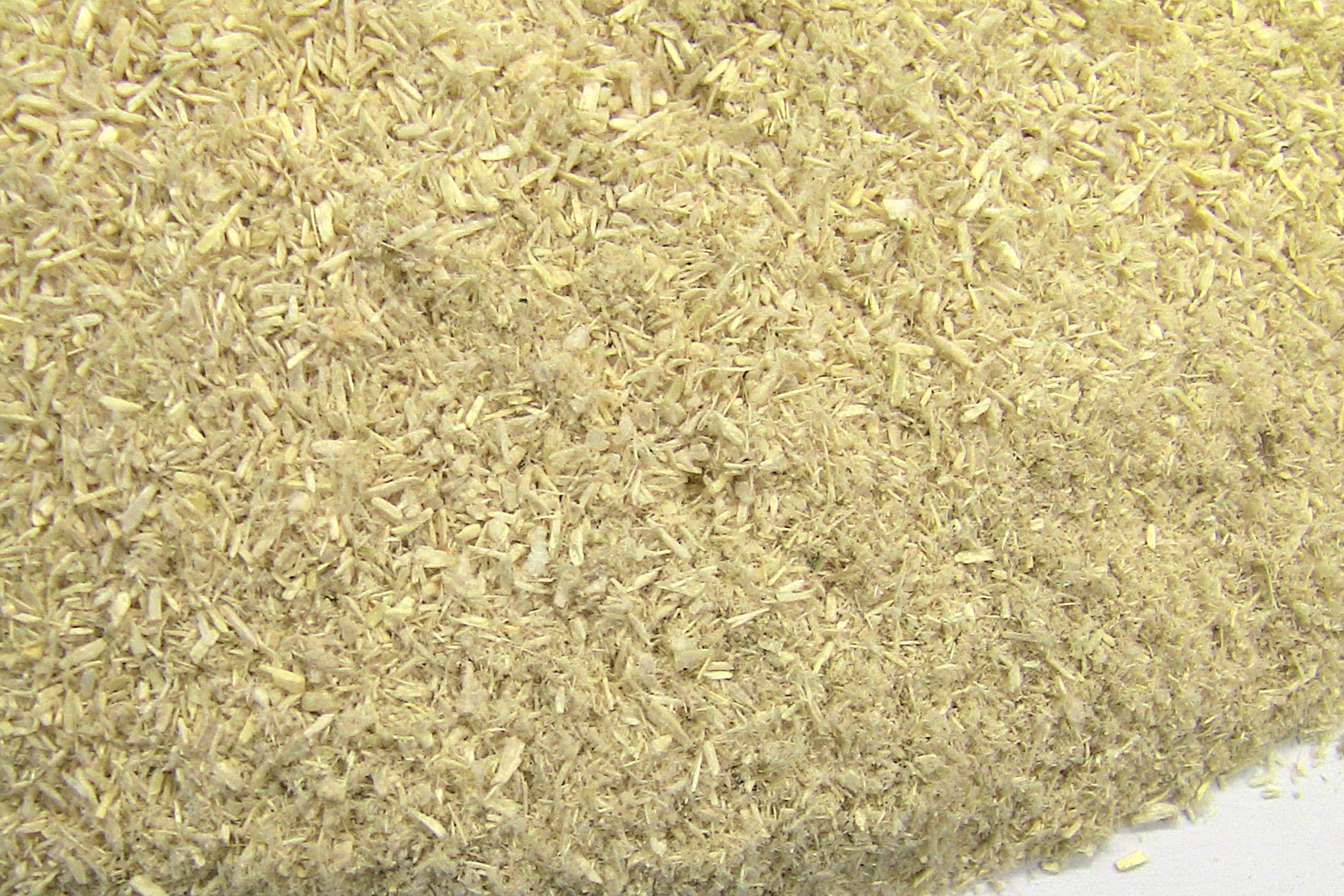
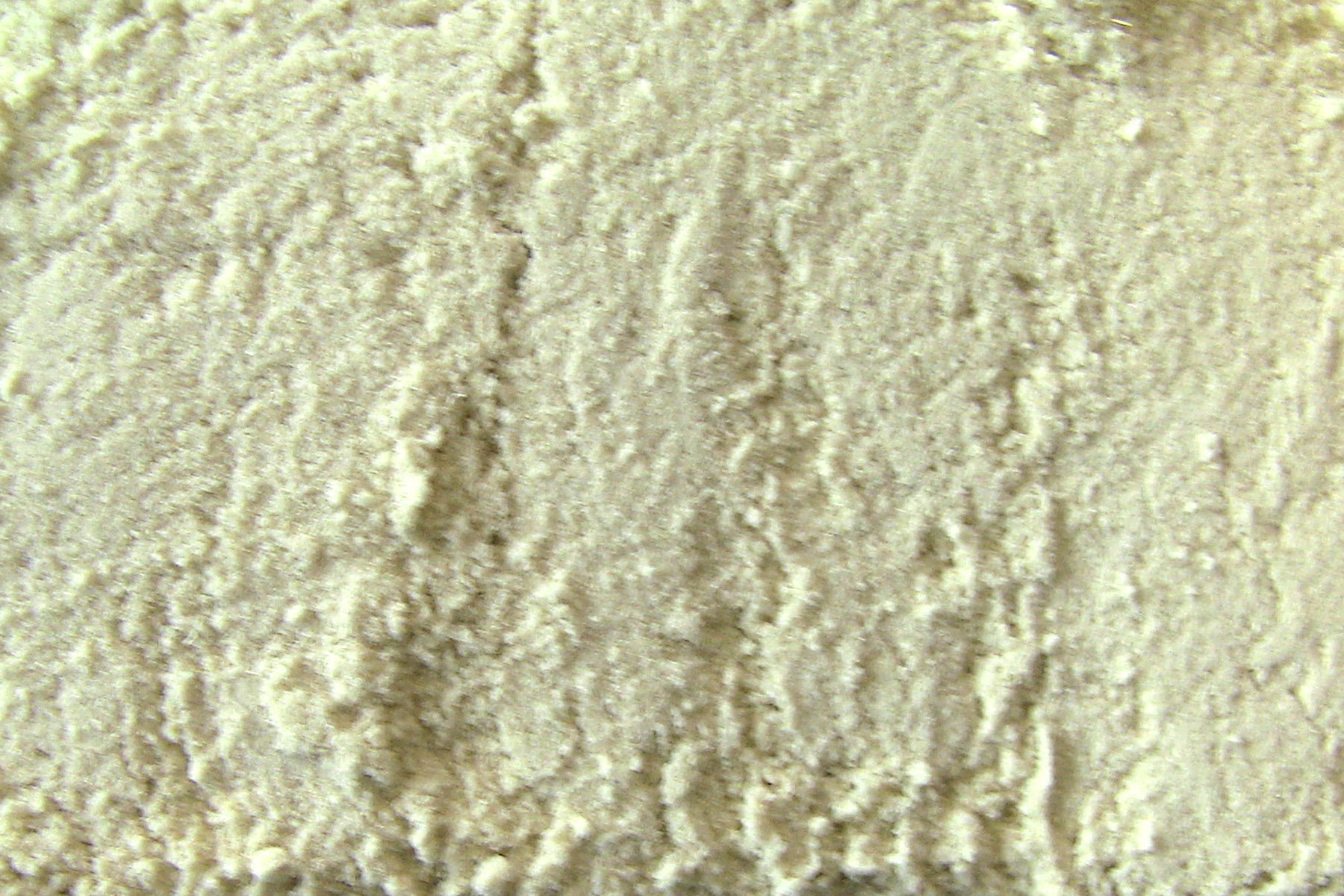
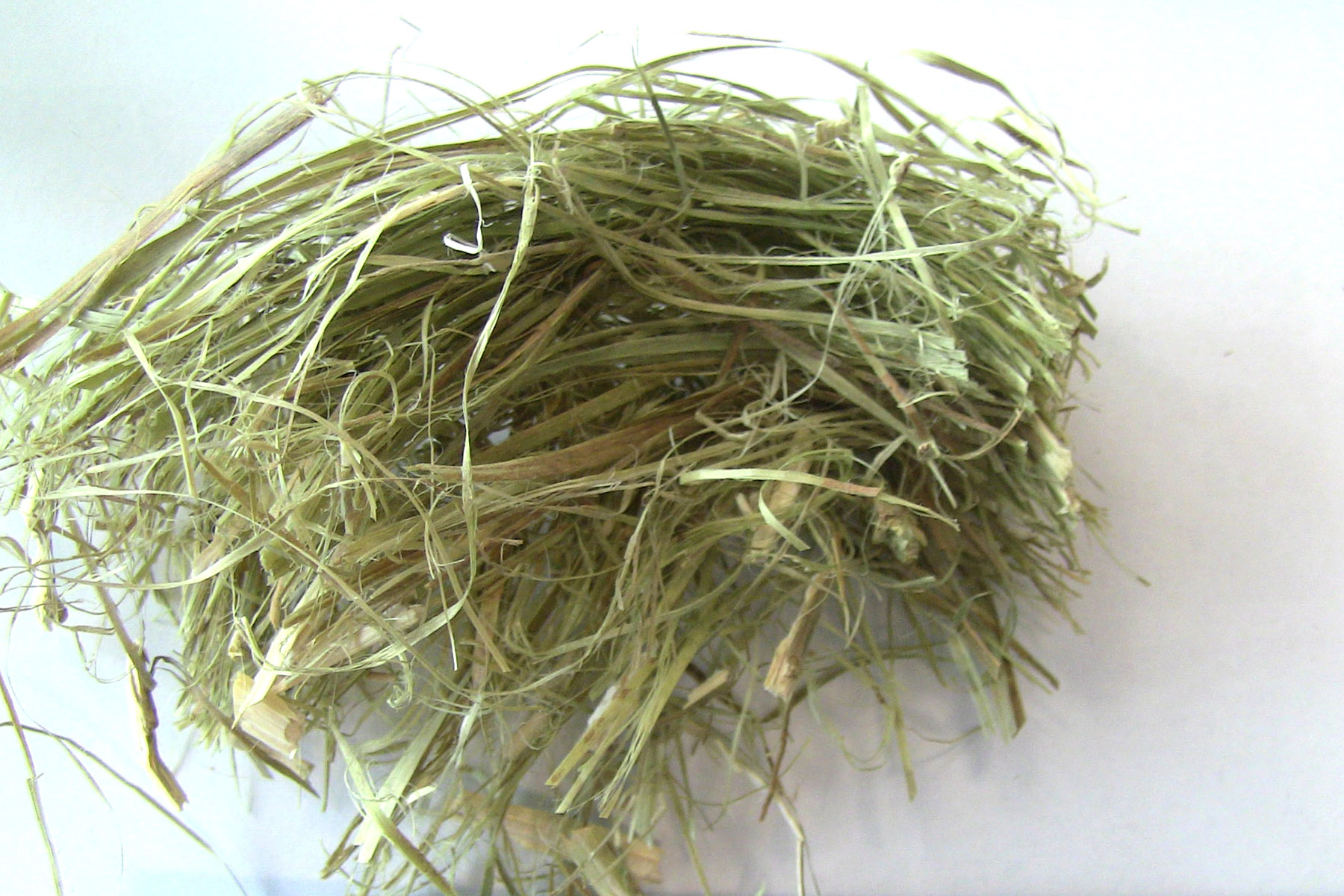
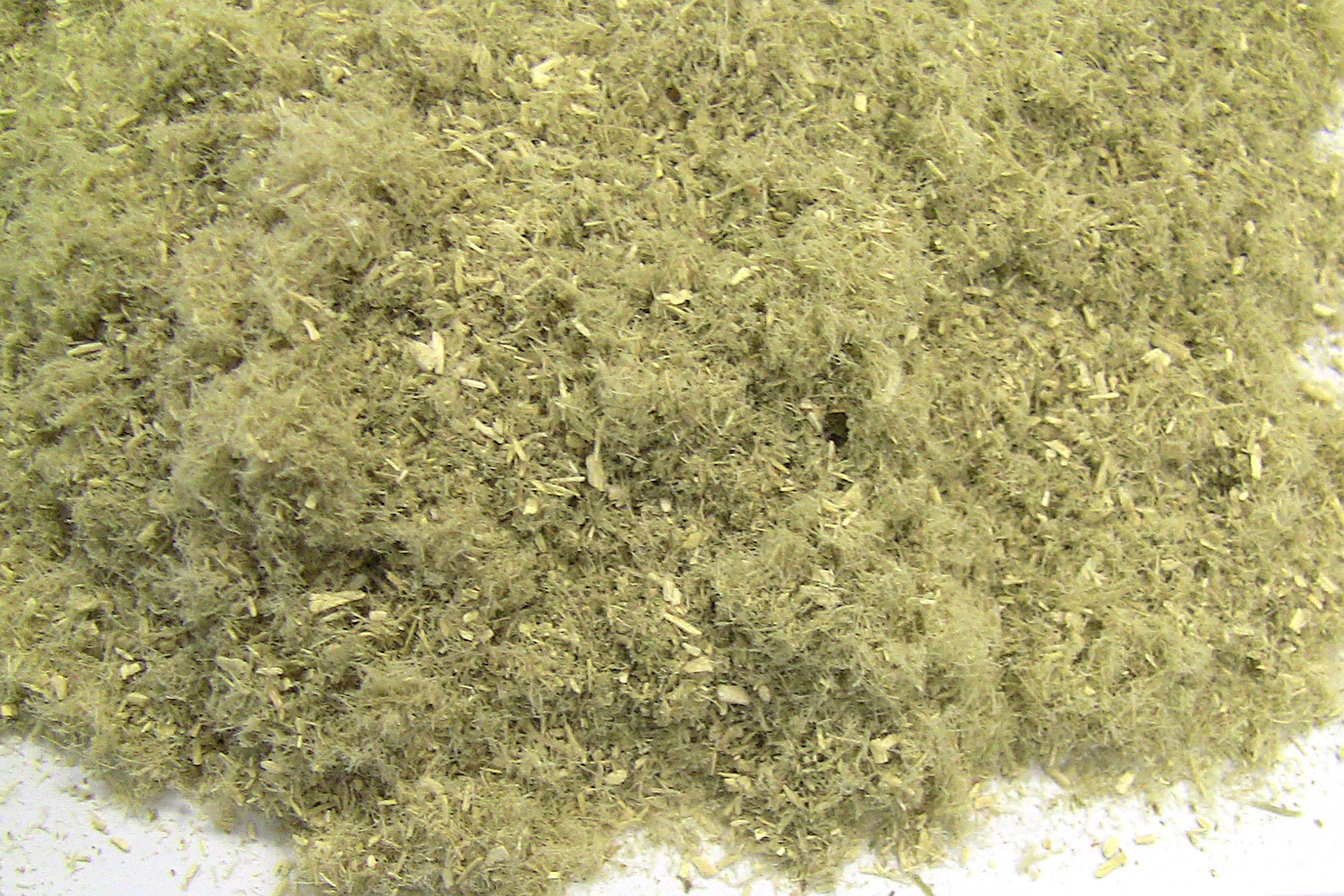
Hemp hurd (above) and hemp fibers (below) after pre-cutting in the SM 300 and subsequent pulverization in the SR 300.
The Retsch Cutting Mill SM 300 and Rotor Beater Mill SR 300 are versatile laboratory-scale mills for grinding hemp and similar materials to a fine powder or flour. Both mills can handle a wide range of fibrous samples and produce consistent particle sizes. While these mills are designed for laboratory-scale applications, they are also suitable for grinding at least 2-3 kg/h in pilot-scale applications. Safe and user-friendly operation and a wide range of accessories of different materials make both mills easy to use in many application fields.
Ücretsiz danışmanlık için bizimle iletişime geçin
Birçok farklı Kenevir numunesi, RETSCH uygulama laboratuvarında halihazırda işlenmiştir, bu nedenle zengin bir deneyimden faydalanabilir ve müşterilerimize nitelikli öneriler sunabiliriz.

Uygulama raporları
Cannabis - Sample Preparation and Quality Control
RETSCH is putting to use its full product portfolio of grinders, sieve shakers and sample dividers to help process and prepare cannabis samples. The sample preparation process needs to be adjustable to the considerable complexity of the various matrices.
How Cyclone Separators Redefine Efficiency and Cleanliness in the Lab
Cyclone separators deliver substantial benefits when used with mills in laboratory settings. While cutting mills or rotor mills are already frequently operated with a cyclone, also jaw crushers and disc mills benefit greatly from this setup. By using a cyclone, it is even possible to combine two mills directly: for example, a two-stage grinding process with a jaw crusher and a disc mill can be completed in a single step.

Sample Preparation of Cannabis
Grinding up to 32 g cannabis flower buds with minimum sample loss in 2 min: The Mixer Mill MM 400 can be used for a very quick homogenization method for Cannabis samples in disposable tubes. Up to eight samples can be processed at the same time. The sample loss is minimized, and the extraction results show less standard deviation than those of manually ground samples in a classic grinder.

Contamination-free cutting of raw materials for the food and medical industries with the new SM 300 foodGrade
Raw materials for the food or pharma industry often require a size reduction process to minimize the particle size (tea, herbs, spices). The materials can be ready for consumption, like tea, or they are used for a second processing step, like extraction of valuable ingredients. A current example is CBD oil extraction from ground cannabis plants. For both – direct use or process step prior to extraction, the specific requirements of the food and medical industries must be considered when choosing a suitable size reduction tool. Aspects like smooth surfaces, easy cleaning, and available materials like stainless steel 316L to ensure contamination-free processing should be taken into account. Retsch has launched the new Cutting Mill SM 300 foodGrade for this type of applications and small-scale production of herbs and spices.

Hemp - Sustainable raw material for an increasing number of industries
Hemp is a versatile plant material that has gained increasing attention in recent years due to its numerous applications and industrial importance. Hemp is a variety of the cannabis sativa plant species and is known for its high levels of cannabidiol and low levels of tetrahydrocannabinol. Hemp has been used for centuries for a variety of purposes including fiber, food, and medicine. However, in the last three years, there has been a significant development in the use of hemp for industrial purposes such as building materials, biofuels, and textiles.
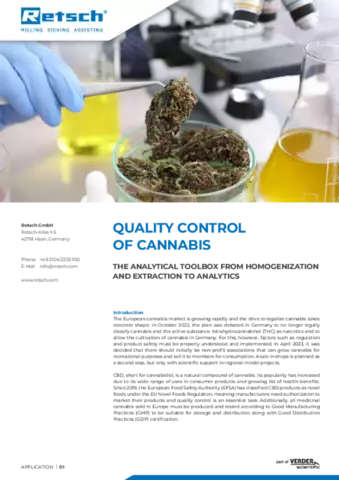
Quality Control of Cannabis: The Analytical Toolbox
All medicinal cannabis sold in Europe must be produced and tested according to Good Manufacturing Practices (GMP) to be suitable for storage and distribution along with Good Distribution Practices (GDP) certification. Shimadzu’s, CEM’s and RETSCH’s analytical toolbox, covering the full range of instrumental analysis and sample preparation systems, enables cannabis laboratories to work efficiently and in full compliance with international regulations.