






Cement & Green Cement -
Sustainable Cement Technology for Research & Laboratories
リサイクルの対象は、バッテリー、建築廃材、バイオ廃棄物など、日常的に発生する廃棄物全般である。さまざまな材料を再利用するためには、多くの場合、粉砕して均質化する必要がある。例えば、使用済みのボトルから粉砕したガラスの粒子を使えば、新しいボトルや美術品を作ることができる。また、繊維や革を破砕し、その粉を新しい家具のカバーに使うこともできる。粉砕された材料を使用するにもかかわらず、例えば建設廃材に含まれるアスベストや電子廃棄物に含まれる有毒成分のような有害物質が再利用されないことを保証するための品質管理が必要である;
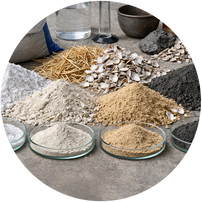
However, this central role also comes with major challenges: cement production is energy intensive and responsible for significant CO₂ emissions - around 8 % of global emissions. As a result, the industry is at the center of the global climate debate. Reducing greenhouse gas emissions is therefore essential. Strategies such as lowering the clinker content, using alternative binders, carbon capture and storage (CCS), and incorporating recycled materials are key steps toward “Green Cement.” Research laboratories develop new formulations, evaluate performance, and support the transition toward more climate friendly solutions.
RETSCH offers innovative milling, sieving, and sample preparation solutions for cement technology - ranging from the grinding of cement raw materials and supplementary cementitious materials (SCMs), through the processing of alternative fuels, to the activation of clays for Green Cement and LC³ concepts. The portfolio is complemented by sieving machines specifically designed for the fine powders used in the cement industry, including air jet sieving systems for precise quality and process control.
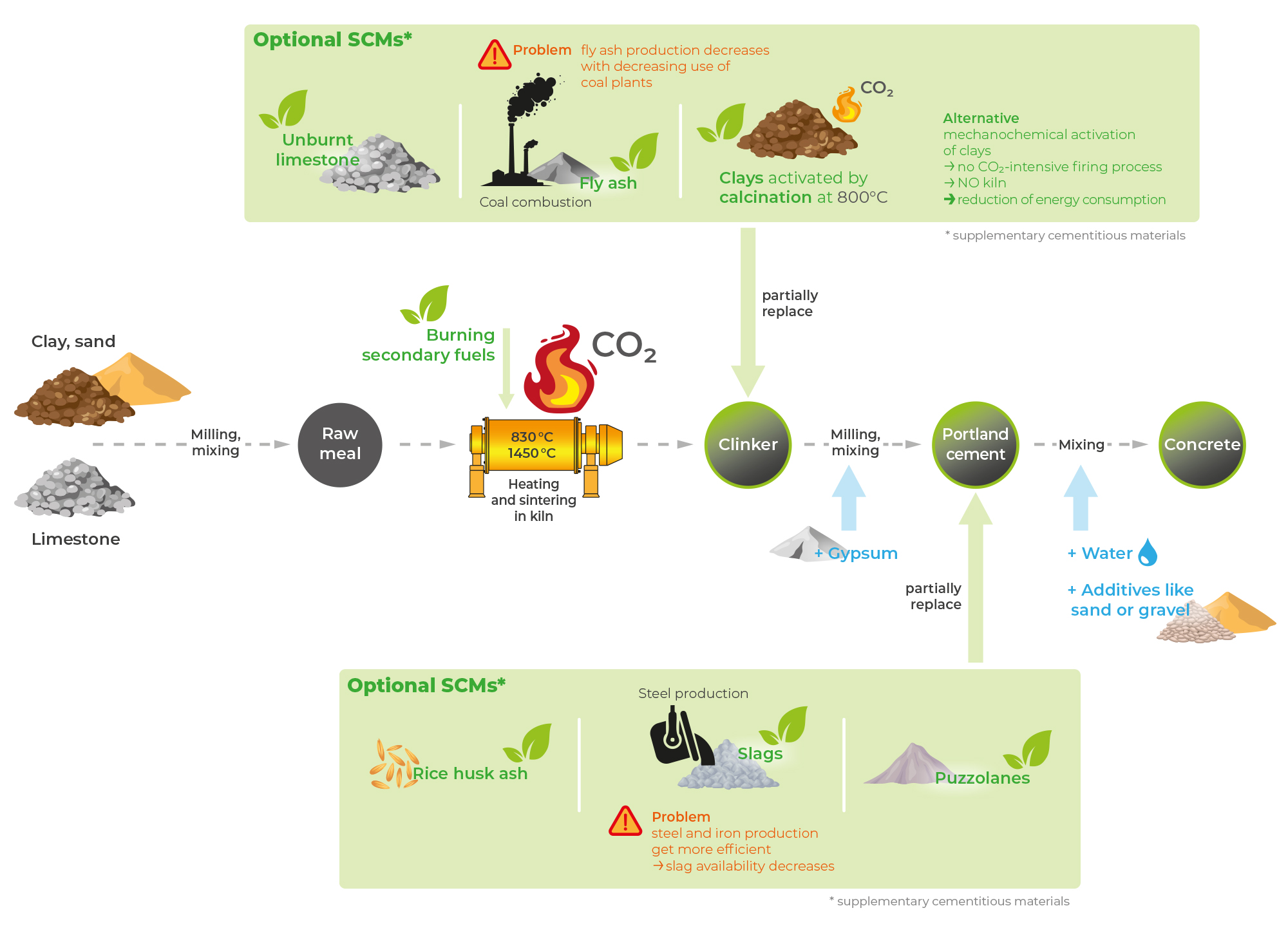
よりエキサイティングな章を発見し、専門知識からメリットを得る Click on the chapters to explore!
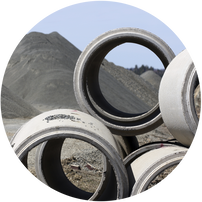
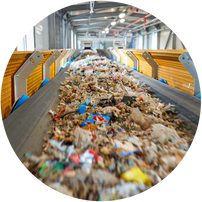
Complementary Cement Technologies: コンクリートリサイクルの再定義:解体廃棄物を貴重な資源へ
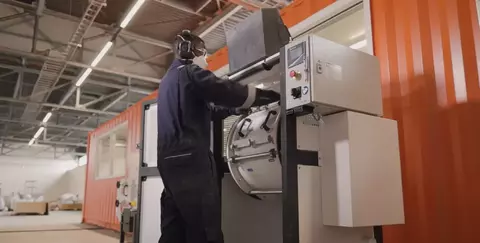
ビデオを見て、オランダのイノベーションリーダーであるeveroxが、画期的なプロセスを用いてコンクリート廃棄物を完全にリサイクル可能な材料分画に分解する方法をご覧ください。様々なRetschの機械を用いて、ロッテルダムのeveroxガーデンに実験室規模のリサイクルプラントが設置されました。技術パートナーとして、Retschはサンプル調製、分類、および実験室分析をサポートし、それによって骨材、砂、セメント含有微粒子の高品質なリサイクルのためのデータ基盤を構築しています。
Complementary Cement Technologies: Use of Cyclone Separators or Sample Drying – Also for Green Cement Materials
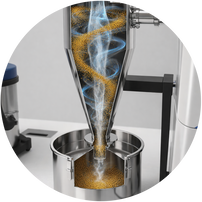
Cyclone Separators – An Advantage Beyond Green Cement Applications
The use of cyclone separators offers numerous advantages: they enable rapid sample discharge, improve sample recovery, and significantly reduce dust generation. This helps maintain a cleaner laboratory environment and protects the health of laboratory personnel. In addition, cyclone separators protect machines from penetrating dust, resulting in reduced maintenance requirements and lower operating costs. Overall, cyclones contribute to optimizing sample preparation both in conventional cement applications and for materials used in Green Cement, ensuring reliable and reproducible analytical results.
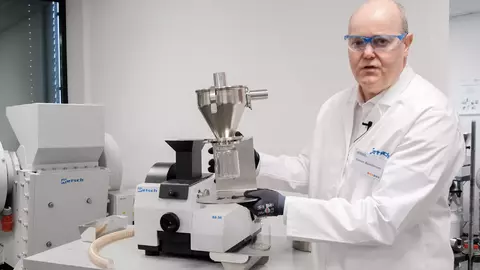
Cyclone separators are available for a wide range of RETSCH laboratory crushers and mills. They can be retrofitted flexibly and equipped with collection vessels of various sizes (up to 30 L). Two different cyclone variants are available: a standard cyclone and a high performance cyclone, which is primarily used for very light, very fine sample particles or with specific mill types. This ensures effective dust control for materials such as fly ash or raw meal.
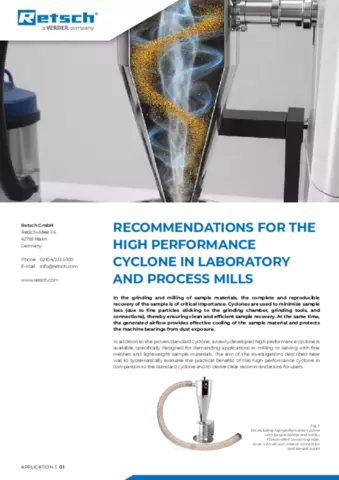
Recommendations for the high performance cyclones
In the grinding and milling of sample materials, the complete and reproducible recovery of the sample is of critical importance. Cyclones are used to minimize sample loss (due to fine particles sticking to the grinding chamber, grinding tools, and connections), thereby ensuring clean and efficient sample recovery. At the same time, the generated airflow provides effective cooling of the sample material and protects the machine bearings from dust exposure.
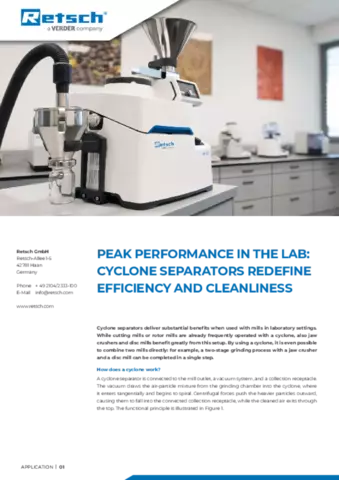
How Cyclone Separators Redefine Efficiency and Cleanliness in the Lab
Cyclone separators deliver substantial benefits when used with mills in laboratory settings. While cutting mills or rotor mills are already frequently operated with a cyclone, also jaw crushers and disc mills benefit greatly from this setup. By using a cyclone, it is even possible to combine two mills directly: for example, a two-stage grinding process with a jaw crusher and a disc mill can be completed in a single step.
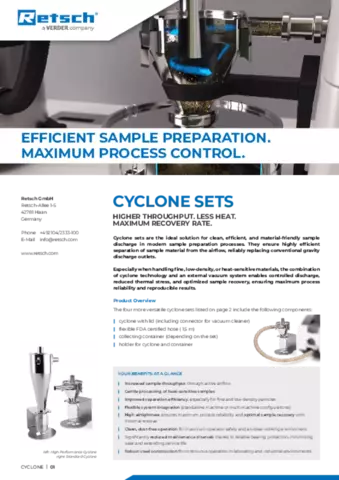
New Cyclone Sets 2026
Cyclone sets are the ideal solution for clean, efficient, and material-friendly sample dis-charge in modern sample preparation processes. They ensure highly efficient separa-tion of sample material from the airflow, reliably replacing conventional gravity dis-charge outlets.
An efficient example of cyclone technology in use is the BB 250 – DM 200 combination unit, which is coupled with a cyclone separator. This system enables continuous and automated sample preparation from coarse crushing through to fine grinding. By directly connecting both instruments to a cyclone, particles are discharged reliably and with minimal dust, further reducing manual handling.
Smaller jaw crushers, such as the BB 50, can also be connected to the DM 200 disc mill via hose or pipe connections. Many raw materials commonly used in Green Cement applications can be effectively homogenized in this way - making cyclone separators a key component of modern cement technology.
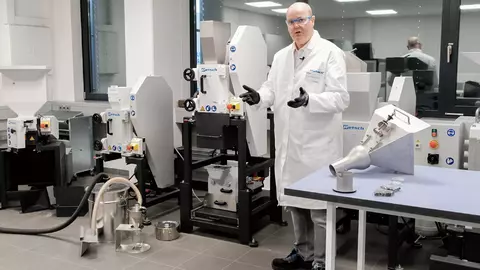
Rounding particles to improve the processing features
More spherical (rounded) manufactured sand can improve “green” concrete because it reduces water demand while still supporting strong particle interlocking, which helps lower the required cement paste volume and overall carbon footprint. In sustainable concrete design, the aim is to use less cement and water without sacrificing performance. Rounded grains reduce friction during mixing and placing, behaving like tiny ball bearings that make the mix flow more easily. Because spherical particles have a lower surface area than angular ones, they need less paste and water to coat them, further improving workability. Their shape also packs more efficiently, leaving fewer voids, which supports lower water-to-cement ratios and creates denser, less permeable concrete.
- Workability: less friction + lower surface area → lower water demand and easier placement
- Performance: better packing → fewer voids, higher density, improved durability and reduced cracking risk
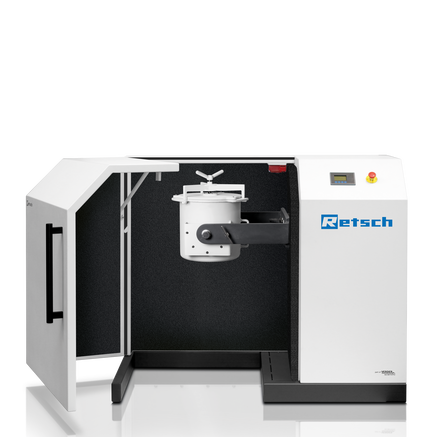
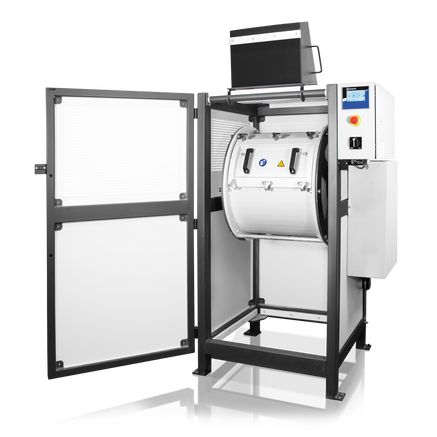
A drum mill such as the TM 300 or TM 500 can be used as a “particle shaping” step to make sand grains more rounded before they are used in green concrete. Inside the rotating drum, sand particles repeatedly collide with each other (and with grinding media, if used), which gradually knocks off sharp edges and reduces flakiness through controlled abrasion. By tuning processing time, rotation speed, and fill level, or varying between grinding balls and rods, the amount of rounding can be adjusted while limiting excessive production of ultra-fines. The result is a more spherical sand fraction that can improve packing and workability, helping to lower water and cement paste demand in sustainable concrete mixes.
代表的なサブサンプルの決定
Sample splitters are used in cement technology to obtain representative subsamples from bulk materials, ensuring reliable and reproducible analytical results. They are essential for quality control, as they minimize sampling errors when preparing materials such as clinker, cement, and raw meal for laboratory testing.
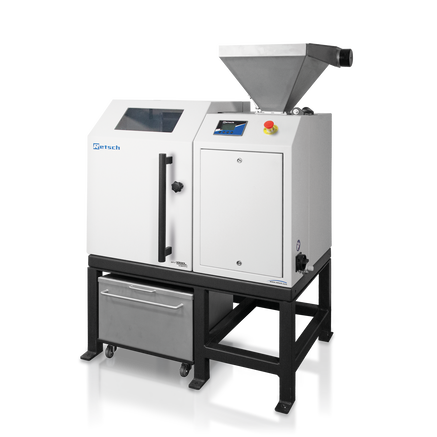
Benefits of Sample Drying
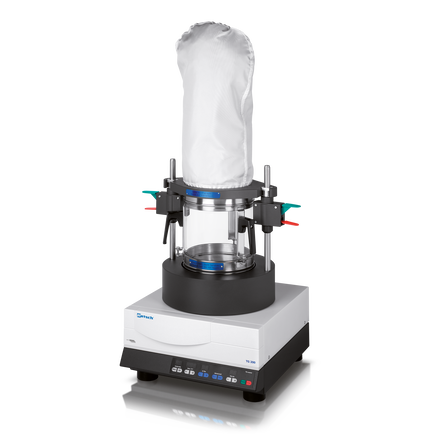
Drying samples is a critical step in sample preparation for cement analysis. Moist samples such as gypsum, limestone, or sands can lead to caking during grinding, which hampers homogenization and may distort analytical results. In addition, drying reduces the risk of blockages in mills, making the workflow safer and more economical.
The TG 200 enables gentle and uniform drying of a wide variety of sample materials, including alternative materials used in Green Cement applications. Controlled temperature management and optimized air circulation efficiently remove moisture without altering material properties, while the system can be flexibly adapted to different sample quantities and material types.
Sieving of Cement Raw Materials or Homogenized Green Cement Materials
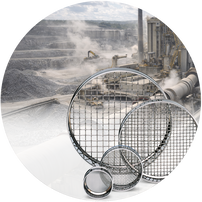
Sieve analyses play a central role in cement technology, as the particle size distribution of raw materials and intermediate products has a decisive influence on the quality and properties of the final product. Precise determination of particle sizes is essential for optimizing grinding processes, improving the reactivity of cement or materials used in Green Cement applications, and ensuring compliance with relevant standards.
RETSCH sieving machines are widely used throughout the industry and are synonymous with reliability, precision, and ease of operation. They enable fast and reproducible analysis of bulk materials such as mortar, cement, clinker, or additives like sands, as well as SCMs such as fly ash or tailings. A wide range of sieve sizes and automated evaluation functions allow both coarse and fine fractions to be determined accurately. Even after homogenization steps, sieving helps verify whether samples have already been ground sufficiently fine.
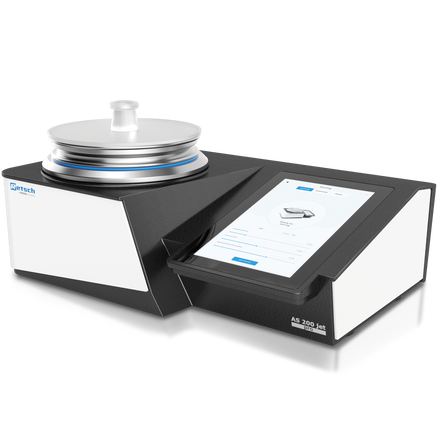
Air jet sieving machines such as the AS 200 jet, AS 200 jet pro, and AS 200 jet pharma enable particularly fast and efficient analysis of fine samples, as the air stream ensures optimal dispersion and separation of the material. Especially for Green Cement and modern cement technology, this precise particle size analysis is crucial for evaluating reactivity, quality, and process stability.
Sieving of Fly Ash as an Example of a Green Cement Material
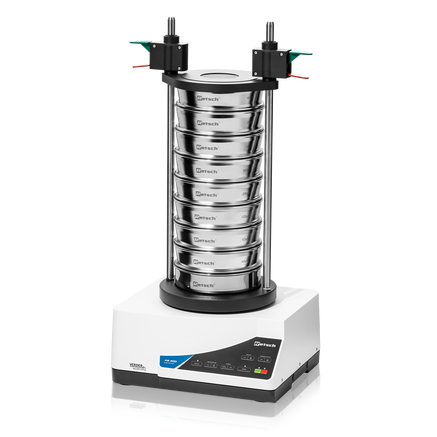
A 100 g fly ash sample can be sieved on the AS 200 control within 10 minutes. A sieve stack with mesh sizes of 32 / 45 / 63 / 90 / 125 / 250 µm is well suited for this purpose, operated at an amplitude of 1.1 mm. In contrast, air jet sieving machines use only a single sieve; sieving time depends on sample quantity and mesh size and is typically 1 -2 minutes per sieve. Using either the “standard” or the “Swiss method,” different fractions and particle size distributions can still be determined. From approximately six sieves onward, both device types are similarly fast. Air jet sieving machines additionally enable dry sieving of samples < 50 µm, whereas wet sieving is often required for the AS 200 control in this range. The AS 200 jet pro significantly simplifies the process thanks to its integrated balance and reduces sample loss. Numerous software checks and guided sieving functions further support error‑free operation.
Example: Sieving of Cement Clinker on the AS 200 jet pro
A 30 g cement clinker sample was sieved on the AS 200 jet pro using the standard procedure. Sieves with mesh sizes of 20, 32, 40, 63, 80, 125, and 180 µm were used. First, the sample was placed on the 20 µm sieve and sieved for 90 s. The oversize was then transferred stepwise to the next coarser sieve and sieved again until the 180 µm sieve was reached. Depending on sieve size, sieving times ranged from 60 to 90 s, with a negative pressure between 20 and 32 mbar. Nozzle rotation was maintained at 20 rpm throughout. The results can be displayed directly on the sieving machine in tabular form, as histograms, or as graphs. In this example, 54.21 % of the sample was below 20 µm. When comparing two samples, differences in the 32 - 40 µm and 40 - 63 µm fractions, for example, can be clearly visualized. This enables effective monitoring of production processes and rapid response in the event of deviations.
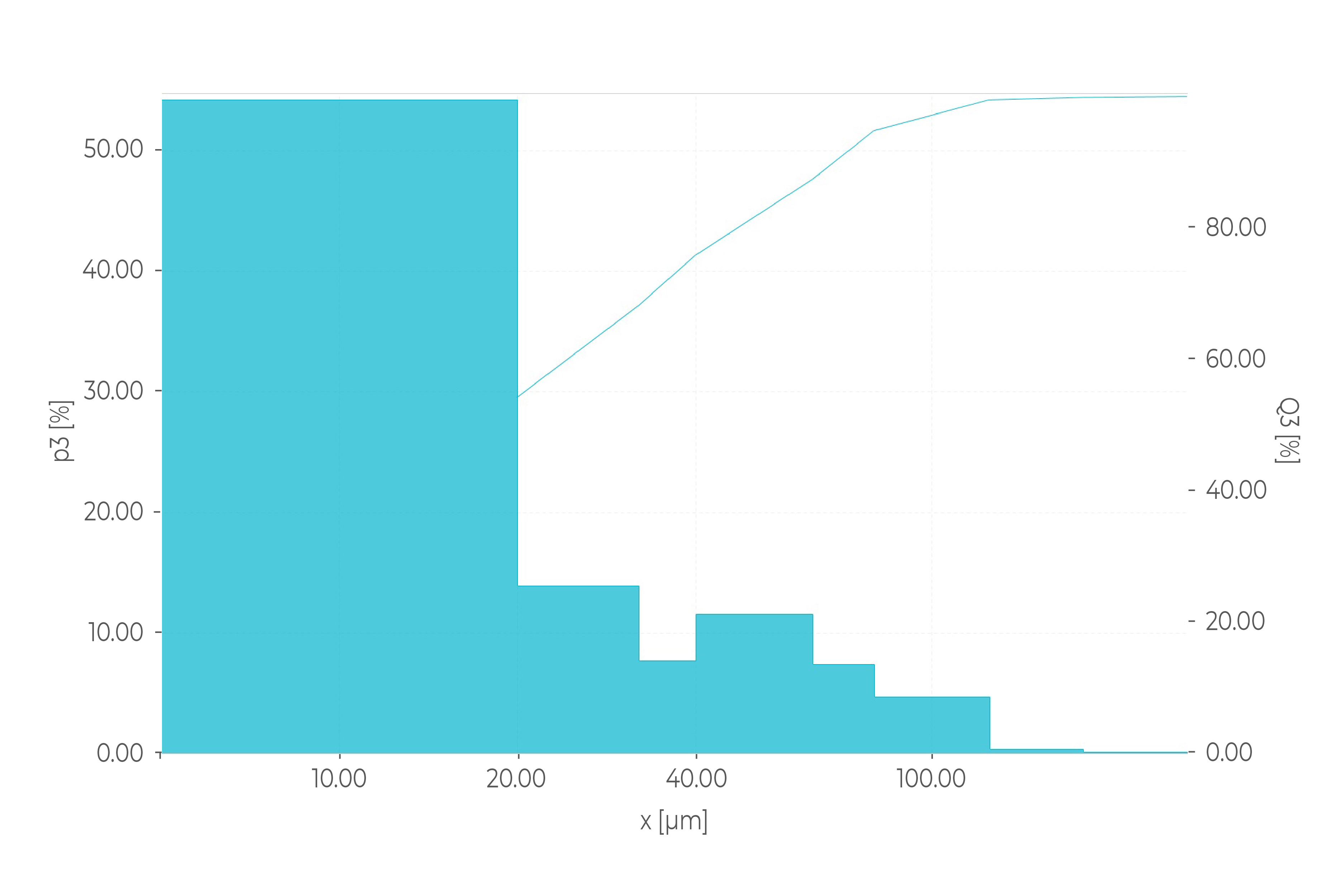
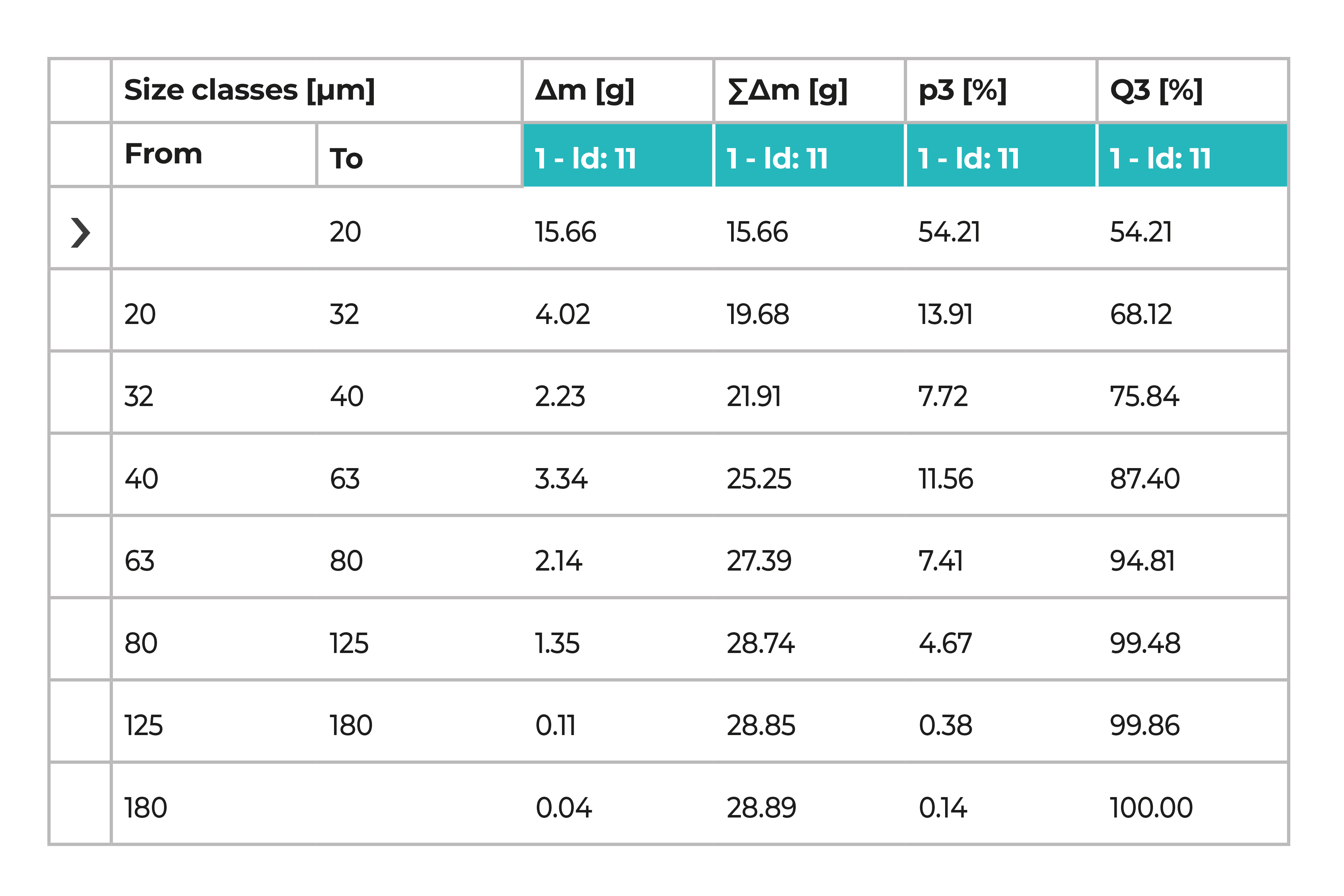
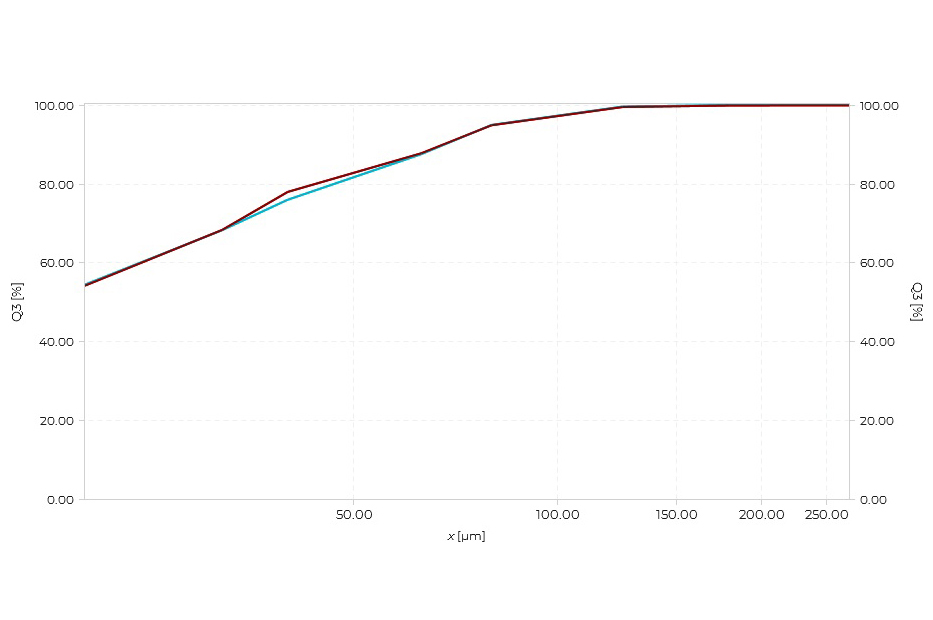
Cement clinker, different result types as histogram, table or graphical comparison of two samples
FAQs – Cement Technology and Green Cement
How does RETSCH support efforts to align cement technologies more closely with Green Cement?
RETSCH offers a wide range of solutions, from crushers and mills for sample preparation of conventional cement materials to systems that homogenize or even mechanically activate SCMs.
Why is dust control in the laboratory so important?
Raw materials used in the cement industry, as well as laboratory mills, tend to generate significant amounts of dust. Cyclone separators make an important contribution here: they keep the laboratory environment clean, cool the sample, improve sample recovery, and protect sensitive machine components such as bearings from penetrating dust. This supports occupational health and safety, process efficiency, and extended maintenance intervals.
Why is air jet sieving important for Green Cement?
Green Cement materials such as SCMs and activated clays consist of very fine, often agglomerating powders. Air jet sieving enables precise and gentle particle size analysis, making it essential for evaluating reactivity, quality, and process control.
Why are more rounded sand particles beneficial in concrete?
More rounded particles reduce friction between grains, which improves workability. At the same time, they require less water and cement paste, contributing to a lower CO₂ footprint. Particle rounding can be achieved in drum mills such as the TM 300.
無料相談のお問い合わせ
ヴァーダー・サイエンティフィックは日本国内だけでなく、世界中に広がる販売網で、お客様のニーズに迅速にお答えしています。
ヴァーダー・サイエンティフィック株式会社
東京本社:〒151-0061 東京都渋⾕区初台1丁⽬46番3号 シモモトビル
1階(アプリケーションラボ、サービス) 10階(オフィス)
TEL:03-6276-0073
FAX:03-6276-0076
東京本社へのアクセス
info@verder-scientific.co.jp
大阪営業所:〒559-0031 大阪市住之江区南港東8丁目2番52号
TEL:06-6655-0003
大阪営業所へのアクセス
メッセージを送信