





Рециклиране и управление на отпадъците
The recycling initiative targets a broad spectrum of waste materials, including everyday items like batteries, construction debris, and bio-waste. To re-use the different materials, they often need to be crushed and homogenized, so that they can be formed to new shapes and new articles. For example, with crushed glass particles from used bottles, new bottles or art articles can be made. Another idea is to shred textiles and leather and use the powders for new furniture coverings. Despite using the crushed materials, quality control is required to assure for example that no hazardous substances are re-used like asbestos in construction debris or toxic components in electronic waste.

Recycling and waste management
We show you how glass, building rubble, batteries, textiles and other materials are processed for reuse through precise pre-crushing and size reduction, homogenization and quality control – professionally and efficiently.
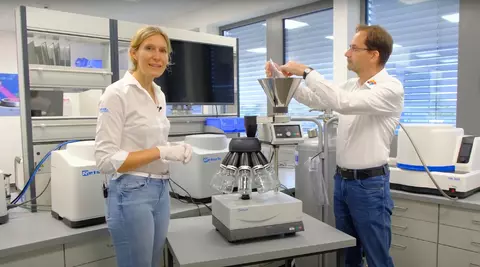
Synthetic polymers and plastics
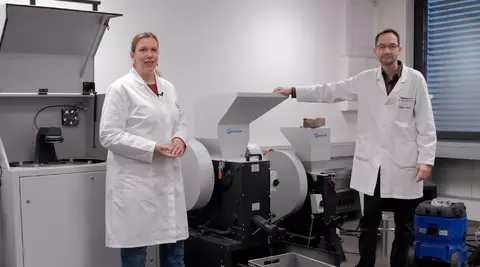
Construction Materials and Mining Waste
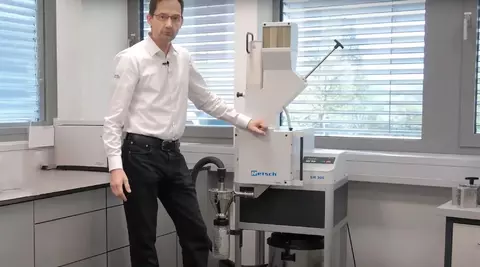
Spent Batteries, Metals and Electronic Scrap
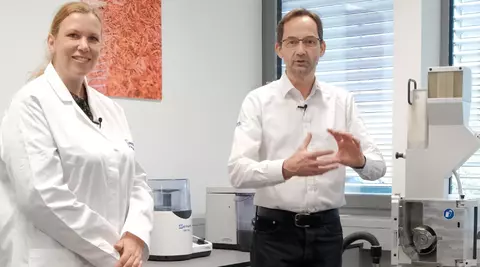
Textile, Leather, Paper, Organic waste
Advantages of recycling
Recycling diverse materials involves recovering and reusing them instead of of landfilling or incinerating the waste. These materials are processed and repurposed for new projects, conserving natural resources like forests for wood production and animal skins for leather production by reducing the demand for new raw materials. This process also minimizes environmental impact by lowering greenhouse gas emissions from decomposition and incinerating, as well as reducing the energy consumption associated with producing new materials. Additionally, recycling can lower overall costs for processes. For example, recycling aluminum can save up to 90% of the energy required compared to extracting aluminium from raw materials. Fewer mines are needed to obtain raw materials, resulting in less environmental pollution.
By reusing electronic waste and ensuring quality control, fewer hazardous substances pollute the environment. Recycling also saves water, as recycling processes require less water than using raw materials. For instance, each ton of recycled paper can save thousands of liters of water, thousands of kilowatt-hours of electricity, and over a dozen trees. Recycling organic waste, such as sewage sludge, food, yard trimmings, and agricultural residues, transforms them into valuable resources like compost and biogas. This process is crucial in waste management strategies by diverting organic waste from landfills, where it decomposes anaerobically and produces methane - a potent greenhouse gas. Technological advances now allow for the extraction of valuable minerals that were previously not economically feasible to recover, including trace amounts of metals like gold, silver, copper, and rare earth elements.

Retsch equipment is used broadly in the sector of recycling:
- Quality control and processing. The quality control process and re-using process both begin with the pre-crushing and size reduction to prepare the materials for analysis or further use. At this stage, RETSCH provides an extensive selection of machines essential for these tasks, for a better overview, the section QC/processing is splitted in different areas by recycling material. Sieving and fractionizing as well as pellet pressing belongs to this chapter.
- In R&D, mechanochemical methods offer new pathways for the recycling of waste materials such as plastics, plant matter, or food residues, with Retsch ball mills playing a key role in these emerging processes.
- Retsch also offers equipment for waste management e.g. secondary fuels or soil remediation
Sustainability through recycling
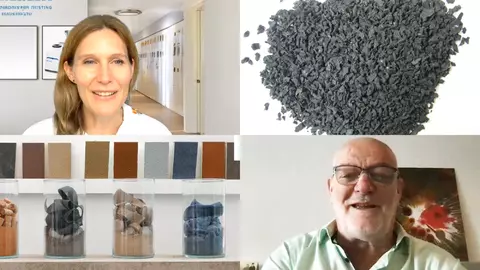
In this interview, the CEO of Cooloo shares how the company transforms waste into valuable resources using innovative technologies, including RETSCH instruments, to support a circular economy.
Grinding of recycling materials:
Given the diverse nature of solid waste requiring recycling or decomposition, RETSCH’s crushers and mills are employed in a variety of recycling methods. Solid waste is categorized into different groups, each with its unique challenges and opportunities, which will be explored in the subsequent sections.
Минерални ресурси

Специални приложения
Биобазирани материали

Инженерни материали и рециклируеми материали
Рециклиране и устойчивост | VERDER SCIENTIFIC
Измервателна система GrindControl GrindControl shows what’s happening inside the grinding jar – in real time
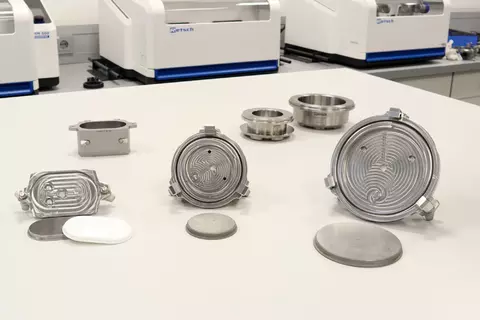
GrindControl provides real-time visibility into processes inside the grinding jar. Pressure and temperature are continuously monitored—ensuring safe, precise control, even with sensitive or reactive materials. Respond promptly to unexpected pressure spikes, and keep a close eye on temperature-sensitive samples and even mechanochemical reactions at all times.
GrindControl at a glance
- Real-time data on pressure & temperature
- Early detection of critical conditions
- Precise process control
- Protection of sensitive materials
- Reproducible results
Contact us for a free consultation
RETSCH offers a comprehensive portfolio of instruments for recycling processes - from quality control and sample preparation to innovative mechanochemical methods. Whether pre-grinding, sieving, pelletizing or the use of ball mills for sustainable recycling solutions: We have the right instruments for your requirements.
Our global network and experts are available to provide you with personalised advice. Contact us and work with our specialists to find the best solution for your application!

Приложени доклади
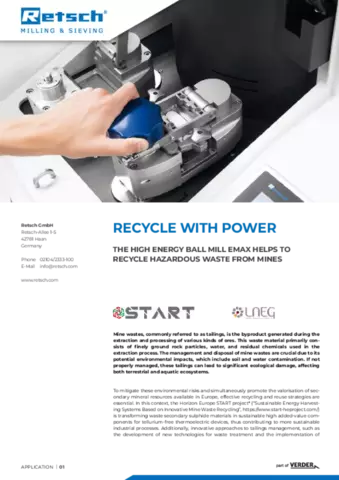
Recycling hazardous waste from mines
Mine wastes, commonly referred to as tailings, is the byproduct generated during the extraction and processing of various kinds of ores. This waste material primarily consists of finely ground rock particles, water, and residual chemicals used in the extraction process. The management and disposal of mine wastes are crucial due to its potential environmental impacts, which include soil and water contamination. If not properly managed, these tailings can lead to significant ecological damage, affecting both terrestrial and aquatic ecosystems.
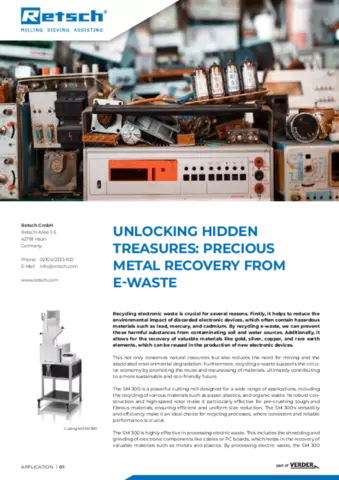
Precious metal recovery from E-Waste
Recycling electronic waste is crucial for several reasons. Firstly, it helps to reduce the environmental impact of discarded electronic devices, which often contain hazardous materials such as lead, mercury, and cadmium. By recycling e-waste, we can prevent these harmful substances from contaminating soil and water sources. Additionally, it allows for the recovery of valuable materials like gold, silver, copper, and rare earth elements, which can be reused in the production of new electronic devices.
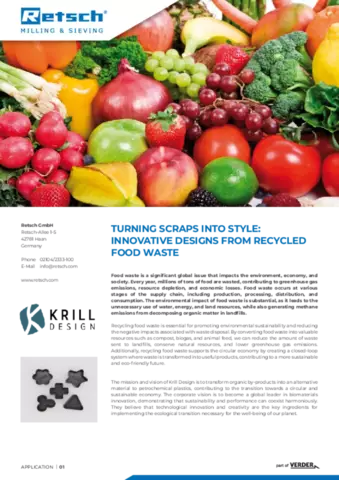
Innovative designs from recycled food waste
Food waste is a significant global issue that impacts the environment, economy, and society. Every year, millions of tons of food are wasted, contributing to greenhouse gas emissions, resource depletion, and economic losses. Food waste occurs at various stages of the supply chain, including production, processing, distribution, and consumption. The environmental impact of food waste is substantial, as it leads to the unnecessary use of water, energy, and land resources, while also generating methane emissions from decomposing organic matter in landfills.
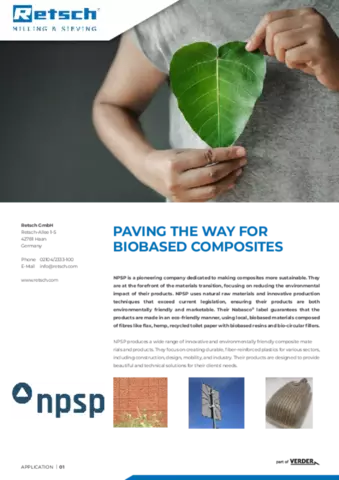
Paving the way for biobased composites
NPSP is a pioneering company dedicated to making composites more sustainable. They are at the forefront of the materials transition, focusing on reducing the environmental impact of their products. NPSP uses natural raw materials and innovative production techniques that exceed current legislation, ensuring their products are both environmentally friendly and marketable. Their Nabasco® label guarantees that the products are made in an eco-friendly manner, using local, biobased materials composed of fibres like flax, hemp, recycled toilet paper with biobased resins and bio-circular fillers.
Transforming waste into high-quality paper
Favini is a renowned Italian company specializing in the production of high-quality paper and innovative solutions for various industries. With a history dating back to 1736, Favini has established itself as a leader in the paper industry, known for its commitment to sustainability, innovation, and excellence. The company offers a wide range of products, including specialty papers for packaging, printing, and creative applications, as well as eco-friendly solutions that cater to the evolving needs of its customers.
Transforming waste into valuable raw material
Textile and leather waste are significant contributors to environmental pollution. The textile industry generates vast amounts of waste, including off-cuts, defective materials, and end-of-life garments. Similarly, the leather industry produces waste in the form of trimmings, shavings, and defective hides. These waste materials often end up in landfills or are incinerated, leading to environmental degradation and the release of harmful pollutants. Recycling and repurposing textile and leather waste not only help in reducing the environmental impact but also provide valuable raw materials for various industries.
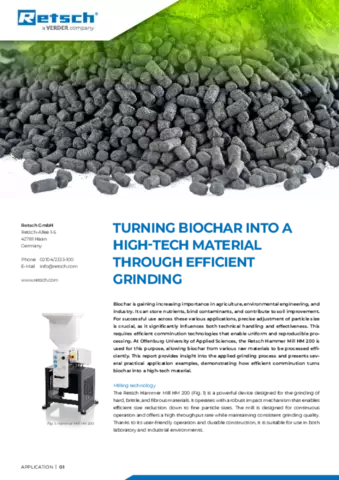
Turning Biochar into a high-tech material through efficient grinding
Biochar is gaining increasing importance in agriculture, environmental engineering, and industry. It can store nutrients, bind contaminants, and contribute to soil improvement. For successful use across these various applications, precise adjustment of particle size is crucial, as it significantly influences both technical handling and effectiveness. This requires efficient comminution technologies that enable uniform and reproducible processing. At Offenburg University of Applied Sciences, the Retsch Hammer Mill HM 200 is used for this purpose, allowing biochar from various raw materials to be processed efficiently. This report provides insight into the applied grinding process and presents several practical application examples, demonstrating how efficient comminution turns biochar into a high-tech material.