






Cement grinding and homogenization of typical Materials in the Cement Production Process
Cement grinding - What Does the Classic Cement Manufacturing Process Look Like?
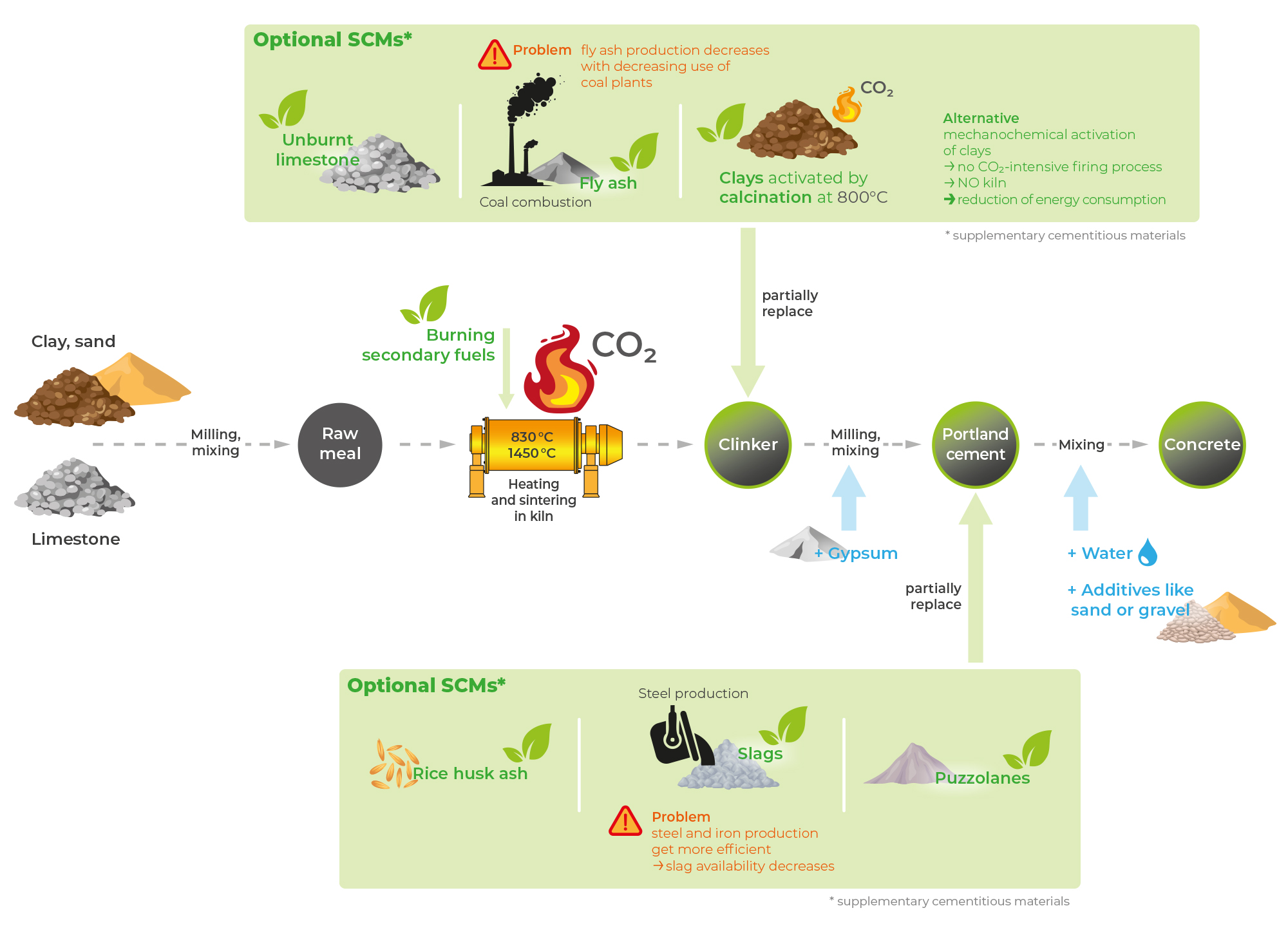
Cement grinding is a key step in the cement manufacturing process and begins with the preparation of raw materials. Limestone, clay and sand are first subjected to crushing limestone and other raw materials to reduce their particle size. The crushed materials are then ground into raw meal and heated in a rotary kiln at approximately 1,450 °C. During this thermal process, clinker is formed and CO₂ is released as an unavoidable by product. After cooling, the clinker is subjected to cement grinding, where it is ground together with gypsum and other additives to produce the final cement product.
The highest energy demand in cement production arises from heating the raw meal in the kiln. Additional electrical energy is required for cement grinding, limestone crushing, and conveying processes. Around 50 % of total CO₂ emissions originate from the chemical calcination reaction in the rotary kiln, while the remaining emissions result from fuel combustion and electricity consumption. Even when renewable energy sources are used, these process related CO₂ emissions remain inherent to cement production.
Cement is ultimately mixed with water and aggregates to produce mortar or concrete. To ensure consistent product quality, all raw materials, intermediate products, and final products must undergo strict quality control. Laboratory analyses and reliable sample preparation using crushers and mills are therefore essential components of modern cement production.
Откройте для себя новые захватывающие главы и воспользуйтесь нашими знаниями Click on the chapters to explore!
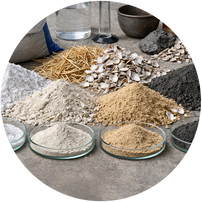
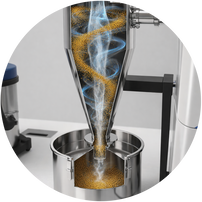
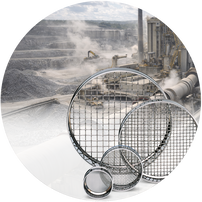
Browse through the topics covered in this chapter:
Crushing Limestone and Clay
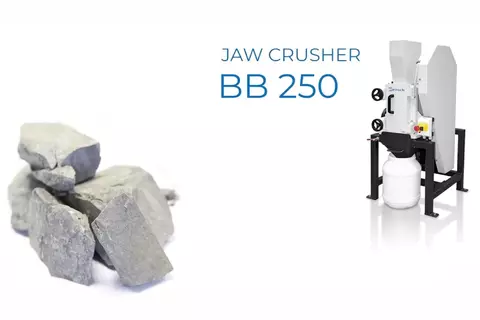
Limestone and clay are the primary raw materials used in cement production. For quality control and process optimization, these materials must be homogenized before analysis. Crushing limestone is typically the first step, as it determines downstream grinding efficiency and final fineness. When selecting suitable equipment, key parameters include the sample quantity, initial particle size, and target fineness. Jaw crushers are commonly used for pre crushing limestone and clay. A wide range of jaw crusher models allows optimal adaptation to varying sample characteristics, from small laboratory batches for example in the BB 50 to larger sample quantities up to 3.5 t/h in the BB 600. Alternatively, hammer mills can be used, as crushing limestone and clay is generally not too hard for this type of mill.
Hammer mills such as the HM 200 can also be used, since the crushing of limestone and clay generally does not involve extremely hard materials.
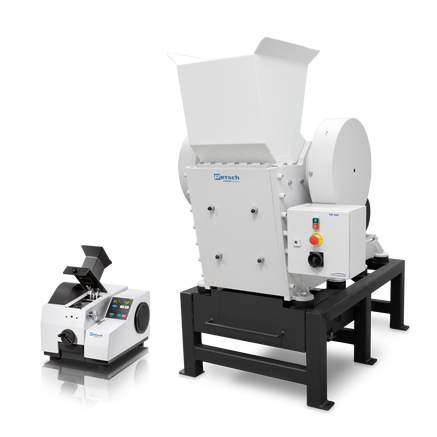
Subsequent fine grinding to particle sizes below 40 µm is typically performed in ball mills. Here, cement grinding principles already apply at laboratory scale, with sample quantity being the decisive factor for selecting the appropriate mill. From a few milliliter up to kilogram scale samples, suitable solutions are available for efficient and reproducible grinding.
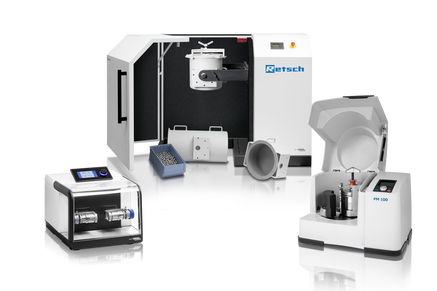
Rotor beater mills such as the SR 300 can also be used for crushing limestone and clay samples. They accept feed sizes of up to 25 mm and achieve final fineness values of around 100 µm, while processing significantly larger sample quantities compared to planetary ball mills. Drum mills like the TM 300 are likewise capable of handling larger volumes, but require considerably more time to reach the fineness range of 100–300 µm.
Limestone samples
30 mm, 0,5 kg

Pre-crushing BB 250
Fine-grinding TM 300
45 мин | < 45 мкм
15 mm, 200 g

BB 50
2,5 мин | < 1 мм
10 mm, 10 kg

HM 200
25 kg/min | < 3 мкм
35 mm, 250 g

Pre-crushing BB 50
Fine-grinding PM 100
6 мин | < 200 мкм
Clay samples
10 mm, 12 g

MM 400
20 сек | < 250 мкм
15 mm, 80 g

PM 100
2 мин | < 500 мкм
120 mm, 10 kg

BB 300
5 мин | < 2 мм
15 mm, 2 kg

SR 300
2,5 мин | < 100 мкм
Clinker samples
Cement clinker formed after sintering is significantly harder and more abrasive than limestone or clay. In principle, the same mills and considerations apply as for crushing limestone and clay, and jaw crushers are typically used also for pre crushing.
From the range of rotor mills, the cross beater mill SK 300 is suitable for the next fine grinding step, as it is designed for harder, abrasive materials. With interchangeable tungsten carbide baffle plates and toothed grinding chamber inserts, it is ideal for crushing cement clinker. In this way, 1 kg of pre crushed sample (5 mm) can be reduced to approximately 200 µm in just 1 minute. If finer final fineness is required, ball mills such as the PM 400 are used. The PM 400 achieves 80 µm in 15 minutes.
The best of both worlds - speed combined with high fineness - is offered by a disc mill for crushing clinker samples. This is why a combination of a jaw crusher followed by a disc mill RS 200 or RS 300 is the classic setup for cement grinding. The RS 300 can grind the amount of one kilogram to below 100 µm in about 4 minutes. The RS 200 is designed for smaller sample quantities up to 250 ml and is generally even faster than the RS 300.
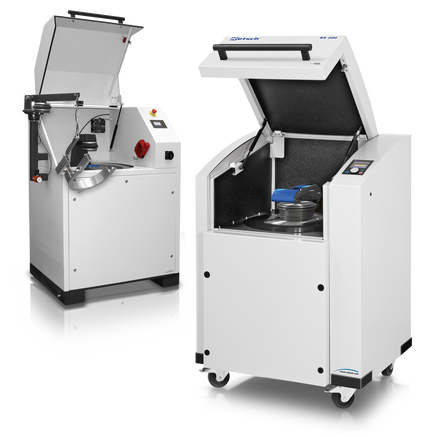
Clinker samples


Pre-crushing in the jaw crusher to 5 mm, fine-grinding in the RS 300 to 200 µm. The total process time for 1 kg was 4 minutes.
The same considerations as for clinker crushing apply to the cement grinding or concrete samples. However, for fine grinding, ball mills or disc mills (RS 200, RS 300 or DM 200) are most used.
Concrete samples
100 x 200 mm, 3,5 kg

Pre-crushing BB 600
Fine-grinding DM 200
1 мин | < 150 мкм
80 mm, 200 g

Pre-crushing BB 200
Fine-grinding MM 400
40 сек | < 150 мкм
150 x 75 mm, 8 kg

Pre-crushing BB 300
Fine-grinding MM 400
2,5 мин | < 3 мм
50 mm, 50 g

Pre-crushing BB 50
Fine-grinding RS 200
1 мин | < 100 мкм
15 mm, 45 kg

TM 500
3 Часов | < 100 мкм
Additive Gypsum
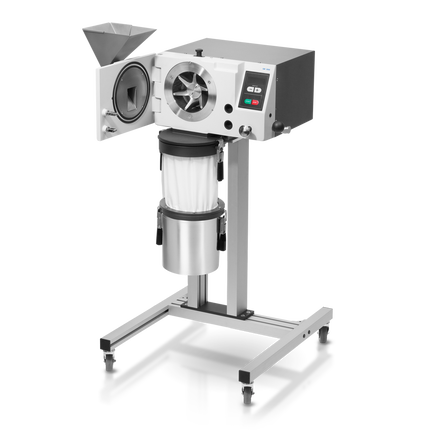
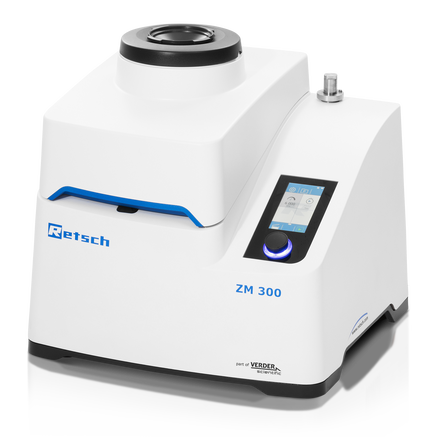
Compared to clinker, gypsum exhibits much softer material properties, which simplifies crushing and homogenization in the laboratory. However, gypsum tends to form agglomerates, which can complicate fine grinding during cement grinding preparation. The classic approach for gypsum samples is therefore pre crushing in a jaw crusher, followed by a rotor mill such as the cross beater mill SK 300, the hammer mill HM 200 or the ultra-centrifugal mill ZM 300. Drying the samples before grinding for example in the TG 200 is recommended to prevent agglomeration even in rotor mills. The use of cyclone modules is also helpful, as they facilitate sample discharge. In the ZM 300, distance sieves are preferred for gypsum samples. In many cases, the use of jaw crushers can be avoided if the samples are first ground with a very coarse sieve in the ZM 300 or HM 200, and then finally homogenized in the fine grinding step using a finer sieve.
Gypsum samples
10 mm, 1 kg

Pre-crushing BB 200
Fine-grinding SK 300
2 мин | < 500 мкм
15 mm, 200 g

Pre-crushing BB 250
Fine-grinding ZM 300
1,5 мин | < 200 мкм
10 mm, 10 kg

BB 250
40 сек | < 4 мм
35 mm, 250 g

HM 200
1 мин | < 2 мм
Recycling gypsum
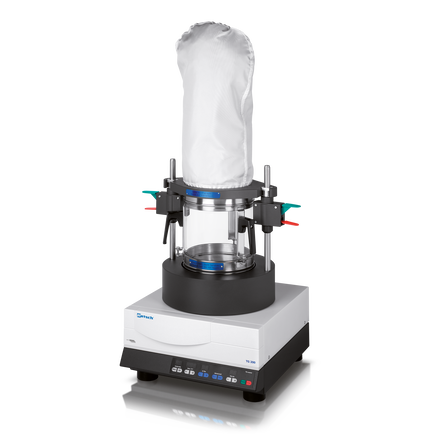
Drying the samples in the TG 200 makes the sample homogenization easier.
The TG 200 is a laboratory quick dryer designed for fast and gentle drying of cement, gypsum, and related granular materials. It operates according to the fluidized bed principle, ensuring uniform heat transfer without local overheating of the sample. This gentle drying process helps preserve the original material properties, which is essential for reliable cement analysis and quality control.
Thanks to its powerful airflow, the TG 200 achieves very short drying times, typically within a few minutes instead of hours in conventional drying ovens. Different containers and filter options make the TG 200 flexible for a wide range of cement and construction material applications. The TG 200 is easy to operate and supports reproducible sample preparation, which is critical for consistent analytical results in cement laboratories. Overall, the TG 200 significantly increases laboratory efficiency by combining speed, gentle treatment, and high process reliability.
Пример: Gypsum samples before and after pre-grinding with a 4 mm sieve and fine-grinding with a 0.25 mm sieve in the ZM 300.
Образец 1: 10 mm, 0,3 kg


Образец 2: 10 mm, 0,3 kg


15 мин | < 80 мкм
Часто задаваемые вопросы - Cement grinding and homogenization of typical Materials in the Cement Production Process
Why is crushing limestone a critical first step in cement grinding?
Crushing limestone is a critical first step in cement grinding because it directly influences grinding efficiency, energy consumption, and final cement fineness. Proper crushing limestone reduces the initial particle size, ensures a homogeneous feed material, and enables stable and reproducible cement grinding in downstream milling steps. Insufficient crushing limestone leads to longer grinding times, higher wear, and inconsistent cement quality, both in laboratory sample preparation and in industrial cement grinding processes.
What equipment is typically used for crushing limestone and cement grinding in quality control?
For crushing limestone, jaw crushers and hammer mills are most commonly used to achieve the required feed size for subsequent cement grinding. Fine cement grinding is then performed using ball mills, disc mills, or rotor mills, depending on the target fineness and sample quantity. This combination of crushing limestone followed by cement grinding ensures homogeneous samples, accurate analytical results, and reliable process control across raw materials, clinker, cement, and additives.
What role does gypsum play in cement grinding and how does crushing limestone differ from gypsum preparation?
Gypsum plays a critical role in cement grinding, as it is added to clinker to control setting time and ensure consistent cement performance. Unlike crushing limestone, which focuses on reducing hard, brittle raw materials to an optimal feed size for cement grinding, gypsum preparation requires special attention due to its softer nature and tendency to agglomerate.
How does clinker differ from crushing limestone in cement grinding processes?
Clinker differs significantly from materials processed during crushing limestone, as it is much harder and more abrasive due to the sintering process in the rotary kiln. While crushing limestone aims to reduce relatively brittle raw materials to an optimal feed size, clinker preparation for cement grinding requires more robust crushing and grinding solutions.
Свяжитесь с нами для получения бесплатной консультации
Продукты и услуги RETSCH доступны через глобальную сеть дочерних компаний и дистрибьюторов. Наши сотрудники будут рады помочь Вам с любыми возникшими вопросами.