






Métodos analíticos como ex.: AAS, NIR, ICP ou RXF requerem o máximo grau possível de homogeneização da amostra, com sua trituração até uma finura definida.
Uma análise confiável e exata só pode ser assegurada por um preparo de amostra reprodutível. Para esse fim, a RETSCH oferece uma ampla linha dos mais modernos moinhos e britadores para trituração grosseira, fina e ultrafina adequada a cada material. As numerosas opções de ferramentas de moagem e de acessórios dos nossos equipamentos possibilitam um preparo de amostras adequado à análise e isenta de contaminações, com preservação das características dos materiais
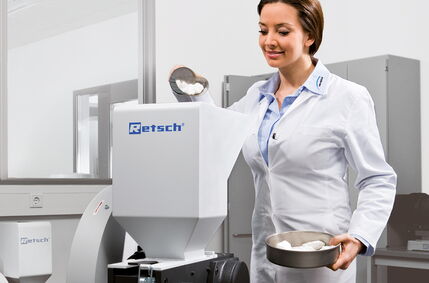
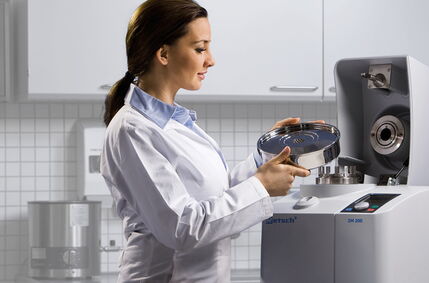
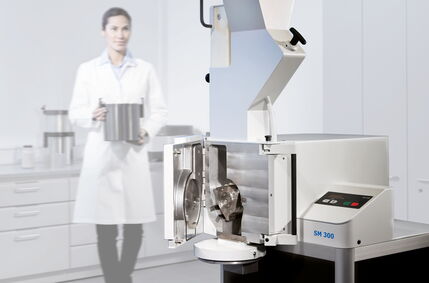

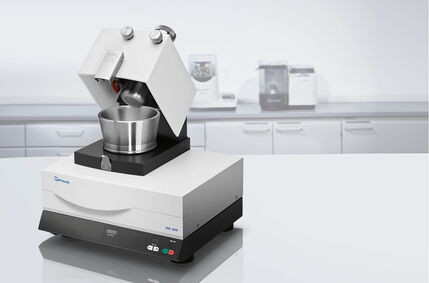
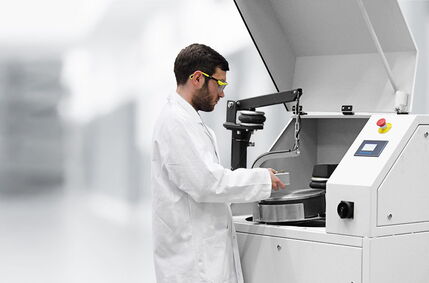

Why use a laboratory mill for grinding?
Comminution of solids or bulk materials is necessary when the material has a grain size that is too coarse for subsequent processes, such as analysis, division, mixing or further processing, and/or the sample is too inhomogeneous, so that the small portion used for analysis is not representative of the entire laboratory sample.
Analyses are necessary for quality assurance, for example in production monitoring or incoming goods inspection. These include spectroscopic and chromatographic methods. Since product properties are often influenced by the particle size (e.g. extraction, filtration or absorption capacity), size reduction with a laboratory mill is also essential for the development of new products and production processes.
Required fineness
A frequent requirement is: “Pulverize finely”. However, the term “powder” is not clear. Washing powder, coffee powder and baking powder are bulk products that all claim the term “powder” but have very different particle size distributions.
Another frequent requirement is to grind the sample “as fine as possible” using a laboratory mill. However, this always requires a high energy input and a lot of time. Time and energy also mean costs in laboratory operations. A more effective approach is: Not as fine as possible, but as fine as necessary!
It is important that the sample material is of analytical fineness. The required analytical finenesses vary, depending on the subsequent analytical method or the subsequent process.
Is comminution an art?
The art of crushing consists of preparing the sample with a laboratory mill in such a way that a representative individual sample is obtained that has a homogeneous analysis fineness. When selecting a suitable laboratory mill and grinding set, it must be ensured that the characteristics of the sample to be determined (e.g. moisture content, heavy metal content, etc.) are not changed during the entire preparation process.
In addition to a precise knowledge of the equipment, this also requires experience in processing various materials. Contact Retsch for non-binding advice on equipment and applications.