Search

Tools for optimized sample preparation for XRF analysis

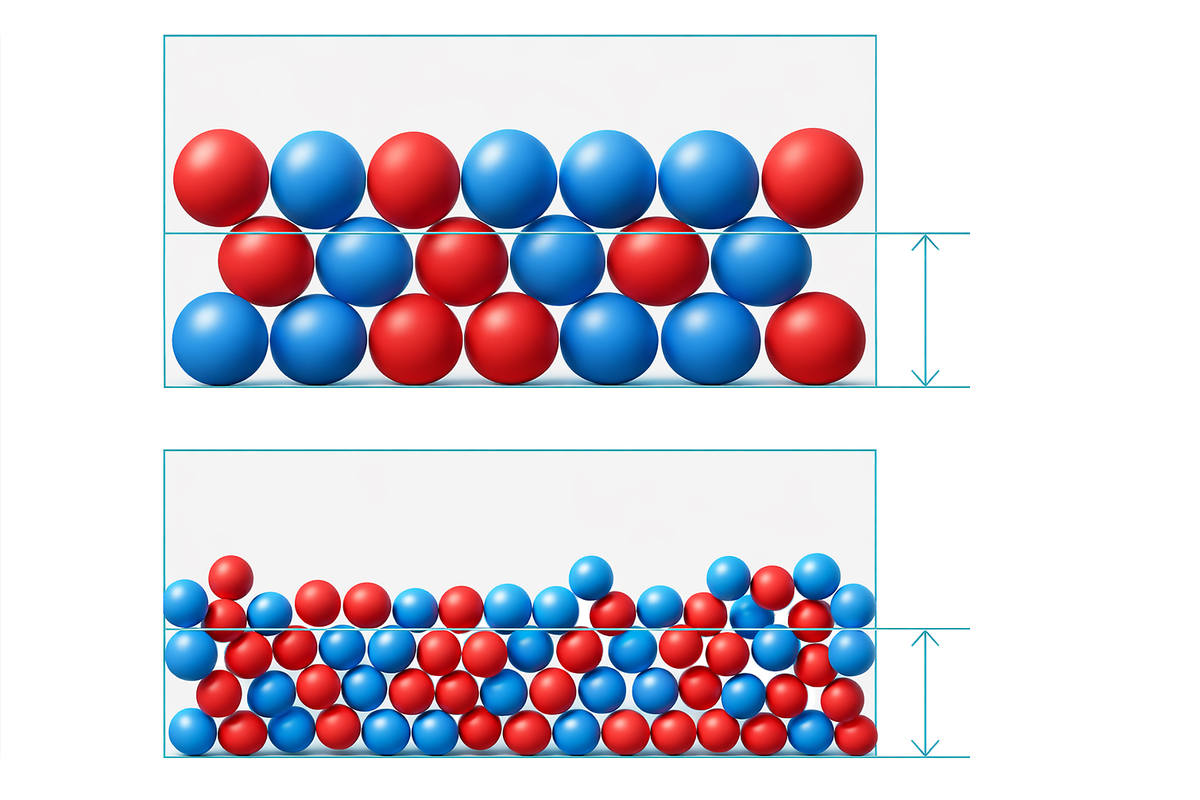
Reliable and reproducible XRF analysis depends strongly on proper sample preparation. In cement production, minerals, and raw material control, pressing and homogenizing the sample before X ray fluorescence analysis is a critical prerequisite for accurate analytical results. Well prepared samples ensure representative measurements, high signal stability, and excellent reproducibility in routine laboratory workflows. Before XRF analysis, the sample is typically pressed into a compact pellet. This pressing step creates a dense, homogeneous tablet with a smooth and uniform surface. Such pellets minimize X ray scattering and absorption effects, significantly improving measurement accuracy. In contrast, loose or unpressed samples often contain air gaps and uneven particle distributions, leading to inhomogeneous measurement areas and distorted XRF results. Optimized sample preparation for XRF analysis therefore forms the basis for meaningful, comparable data and robust quality control in the laboratory.

Cement grinding - What Does the Classic Cement Manufacturing Process Look Like?

Cement grinding is a key step in the cement manufacturing process and begins with the preparation of raw materials. Limestone, clay and sand are first subjected to crushing limestone and other raw materials to reduce their particle size. The crushed materials are then ground into raw meal and heated in a rotary kiln at approximately 1,450 °C. During this thermal process, clinker is formed and CO₂ is released as an unavoidable by product. After cooling, the clinker is subjected to cement grinding, where it is ground together with gypsum and other additives to produce the final cement product.

Preparing slags for XRF analysis

For XRF analysis of slags, a jaw crusher is typically used for preliminary size reduction, followed by the MM 400 (or a disc vibration mill) for fine grinding. The PP 40 pellet press produces stable pellets. If required, the sample must be mixed with Licowax beforehand to prevent cracking; aluminum cups further increase pellet stability.

Influence of the pressing force on the XRF analysis result

The applied pressing force plays a decisive role in XRF analysis performance. Using calcium analysis of limestone samples as an example, the relationship between pressing force and signal intensity becomes clear. With increasing pressing force, the measured XRF signal intensity rises until a plateau is reached at approximately 30 tons. Insufficient pressing force can result in lower signal intensities and reduced analytical precision. For this reason, both the selection and the consistency of pressing parameters are essential for reproducible XRF analysis. In addition to pressure, the holding time of the pressing force is equally important. Particles require sufficient time to rearrange, while excess air must be able to escape from the pellet structure. Programmable presses, such as the PP 40, offer clear advantages by enabling controlled and repeatable pressing conditions, thereby improving long term reproducibility in XRF laboratories. [1]

Why Particle Size Is Crucial for XRF Analysis

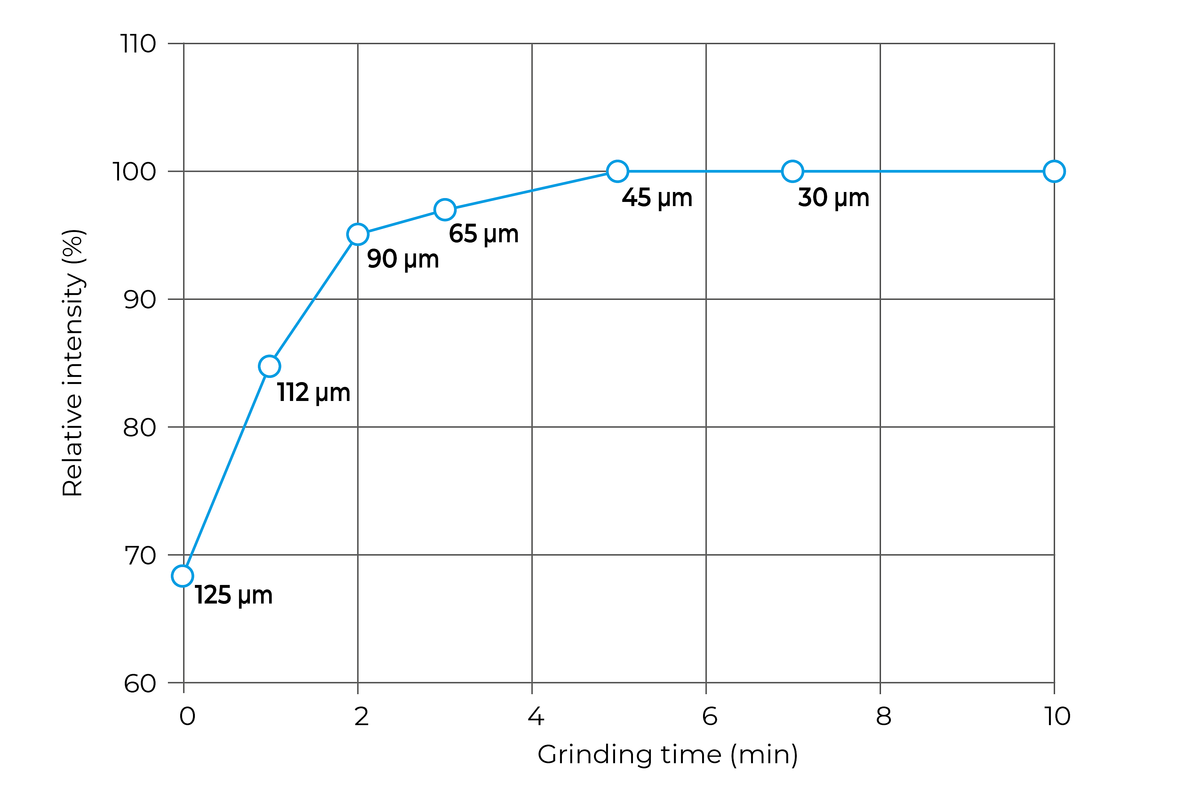
Particle size is a key factor in sample preparation for XRF analysis, as it directly influences how representative the analyzed sample layer is. In XRF, the penetration depth describes how deeply the primary X rays enter the sample, while the escape depth defines from which depth the characteristic fluorescence radiation can exit the sample and be detected. The escape depth is closely correlated with particle size. If particles are too coarse, the analyzed layer becomes uneven and no longer representative of the bulk material. Reducing particle size creates a denser and more homogeneous sample layer, significantly enhancing the quality, reliability, and accuracy of XRF analysis. This effect is clearly demonstrated by the homogenization of limestone samples in a RS 200 disc mill, where decreasing particle size leads to increased relative Kα intensity and improved precision, particularly in silicon analysis. Effective sample preparation should therefore include at least 2 minutes of homogenization. Grinding beyond 2 minutes - especially beyond 5 minutes - provides little additional analytical benefit and mainly increases processing time without improving XRF results.


The Si Kα intensity depends on the particle size and, consequently, on the grinding time [1]

Discover these exciting chapters and benefit from our expertise

Grinding and homogenization of typical materials

Tools for optimized sample preparation for XRF analysis

Refused derived and alternative fuels in cement production

Processing and activation of SCMS

Complementary cement technologies

Sieving of raw or homogenized cement materials

FAQ

Why is proper sample preparation essential for reliable XRF analysis?

Proper sample preparation is a critical prerequisite for accurate XRF analysis, especially in cement and mineral applications. Pressing the sample into a compact and homogeneous pellet creates a uniform surface that minimizes X‑ray scattering and absorption. This significantly improves measurement accuracy and reproducibility. In contrast, loose or insufficiently prepared samples can cause inhomogeneous measurement areas due to air gaps or uneven particle distribution, leading to distorted XRF analysis results. Optimized sample preparation therefore ensures meaningful, comparable data and supports effective quality control in the laboratory.

How does pressing force influence analytical results in XRF analysis?

In XRF analysis, the applied pressing force during sample preparation has a direct impact on signal intensity and data quality. As demonstrated using calcium analysis of limestone samples, increasing the pressing force leads to higher signal intensity until a plateau is reached at around 30 tons. Insufficient pressing force can result in intensity losses and poor reproducibility within the XRF analysis. In addition to pressure, the holding time of the pressing force is crucial, as particles need time to rearrange and excess air must escape. Programmable presses enable consistent control of these parameters and are therefore a key factor for reproducible XRF analysis results.

Why is particle size a key factor in sample preparation for XRF analysis?

Particle size directly affects the representativeness of XRF analysis, as only material within the escape depth contributes to the measured signal. If particles are too coarse, the analyzed layer becomes uneven and non‑representative. Finer particles form a denser, more homogeneous layer, improving accuracy, reliability, and relative Kα intensity (e.g. in silicon analysis). Effective sample preparation therefore requires sufficient homogenization, while excessive grinding offers little additional benefit.

Referências

Permission for picture usage by Rigaku Europe SE