Search

Sustainable Cement Technology for Research & Laboratories

Green Cement represents the transformation of the cement industry toward more sustainable, CO₂ reduced binders. But why is Green Cement gaining so much importance right now? The cement and concrete industry is one of the key pillars of the global construction sector and a fundamental link in our infrastructure. Every year, billions of tonnes are produced worldwide to meet the growing demand for housing and transportation networks. The industry is characterized by stringent quality requirements, complex chemical processes, and the continuous advancement of material technologies. For laboratories, this means precise analyses, reliable testing methods, and ongoing research. However, this central role also comes with major challenges: cement production is energy intensive and responsible for significant CO₂ emissions - around 8 % of global emissions. As a result, the industry is at the center of the global climate debate. Reducing greenhouse gas emissions is therefore essential. Strategies such as lowering the clinker content, using alternative binders, carbon capture and storage (CCS), and incorporating recycled materials are key steps toward “Green Cement.” Research laboratories develop new formulations, evaluate performance, and support the transition toward more climate friendly solutions.

RETSCH offers innovative milling, sieving, and sample preparation solutions for cement technology - ranging from the grinding of cement raw materials and supplementary cementitious materials (SCMs), through the processing of alternative fuels, to the activation of clays for Green Cement and LC³ concepts. The portfolio is complemented by sieving machines specifically designed for the fine powders used in the cement industry, including air jet sieving systems for precise quality and process control.

Onderzoek en ontwikkeling (R&D)

Cement Grinding and Homogenization of Typical Materials in the Cement Manufacturing Process

Kwaliteitscontrole (QC)

Tools for optimized sample preparation for XRF analysis

Productie

Refused Derived Fuels and Alternative Fuels for Reducing Fossil Fuel Use in Cement Production

Speciale aandacht: Weefselhomogenisatie en celdisruptie

Processing and Activation of Supplementary Cementitious Materials (SCMs): Cement Replacement Materials and Clay Activation Technology

Complementary Cement Technologies: Sample Drying or the Use of Cyclone Separators – Also for Green Cement Materials

Benefits of Sample Drying

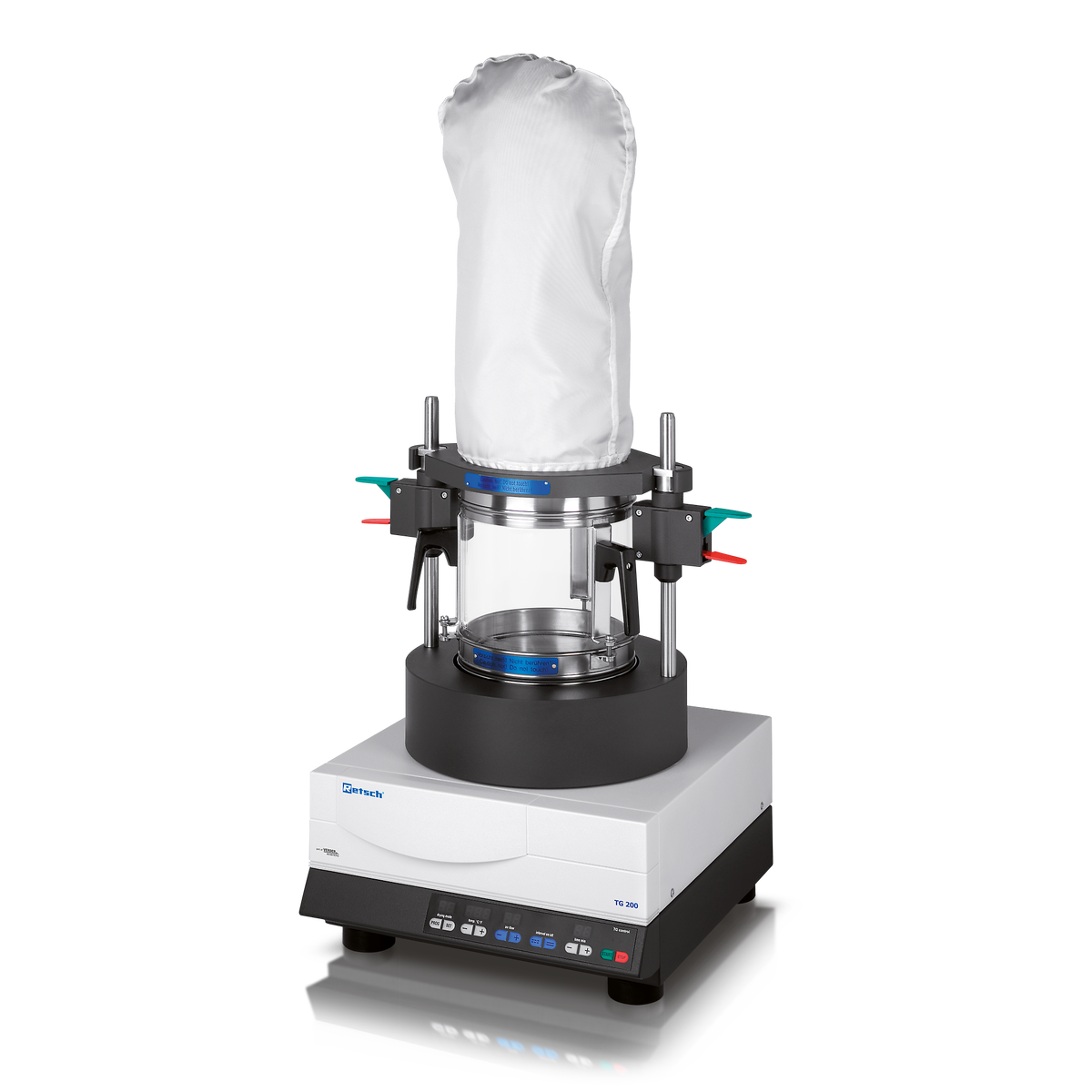
Drying samples is a critical step in sample preparation for cement analysis. Moist samples such as gypsum, limestone, or sands can lead to caking during grinding, which hampers homogenization and may distort analytical results. In addition, drying reduces the risk of blockages in mills, making the workflow safer and more economical. The TG 200 enables gentle and uniform drying of a wide variety of sample materials, including alternative materials used in Green Cement applications. Controlled temperature management and optimized air circulation efficiently remove moisture without altering material properties, while the system can be flexibly adapted to different sample quantities and material types.

Cyclone Separators – An Advantage Beyond Green Cement Applications

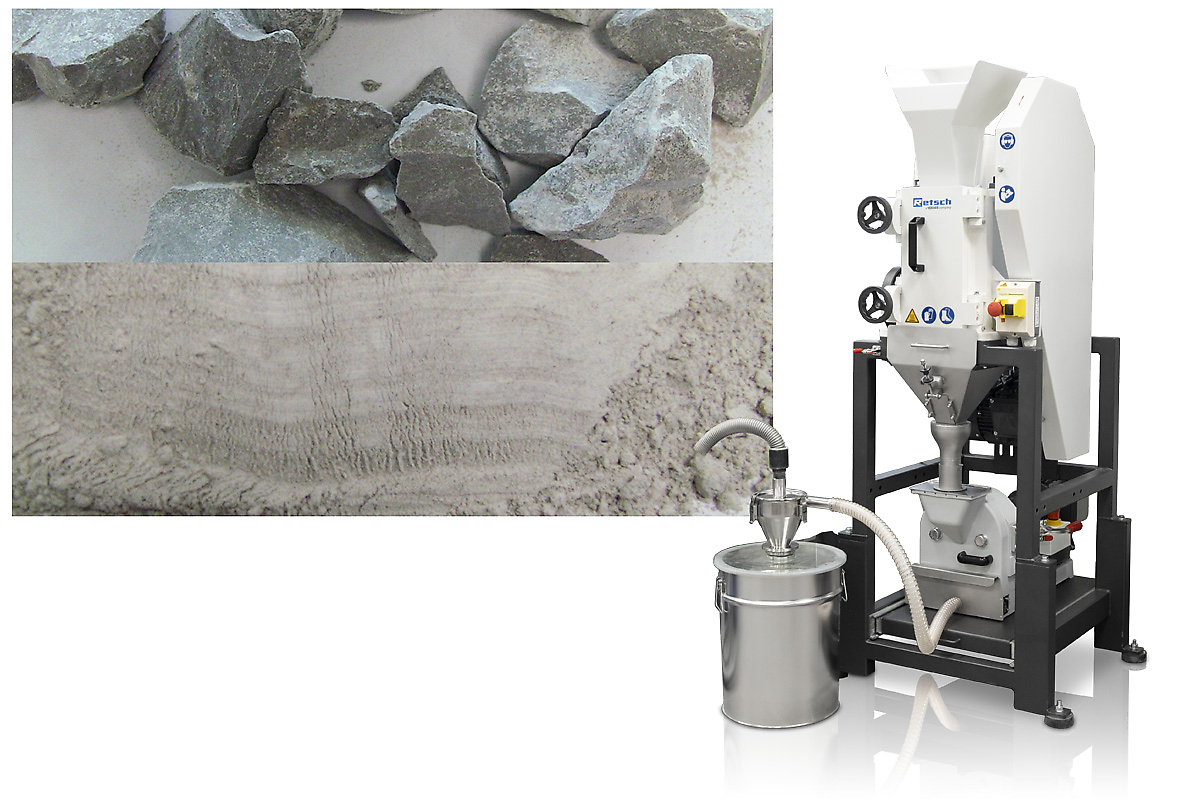
The use of cyclone separators offers numerous advantages: they enable rapid sample discharge, improve sample recovery, and significantly reduce dust generation. This helps maintain a cleaner laboratory environment and protects the health of laboratory personnel. In addition, cyclone separators protect machines from penetrating dust, resulting in reduced maintenance requirements and lower operating costs. Overall, cyclones contribute to optimizing sample preparation both in conventional cement applications and for materials used in Green Cement, ensuring reliable and reproducible analytical results. Cyclone separators are available for a wide range of RETSCH laboratory crushers and mills. They can be retrofitted flexibly and equipped with collection vessels of various sizes (up to 30 L). Two different cyclone variants are available: a standard cyclone and a high performance cyclone, which is primarily used for very light, very fine sample particles or with specific mill types. This ensures effective dust control for materials such as fly ash or raw meal.

An efficient example of cyclone technology in use is the BB 250 – DM 200 combination unit, which is coupled with a cyclone separator. This system enables continuous and automated sample preparation from coarse crushing through to fine grinding. By directly connecting both instruments to a cyclone, particles are discharged reliably and with minimal dust, further reducing manual handling. Smaller jaw crushers, such as the BB 50, can also be connected to the DM 200 disc mill via hose or pipe connections. Many raw materials commonly used in Green Cement applications can be effectively homogenized in this way - making cyclone separators a key component of modern cement technology.

Sieving of Cement Raw Materials or Homogenized Green Cement Materials

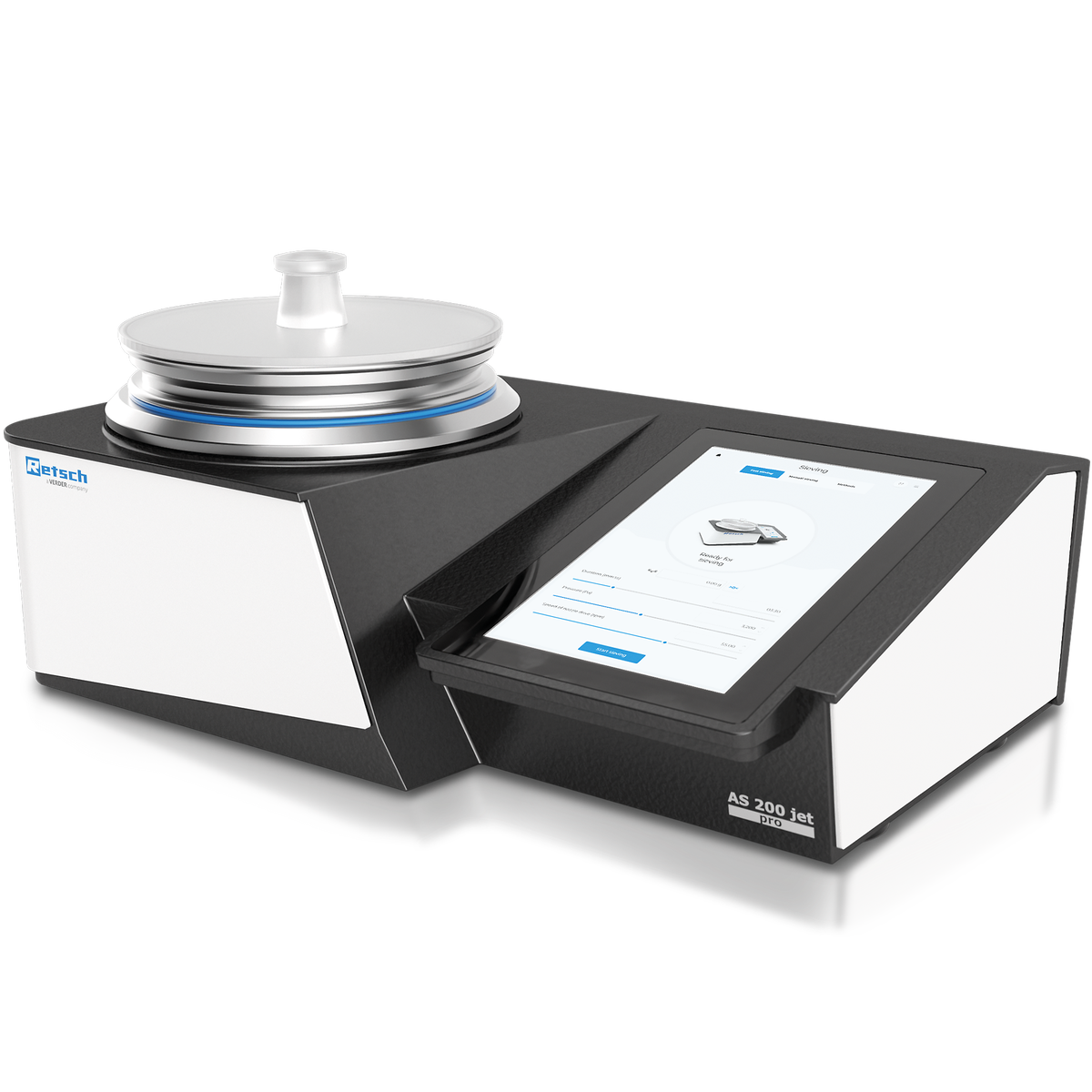
Sieve analyses play a central role in cement technology, as the particle size distribution of raw materials and intermediate products has a decisive influence on the quality and properties of the final product. Precise determination of particle sizes is essential for optimizing grinding processes, improving the reactivity of cement or materials used in Green Cement applications, and ensuring compliance with relevant standards. RETSCH sieving machines are widely used throughout the industry and are synonymous with reliability, precision, and ease of operation. They enable fast and reproducible analysis of bulk materials such as mortar, cement, clinker, or additives like sands, as well as SCMs such as fly ash or tailings. A wide range of sieve sizes and automated evaluation functions allow both coarse and fine fractions to be determined accurately. Even after homogenization steps, sieving helps verify whether samples have already been ground sufficiently fine. Air jet sieving machines such as the AS 200 jet, AS 200 jet pro, and AS 200 jet pharma enable particularly fast and efficient analysis of fine samples, as the air stream ensures optimal dispersion and separation of the material. Especially for Green Cement and modern cement technology, this precise particle size analysis is crucial for evaluating reactivity, quality, and process stability.

Sieving of Fly Ash as an Example of a Green Cement Material

A 100 g fly ash sample can be sieved on the AS 200 control within 10 minutes. A sieve stack with mesh sizes of 32 / 45 / 63 / 90 / 125 / 250 µm is well suited for this purpose, operated at an amplitude of 1.1 mm. In contrast, air jet sieving machines use only a single sieve; sieving time depends on sample quantity and mesh size and is typically 1 -2 minutes per sieve. Using either the “standard” or the “Swiss method,” different fractions and particle size distributions can still be determined. From approximately six sieves onward, both device types are similarly fast. Air jet sieving machines additionally enable dry sieving of samples < 50 µm, whereas wet sieving is often required for the AS 200 control in this range. The AS 200 jet pro significantly simplifies the process thanks to its integrated balance and reduces sample loss. Numerous software checks and guided sieving functions further support error‑free operation.

Example: Sieving of Cement Clinker on the AS 200 jet pro

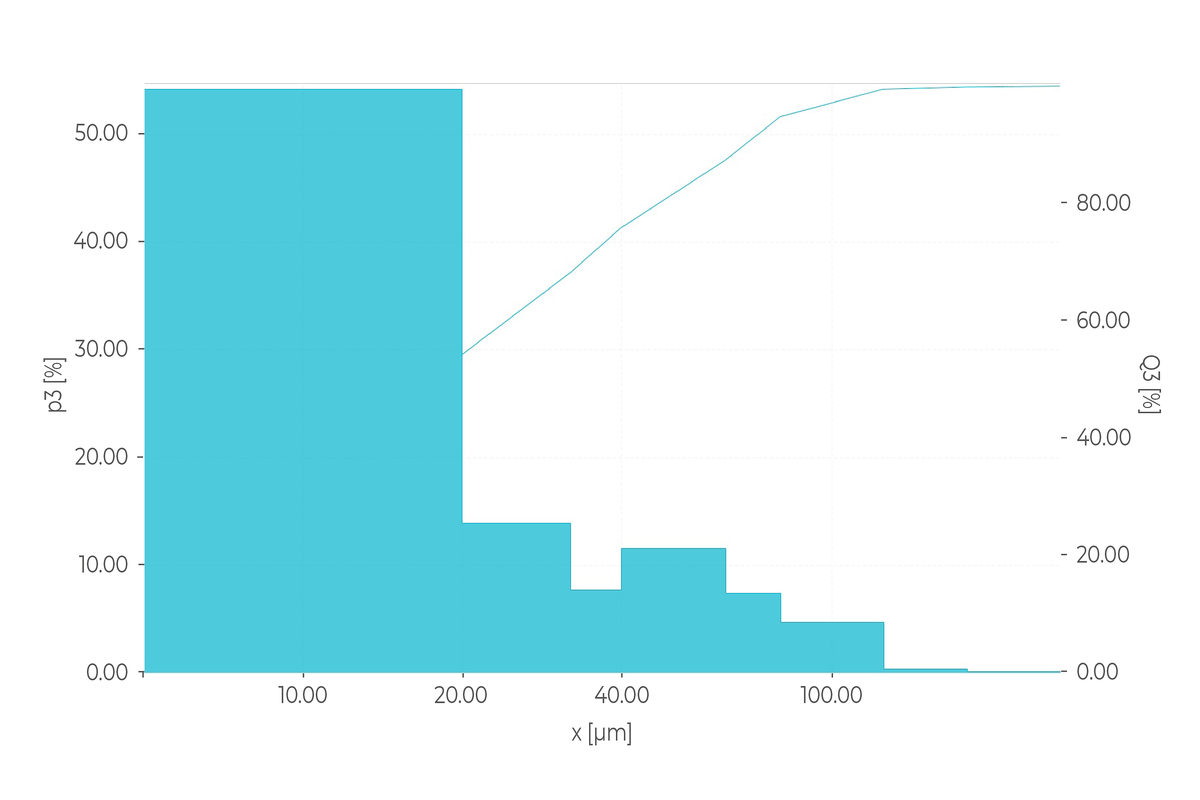
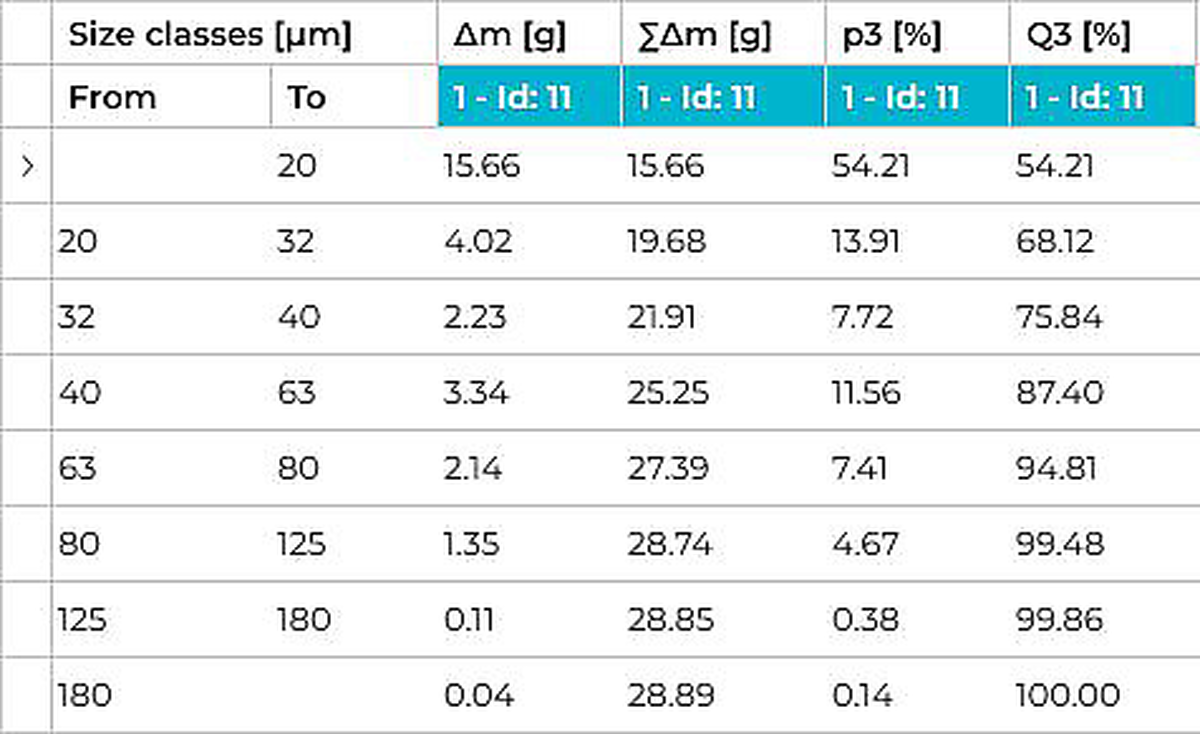
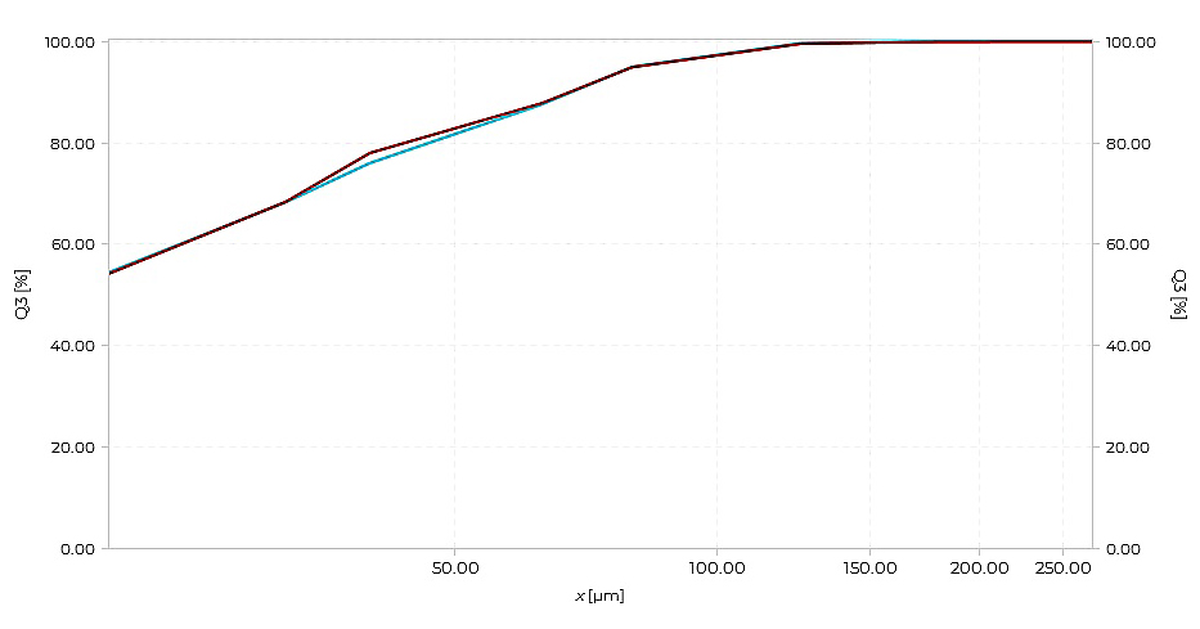
A 30 g cement clinker sample was sieved on the AS 200 jet pro using the standard procedure. Sieves with mesh sizes of 20, 32, 40, 63, 80, 125, and 180 µm were used. First, the sample was placed on the 20 µm sieve and sieved for 90 s. The oversize was then transferred stepwise to the next coarser sieve and sieved again until the 180 µm sieve was reached. Depending on sieve size, sieving times ranged from 60 to 90 s, with a negative pressure between 20 and 32 mbar. Nozzle rotation was maintained at 20 rpm throughout. The results can be displayed directly on the sieving machine in tabular form, as histograms, or as graphs. In this example, 54.21 % of the sample was below 20 µm. When comparing two samples, differences in the 32 - 40 µm and 40 - 63 µm fractions, for example, can be clearly visualized. This enables effective monitoring of production processes and rapid response in the event of deviations.