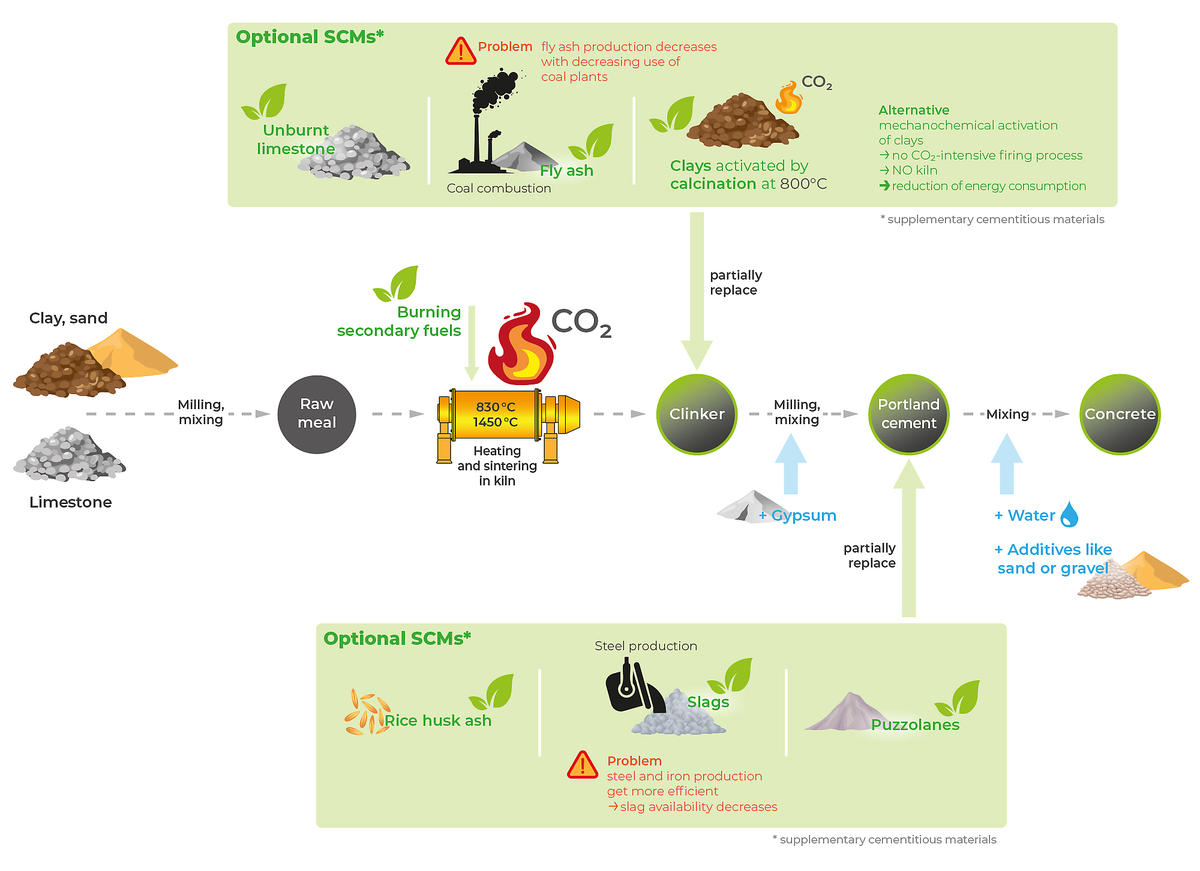
Supplementary cementitious materials (SCMs) are widely used cement replacement materials that substitute part of the limestone or traditional Portland cement clinker in cement and concrete. Using supplementary cementitious materials (SCMs) is one of the most effective levers for reducing CO₂ emissions because clinker production generates large amounts of CO₂: first from the chemical reaction during limestone calcination, and second from the energy demand of the high‑temperature kiln process. By replacing e.g. a portion of clinker with SCMs, less clinker is required, which directly lowers process‑related CO₂ emissions. In addition, many SCMs are industrial by‑products or locally available mineral resources, which can reduce virgin resource consumption and support circular‑economy principles.
| Clinker Substitute | Substitute for Portland Cement | |||
| Unburnt limestone | Puzzolans | |||
| Seashells contain large amounts of lime and, once ground, can be used similarly to unburnt limestone. | Slags: Waste materials from steel production are recycled. However, these industrial processes are becoming more efficient, reducing the availability of slag. | |||
| Fly ash: Due to the decreasing use of coal‑fired power plants, the availability of fly ash is steadily declining. | Ash from food waste, such as rice husks, can be used to replace Portland cement. | |||
| Calcined clays can be calcined at 800 °C. Although CO₂ is released during calcination - similar to limestone firing - the required temperatures are significantly lower. | - | |||
| Tailings from mining waste can even increase strength of cement depending on their composition. The advantage lies in resource conservation, as waste is reused, e.g. instead of natural sand. | ||||
By replacing clinker or Portland cement, significantly less CO₂ is released. In addition, less fuel is required for heating the rotary kiln.
Reliable laboratory characterization of slag based supplementary cementitious materials (SCMs) starts with consistent sample preparation. Slags are often highly inhomogeneous and may contain metallic residues, which is why magnetic components should first be removed before further processing. For crushing and homogenization, jaw crushers are typically used for pre crushing, followed by ball mills or the Cross Beater Mill SK 300 for fine grinding. When selecting the appropriate jaw crusher, the key factors are initial particle size, sample quantity, and the desired final fineness.
A two step pre crushing approach in the jaw crusher - first using a wide gap and then a narrow gap - is often faster than forcing material directly through a tight gap. Sample pieces up to approximately 20 mm can be efficiently processed in the SK 300, which achieves final fineness levels of about 700 µm and, thanks to its robust design and tungsten carbide baffle plates, is well suited for abrasive materials.
Ball mills are suitable for fine grinding of slag sample pieces up to a maximum of 15 mm. Here again, the choice of mill type and operating parameters depends on initial particle size, sample amount, and target fineness. For small volumes up to 20 ml, the MM 400 is commonly used. For larger batches, the TM 300 can process around 500 g of slag with a particle size of 5 mm to a final fineness of 25 µm within a few hours and, with larger drums, can even handle more than 2 kg of sample.
BB 300
15 (分) | < 3 µm
PM 100
5 (分) | < 500 µm
SK 300
20 (分) | < 700 µm
TM 300
4 時 | < 25 µm
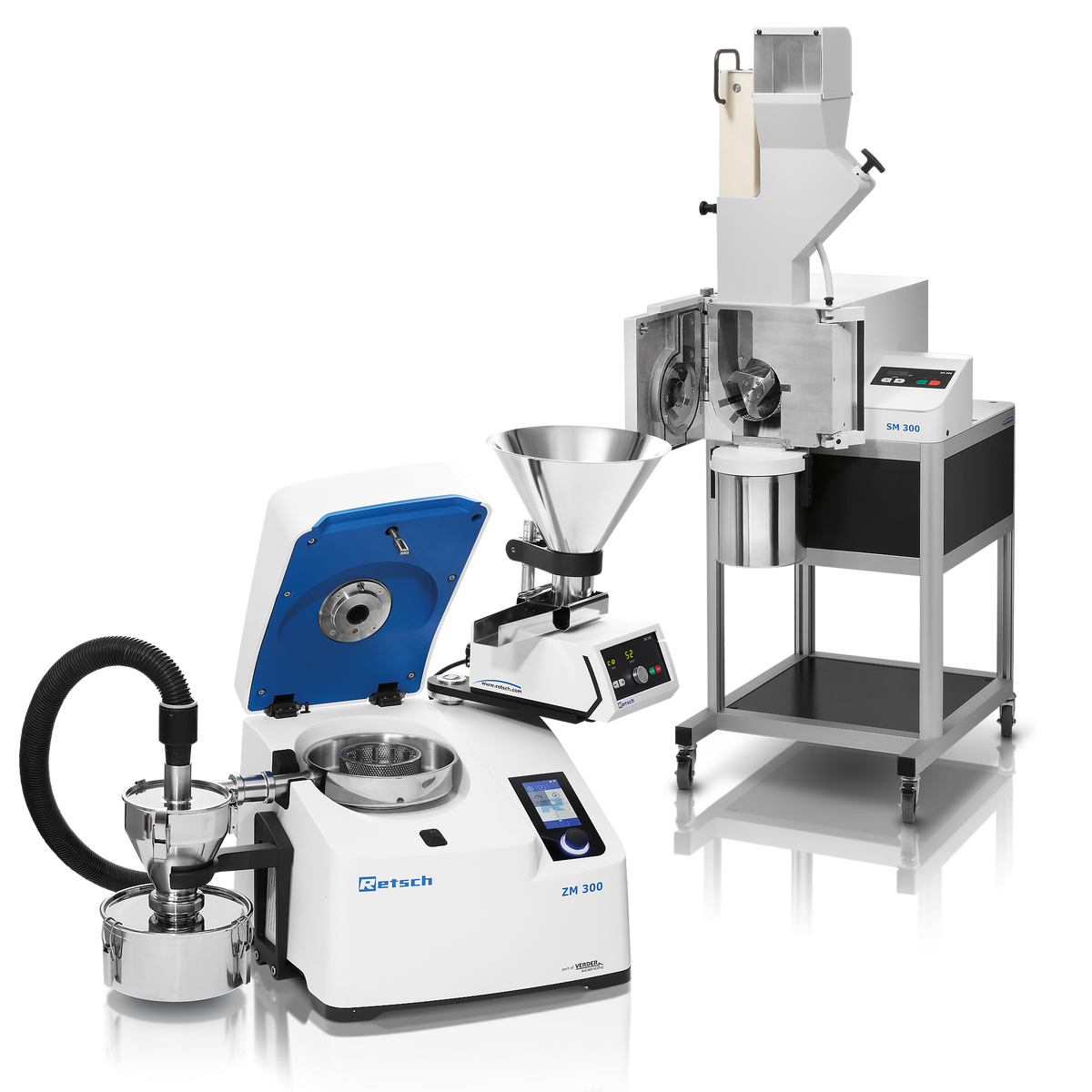
Several mineral cement replacement materials can be processed with standard cement‑lab grinding equipment. Unburnt limestone is ideally processed using jaw crushers followed by ball mills. Seashells also consist mainly of CaCO₃ but are thinner than typical limestone samples and can therefore be efficiently pre‑crushed using cutting mills and finely ground in the Ultra Centrifugal Mill ZM 300; the 6‑disc rotor for cutting mills is suitable for this purpose, and wear‑resistant, tungsten‑carbide‑coated rotors as well as distance sieves can be used in the ZM 300. Softer supplementary cementitious materials e.g. pozzolans or volcanic materials like pumice are likewise processed using rotor mills such as the ZM 300 for volumes up to 5 l or the SR 300 for larger sample quantities. For sieve apertures below 1 mm, cyclones facilitate sample discharge and help prevent dust formation.
BB 50
1 (分) | < 2 mm
Pre-crushing SM 200
Fine-grinding ZM 300
3 (分) | 0.3 µm
SR 300
45 s | < 500 µm
ZM 300
2.5 (分) | 0.1 mm
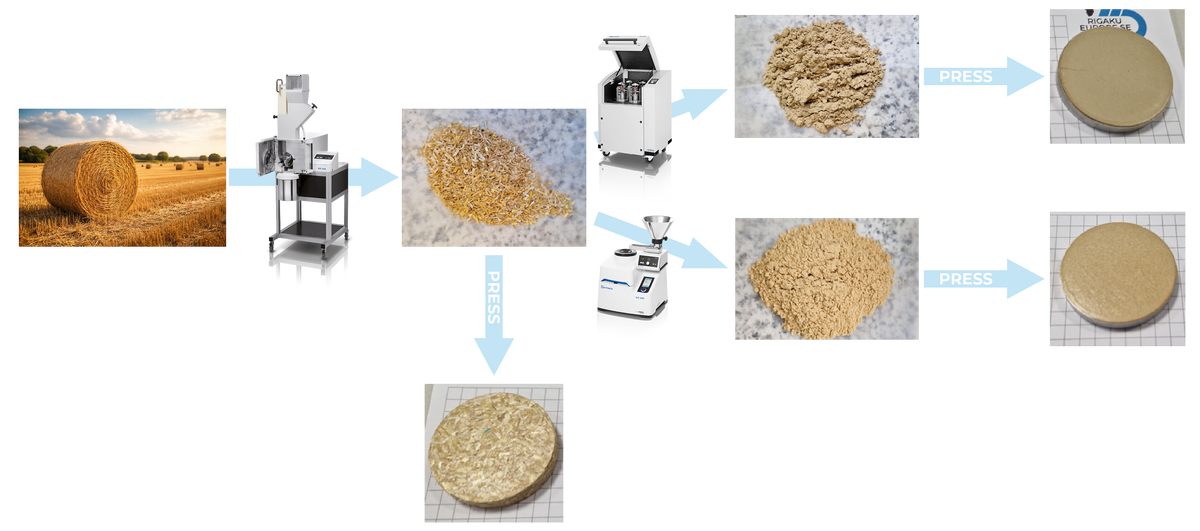
Ash‑derived plant materials - especially those originating from food‑industry waste such as rice husks - can serve as supplementary cementitious materials (SCMs) and cement replacement materials. They can be homogenized in the same way as slags or limestone. The wear resistant SK 300 is particularly suitable for abrasive samples, while for fine grinding below 500 µm, ball mills (for small to medium sample quantities) or drum mills (for larger quantities) are used. The plant‑based raw materials themselves (e.g., rice husks, sunflower‑seed‑hull pellets, or straw residues) must also be analyzed; cutting mills are used for preliminary size reduction, followed by the ZM 300 or, for larger volumes, the SR 300 for fine grinding. For fibrous samples, cyclones should always be considered, as they cool the material, improve sample discharge, and prevent dust formation; slow, steady feeding or the use of distance sieves also helps reduce heat buildup. The DR 100 feeding system enables easier and more consistent sample introduction.
If the fiber content of the ground sample needs to be reduced, the sieves in cutting mills or the SR 300 can be installed in reverse orientation, or the rotor speed in rotor mills can be reduced. For XRF analysis, very fine grinding - often below 50 µm - is required; whether ball mills or rotor mills are more suitable depends on the downstream analysis, since ball mills provide finer results but take longer and may generate more metal abrasion [3]. If abrasion is not critical, the general rule for reproducible XRF results is: the finer, the better.
ZM 300
8 (分) | 0.5 mm
SK 300
2 (分) | 1 mm
ZM 300
15 (分) | 0.5 mm
SR 300
7 (分) | < 200 µm
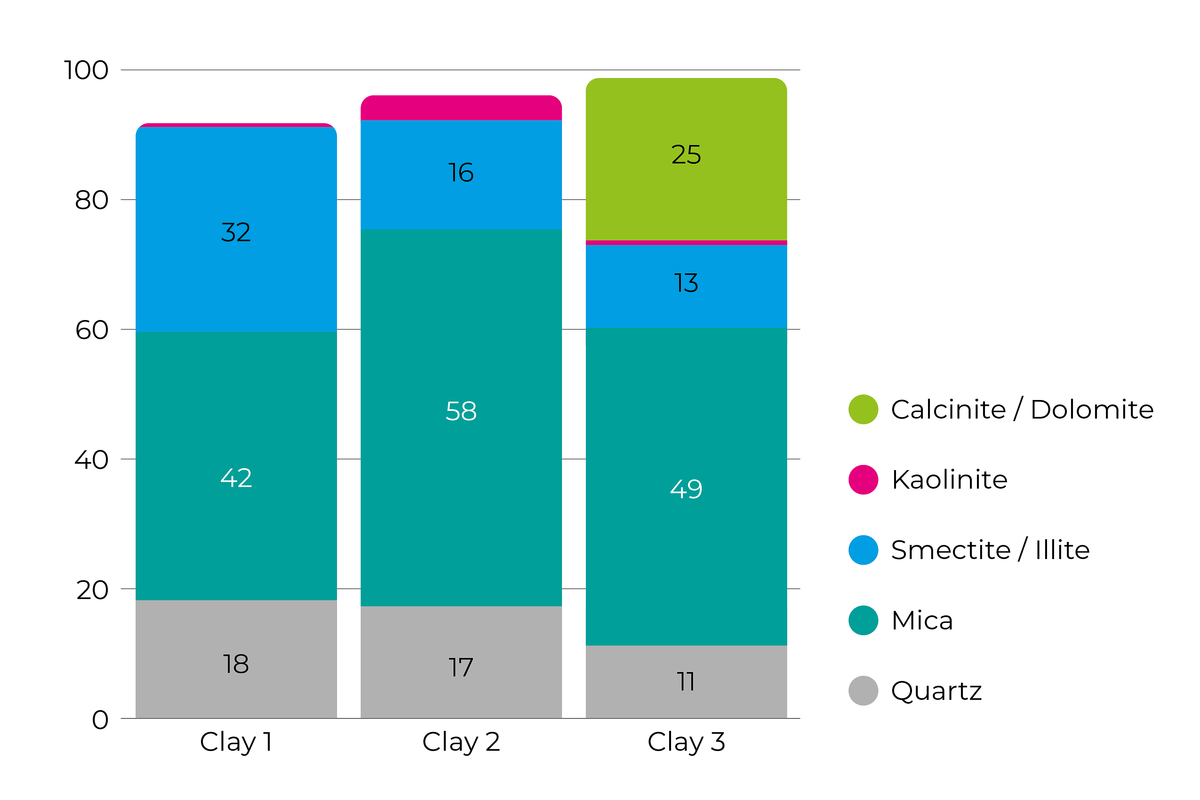
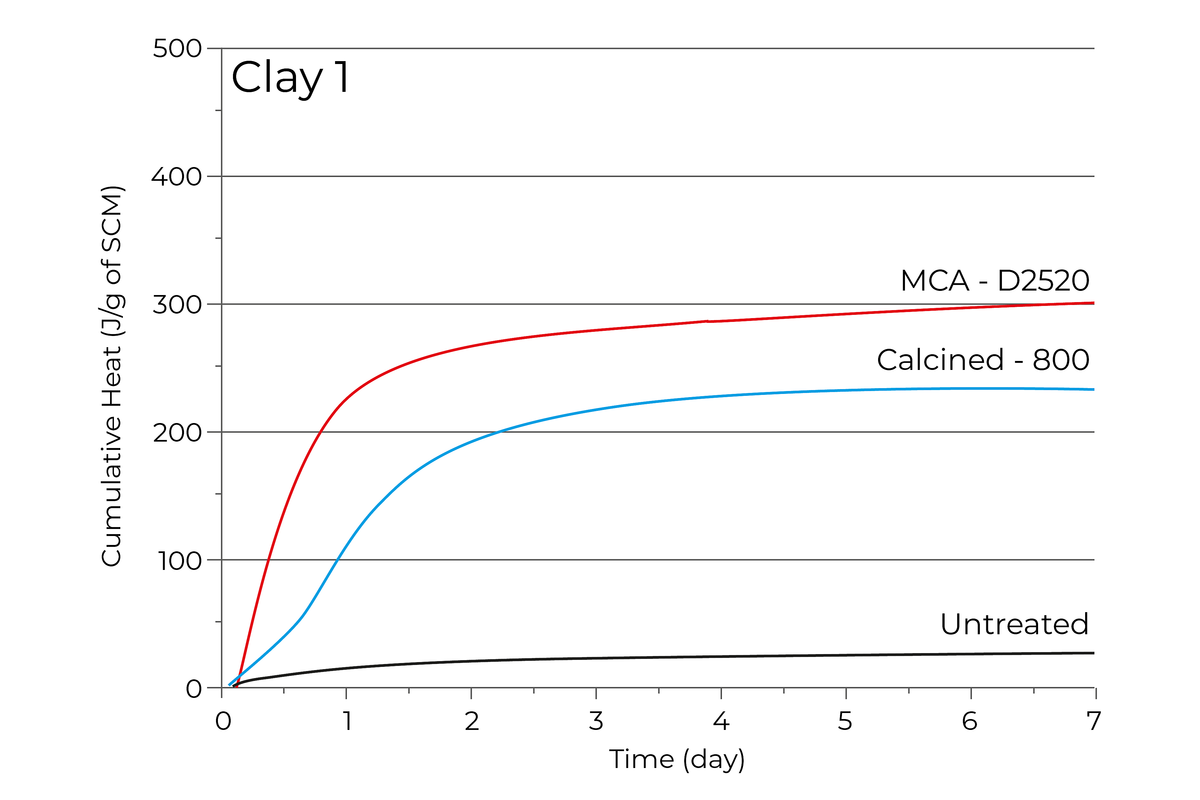
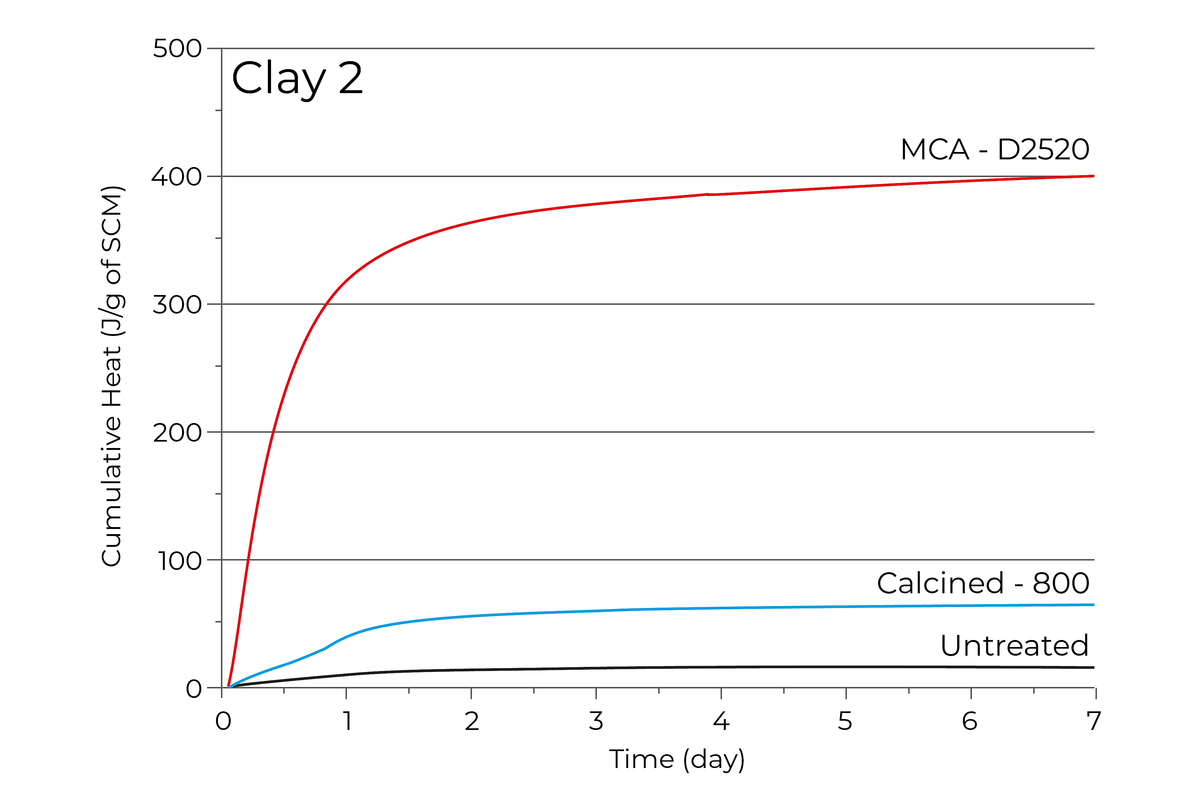
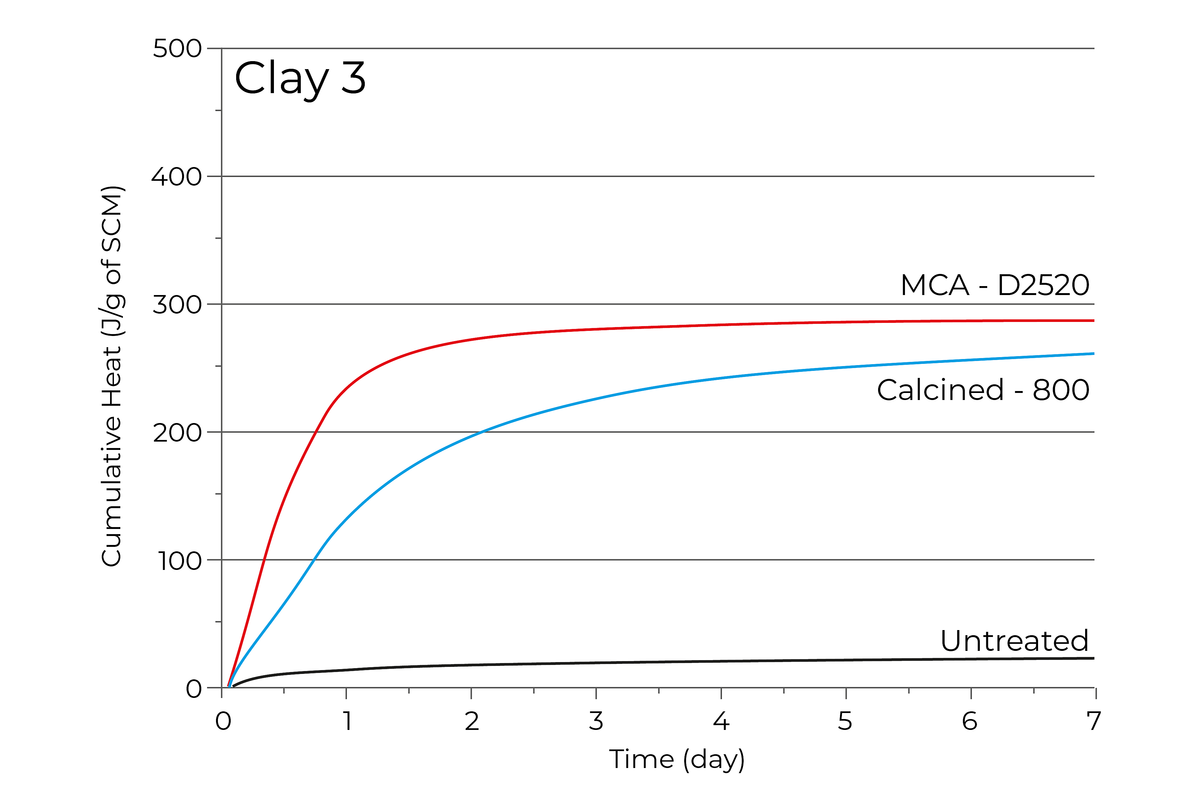
Activated clays are among the most promising supplementary cementitious materials (SCMs) because they are globally available, can be locally sourced, and enable significant clinker reduction. Traditionally, reactive clays are produced via clay calcination, but mechanochemical activation is an emerging activation technology that can provide a compelling alternative in certain applications. Mechanochemical activation of clay - particularly using ball mills such as the PM 100 or PM 300 - uses mechanical energy to alter the crystal structure, enable amorphization, and increase reactivity, making a wide range of local clay types usable as cement replacement materials. The PM 100 and PM 300 are ideally suited for this process at laboratory and pilot scale. Studies show that mechanically activated clays are finer, structurally modified, and more chemically reactive than calcined clays, especially those with a high mica content. A key element of activation technology process control is the GrindControl system, which continuously measures temperature and pressure inside the grinding jar, helps prevent overheating, and provides important insights into mechanochemical reactions. The sensors are compatible with various jar sizes. During clay activation, temperature and pressure rise significantly, indicating gas release and mineral transformation; this monitoring is essential for controlling reactivity and ensuring consistent SCM product quality. The data can also support conclusions about clay composition - for example, materials with higher dolomite content generate higher pressures due to CO₂ release [1].
A study [2] examines how energy input during mechanochemical activation influences the chemical reactivity of clays, with a focus on planetary ball mills. The planetary ball mill is a preferred laboratory tool because it enables precise adjustment of key parameters such as rotational speed, ball to powder ratio, and milling duration. By analyzing nearly 100 data points, the researchers identified a strong correlation between energy input and resulting clay reactivity. Chemical reactivity increases rapidly with rising energy input up to about 100 kJ/g, while further increases show only minor additional effects. In practical terms, the PM 300 planetary ball mill - operated at high speeds such as 850 rpm - offers significant advantages by maximizing energy input and accelerating the activation process for clay based supplementary cementitious materials (SCMs).
Supplementary cementitious materials (SCMs) are cement replacement materials that substitute a portion of limestone and/or traditional Portland cement clinker in cement and concrete.
They reduce the amount of clinker required. Clinker production is CO₂‑intensive due to the calcination reaction of limestone and the high energy demand of the kiln process, so replacing clinker with SCMs directly lowers process‑related emissions and can support circular‑economy resource use.
Examples include slags, fly ash, pozzolans/volcanic rocks (e.g., pumice), unburnt limestone, seashells (CaCO₃‑rich), ash from food‑industry waste such as rice husks, calcined clays, and mining tailings. Availability can change with industrial trends - for example, more efficient steel production can reduce slag availability, and reduced coal power generation can limit fly ash supply.
Traditionally, reactive clays are produced via clay calcination at 800 °C, while mechanochemical activation is an activation technology that increases clay reactivity by milling (e.g., in PM 100 or PM 300 planetary ball mills). Mechanical energy modifies the crystal structure, promotes amorphization, and can make a wider range of local clays usable. Process control can be supported with GrindControl (temperature/pressure monitoring).
1] Tole, I., Delogu, F., Qoku, E., Habermehl-Cwirzen, K., & Cwirzen, A. (2022). Enhancement of the pozzolanic activity of natural clays by mechanochemical activation. Construction and Building Materials, 352, 128739.
[2] Alastair T.M. Marsh, Sreejith Krishnan, Suraj Rahmon, Sisan A. Bernal and Xinyuan Ke; Relationsship between milling input energy and chemical reactivity for mechanochemical activation of clays; Royal Society of Chemistry 2025, DOI: 10.1039/d5mr00088b
[3] Permission for picture usage by Rigaku Europe SE