






Strumenti per una preparazione del campione ottimizzata per l’analisi XRF
Un’analisi XRF affidabile e riproducibile dipende in larga misura da una corretta preparazione del campione. Nella produzione di cemento, nei minerali e nel controllo delle materie prime, una riduzione dimensionale, omogeneizzazione e pressatura coerenti sono essenziali per ottenere risultati significativi e comparabili.
Macinazione del cemento – In cosa consiste il processo classico di produzione del cemento?
La macinazione del cemento è una fase chiave nel processo di produzione del cemento e inizia con la preparazione delle materie prime. Il calcare, l’argilla e la sabbia vengono innanzitutto sottoposti a frantumazione del calcare e delle altre materie prime per ridurne la dimensione delle particelle. I materiali frantumati vengono poi macinati fino a ottenere la farina cruda e successivamente riscaldati in un forno rotante a circa 1.450 °C. Durante questo processo termico si forma il clinker e viene rilasciata CO₂ come sottoprodotto inevitabile. Dopo il raffreddamento, il clinker viene sottoposto alla macinazione del cemento, durante la quale viene macinato insieme a gesso e altri additivi per produrre il cemento finale.
Preparazione delle scorie per l’analisi XRF


Per l’analisi XRF delle scorie si utilizza tipicamente un frantoio a mascelle per la riduzione dimensionale preliminare, seguito dall’MM 400 (o da un mulino vibrante a dischi) per la macinazione fine necessaria alla preparazione di pastiglie pressate omogenee.

Influenza della forza di pressatura sul risultato dell’analisi XRF
La forza di pressatura applicata svolge un ruolo decisivo nelle prestazioni dell’analisi XRF. Prendendo come esempio l’analisi del calcio in campioni di calcare, i risultati mostrano che la pressione di compattazione influenza in modo diretto l’intensità del segnale e quindi la qualità e la comparabilità dei dati analitici. [1]

Scopri capitoli più emozionanti e approfitta della nostra esperienza Click on the chapters to explore!



Perché la dimensione delle particelle è cruciale per l’analisi XRF
La dimensione delle particelle è un fattore chiave nella preparazione del campione per l’analisi XRF, poiché influisce direttamente sulla rappresentatività dello strato di campione analizzato. Particelle troppo grossolane possono causare effetti granulometrici, ridurre l’omogeneità e compromettere la comparabilità dei risultati. Una macinazione riproducibile fino a una finezza adeguata è quindi essenziale per ottenere dati affidabili.

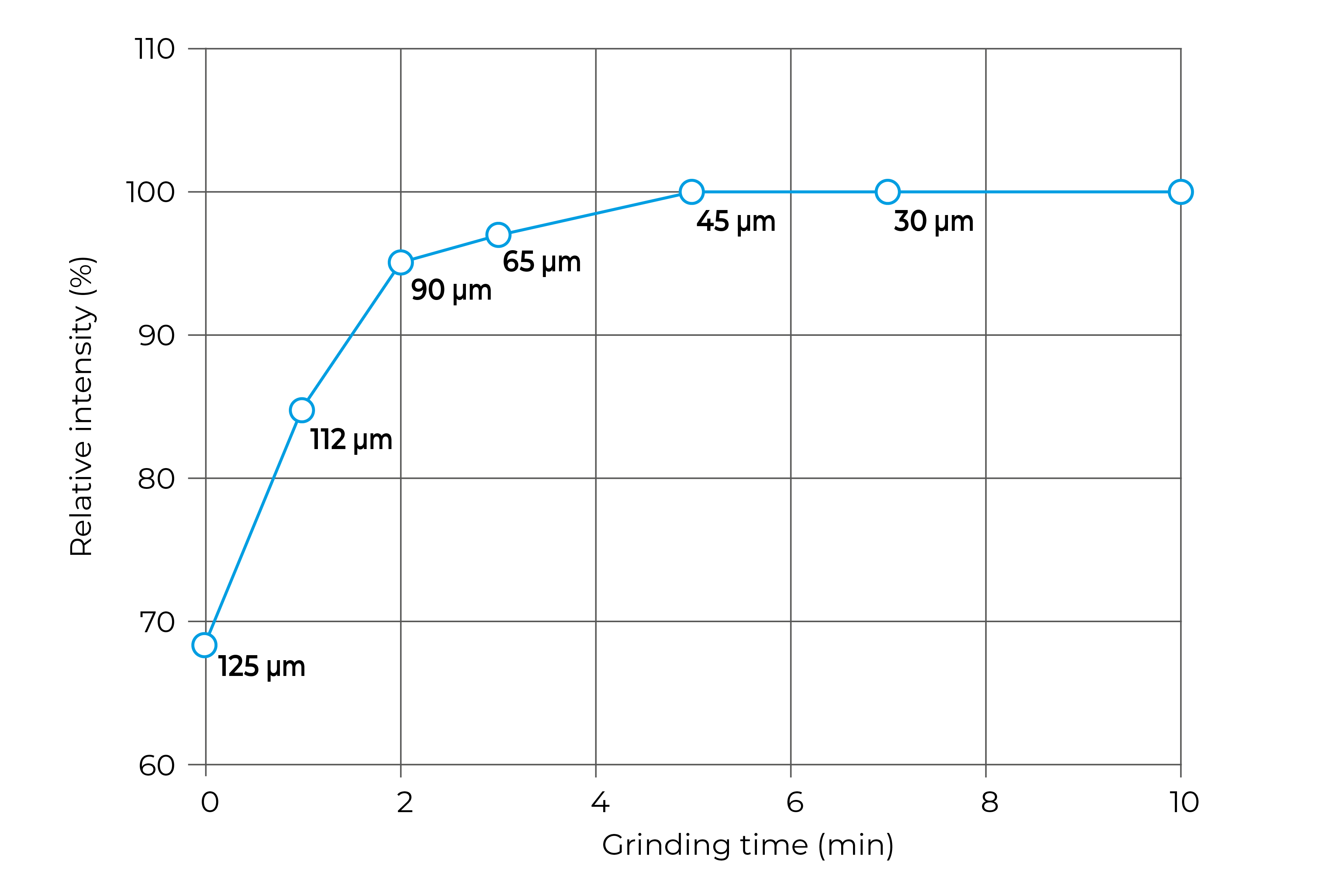

L’intensità del Si Kα dipende dalla dimensione delle particelle e, di conseguenza, dal tempo di macinazione [1]
Strumenti per una preparazione del campione ottimizzata per l’analisi XRF - FAQ
Perché una corretta preparazione del campione è essenziale per un’analisi XRF affidabile?
Una corretta preparazione del campione è un prerequisito fondamentale per un’analisi XRF accurata, in particolare nelle applicazioni su cemento e minerali. La pressatura del campione in una pastiglia uniforme, con una granulometria adeguata e una densità omogenea, contribuisce in modo decisivo alla stabilità del segnale e alla qualità dei dati.
In che modo la forza di pressatura influenza i risultati analitici nell’analisi XRF?
Nell’analisi XRF, la forza di pressatura applicata durante la preparazione del campione ha un impatto diretto sull’intensità del segnale e sulla qualità dei dati. Come mostrato, ad esempio, nell’analisi del calcio su campioni di calcare, condizioni di pressatura coerenti sono essenziali per ottenere risultati comparabili e riproducibili.
Perché la dimensione delle particelle è un fattore chiave nella preparazione del campione per l’analisi XRF?
La dimensione delle particelle influisce direttamente sulla rappresentatività dell’analisi XRF, poiché solo il materiale entro la profondità di fuga contribuisce al segnale misurato. Una granulometria non uniforme o eccessivamente grossolana può introdurre errori sistematici e compromettere la precisione analitica.
Ci contatti per una consulenza gratuita
Grazie alla sua fitta rete internazionale composta da filiali, agenzie locali e società satellite, RETSCH è presente in più di 80 paesi garantendo elevati standard qualitativi e di competenza tecnica. Nei nostri laboratori applicativi, utilizzatori e potenziali clienti possono processare GRATUITAMENTE i propri campioni, in modo da poter valutare l'idoneità di sistemi proposti, prima di un eventuale acquisto. Le prove effettuate saranno inoltre accompagnate da un report di macinazione, riportante tutte le informazioni inerenti la prova (setting strumentali, strumenti ed accessori utilizzati)

Immagine utilizzata su gentile concessione di Rigaku Europe SE