Mixer mills grind and homogenize small sample volumes quickly and efficiently by impact and friction. These ball mills are suitable for dry, wet and cryogenic grinding as well as for cell disruption for DNA/RNA or protein recovery. For special applications such as mechanosynthesis, they offer unique solutions. Mixer mills are well known for their ease of use and small foot-print compared to other types of ball mills.
The grinding jars of mixer mills perform radial oscillations in a horizontal position. The inertia of the grinding balls causes them to impact with high energy on the sample material at the rounded ends of the jars and pulverize it. High energy milling is possible by operating at high frequencies up to 35 Hz. The movement of the jars and balls causes further size reduction effects through friction and additionally leads to effective mixing of the sample. The degree of mixing can be increased by using several smaller balls.
Mixer mills are used for the pulverization of soft, hard, brittle, and fibrous materials in dry and wet mode. With their small footprint, ease of use, and very short processing times, they are true allrounders in the laboratory.
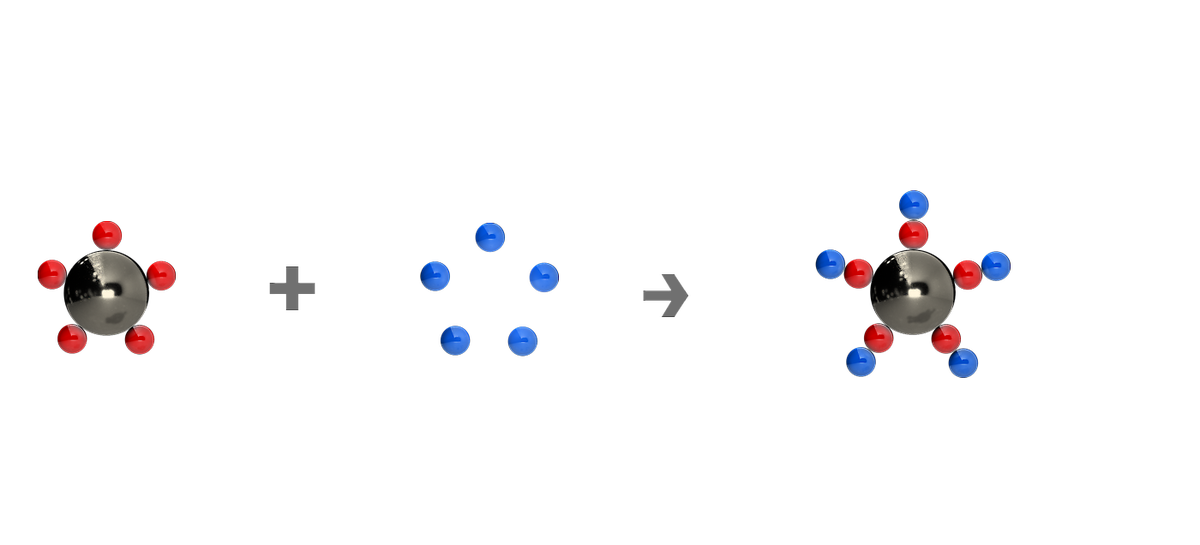
Mixer mills are ideally suited for tasks in research like mechanochemistry (mechanosynthesis, mechanical alloying and mechanocatalysis), or ultrafine colloidal grinding on a nanometer scale, as well as for routine tasks such as mixing and homogenizing.
They are also widely used for cell disruption for DNA/RNA extraction via bead beating. Up to 240 ml of cell dispersions can be processed for protein extraction or metabolome analysis.
A crucial advantage of mixer mills is their great versatility – in some models combined with the capacity to actively cool or heat material, allowing for more controlled configurations than in other ball mills. In the field of mechanochemistry, the possibility to control the reactions inside the jar is very beneficial.
Depending on the models, temperatures down to -196°C or up to 100°C can be applied. Mixer mills are available with 1, 2 or 6 stations. Jars and balls are available in various sizes, designs and materials.
titán-oxid
nedves őrlés
fémötvözet
száraz őrlés
haj
száraz őrlés
gumiabroncs
kriogén őrlés
A CryoMillt -196 °C-os kriogén őrléshez tervezték, míg az MM 500 vezérlés -100 °C és +100 °C közötti hőmérsékletet fed le, -100 °C és 0 °C közötti hőmérséklet-szabályozással. A hűtés előnyös pl. a következőkhöz:
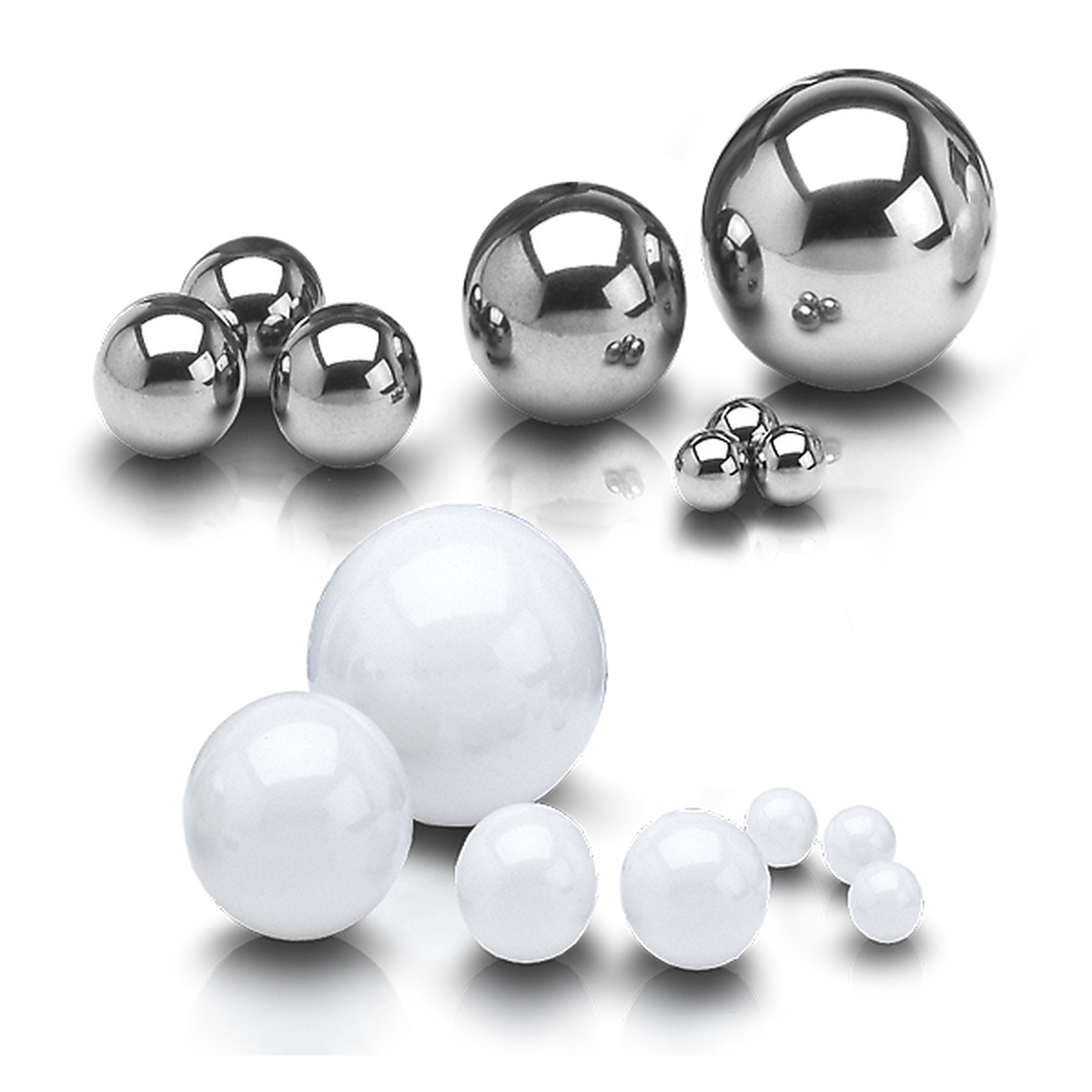
A megfelelő keménységű edény és golyó anyagának megtalálása egyszerű: Az anyagnak keményebbnek kell lennie, mint a mintának. Ha az anyag kevésbé kemény, akkor az őrlőgolyókat a minta anyagának részecskéi őrölhetik.
Nem ajánlott különböző anyagú szerszámokat használni, pl. acélból készült edényt cirkónium-oxidból készült golyókkal. Először is, a két anyagból származó kopás befolyásolja az analitikai eredményt, másodszor, a szerszámok kopása megnő.
Classic mixer mills work with screw-top jars which are designed for quick handling and pulverization of small sample amounts. The jars are available in hardened steel, stainless steel, tungsten carbide, agate, zirconium oxide, and PTFE.
The MM 500 nano and MM 500 control are operated with screw-lock jars. These jars are pressure-tight up to 5 bar, the integrated safety closure allows for convenient handling. The new jar design is very beneficial for wet grinding and pulverizing fibrous samples like hair.
Thanks to the flat lid, the nominal volume can be fully used, for instance when milling fibrous samples, or to ensure the optimum mixture of material, small balls and liquid for wet grinding.
Available materials include hardened steel, stainless steel, tungsten carbide and zirconium oxide ensuring contamination-free processing. Aeration lids for all mixer mill jar sizes and materials are available, e.g. for processing under inert atmosphere.
| Screw-top jars MM 400, MM 500 vario, CryoMill | Screw-lock jars MM 500 nano, MM 500 control | |
| Different jar materials | 7 (4) | 4 |
| Jar sizes | 1.5 | 5 | 10 | 25 | 35 | 50 ml | 50 | 80 | 125 ml |
| Aeration lids | nem | igen |
| GrindControl | nem | igen |
| Integrated safety closure | nem | igen |
| Suitable for dry grinding | igen | igen |
| Suitable for wet grinding | Limited - jar design is not optimal for applying the 60% filling rule | Yes, designed to apply the 60% rule |
| Grinding of fibrous samples | igen | Yes, very easy handling, as the lids are flat and the full volume of the jar can be used to fill in voluminous sample |
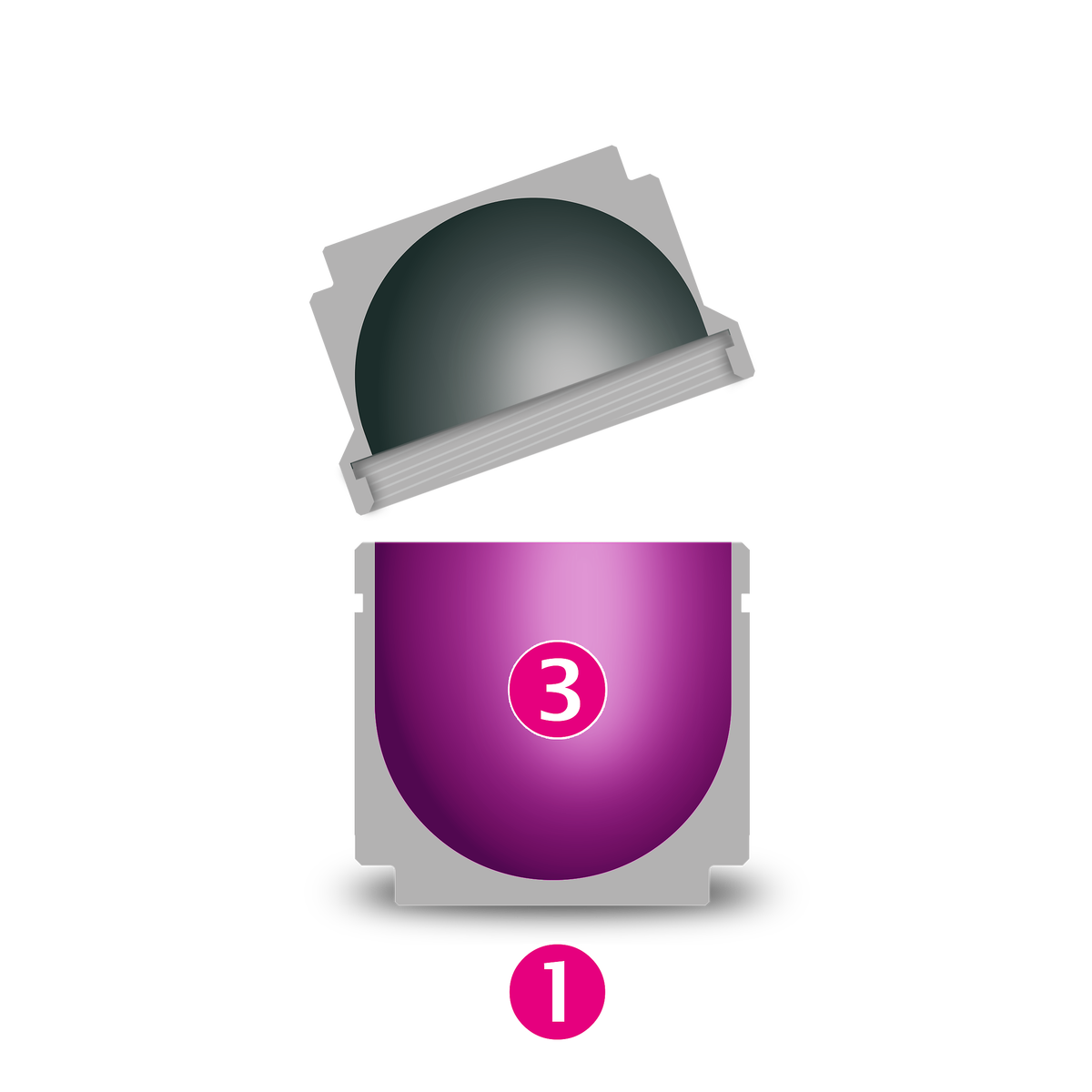
Száraz őrlés esetén a legjobb eredményt általában az úgynevezett egyharmad-szabály alkalmazásával érhetjük el. Ez azt jelenti, hogy az edény térfogatának körülbelül egyharmadát meg kell tölteni golyókkal. Ezt a szabályt követve minél kisebbek a golyók, annál többet kell venni, hogy az edény egyharmadát megtöltse. Az edény térfogatának további egyharmadát mintaanyaggal kell megtölteni. A fennmaradó harmad szabad tér, hogy a golyók mozgása a belsejében lehetővé tegye a minta gyors porlasztásához szükséges aprítási energia elérését.
Ezt a szabályt követve a szükséges aprítási energia biztosított, miközben elegendő mintaanyag van az edényekben a kopás megelőzéséhez.
1. Egyharmad szabad tér
2. Egyharmad minta
3. Egyharmad őrlőgolyó
Szálas anyagok vagy olyan anyagok esetében, amelyek porlasztáskor drasztikusan veszítenek térfogatukból, magasabb mintatöltési szint ajánlott. Az edényben elegendő anyagnak kell lennie a kopás minimalizálása érdekében. Szükség esetén néhány perc elteltével további anyagot lehet hozzáadni a minimálisan szükséges térfogat fenntartásához.
1. Két harmad minta
2. Egyharmad őrlőgolyó
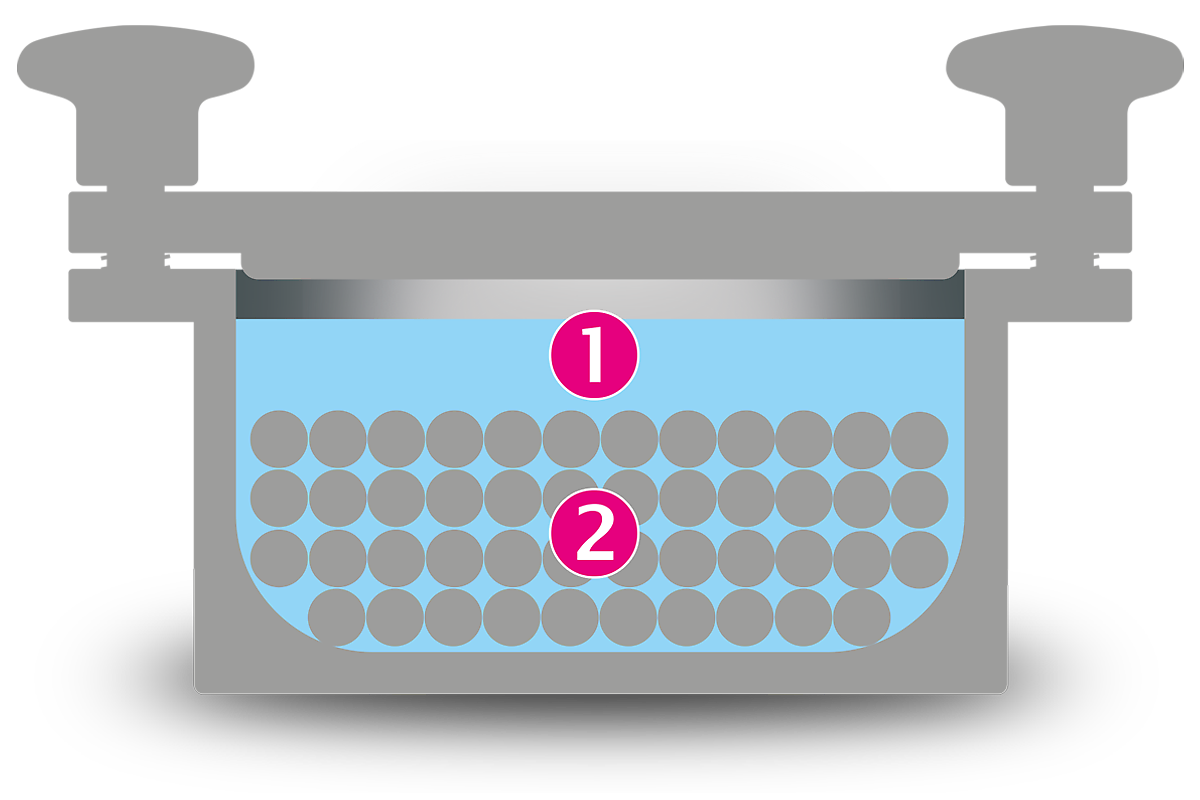
A 100 nm-es vagy annál kisebb szemcseméret előállításához ütés helyett nedves őrlés és súrlódás szükséges. Ezt sok kis golyó nagy felülettel és sok súrlódási ponttal történő alkalmazásával érik el. Következésképpen a száraz őrlési eljárásoknál ajánlott egyharmados töltöttségi szintet felváltja a 60 %-os szabály, ami azt jelenti, hogy az edény 60 %-át kis golyókkal töltik meg. A minta mennyiségének kb. 30 %-nak kell lennie. Először a kis golyókat adagoljuk az üvegekbe (súly szerint!), majd az anyagot adjuk hozzá és keverjük össze. Végül a diszpergáló folyadékot óvatosan összekeverjük.
Aeration lids have been engineered to improve both the efficiency and safety of grinding processes in laboratory environments. They are especially beneficial when working with materials that require a controlled atmosphere—such as during wet grinding or when handling reactive substances. In such cases, the internal atmosphere, including oxygen, can be replaced by flushing the jar with an inert gas like nitrogen.
These lids also enable the introduction of gases directly into the grinding jar, which is essential for certain chemical reactions or for maintaining an inert environment. The jars can be pressurized up to 5 bar, which may help facilitate the incorporation of gas molecules into the reaction during milling.
Additionally, aeration lids allow the grinding jar to be connected directly to an analyzer—either after operation in a planetary ball mill (or in the Emax) or even during operation in the MM 500 nano or MM 500 control. This setup makes it easy to analyze gases released during grinding processes or generated by chemical reactions. The lids are equipped with inlays made from various materials—such as stainless steel, zirconium oxide, and tungsten carbide—allowing the same lid to be used with different jar types.
Mixer mills belong to the family of ball mills and are characterized by their small footprint, fast processing times and great versatility.
They are used for mixing, pulverizing and homogenizing hard, medium-hard, brittle, soft, elastic and fibrous sample materials.
Size reduction is effected through impact and friction. Mixer mills from Retsch are available with one, two or six grinding stations.
Mixer mills are used for dry, wet and cryogenic pulverization of small sample volumes within seconds. They generate the required energy input for nanoscale grinding.
A typical field of application is cell disruption by bead beating for DNA/RNA and protein extraction.
Mixer mills are also frequently used in the field of mechanochemistry, particularly those models which provide cooling and heating options.
Sample material and grinding balls are filled into the jar which is clamped into the mill. The radial oscillations performed by the mill lead to the pulverization by impact and friction of the balls. The sample is also thoroughly mixed by the movements of jar and balls.